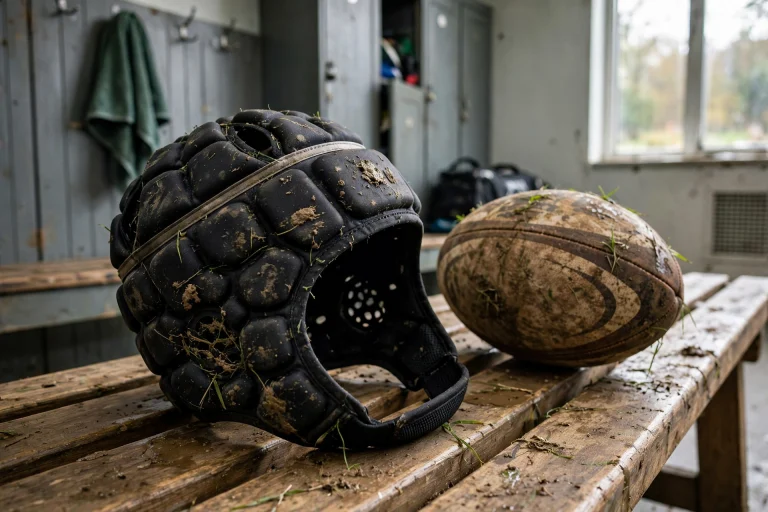
Rugby headgear is not a helmet, and in general terms, the difference is in what each one is built to do. Rugby headgear is soft, padded protection made from foam, worn to cushion bumps, scrapes, and minor knocks. A helmet is a hard shell, usually with a rigid outer layer and an impact-absorbing liner, built for sports where hard, high-speed impacts are expected. The two look similar at a glance, but they are designed for very different risks.
The confusion is understandable. Both sit on your head, both have straps, and both are called protective headgear. But wearing a hard helmet in rugby would be dangerous for other players, and wearing soft rugby headgear on a motorbike or a ski slope would offer far too little protection. This guide explains how rugby headgear and helmets differ in construction, purpose, and rules, so you can tell them apart and choose the right protection for the right sport.
What Is Rugby Headgear Made Of?
Rugby headgear, often called a scrum cap, is made from soft, flexible foam padding covered in fabric. It fits closely over the head and ears, with padding over the forehead, the top of the head, the temples, and the ears. There is no hard shell, no rigid outer layer, and no stiff structure — the whole thing is soft to the touch.
That softness is deliberate. Rugby is a contact sport, but it is also a sport where players collide with each other, and a hard shell would turn every head clash into a much harder impact for the other player. Soft foam spreads the force of a bump over a wider area and reduces the risk of cuts and abrasions, without adding a hard surface that could injure someone else.
What Is a Helmet Made Of?
A helmet is built very differently. Most helmets have a hard outer shell, made from a rigid material such as polycarbonate or a composite, and an inner liner made from a crushable foam that absorbs impact by deforming. The shell spreads the force of an impact, and the liner absorbs it, so less force reaches your head.
Helmets are designed for sports and activities where the impact is hard, fast, or against a hard surface. Think of cycling, motorcycling, skiing, climbing, or American football: in each case, a fall or a collision can involve high speed, a hard surface, or a heavy object, and soft foam alone would not be enough. The hard shell is what makes a helmet suitable for those risks.
The fit and fastening of a helmet are also different. Helmets usually have a more rigid structure, a firm chin strap, and sometimes a visor or peak. They are built to stay in place during a high-speed impact, and they are not meant to be soft or flexible. If you are curious about how modern helmets manage rotational forces as well as direct impacts, reading about what MIPS is for helmets is a useful starting point, because it explains one of the technologies used in many hard-shell helmets.
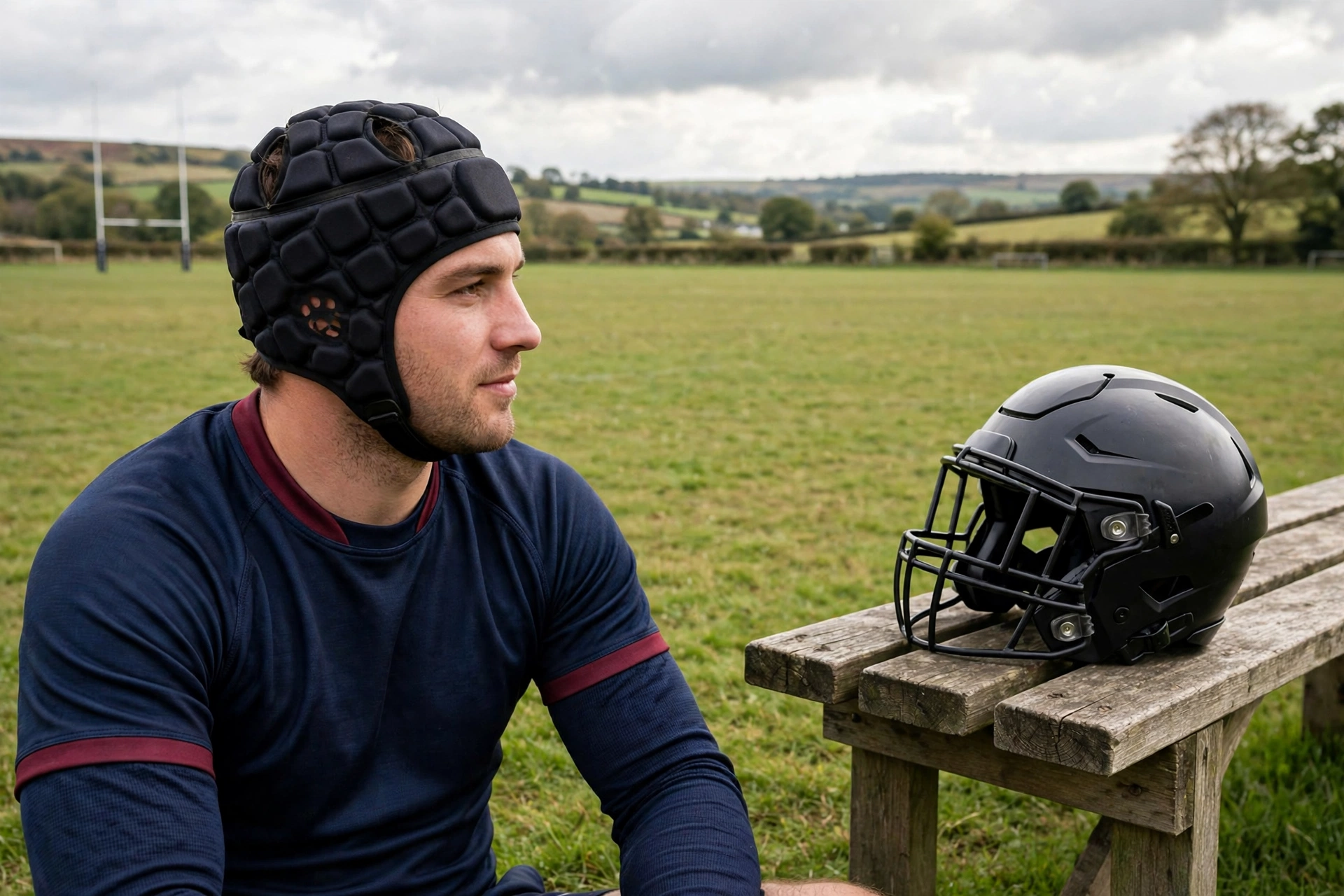
How Do Rugby Headgear and Helmets Differ in Purpose?
The purpose of rugby headgear is to reduce minor injuries: cuts, grazes, bruises, and ear damage. It can make a clash of heads feel softer, and it can protect your ears in a scrum. What it is not designed to do is prevent concussion or protect against a serious head injury from a hard impact. That is an important distinction, and it is one that governing bodies and medical experts stress regularly.
The purpose of a helmet, by contrast, is to reduce the risk of serious head injury in a high-impact activity. A cycling helmet is there for the moment you hit the road. A ski helmet is there for the moment you hit a tree or hard snow. The helmet is built for a worst-case impact, and its design reflects that.
This difference in purpose explains why the two are not interchangeable. Wearing a helmet in rugby would not make you safer overall, because the hard shell would increase the risk to other players, and it would not be allowed under the rules. Wearing rugby headgear for cycling or motorcycling would leave you badly under-protected, because the soft foam is not built for those impacts.
Can You Wear a Helmet Instead of Rugby Headgear?
In general terms, no. The laws of rugby set out what headgear is allowed, and a hard-shell helmet does not meet those requirements. World Rugby, the governing body for the sport, has rules about the type of headgear that can be worn, and those rules specify soft, padded headgear that meets a particular standard. A helmet would not be approved, and a referee would not allow you to play in one.
There are good reasons for this. A hard helmet could injure other players in tackles, rucks, and scrums, where heads and bodies are in close contact. It could also change how a player tackles, making them more willing to lead with their head because they feel protected, which would make the game more dangerous for everyone.
Some players, especially parents of young players, ask whether a harder form of protection would be safer. It is a natural question, but the evidence and the rules point the other way: rugby is designed around soft headgear and safe technique, not hard shells. If you are concerned about head injuries in rugby, the best steps are to learn proper tackling technique, follow the laws, and talk to your coach or club about their approach to player welfare.
How Do You Choose the Right Rugby Headgear?
If you play rugby and want headgear, start with the standard. Look for headgear that meets the World Rugby standard for the level you play at, and check that it is approved for use. The label or the product description should say which standard it meets. If it does not, ask the seller or your club before you buy.
Fit matters as much as the standard. Rugby headgear should sit snugly over your head and ears, without gaps or loose areas, and it should stay in place when you run, tackle, and change direction. It should not slide over your eyes or ride up at the back. Try it on, move around in it, and check that you can hear reasonably well — headgear that muffles everything can make communication on the pitch harder.
Think about what you want it for. If ear protection is your main concern, look for headgear with good ear coverage and padding that sits well over the ears. If you want general cushioning for tackles and rucks, look for even padding over the forehead and temples. Comfort matters too, because headgear you find hot, tight, or distracting is headgear you will stop wearing.
Frequently Asked Questions
Q: Is rugby headgear the same as a scrum cap?
A: Yes — scrum cap is the common name for the soft padded headgear worn in rugby. It is the same item, and it is not a hard-shell helmet.
Q: Does rugby headgear prevent concussion?
A: In general terms, no. Rugby headgear is designed to reduce cuts, grazes, and ear injuries. It is not designed to prevent concussion, and it should not be relied on for that purpose.
Q: Can children wear rugby headgear?
A: Yes, children can wear rugby headgear that meets the relevant standard and fits properly. It is optional in most cases, so check with your child’s club and coach about what they recommend.

Olivia
Writer at Helmet Today, covering helmet reviews, fit and riding safety.