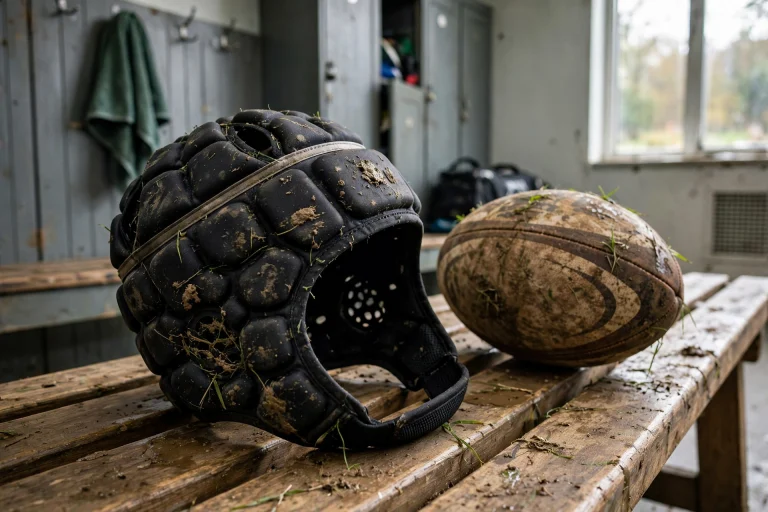
For juniors, rugby headgear is soft padded headgear that can help protect the ears and scalp from scrapes and knocks — but parents should know it is not a hard helmet and it does not prevent concussion. The decision to buy headgear for a young player should be based on fit, comfort, and realistic expectations, not on the idea that it makes rugby safe. A well-fitting scrum cap can be a useful piece of kit for a junior player, especially one who plays in the forwards or has had ear problems, but it is only one part of playing safely.
Junior rugby is often a child’s first experience of a contact sport, and parents naturally want to know what kit will help and what is simply marketing. This guide covers what rugby headgear can and cannot do for young players, how to choose the right size for a growing child, what to check before every game, and how to care for headgear through a season of mud, rain, and washing.
What Does Rugby Headgear Do for Junior Players?
Rugby headgear for juniors works the same way as the adult version: a thin layer of foam padding, covered in stretchy fabric, that fits closely over the head and ears. For a young player, its main benefit is protection for the ears and scalp. Junior games involve plenty of tackles and rucks, and even at a young age, repeated friction can graze the scalp or bruise the ears. The padding helps cushion those everyday knocks and reduces the chance of a cut or a sore ear after a game.
There is also a confidence benefit that should not be dismissed. A child who is nervous about contact may feel braver and more willing to tackle with headgear on, and that confidence can help them learn the game properly. Coaches often notice that a nervous player tackles better once they feel a little more protected. That is a real benefit, but it needs to be balanced with honest expectations — the child should understand that headgear helps with scrapes and knocks, not with the bigger risks of the game.
How Do You Choose the Right Size for a Growing Child?
Choosing headgear for a child starts with measuring the head. Use a soft tape measure around the widest part of the head, just above the eyebrows and ears, and compare the result with the maker’s junior size chart. Junior sizes are usually labelled by age or by head measurement, and they vary between brands, so the chart matters more than the label. If your child’s measurement falls between two sizes, try both if you can, and choose the one that feels snug without pinching.
Children grow quickly, so a size that fits perfectly in September may be tight by the following spring. Check the fit every few weeks during the season, not just when you buy it. Look for signs that it has become too small: the front edge riding up, the ear holes no longer lining up, the chin strap feeling tight, or your child complaining of a headache after a game. A headgear that has become too small will not sit properly, and it may distract your child at exactly the wrong moment.

How Should Junior Headgear Fit, and What Should Parents Check?
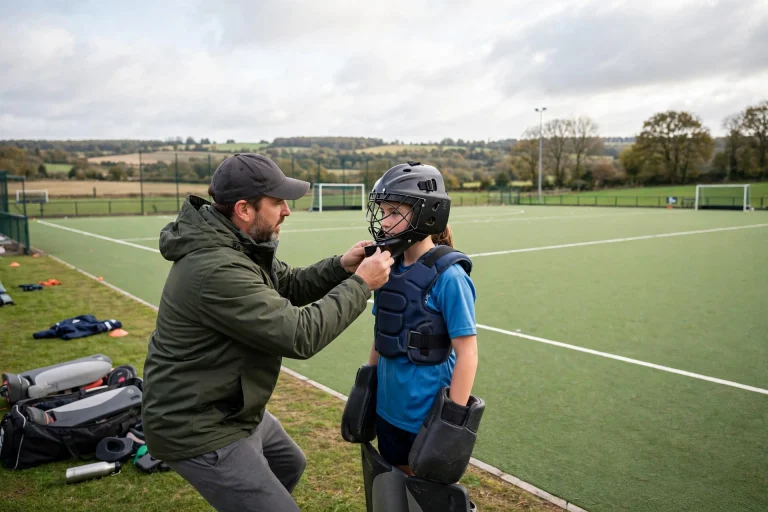
Junior headgear should fit in the same way as adult headgear: snug all around, with the padding sitting flat against the head and the ear holes lined up with the ears. The front edge should sit just above the eyebrows, and the chin strap should be fastened snugly under the chin — loose enough for your child to talk and breathe comfortably, tight enough that the headgear does not shift when they shake their head. Do these checks together before the first game, and teach your child to check them too.
Before every game, run through a quick checklist with your child. Is the headgear the right way round? Are the ear holes over the ears? Is the chin strap done up? Does it feel comfortable, not painful? Can they hear you when you speak from a few metres away? Can they see to the sides without turning their whole head? A minute of checking on the sideline can prevent a game spent pushing headgear back into place.
How Do You Look After Junior Rugby Headgear?
Junior headgear gets dirty quickly. It is worn in mud and rain, thrown into a kit bag after a game, and forgotten until the next weekend. To keep it in good condition, wash it regularly following the maker’s instructions — usually a gentle hand wash or a cool machine wash, then air-drying away from direct heat. Do not put it in a tumble dryer, and do not leave it damp in a closed bag, because that can cause smells and damage the foam.
Check the headgear regularly for wear. Look at the foam: has it gone flat or lumpy in places? Check the fabric for tears or thinning, especially over the ears. Check the chin strap and any laces: are they still holding firmly, or have they stretched and lost their grip? If the padding has compressed or the straps no longer hold the headgear snugly, it is time to replace it, even if it still looks fine from the outside. If you are learning about helmet technology in general, reading about what MIPS is for helmets can help you understand one of the features used in hard helmets, even though soft rugby headgear does not use that system.
What Should Parents Tell Their Child About Headgear?
The most important conversation is about what headgear can and cannot do. Tell your child, in simple terms, that headgear helps protect their ears and skin from scrapes and knocks, but that it is not a hard helmet and it does not stop concussion. Explain that they still need to tackle safely, keep their head in the right position, and tell a coach or a parent straight away if they feel dizzy, sick, or confused after a knock — whether or not they were wearing headgear.
It is also worth talking about why some children wear headgear and others do not. There is no rule that says every junior player must wear it, and a child who does not wear it is not being careless. The choice is personal, and it may change as the child grows, changes position, or gains confidence. Let your child have a say, and listen to how they feel about it — a child who chooses to wear headgear is more likely to wear it properly and keep it on for the whole game.
Frequently Asked Questions
Q: At what age can a child start wearing rugby headgear?
A: In general terms, a child can wear rugby headgear once they start playing contact rugby and the headgear fits them properly. Check with your club or coach, because age-grade rules and team guidance can vary.
Q: Does my child need headgear for tag or touch rugby?
A: In general terms, no. Tag and touch rugby involve no tackling or scrums, so headgear is not usually needed. It becomes more relevant once a child moves into full-contact rugby.
Q: How often should I replace my child’s rugby headgear?
A: Replace it when the fit changes, the foam flattens, the straps stretch, or your child outgrows it. For a growing child, that may mean a new size each season, so check the fit regularly rather than waiting for it to look worn out.

Olivia
Writer at Helmet Today, covering helmet reviews, fit and riding safety.