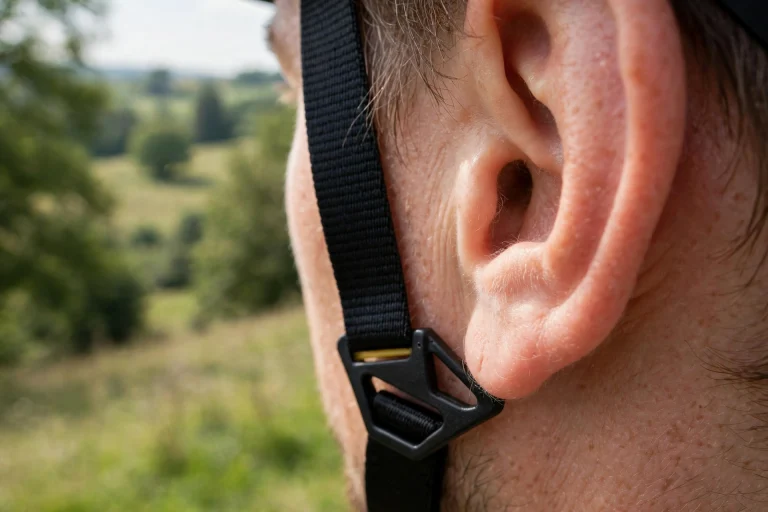
You can wear a helmet with hearing aids, in general terms, but it takes a little care: the helmet must fit around the aids without pressing on them, the aids must stay in place under the helmet, and you should be able to hear well enough to stay aware of your surroundings. Many hearing aid wearers ride, ski and cycle with helmets, and with the right fit it works well.
The key is choosing a helmet with enough room around the ears and adjusting it so the aids are not squeezed or dislodged. This guide explains what to look for, how to fit a helmet with hearing aids, and what to do if you have problems.
What Makes Fitting a Helmet with Hearing Aids Tricky?
Hearing aids sit in or behind the ear, which is exactly where a helmet’s ear coverage, straps and padding also sit. A helmet that fits snugly around the ears can press on a behind-the-ear aid, push an in-ear aid out of place, or cause feedback, the whistling sound that happens when the aid’s microphone picks up its own output.
The shape of the aid matters. Behind-the-ear aids, which sit in a small case behind the ear with a tube or wire into the ear canal, are the most likely to be affected by a helmet, because the helmet’s padding and straps press on the case. In-the-ear aids, which sit inside the ear canal, are less likely to be pressed, but they can still be dislodged if the helmet pushes on the ear.
Feedback is another issue. If the helmet presses the aid’s microphone close to the ear, or if the aid is squeezed, it may whistle. This is annoying and can be distracting, but it is usually a sign that the fit needs adjusting rather than a sign that you cannot wear a helmet at all.
What Should You Look for in a Helmet?
Look for a helmet with room around the ears. Some helmets have ear pockets, which are recessed areas in the padding that give space for the ear and for a hearing aid. Others have removable ear pads, which you can take out to make more room. A helmet with soft, flexible padding around the ears is usually more forgiving than one with firm, shaped ear coverage.
Avoid helmets with hard ear cups that press firmly on the ears, unless you can try them on with your aids in place and confirm they do not press. A helmet with a dial adjuster at the back can also help, because it lets you fine-tune the fit without changing the size.
Try the helmet on with your hearing aids in, not without them. The fit you need is the fit with the aids in place, and a helmet that feels fine without them may press on them once they are in. Take your time, and try more than one model if you can.
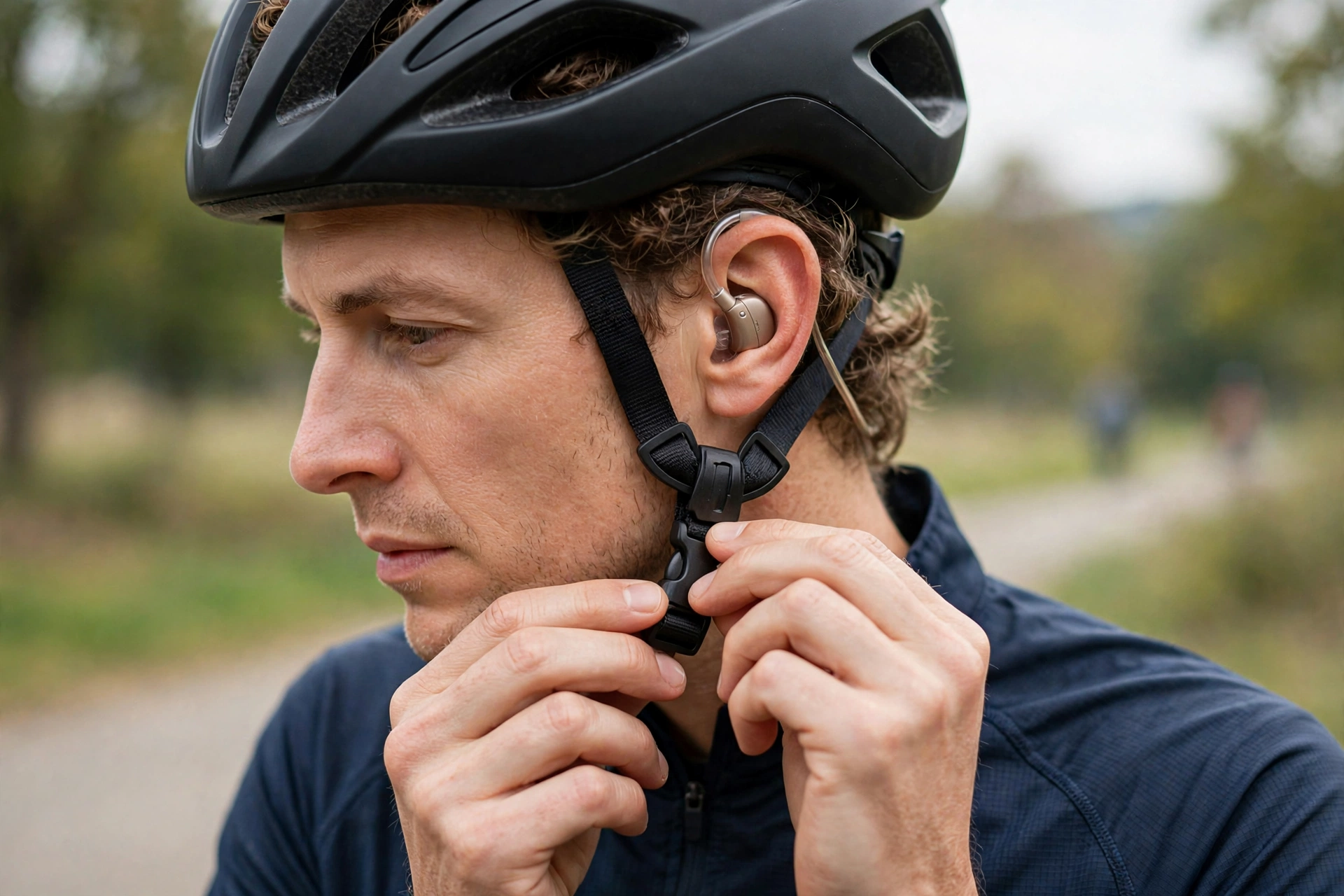
How Should You Put a Helmet On with Hearing Aids?
Put your hearing aids in first, then put the helmet on carefully, lowering it straight down onto your head rather than sliding it on from the front or back. Sliding the helmet can catch the aids and push them out of place, while lowering it straight down is less likely to disturb them.
Once the helmet is on, check that the aids are still in place and that they have not been pushed out of your ears. Adjust the straps so they sit flat and do not press on the aids, and tighten the rear dial until the helmet feels snug without pressing on the aids.
Do a quick sound check. Listen for feedback or whistling, and check that you can hear normally. If you hear feedback, try adjusting the helmet slightly or moving the strap away from the aid. If the feedback persists, the helmet may not suit your aids, and a different model may be better.
What If a Helmet Presses on Your Hearing Aids?
If a helmet presses on your aids, try a few adjustments before you give up on it. Loosen the rear dial slightly, move the straps so they do not cross the aid, or remove the ear pads if the helmet allows it. Sometimes a small change in the strap position is enough to stop the pressure.
If the pressure persists, the helmet may be the wrong size or shape for you. A larger size, a different model, or a helmet with ear pockets may fit better. Some hearing aid wearers find that a helmet with a rounder shape, or one designed for a different sport, gives more room around the ears.
Talk to your audiologist if you are unsure. They can advise on how your aids should sit, whether a different aid style would work better with a helmet, and how to protect the aids from sweat and moisture while you ride.
How Do You Look After Hearing Aids Under a Helmet?
Sweat and moisture are the main concerns. A helmet can trap heat and sweat around the ears, and moisture can damage a hearing aid. Wipe the aids dry after a ride, and store them in a dry place overnight. A drying box or a dehumidifier for hearing aids can help if you ride often.
Keep the helmet’s ear padding clean, because sweat and dirt can build up there and affect the aids. If the padding is removable, wash it regularly. If it is not, wipe it with a damp cloth and mild soap.
Check the aids after each ride to make sure they are still working well and have not been damaged. If you are learning about helmet technology, reading about what MIPS is for helmets can help you understand another feature that may be listed on the box of your next helmet.
Frequently Asked Questions
Q: Can I wear a helmet with behind-the-ear hearing aids?
A: Yes, in general terms. Choose a helmet with room around the ears, put the aids in first, and lower the helmet straight down. If it presses on the aids, try a different size or model.
Q: Will a helmet cause my hearing aids to whistle?
A: It can, if the helmet presses the aid’s microphone close to the ear. Adjusting the helmet or the strap position usually stops the feedback. If it persists, the helmet may not suit your aids.
Q: Should I take my hearing aids out to wear a helmet?
A: It is better to keep them in if you can, because you need to hear traffic and other riders. If you cannot find a helmet that works with your aids, talk to your audiologist about your options.

Olivia
Writer at Helmet Today, covering helmet reviews, fit and riding safety.