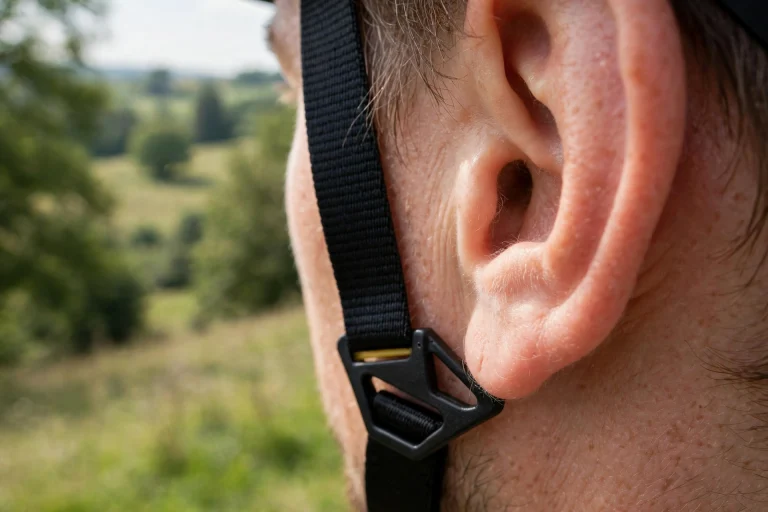
Yes, in general terms, you can wear a helmet with a cochlear implant processor — but the fit needs more care than it does for most riders, because the processor sits on the side of the head where a helmet shell and padding press. A cochlear implant processor is the external part of the implant system. It usually sits behind the ear, held in place by a magnet over the internal implant, with a coil that sits flat against the scalp. A helmet that squeezes that area can dislodge the coil, cause discomfort, or make the processor whistle.
The good news is that many cochlear implant users ride, ski, and cycle with helmets every day. The key is choosing a helmet with space where the processor sits, fitting it with the processor in place, and knowing what to do if the coil comes loose mid-ride. This guide explains how.
How Does a Cochlear Implant Processor Interact with a Helmet?
The external processor has two parts that matter for helmet fit. The main body sits behind the ear, much like a behind-the-ear hearing aid, and the coil sits on the scalp above and behind the ear, held by a magnet. A helmet’s shell edge, padding, or retention cradle can press on either part.
If the helmet presses on the coil, the magnet can lose contact and the coil can slip off. When that happens, sound stops until the coil is reseated — which is awkward and potentially unsafe if you are moving. If the helmet presses on the processor body, it can cause pain where the device presses against the bone, or feedback in the form of whistling. A helmet pulled off quickly can also catch the processor or the coil, so remove it slowly, holding the processor in place with one hand.
What Should You Look for in a Helmet as a Cochlear Implant Wearer?
Space around the ear and the coil site matters most. Look for helmets with deeper ear cut-outs, thinner padding near the ears, or removable ear pads you can take out on the implant side. Some helmets have a roomy shell shape that leaves more clearance around the side of the head, and that clearance is worth more than any single feature on the box.
The retention system is the second thing to check. A dial or cradle at the back of the helmet can press directly on the coil site if it sits too high or too low. Helmets with a low-profile cradle, or a cradle you can adjust up and down, are easier to position clear of the implant. Try the helmet with the processor on and feel whether the cradle touches the coil.
Weight matters more for implant wearers than for most riders. A heavy helmet presses down on the processor for the whole ride, and that constant pressure can become sore. A light helmet with good ventilation also keeps sweat away from the processor, which helps, since moisture and electronics do not mix well.

How Do You Fit a Helmet with a Cochlear Implant Processor?
Put the processor and coil on first, in their normal position, and leave them switched on. Then lower the helmet straight down onto your head, rather than sliding it forward from the back, which can drag the coil off. Check that the coil is still seated before you do up the straps.
Next, check the fit in three places. First, the coil site: run a finger between the helmet and the coil and feel for pressure or contact. Second, the processor body: make sure no padding presses hard on it. Third, the retention cradle: check that it sits clear of the coil and the magnet. If the cradle overlaps the coil site, try adjusting it lower, or try a different helmet.
Then test it in motion. Nod, turn your head side to side, and shake gently. The helmet should stay put, the coil should stay seated, and the sound should not cut out or whistle. If the coil slips when you move, the helmet is pressing on it, and the fit needs changing. Do this test before every ride at first, until you trust the combination.
What If the Coil Keeps Coming Off Under a Helmet?
If the coil slips off repeatedly, the helmet is almost certainly pressing on it. Start by adjusting the retention cradle lower or looser, and try thinner pads on the implant side. Some riders find that a helmet one size up, with the fit taken up by the retention dial rather than the shell, gives the coil more room without making the helmet loose overall.
Talk to your audiologist or implant centre as well. They can check the magnet strength, because a stronger magnet holds the coil more firmly against helmet pressure, and a weaker one may be worth changing. They may also suggest a different processor wearing option, such as a headband or a clip, though those have their own trade-offs with a helmet. If you are comparing helmet features, reading about what MIPS is for helmets can help you understand one of the liner systems you may see, since some liners change how much space sits between the shell and your head.
For high-impact sports, ask your implant team for sport-specific advice. In general terms, a helmet is still the right choice for cycling, skiing, and similar activities — the implant team can advise on the best combination of helmet and processor setup for your sport, and on what to do if the processor is knocked off in a fall.
How Can You Protect the Processor While Riding?
Moisture is the main enemy. Sweat can work its way into the processor, and rain can do the same. A helmet with good airflow helps, and a thin skull cap or sweatband under the helmet can catch sweat before it reaches the device — as long as it does not change the helmet’s fit or press on the coil. A helmet cover in rain is worth carrying.
Wind noise is another issue at speed. The processor’s microphone sits behind the ear, right where wind rushes past the helmet edge. Some processors have wind-noise settings, and a helmet with ear flaps or a thin ear cover can cut the rush. Ask your audiologist which programme suits riding before you rely on it on the road.
Carry a small, hard case for the processor and a spare coil magnet if you have one. If the processor comes off mid-ride, you will want somewhere safe to put it, and a spare magnet can save the ride. Make checking the coil part of your pre-ride routine, just like checking the strap and the fit.
Frequently Asked Questions
Q: Can a helmet damage a cochlear implant?
A: A well-fitting helmet should not damage the implant or the processor. The main risks are the coil slipping off, pressure causing discomfort, and moisture — all of which a careful fit and a good routine can reduce.
Q: Should I take my cochlear implant processor off to wear a helmet?
A: Most implant users keep it on, because hearing traffic and other people matters for safety. If the fit is impossible, talk to your audiologist about magnet strength and processor options before riding without it.
Q: Can children with cochlear implants wear helmets for cycling?
A: Yes, in general terms. Children’s helmets with adjustable retention and room around the ears work well, and the same fitting checks apply: processor on, coil seated, no pressure, and a slow helmet removal.

Olivia
Writer at Helmet Today, covering helmet reviews, fit and riding safety.