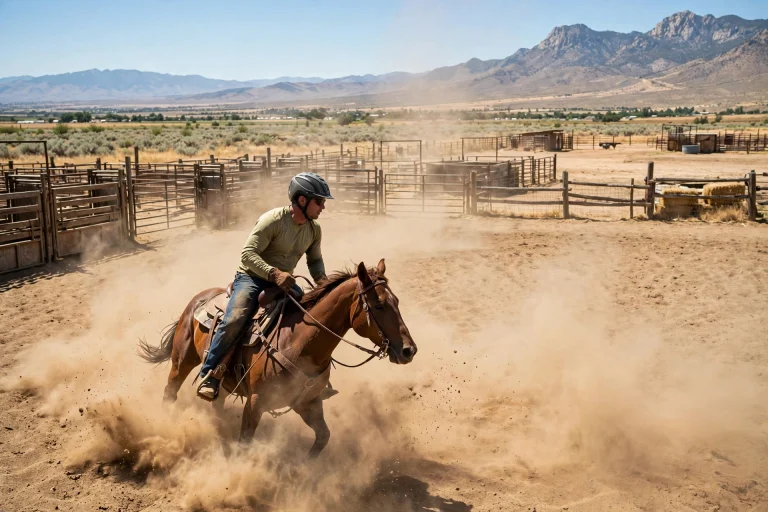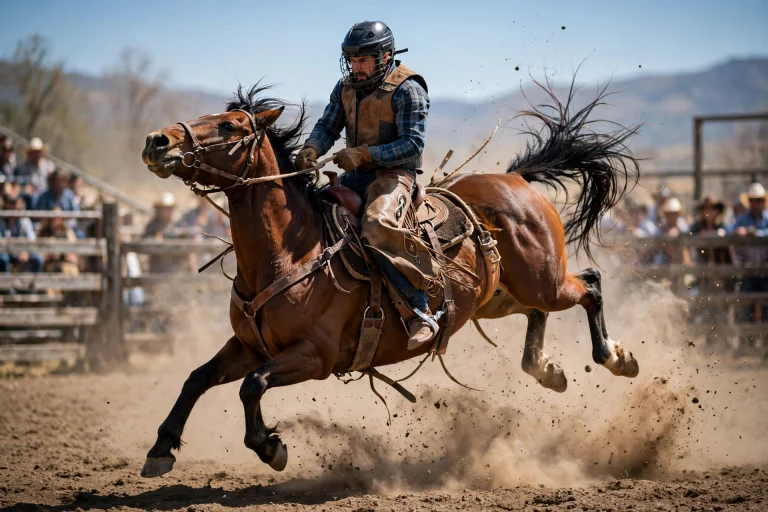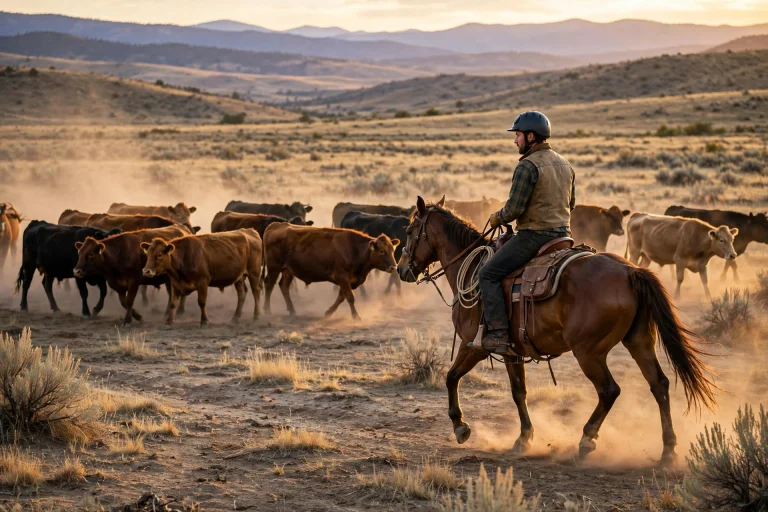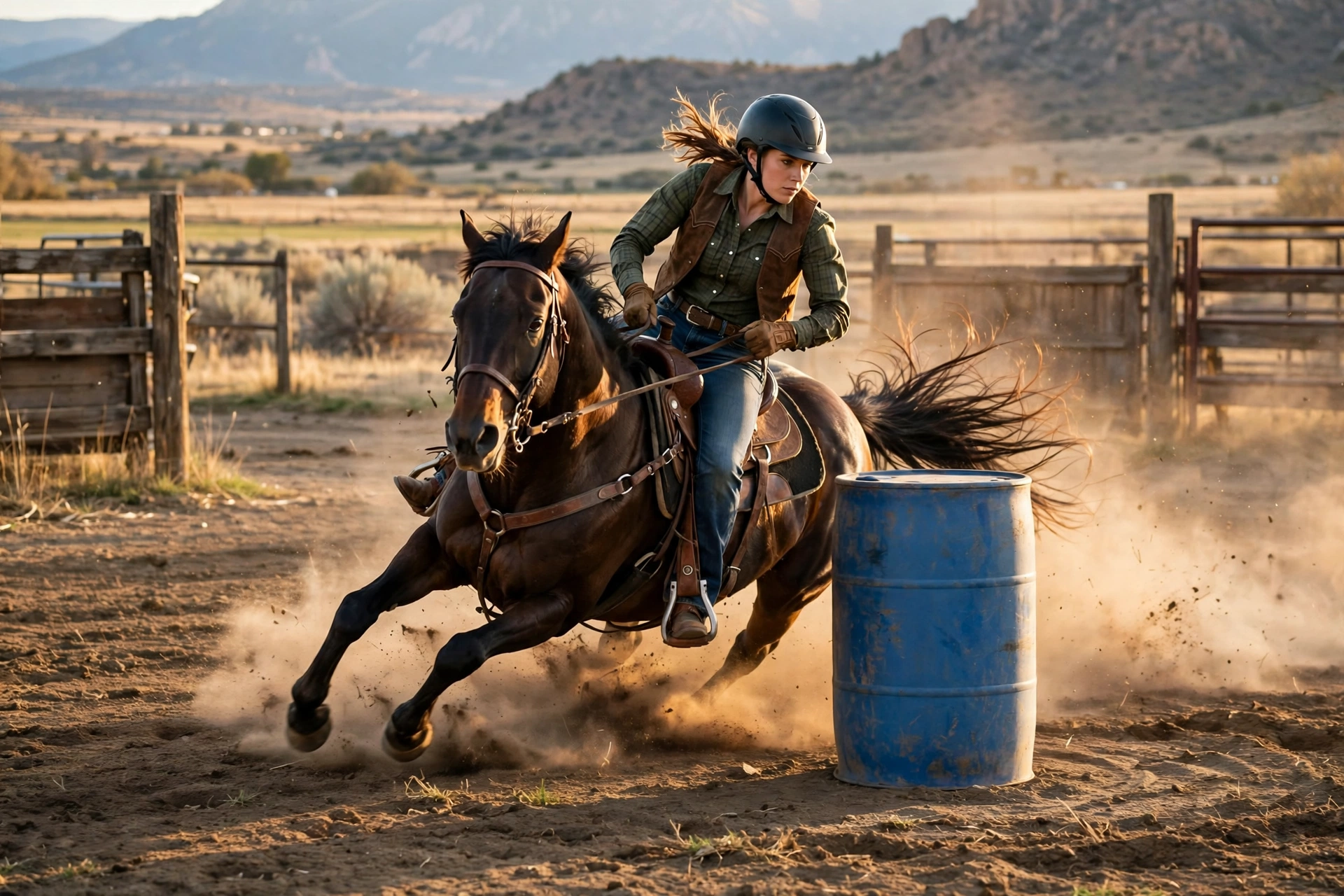
The difference between a barrel racing helmet and a western riding helmet is mostly about purpose: a barrel racing helmet is chosen for speed and fall protection during fast runs around the barrels, while a western riding helmet is a broader term for the helmets worn across western disciplines, from trail riding to ranch work. In practice, the two often overlap — a good barrel racing helmet is usually a certified equestrian helmet with a western look — but the priorities behind each choice are not quite the same.
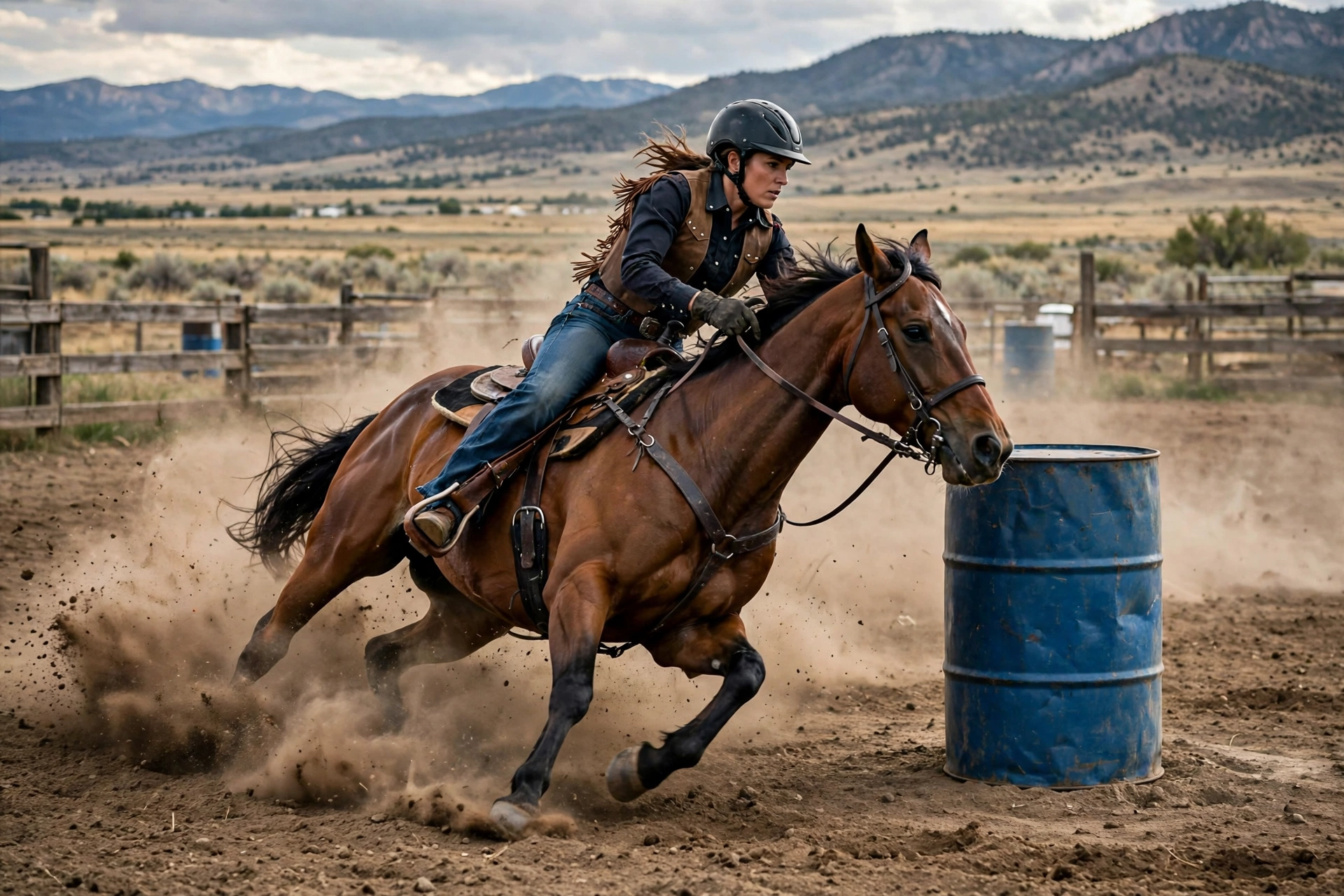
Barrel racing is one of the fastest events in western riding. A horse and rider sprint a cloverleaf pattern around three barrels at full gallop, making sharp turns at speed, and falls in this event can happen fast and hard. This guide explains what each type of helmet is, how they differ, and whether one helmet can do both jobs.
What Is a Barrel Racing Helmet?
A barrel racing helmet is a protective riding helmet worn for barrel racing, and in general terms it is chosen with speed and impact protection in mind. During a run, the horse accelerates hard out of the gate, turns tightly around each barrel, and sprints for home. A fall at any point in that pattern can send a rider to the ground at speed, sometimes with the horse moving away from them, which is why coverage and a secure fit matter so much.
Most barrel racers wear a certified equestrian helmet rather than a cowboy hat, even though the hat is the traditional western look. Modern barrel racing helmets often come in low-profile designs that sit close to the head and look at home with western tack and clothing. Some have a brim or a hat-shaped cover, while others are plain helmets in western colours.
Because the event is fast and physical, barrel racing helmets are chosen for a snug, stable fit that will not shift during a sharp turn. A helmet that rocks or slides when you lean into a barrel is a distraction at best and a hazard at worst.
What Is a Western Riding Helmet?
A western riding helmet is a general term for the protective helmets worn in western riding disciplines. That covers a wide range of activities: trail riding, ranch work, reining, cutting, pleasure riding, and western shows. Unlike barrel racing, many of these disciplines are slower and less about sudden speed, so the helmet priorities shift toward comfort over long hours in the saddle and a look that fits the western tradition.
Western riding helmets are usually certified equestrian helmets as well, and many models are sold for both barrel racing and general western riding. The difference is in how the rider uses them. A trail rider may care most about ventilation and a comfortable fit for a four-hour ride, while a barrel racer cares most about staying put through a tight turn at a gallop.
Western styling is a big part of the appeal. Many western helmets are made in low-profile shapes that sit closer to the head than a traditional English riding helmet, and some come with a brim or a removable hat cover. The goal is a helmet that protects properly without looking out of place in a western saddle.
How Do Barrel Racing and Western Riding Helmets Differ?
The clearest difference is the priority each one is chosen for. A barrel racing helmet is chosen first for protection at speed: secure fit, good coverage, and a design that stays stable during hard turns. A western riding helmet is chosen first for the discipline it serves, which may mean comfort for long rides, a particular look for the show ring, or all-round versatility across several western activities.
Coverage can differ too. Barrel racing helmets often favour a slightly deeper fit with good side and back coverage, because falls in this event can come from any direction. General western helmets, especially those aimed at trail riding, may be lighter with larger vents, trading a little coverage for airflow and comfort on hot days.
There are also differences in styling and price. Competition barrel racing helmets can cost more, partly because of the materials used to keep them light and strong. A general western riding helmet for everyday trail use is often simpler and more affordable. But the categories are not fixed — a well-made western helmet can be a fine barrel racing helmet, and vice versa, as long as it is certified and fits well.
Can One Helmet Work for Both Barrel Racing and Western Riding?
Yes, in most cases one good helmet can do both jobs. If a helmet meets a recognised equestrian safety standard, fits you snugly, and stays stable when you move, it will protect you in a barrel racing run and on a trail ride alike. The protection comes from the helmet’s construction and fit, not from the label on the box.
What matters is matching the helmet to the hardest use you will put it through. If you barrel race, choose a helmet that will stay put at a gallop and through sharp turns, then use that same helmet on the trail. If you only trail ride, a comfortable, well-ventilated western helmet is enough.
One thing to avoid is using a helmet that is too loose or too worn for the job. A helmet that fits loosely on a quiet trail ride may feel fine at a walk, but it can shift badly during a barrel run. Whatever disciplines you ride, the helmet should sit level, feel snug, and stay stable when you shake your head.
What Should You Look for When Choosing Either Helmet?
Start with certification. Look for a helmet that meets a recognised equestrian safety standard for your country, and check the label inside the helmet to confirm it. If you want to understand one of the features you may see listed on the box, reading about what MIPS is for helmets is a useful starting point.
Fit comes next. The helmet should sit level, low enough to cover your forehead, and feel snug without pressure points. Try it on with your hair the way you wear it to ride, and with any hat or cover you plan to use. Walk around in it for a few minutes in the shop — a helmet that hurts after five minutes will be unbearable after an hour in the saddle.
Ventilation, weight, and comfort are worth weighing too. Barrel racers need a helmet that stays cool during a short, intense run, while trail riders need one that stays comfortable for hours. Removable, washable lining is a practical plus in both cases.
Frequently Asked Questions
Q: Do barrel racers have to wear a helmet?
A: It depends on the event and the organisation running it. Many barrel racing events require helmets for youth riders, and rules for adults vary. Check the rules of the specific event before you enter.
Q: Can I wear a cowboy hat instead of a helmet for barrel racing?
A: A cowboy hat offers no impact protection, so it is not a substitute for a helmet. Many riders wear a helmet with a western look or a hat-shaped cover instead.
Q: Is a barrel racing helmet the same as an English riding helmet?
A: They are often built to similar safety standards, but the shape and styling differ. Barrel racing helmets are usually lower profile and styled for western riding, while English helmets tend to be taller.

Olivia
Writer at Helmet Today, covering helmet reviews, fit and riding safety.