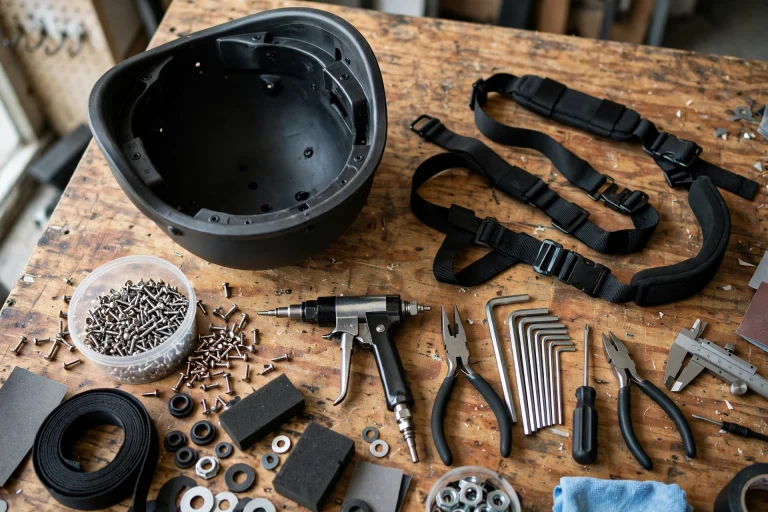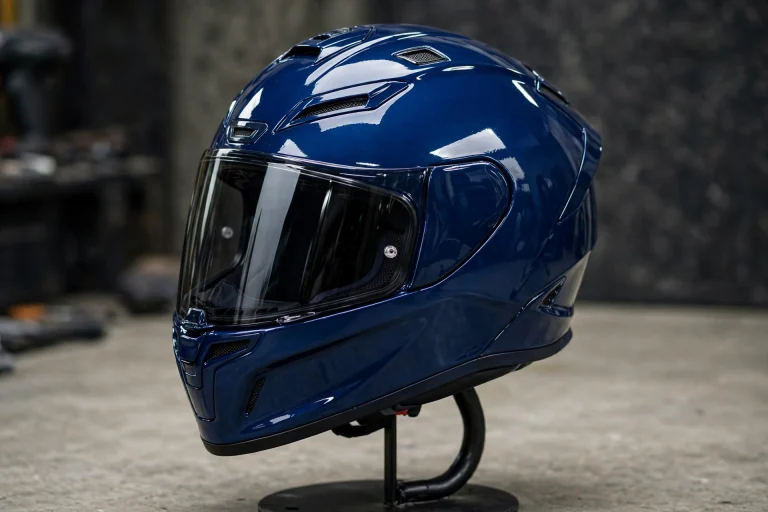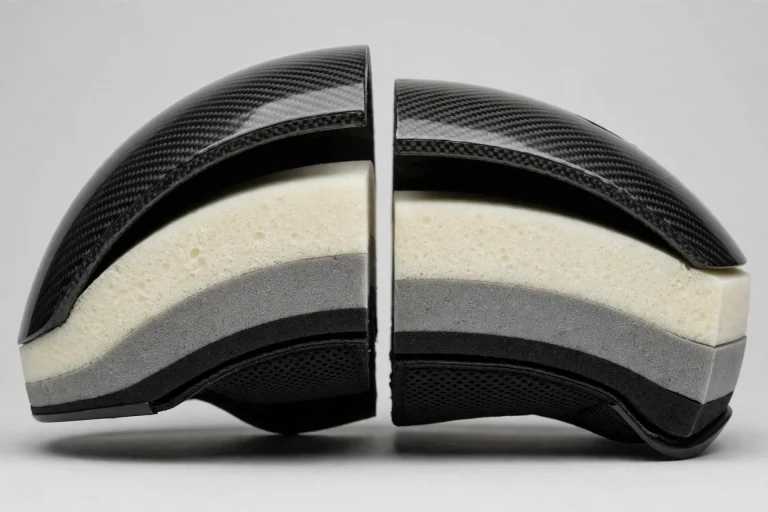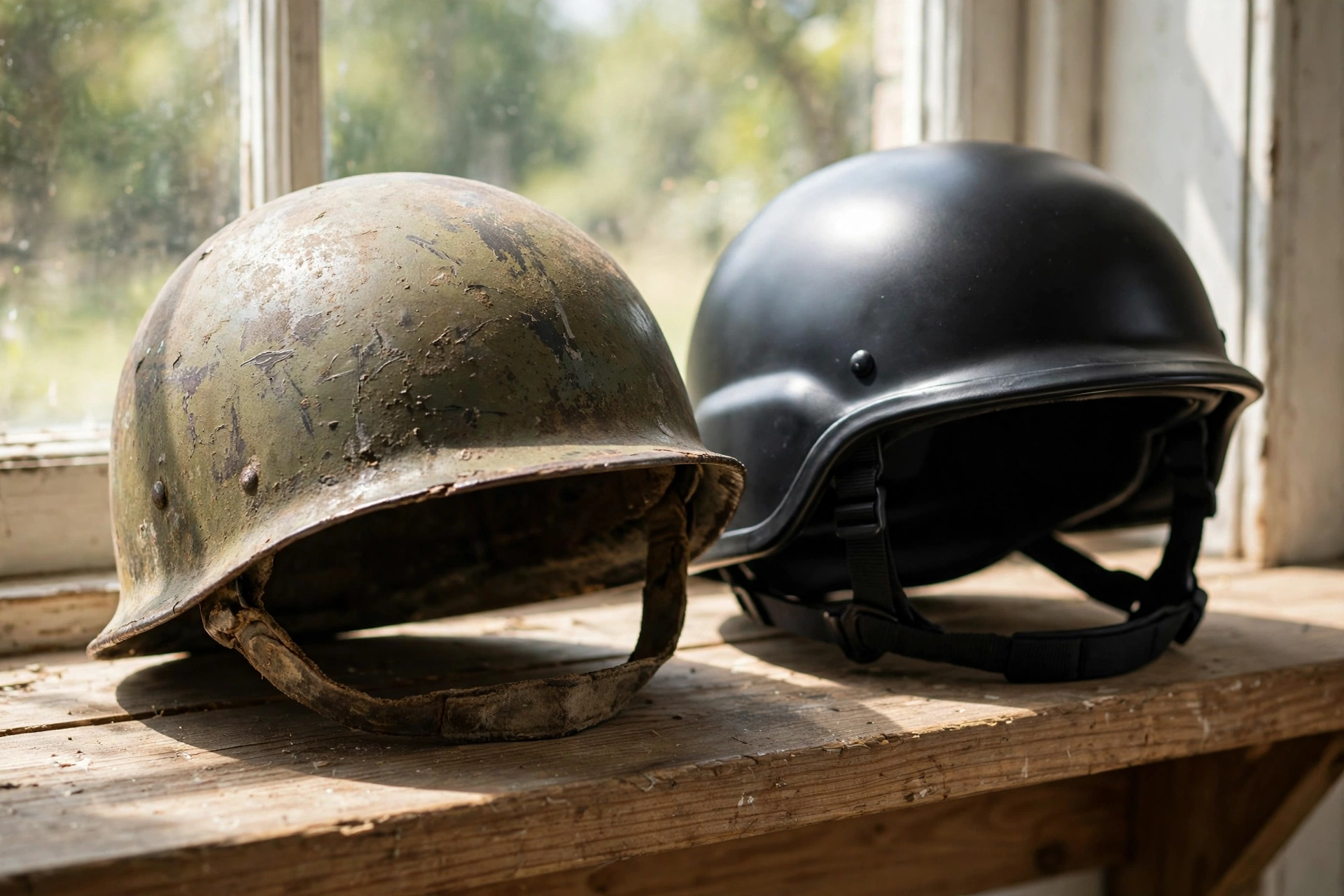
Helmet shells can weaken with UV exposure over time, in general terms, because the ultraviolet light in sunlight can slowly break down the plastics and resins used in shells, making them more brittle and less able to flex under load. The effect is gradual, not sudden, and it depends on how much sun the helmet gets, what the shell is made of, and how the helmet is stored.
UV weakening is one of several reasons helmets have a limited working life, even if they have never been crashed. This guide explains how UV affects different shell materials, what the signs are, and how to slow the process down.
How Does UV Light Damage a Helmet Shell?
Ultraviolet light carries enough energy to break the chemical bonds in some plastics and resins. Over time, this can make the material stiffer and more brittle, so it is less able to bend and absorb energy. A shell that has become brittle may crack more easily under an impact than a new shell would.
The damage is worst on the outer surface, where the light hits directly. The clear coat, paint and pigments on a helmet act as a shield, absorbing or reflecting some of the UV before it reaches the plastic underneath. That is one reason a well-finished helmet lasts longer in the sun than a bare or damaged one.
The foam liner inside the helmet is protected by the shell, so it is less affected by UV directly. But the shell is the first line of defence, and if it weakens, the helmet as a whole is less able to do its job.
Which Shell Materials Are Most Affected?
Not all shell materials react to UV in the same way. ABS plastic, used in many affordable helmets, is more sensitive to UV than some other materials, and it can become brittle faster if it is left in strong sun for long periods. Polycarbonate, used in many in-mould helmets, is also affected, though makers often add UV stabilisers to slow the process.
Composite shells made from fibreglass, carbon fibre or aramid are generally more resistant, because the fibres themselves are less affected by UV and the resin can be chosen to resist it. But the resin that holds the fibres together can still degrade, especially if the outer finish is damaged and the fibres are exposed.
In practice, the material matters less than the exposure. A helmet of any type that is left in strong sun day after day will age faster than one that is stored in the shade. The finish, the storage and the age of the helmet all play a part.
What Are the Signs of UV Damage?
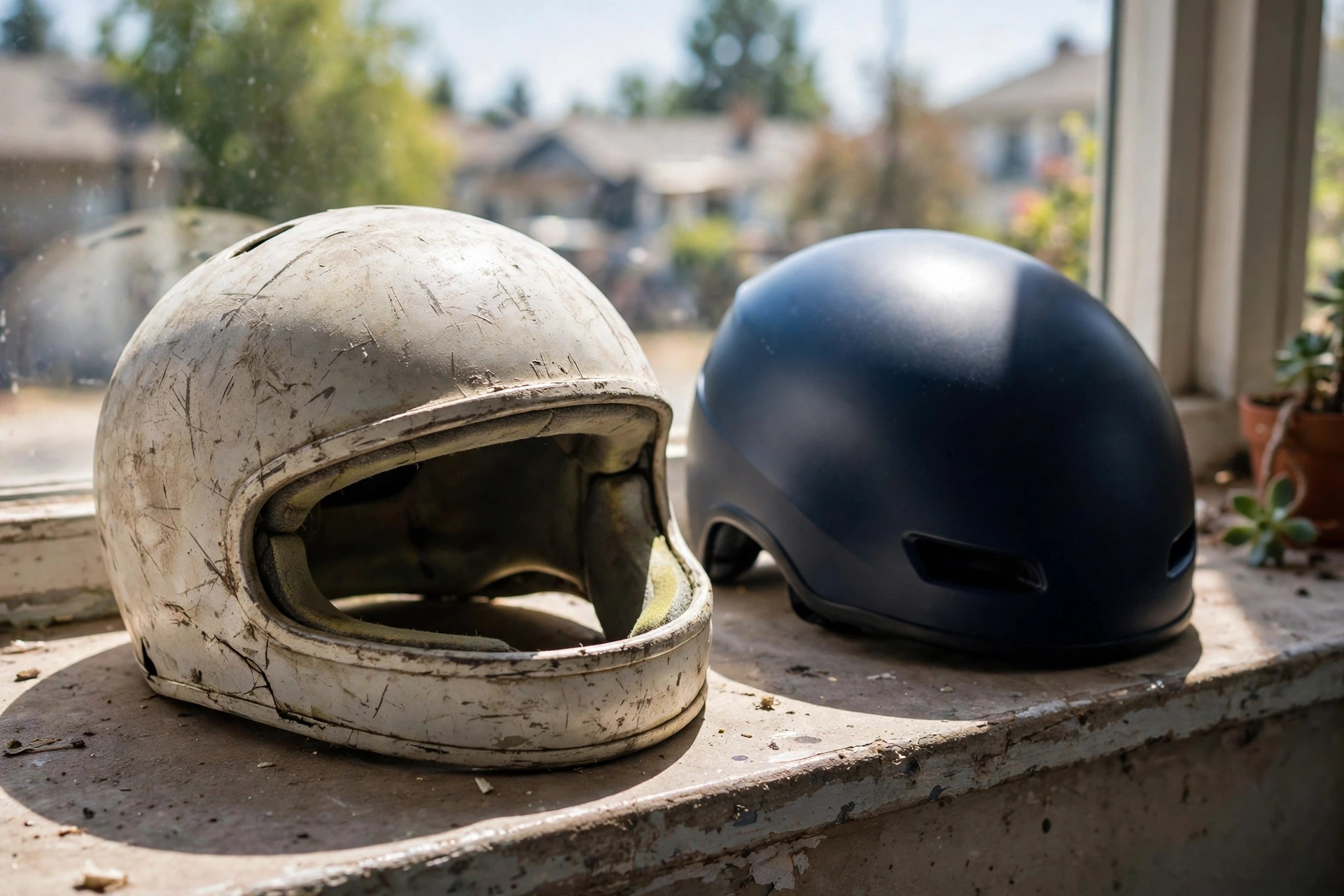
The most obvious sign is fading. If the colour of the shell has dulled or changed, especially on the side that faces the sun, the finish has been affected. Fading on its own does not mean the shell is unsafe, but it is a sign that the helmet has had a lot of sun exposure.
Other signs include a chalky or rough surface, fine cracks in the clear coat, and a shell that feels dry or brittle to the touch. If the clear coat is peeling or the paint is flaking, the plastic underneath is no longer protected and will degrade faster.
A more serious sign is cracking in the shell itself, especially fine cracks that appear without any impact. If you see cracks, or if the shell feels unusually stiff or brittle, the helmet should be replaced. Do not rely on a helmet that shows these signs.
How Can You Slow UV Weakening?
The simplest step is storage. Keep your helmet out of direct sunlight when you are not wearing it, and store it in a cool, dry place, ideally in a helmet bag. Do not leave it on a car dashboard, on a windowsill, or hanging on a handlebar in the sun for hours at a time.
Do not try to protect the shell with aftermarket coatings or sprays unless the maker says they are safe. Some products can react with the plastic or the clear coat and do more harm than good. The finish the maker applied is the best protection the helmet has.
A helmet bag is the simplest protection. A padded bag blocks sunlight completely and also protects the shell from scratches and dents when the helmet is not being worn. If you do not have a bag, a drawer, a cupboard or a shaded shelf will do. The key is to keep the helmet out of direct sun whenever you are not wearing it, whether that is at home, at work or on a trip.
Clean the shell with mild soap and water, and avoid abrasive cleaners that can wear away the clear coat. A well-kept finish protects the plastic underneath, so looking after the surface is also looking after the shell.
When Should UV Exposure Mean Replacing a Helmet?
There is no single date after which a helmet is unsafe, because exposure varies so much. A helmet that is used daily in strong sun will age faster than one used occasionally in a mild climate. As a general guide, many makers suggest replacing a helmet after around five years of use, and sooner if it has had heavy sun exposure or a significant impact.
Use the signs above as your guide. If the shell is faded, chalky, cracked or brittle, replace the helmet, whatever its age. If the helmet has been stored well and shows no signs of damage, it may last longer, but it is still worth checking it regularly.
Remember that UV is only one factor in a helmet’s life. Impacts, heat, sweat and general wear all play a part. If you are learning about helmet technology, reading about what MIPS is for helmets can help you understand a feature that may be listed on the box of your next helmet.
Frequently Asked Questions
Q: Will my helmet weaken if I ride in the sun every day?
A: In general terms, regular sun exposure will age a shell gradually, but normal riding is not the same as leaving a helmet in strong sun all day. Storing it in the shade when you are not riding slows the process a lot.
Q: Does a faded helmet need replacing?
A: Fading alone does not mean the shell is unsafe, but it is a sign of heavy sun exposure. Check the shell for chalkiness, fine cracks or brittleness, and replace it if you find any of those signs.
Q: Can I protect my helmet from UV with a cover?
A: A helmet bag or a cover that blocks sunlight will help when the helmet is stored. Avoid sprays or coatings unless the maker says they are safe for the shell.

Olivia
Writer at Helmet Today, covering helmet reviews, fit and riding safety.