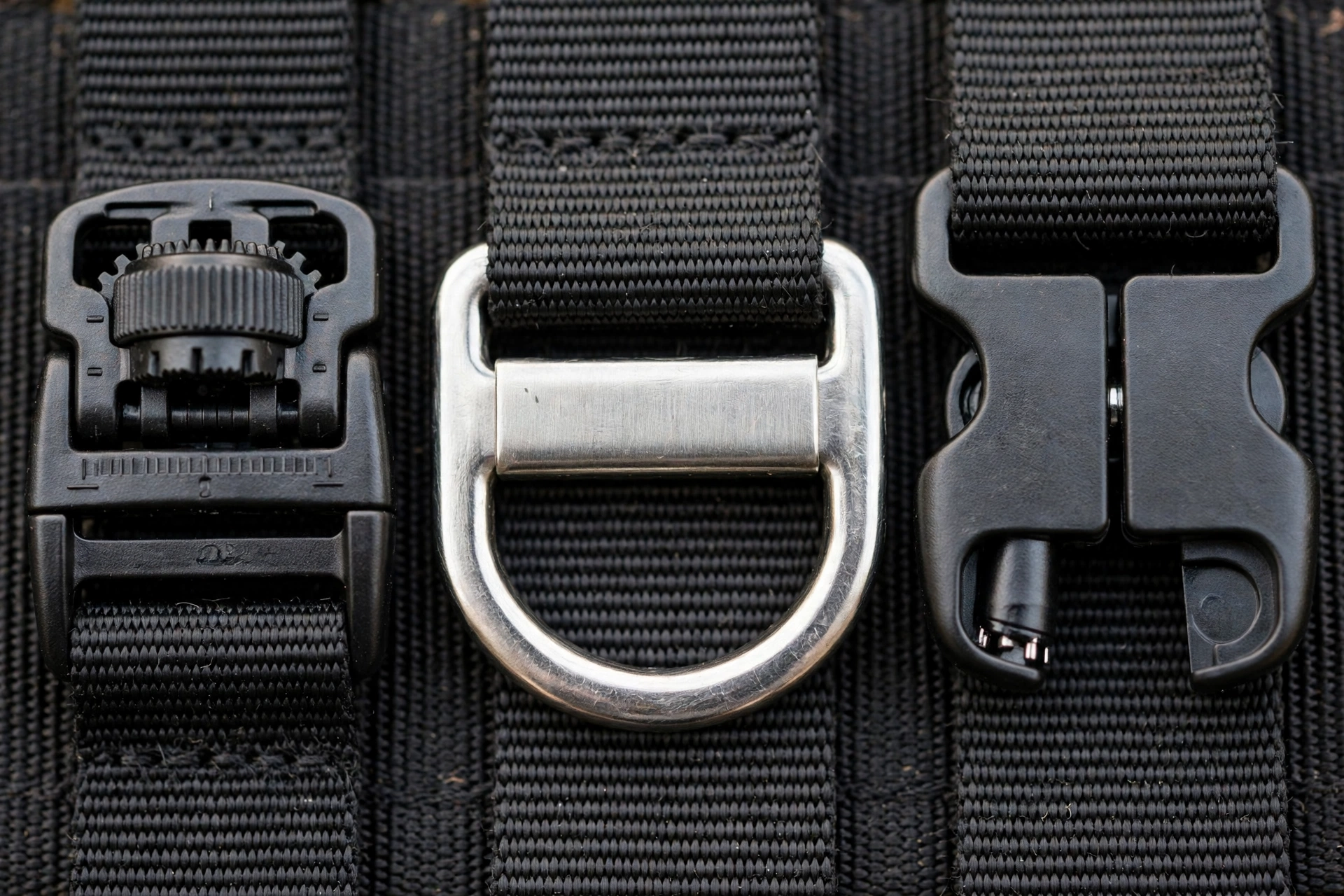
The three main buckle types on helmets are the micrometric buckle, the D-ring, and the magnetic buckle, and they differ in how they fasten, how finely they adjust, and how easy they are to use with gloves on. The buckle is the part of the retention system that holds the strap tight under your chin, and it must stay shut in a crash while still being easy to open when you want it off.
Each type has its fans and its trade-offs. This guide explains how each one works, where you will find it, and which suits different kinds of riding.
What Is a Micrometric Buckle?
A micrometric buckle, sometimes called a ratchet buckle, uses a toothed strap and a small lever or wheel to tighten the chin strap in small steps. You push the strap through the buckle, then squeeze or turn the adjuster to pull it tighter, one click at a time. To release it, you lift a tab or press a button, and the strap slides free.
Micrometric buckles are common on motorcycle helmets, where riders want a precise, snug fit and the ability to adjust the strap quickly. The fine adjustment is the main benefit: you can tighten the strap by a click or two without undoing it completely, which is handy when you put the helmet on over a balaclava or take it off and put it back on.
The trade-off is complexity. A micrometric buckle has more moving parts than a D-ring, so there is more to go wrong, and it can be fiddly with thick gloves. It also needs to be kept clean, because dirt in the ratchet can make it stiff or prevent it from locking.
What Is a D-Ring Buckle?
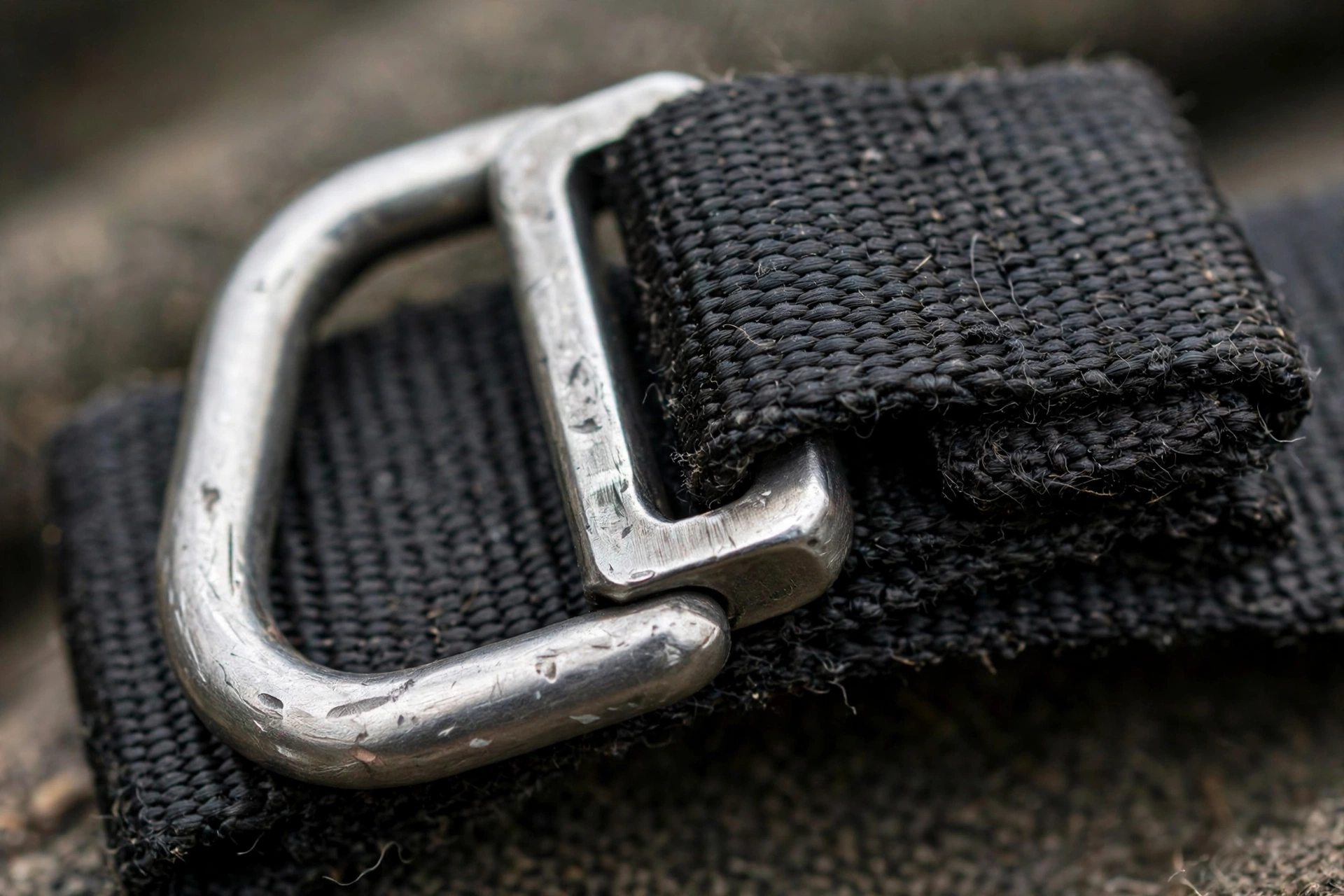
A D-ring buckle uses two metal rings, shaped like the letter D, through which the strap is threaded. You pass the strap through both rings, loop it back through one, and pull it tight. The friction between the strap and the rings holds it in place. To undo it, you pull the free end and slide the strap back through the rings.
D-rings are the oldest and simplest buckle type, and they are still the standard on many motorcycle and motorsport helmets. They have no moving parts to fail, they work with any gloves, and they are very secure when they are done up correctly. Many racing rules require D-rings, because their simplicity makes them reliable.
The trade-off is convenience. Threading a D-ring takes longer than clicking a micrometric buckle, and it is harder to adjust in small steps. Some riders find D-rings fiddly at first, but most get used to them quickly with practice.
What Is a Magnetic Buckle?
A magnetic buckle uses magnets to guide the two halves of the buckle together, so they snap into place with little effort. You bring the two ends close together, the magnets pull them into alignment, and a latch or clip holds them shut. To open it, you slide or lift a tab, and the magnets release.
Magnetic buckles are most common on cycling, ski and children’s helmets, where ease of use matters. They are quick to fasten with one hand, they work well with gloves, and they are kind to the skin, because there is no need to pinch the strap tight under the chin. That last point is why they are popular on children’s helmets.
The trade-off is that a magnetic buckle relies on the latch as well as the magnets, and the magnets can attract small metal debris. A magnetic buckle also needs to be kept clean, and it should be checked regularly to make sure it still clicks shut firmly.
How Do the Three Buckles Compare?
For security, the D-ring is the benchmark, with no moving parts and a long record in racing. The micrometric buckle is close behind, with a positive ratchet that holds the strap firmly. The magnetic buckle is secure when its latch is working properly, but it depends on the latch more than the other two do.
For ease of use, the magnetic buckle is the easiest, followed by the micrometric buckle, with the D-ring the slowest to fasten. For fine adjustment, the micrometric buckle is the best, because it tightens in small clicks. The D-ring adjusts in a continuous pull, which is precise but slower, while the magnetic buckle usually adjusts at the strap slider rather than at the buckle itself.
For gloves, all three can work, but the D-ring and the magnetic buckle are the easiest with thick gloves, while the micrometric buckle’s small lever can be harder to operate. In general terms, the right buckle is the one you can fasten correctly every time, without thinking about it.
Maintenance differs slightly between the types. A D-ring needs almost no care beyond keeping it clean, because it has no moving parts. A micrometric buckle needs its ratchet kept free of dirt, and a magnetic buckle needs its magnets kept clean so they can pull the halves together. Whichever type you have, a quick check each time you put the helmet on is the best habit: do the buckle up, tug the strap, and make sure it holds.
How Should You Look After a Helmet Buckle?
Whichever buckle your helmet has, keep it clean and check it regularly. Rinse away mud and grit, and make sure the mechanism moves freely. If a micrometric buckle feels stiff, clean the ratchet teeth. If a magnetic buckle does not snap shut firmly, check for debris on the magnets.
Test the buckle every time you put the helmet on. Do it up, tug the strap firmly, and make sure it stays shut. If a buckle slips, sticks, or fails to lock, do not ride with that helmet until it is fixed or replaced.
If you are learning about helmet technology, reading about what MIPS is for helmets can help you understand another feature that may be listed on the box of your next helmet.
Frequently Asked Questions
Q: Which buckle type is safest?
A: All three types are safe when they are done up correctly and in good condition. The D-ring has the longest record in racing, but a micrometric or magnetic buckle that is fastened properly will also hold the helmet on.
Q: Can I replace a helmet buckle?
A: Sometimes. Some makers sell replacement buckles, and some straps allow a new buckle to be fitted. If the buckle is stitched into the strap, a faulty buckle may mean replacing the helmet.
Q: Why do racing helmets use D-rings?
A: D-rings are simple, with no moving parts to fail, and they hold securely. Many racing rules require them because their reliability is well proven.

Olivia
Writer at Helmet Today, covering helmet reviews, fit and riding safety.