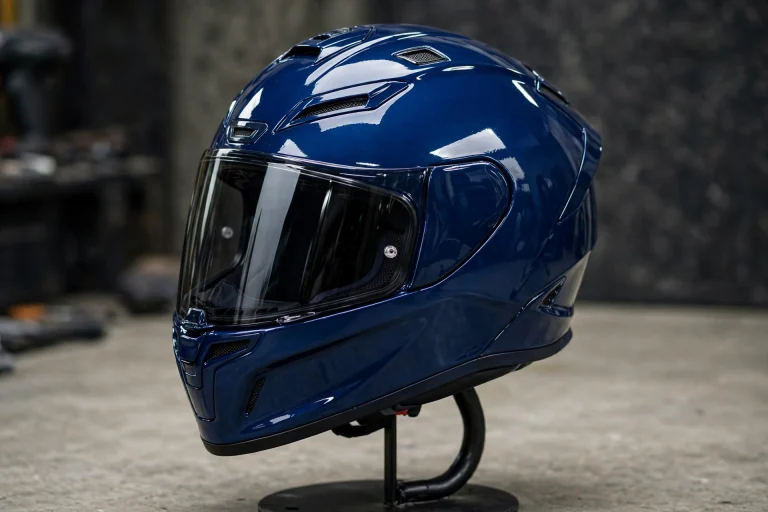
A helmet is held together by a combination of glue, rivets and the way its parts are fitted and moulded: the shell and liner are bonded or clipped together, the straps are stitched or riveted to the shell, and the padding and fittings are held in place by studs, clips and hook-and-loop fasteners. No single method holds the whole helmet together. Each joint uses the method that suits the parts it joins.
Understanding how a helmet is assembled helps you check it for damage and know what can be fixed and what cannot. This guide explains each method and where it is used.
How Is the Shell Bonded to the Liner?
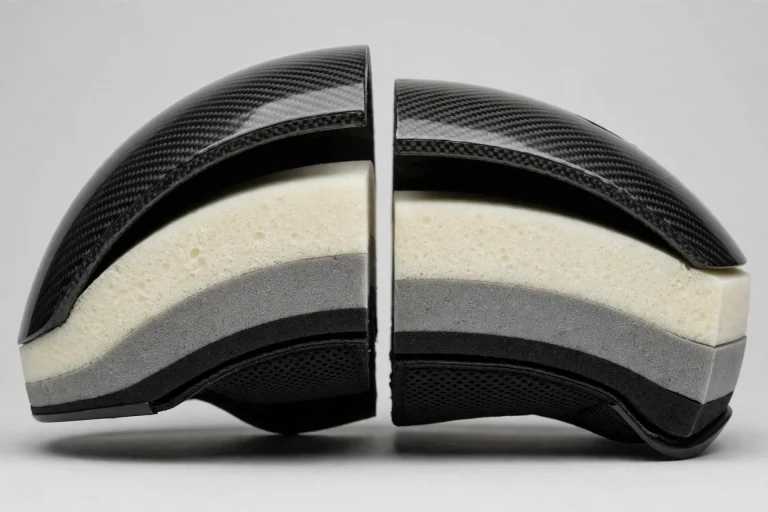
In an in-mould helmet, the shell and the foam liner are bonded during moulding. Heat and pressure fuse the thin polycarbonate shell to the EPS foam as the helmet takes shape, so the two become a single piece with no separate glue or fixings.
In a hard-shell helmet, the shell and liner are made separately and then joined. The liner is usually glued into the shell with an adhesive chosen to bond foam to plastic, and it may also be held by clips or by a snug fit. The glue must hold the liner firmly without damaging the foam or the shell.
In a composite helmet, the shell itself is built from layers of fibre and resin, and the liner is glued or clipped inside afterwards. The bond between shell and liner matters, because the two need to work together in an impact: the shell spreads the force, and the liner absorbs it.
Where Are Rivets Used in a Helmet?
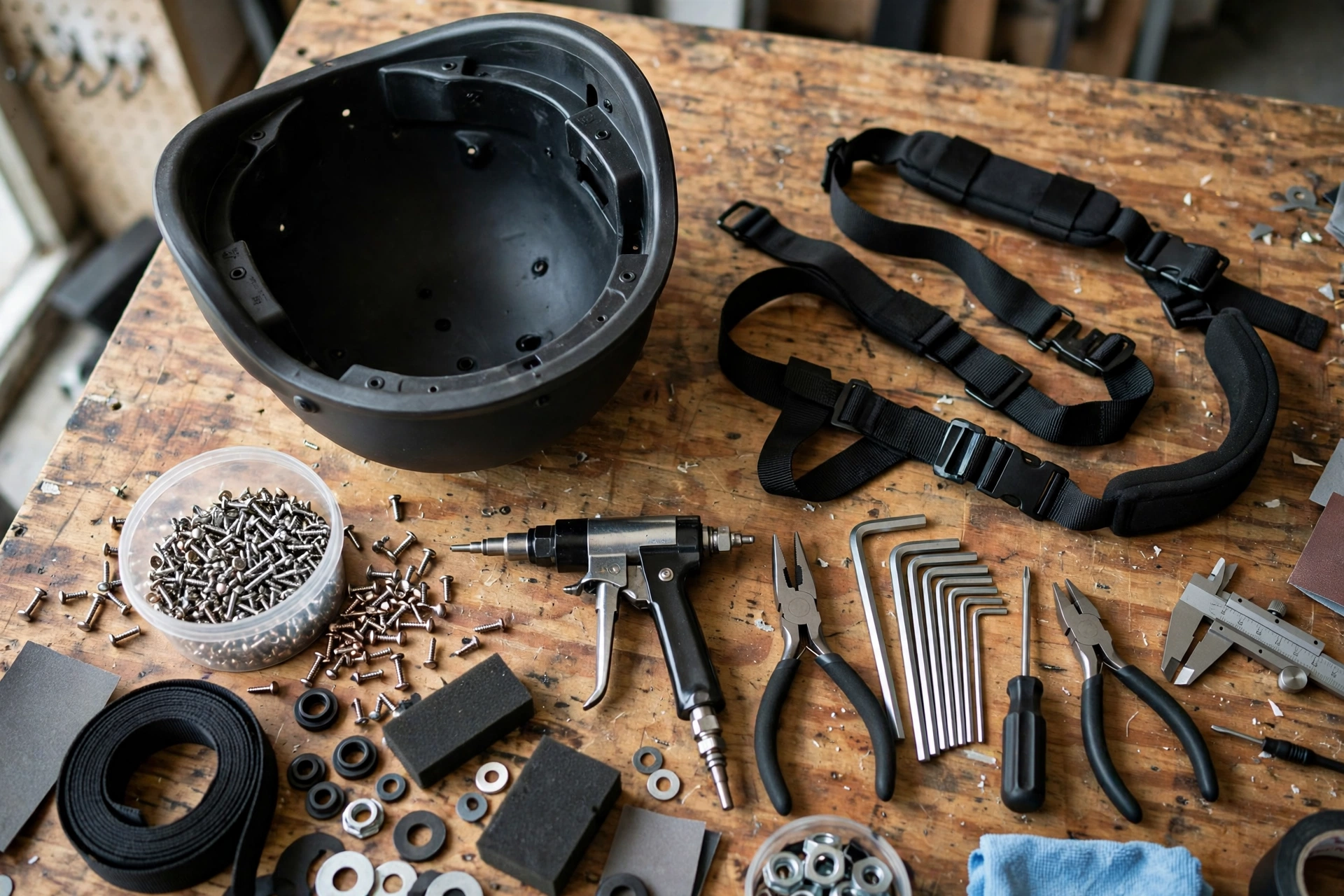
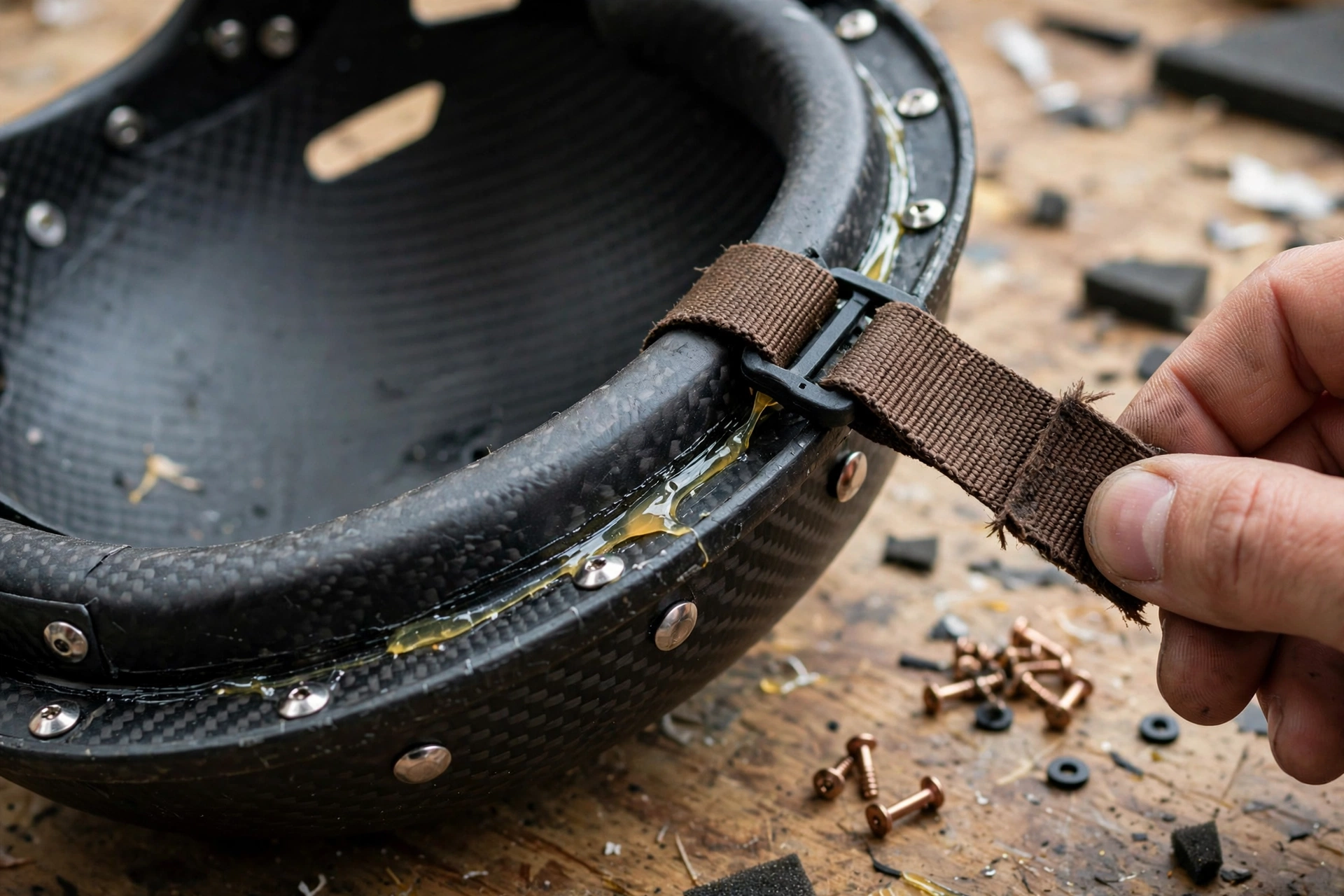
Rivets are small metal or plastic pins that are pushed through two parts and flared at the end to hold them together. In helmets, rivets are most often used to attach the straps to the shell, because a rivet can hold a strap firmly through the thick shell material.
You may see rivets on the sides of a helmet where the straps meet the shell, and sometimes on the peak or visor of a helmet, where a rivet lets the part pivot. Rivets are strong and simple, and they do not rely on glue, which can weaken with heat or age.
The trade-off is that a rivet is a hole through the shell, so it must be placed where it does not weaken the shell. Makers place rivets in reinforced areas, and the hole is sealed or covered to keep water out. If a rivet comes loose or falls out, the part it held may no longer be secure.
What Holds the Straps and Fittings in Place?
Straps are usually stitched as well as riveted. The webbing is folded and stitched to form a loop, and the loop is riveted or bolted to the shell. Stitching spreads the load across the webbing, while the rivet anchors it to the shell. Together they hold the strap firmly enough to keep the helmet on in a crash.
Smaller fittings, such as vents, peaks and visors, are often held by screws, clips or press studs. These let the part be removed or adjusted without tools, which is useful for cleaning or for swapping a peak. The fittings are placed in reinforced areas of the shell, so they do not weaken it.
Comfort padding is usually held by press studs or hook-and-loop fasteners, so it can be removed for washing. These fasteners are strong enough to hold the padding in place during use, but they can be undone by hand when the liner needs cleaning.
Can a Helmet Be Taken Apart and Reassembled?
Some parts can be removed and refitted: the comfort liner, the cheek pads, the peak and the visor are designed to come off and go back on. These parts are held by studs, clips or screws, and the maker may sell spares.
The shell and the impact liner cannot be taken apart and reassembled safely. The bond between them is part of the helmet’s structure, and once it is broken, it cannot be restored to its original strength. If the shell has separated from the liner, the helmet should be replaced.
Straps and rivets are also hard to repair at home. If a strap is torn or a rivet has come loose, check whether the maker offers a repair or a replacement part. Do not try to glue a strap back on or fit a new rivet yourself unless the maker says it is safe to do so.
Screws and clips need care too. A screw that is overtightened can crack the shell around it, and a clip that is forced can snap. When you remove a peak or a visor, follow the maker’s instructions and use the right tool if one is needed. If a screw or clip is damaged, replace it with the part the maker supplies, rather than forcing a different one to fit. Small parts matter more than they look.
The inside of the helmet deserves a check as well. Lift the comfort padding now and then and look at the liner underneath. If the liner has moved, cracked or come away from the shell, the helmet needs attention. A liner that is no longer bonded to the shell cannot do its job properly, and the helmet should be replaced.
How Can You Check a Helmet’s Assembly?
Check the helmet regularly for loose parts. Tug the straps gently to make sure they are firmly attached, and check that the rivets are in place and not loose. Press the shell and the liner to see if they have separated, and look for gaps or movement between them.
Check the fittings too. Make sure the peak, visor and vents are secure, and that the comfort padding is held firmly by its studs or fasteners. If a part rattles or moves when it should not, it may need attention.
If you find a loose rivet, a separated liner or a torn strap, do not ride with that helmet until it is fixed or replaced. If you are learning about helmet technology, reading about what MIPS is for helmets can help you understand another feature that may be listed on the box of your next helmet.
Frequently Asked Questions
Q: Can I glue my helmet back together if it comes apart?
A: No. The bond between the shell and the liner is part of the helmet’s structure, and household glue cannot restore it. A helmet that has come apart should be replaced.
Q: Why do helmets use rivets instead of just glue?
A: Rivets hold straps firmly through the shell and do not rely on glue, which can weaken with heat or age. They are strong, simple and reliable for parts that take a lot of load.
Q: Can I remove the peak or visor from my helmet?
A: In general terms, yes, if it is held by screws or clips and the maker intends it to be removable. Check the maker’s guidance before you take it off.

Olivia
Writer at Helmet Today, covering helmet reviews, fit and riding safety.