In general terms, you can extend a helmet’s life by storing it well, cleaning it regularly, and replacing worn pads and straps — but you must never extend it past the point where it can still protect you. A helmet’s foam ages with heat, sunlight, and sweat, and no amount of care can reverse that. The goal is to get the helmet’s full safe service life, not to squeeze extra years out of a helmet that is finished.
This guide explains the habits that genuinely add life to a helmet, the warning signs that mean its life is over, and the line between good maintenance and false economy. Done right, a little care can add years of use to a helmet you already own.
How Should You Store a Helmet?
Storage is the single biggest factor in how long a helmet lasts. Keep it somewhere cool and dry, out of direct sunlight, and away from heat sources such as radiators or a car dashboard. Sunlight and heat are the foam’s main enemies: they dry out the liner and weaken the shell over time. A helmet left in a hot car through a summer will age far faster than one kept in a cupboard.
Keep the helmet away from chemicals too. Petrol, solvents, strong cleaners, and some insect sprays can damage the shell and the foam. If you ride a motorbike, do not store the helmet near fuel cans or cleaning products. If you clean the helmet, use only mild soap and water, as the maker recommends.
Give the helmet space. Do not stack heavy items on top of it, and do not hang it by its straps for long periods, which can stretch the webbing. A shelf or a hook through the vents is better. If the helmet came with a carry bag, use it — it protects the shell from scratches and dust, and it stops the helmet being knocked around in a boot or a bag.
How Should You Clean a Helmet?
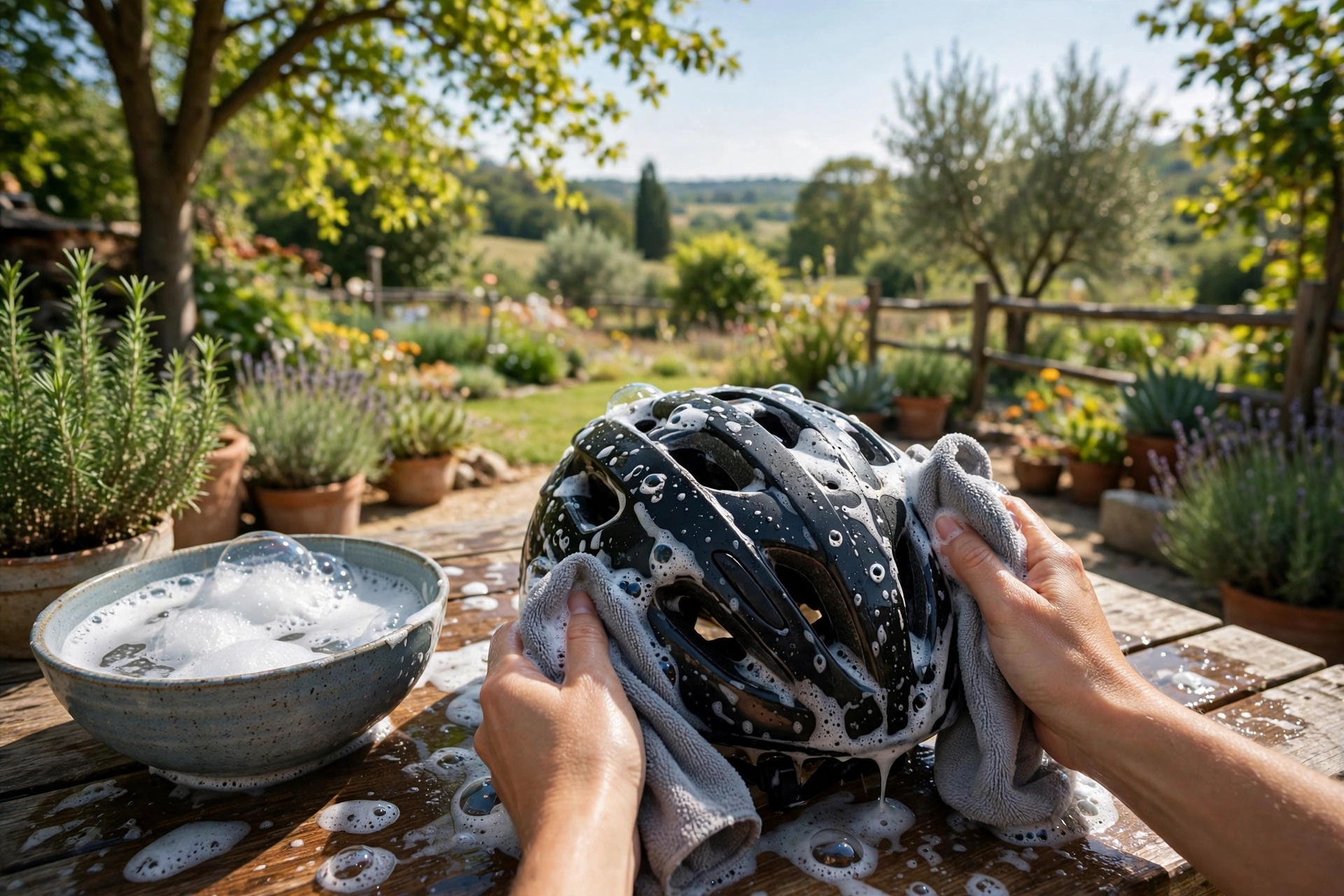
Regular cleaning keeps a helmet comfortable and helps it last. Remove the pads and wash them in mild soapy water, then let them air-dry completely before putting them back. Never use a tumble dryer or a radiator to dry pads, because heat can shrink or harden them. If the pads are not removable, wipe them gently with a damp cloth.
Wipe the shell with a damp cloth and mild soap. Do not use abrasive cleaners, solvents, or pressure washers, which can damage the shell’s surface and the vents. Clear the vents with a soft brush or a cotton bud to remove dust and dead insects, so airflow stays good.
Let the helmet dry fully after a sweaty or wet ride before storing it. A helmet put away damp will smell, and moisture trapped inside can damage the pads and the liner over time. Stand it on a shelf with the vents open, in a place with good air circulation, and it will dry naturally.
Which Parts Can Be Replaced to Extend a Helmet’s Life?
Pads are the most commonly replaced part, and new pads can transform a helmet that has become uncomfortable. Most makers sell spare pads for current models, and they are usually easy to fit — they clip or press into place. If the pads are worn thin, torn, or have lost their shape, replacing them can restore the fit and add a year or more to the helmet’s life.
Straps and buckles can sometimes be replaced too, though this depends on the model. If the strap is frayed or the buckle sticks, ask the maker whether a replacement is available. A strap that slips or a buckle that does not fasten properly is a safety issue, not a cosmetic one, and it should be fixed or the helmet retired.
Visors, peaks, and vent covers are also replaceable on many helmets, and replacing a scratched visor can make a real difference to visibility. But remember the limit: pads, straps, and visors are comfort and accessory parts. None of them can repair a damaged shell or crushed foam. If the protective parts are finished, no spare part can save the helmet.
What Are the Warning Signs a Helmet Is Finished?
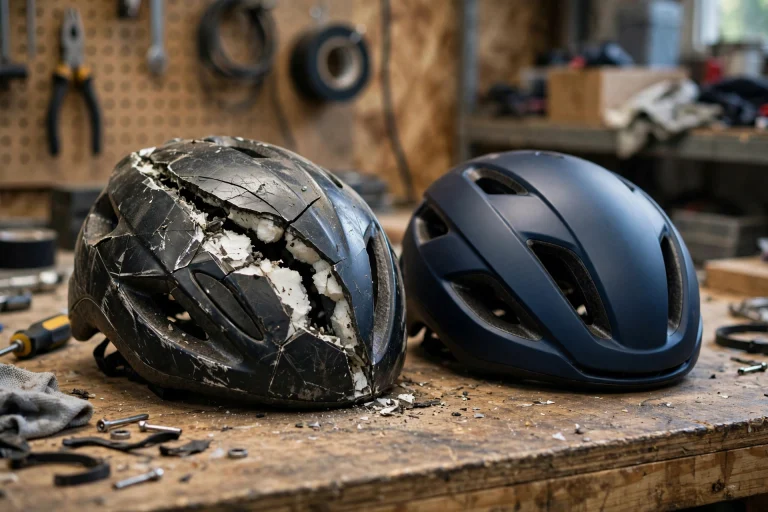
The clearest warning sign is a crash or a hard drop. A helmet that has taken a hard impact should be replaced, even if it looks undamaged, because the foam inside may have crushed. The same applies to a helmet that has been dropped from height onto a hard surface — the damage is often invisible.
Check the shell regularly for cracks, deep scratches, dents, or areas where the outer layer is lifting away from the foam. Press the liner gently all over and feel for soft spots, crumbling, or places that feel different from the rest. Look at the straps for fraying and the buckle for smooth operation.
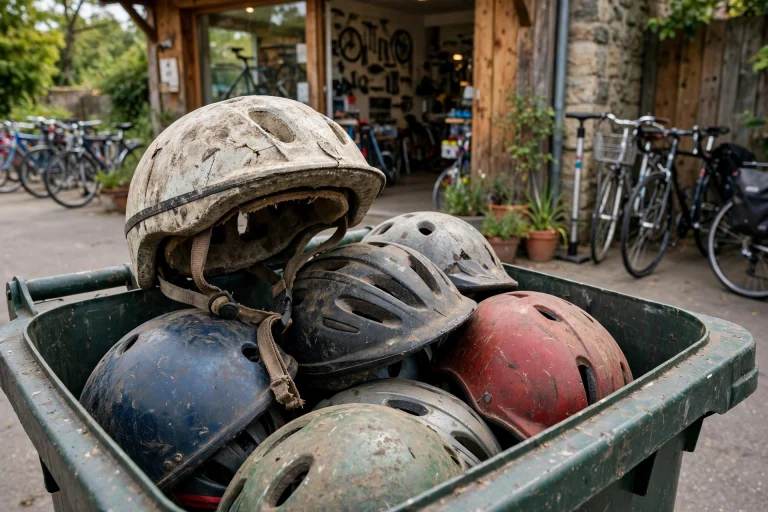
Age is a warning sign on its own. If the helmet is past the maker’s suggested service life, or you do not know how old it is, it is time to replace it. A helmet that feels loose, even with new pads, has lost its fit and cannot be trusted. When in doubt, the safe choice is to retire the helmet. If you want to understand what is happening inside the liner as it ages, reading about what MIPS is for helmets can help you see why the foam’s condition matters so much.
What Habits Shorten a Helmet’s Life?
Leaving a helmet in a hot car is the most common mistake. The temperature inside a parked car can climb far higher than the air outside, and that heat ages the foam quickly. The same applies to leaving a helmet on a sunny windowsill or in a conservatory.
Dropping the helmet is another habit to avoid. It is tempting to set a helmet down on a table edge or hang it on a mirror, where it can fall. Every hard knock, even one that leaves no mark, can stress the foam. Treat the helmet as safety equipment: put it down gently, on a flat surface, and carry it by its straps or in a bag.
Using the wrong cleaners is a quieter risk. Solvents, strong detergents, and abrasive pads can damage the shell’s surface and weaken the materials underneath. Stick to mild soap and water, and follow the maker’s cleaning advice. A helmet cleaned gently and stored well will last far longer than one cleaned harshly and stored carelessly.
Frequently Asked Questions
Q: Can I make my helmet last longer by wearing a cap underneath?
A: In general terms, no — and a thick cap can change the fit, making the helmet looser or less stable. A thin skull cap can keep sweat off the pads, which helps, but it does not slow the foam ageing.
Q: Is it worth replacing pads on an old helmet?
A: Yes, if the shell and foam are still sound and the helmet is within its service life. New pads restore comfort and fit. But if the helmet is past its suggested life or has been crashed, new pads cannot make it safe again.
Q: How often should I check my helmet for damage?
A: A quick check every few months is enough for most riders, plus a check after any drop or knock. Look at the shell, feel the foam, and test the strap and buckle. A two-minute check can catch a problem before it becomes a risk.

Olivia
Writer at Helmet Today, covering helmet reviews, fit and riding safety.