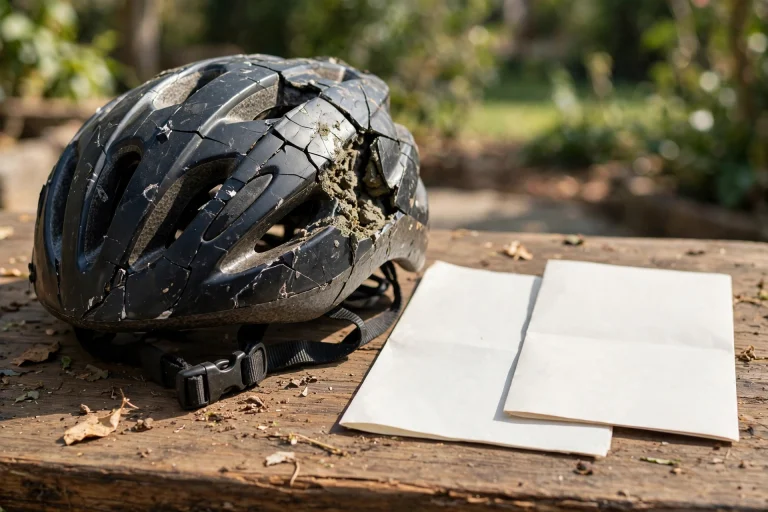
In general terms, you can inspect helmet foam without cutting it open — by looking at it, feeling it, and checking the shell — but you cannot see inside the foam, so the inspection can reveal damage without ever proving the helmet is safe. The foam liner is hidden behind the shell and under the pads, and its most important damage is the kind that happens inside, where no eye or finger can reach. This guide explains what a non-destructive inspection can and cannot tell you.
Understanding the limits of inspection matters. A helmet that passes a careful check may still have hidden damage from a crash, and knowing that is what stops a rider from trusting a helmet they should retire. The inspection is a useful tool, not a guarantee.
What Can You See Without Cutting the Helmet Open?
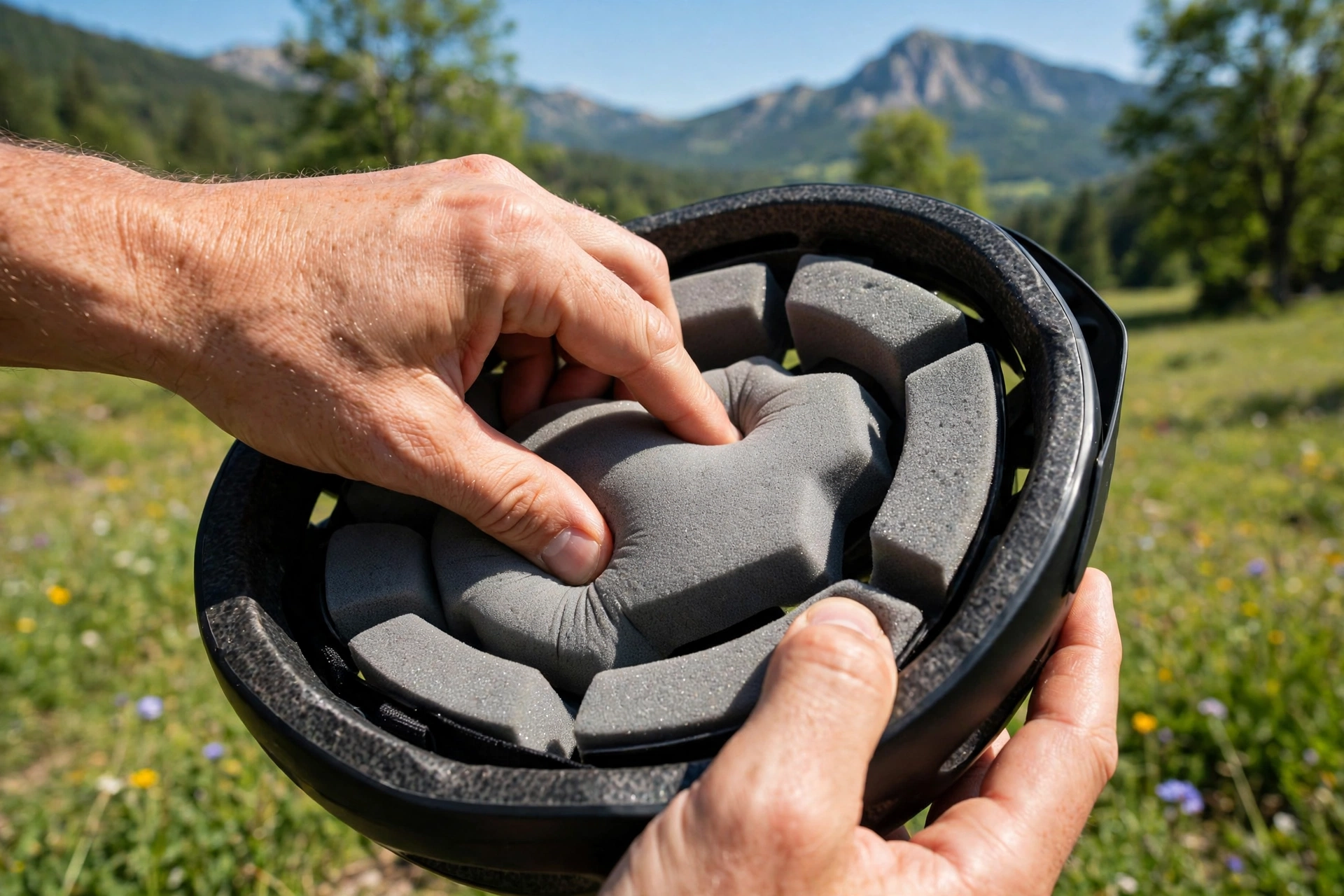
Remove the pads and look at the foam liner in good light. You can see the liner’s surface: cracks, dents, compression marks, and areas where the foam has crumbled or changed colour. A dent that does not spring back, or a crack running through the foam, is a clear sign of damage.
You can also see where the liner meets the shell. Look for gaps, separation, or glue that has failed. The liner should sit snugly against the shell all the way round, with no movement when you press it gently. Separation between liner and shell means the helmet’s structure has been compromised.
What you cannot see is the inside of the foam. The liner may be several centimetres thick, and an impact can crush the foam deep inside while the surface looks almost normal. That is the fundamental limit of a visual inspection: it shows you the outside of the part that matters most, not the inside.
What Can You Feel?
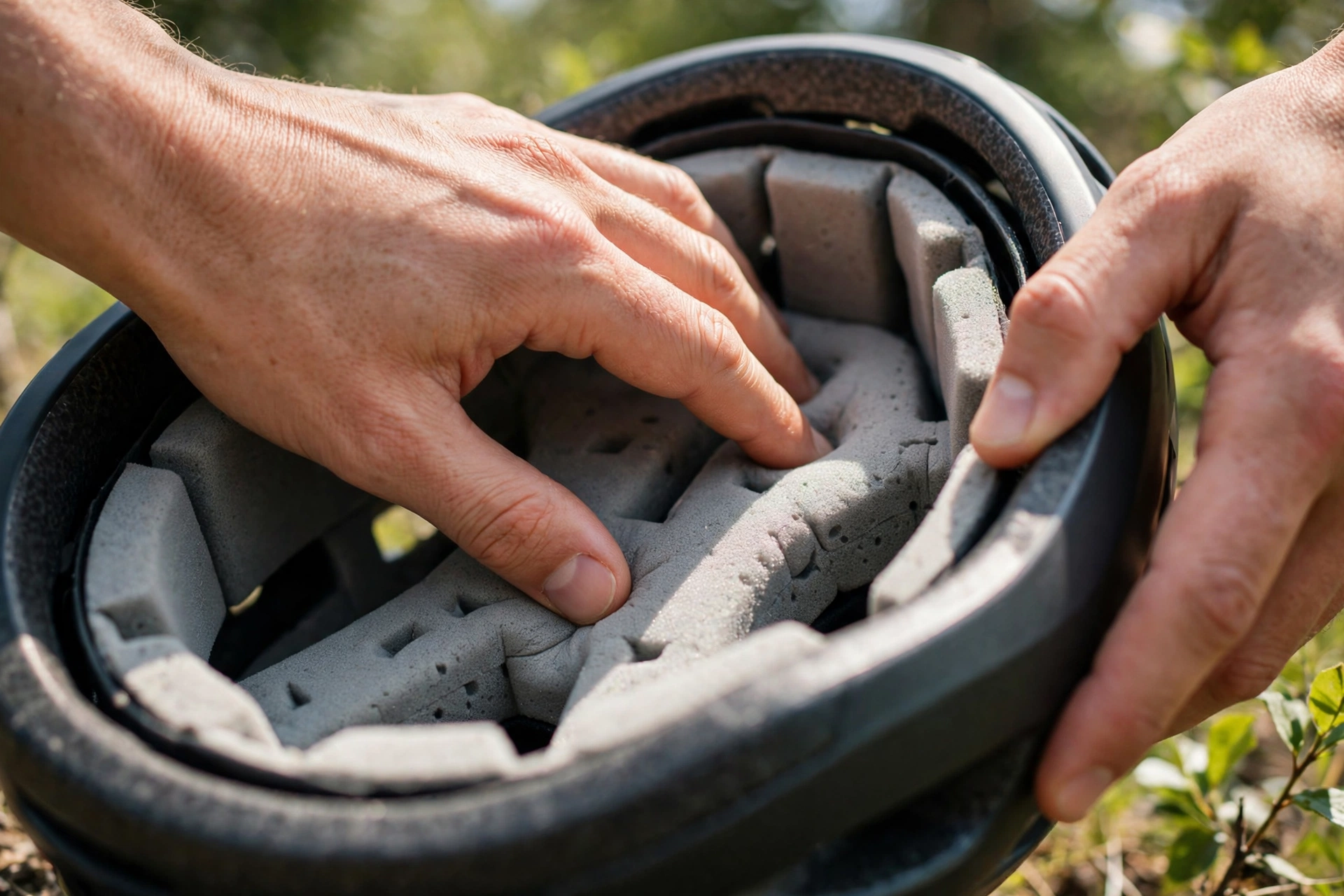
Press the liner gently all over with your fingertips. Healthy foam feels firm and even, with the same resistance everywhere. A soft spot — an area that gives more easily than the foam around it — suggests the foam has been compressed or damaged. A hard spot, or an area that feels brittle and crumbly, suggests the foam has aged or been exposed to heat.
Feel for changes in texture. Foam that has been exposed to sunlight or chemicals may feel dry and chalky on the surface. Foam that has absorbed moisture may feel soft or spongy. Both are signs the helmet is ageing, and both are reasons to look more carefully.
Tap the shell lightly and listen. A helmet with a well-bonded liner sounds solid; a helmet where the liner has separated from the shell may sound hollow or rattly in places. This is a rough test, not a precise one, but a change in sound compared with when the helmet was new can be a useful clue.
Are There Tools That Can Look Inside the Foam?
In general terms, no tool available to a rider can reliably show the inside of a helmet’s foam. X-rays and CT scans can show internal structure, but they are expensive, not designed for helmets, and not available at a bike shop. Some specialist labs use them for research, but they are not a practical option for checking your own helmet.
There are no consumer devices that test a helmet’s foam without damaging it. The certification test that proves a helmet works is a destructive test: a helmet is dropped onto a hard surface with a sensor inside, and the foam is crushed in the process. That test proves the design works, but it destroys the helmet it tests. It cannot be used to check a helmet you want to keep wearing.
That is why makers rely on a simple rule instead of a test: if the helmet has been in a crash, replace it. The rule exists precisely because no inspection can prove a crashed helmet is safe. The absence of a tool is not a gap in the market — it is a fact of how foam works.
When Is Inspection Enough, and When Is It Not?
Inspection is enough for routine checks: looking for wear, checking the pads, making sure the straps and buckle work, and catching obvious damage early. A regular check every few months is a good habit, and it can catch problems before they become risks.
Inspection is not enough after a crash or a hard drop. A helmet that has taken an impact should be replaced, even if the inspection finds nothing wrong. The foam may have crushed inside, and no amount of looking or feeling can rule that out. The same applies to a helmet of unknown history — a second-hand helmet whose past you cannot verify.
Inspection is also not enough for a helmet that is past its service life. Foam ages with heat, sunlight, and sweat, and an old helmet may have weakened throughout, not just in one spot. If the helmet is past the maker’s suggested life, replace it regardless of how it looks. If you want to understand why the foam’s hidden condition matters so much, reading about what MIPS is for helmets can help you see how the liner is meant to work.
What Should You Do Instead of Cutting a Helmet Open?
Do not cut a helmet open to inspect it. Cutting the foam destroys the helmet, and it does not even give you a reliable answer — the damage from a crash may be in a different part of the liner from where you cut, and you cannot inspect the whole liner by cutting it in one place.
Instead, follow the maker’s guidance. If the helmet has been crashed, replace it. If it is old, replace it. If it shows any sign of damage, replace it. The cost of a new helmet is small compared with the cost of trusting a damaged one.
And keep a record of your helmet’s history. Note when you bought it, any drops or crashes, and how it has been stored. A helmet with a known history is a helmet you can judge honestly — and a helmet whose history you know is the only kind worth inspecting in the first place.
Frequently Asked Questions
Q: Can I use an X-ray to check my helmet’s foam?
A: In general terms, no. X-rays and CT scans are not practical for checking a helmet, and they are not available as a consumer service. Makers do not recommend them, and they would not give a reliable answer about the foam’s condition.
Q: My helmet looks fine after a crash — can I keep using it?
A: In general terms, no. The foam inside may have crushed invisibly, and no inspection can rule that out. Makers advise replacing a helmet after any crash where your head hits the ground.
Q: How can I tell if foam has aged without cutting the helmet open?
A: Look for surface signs: crumbling edges, a chalky or dry texture, soft spots when you press the liner, and a fit that has loosened. But ageing happens throughout the foam, so a helmet past its service life should be replaced even if it looks fine.

Olivia
Writer at Helmet Today, covering helmet reviews, fit and riding safety.