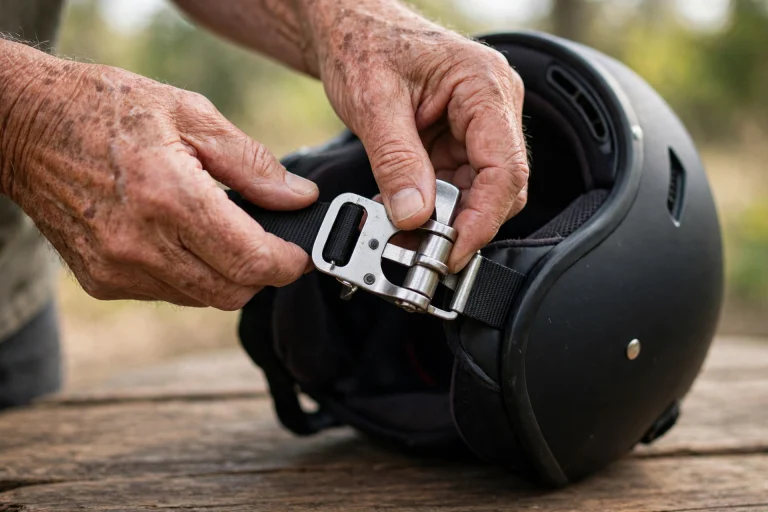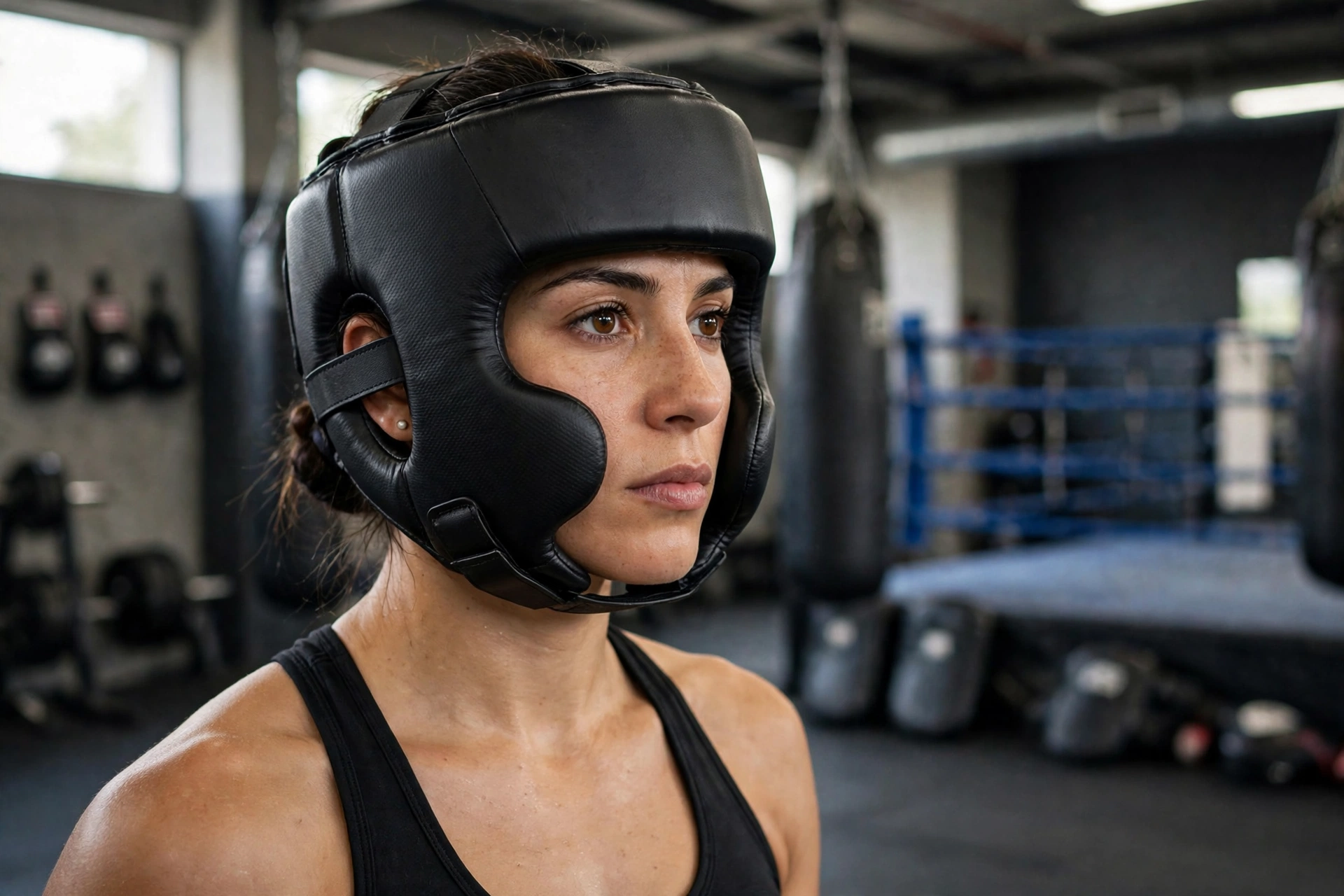
In general terms, a women’s boxing headguard should fit snugly all round, sit level with a clear view ahead, and stay in place when you move — with the chin strap firm, the cheek protection close without squeezing, and no slipping when you shake your head or work the bag. Many women’s headguards are shaped for a slightly smaller or narrower head, and some offer a ponytail opening, but the fit test is the same for every boxer: snug, level, stable, and comfortable for a full round.
Boxing is fast, sweaty work, and a headguard that fits well lets you focus on your guard, your footwork, and your breathing, instead of on a strap that slips or padding that presses on your forehead. A headguard that is too loose will slide over your eyes when you move, while one that is too tight will give you a headache and make it hard to breathe comfortably. This guide explains how to measure, try on, and adjust a women’s boxing headguard, and what to check with hair, a mouthguard, and different training styles.
How Do You Measure for a Women’s Boxing Headguard?
Start by measuring your head with a soft tape measure. Wrap the tape around the widest part of your head, just above the eyebrows and ears, keeping it level all the way round. Take the measurement twice and write it down in centimetres. Then compare it with the size chart for the headguard you are considering, because sizes vary between makers, and a medium from one maker may fit very differently from a medium from another.
Think about how you wear your hair when you train. If you usually box with a low ponytail, a braid, or a headband under your headguard, try it on in that style. A ponytail can change how a headguard sits at the back, and a model with a ponytail opening can make a real difference to comfort. Measure and try on the headguard the way you will actually wear it in the gym.
What Does a Good Boxing Headguard Fit Feel Like?
A good fit feels snug all round, with even contact and no hard pressure point on the forehead, the temples, or the back of the head. The headguard should sit level, with the front edge just above your eyebrows, so you can see clearly ahead and to the sides. It should not tilt back and expose your forehead, and it should not sit so low that it presses on your eyebrows or blocks your view of your partner or the bag.
Shake your head gently from side to side and up and down, and try moving as if you are slipping a punch. The headguard should move with your head, not slide around on its own. If it wobbles, it is too loose. If it leaves a red mark after a few minutes, or if it hurts at one spot, it is the wrong shape or size for you. The padding should touch your head evenly, with no gaps at the sides or the back.
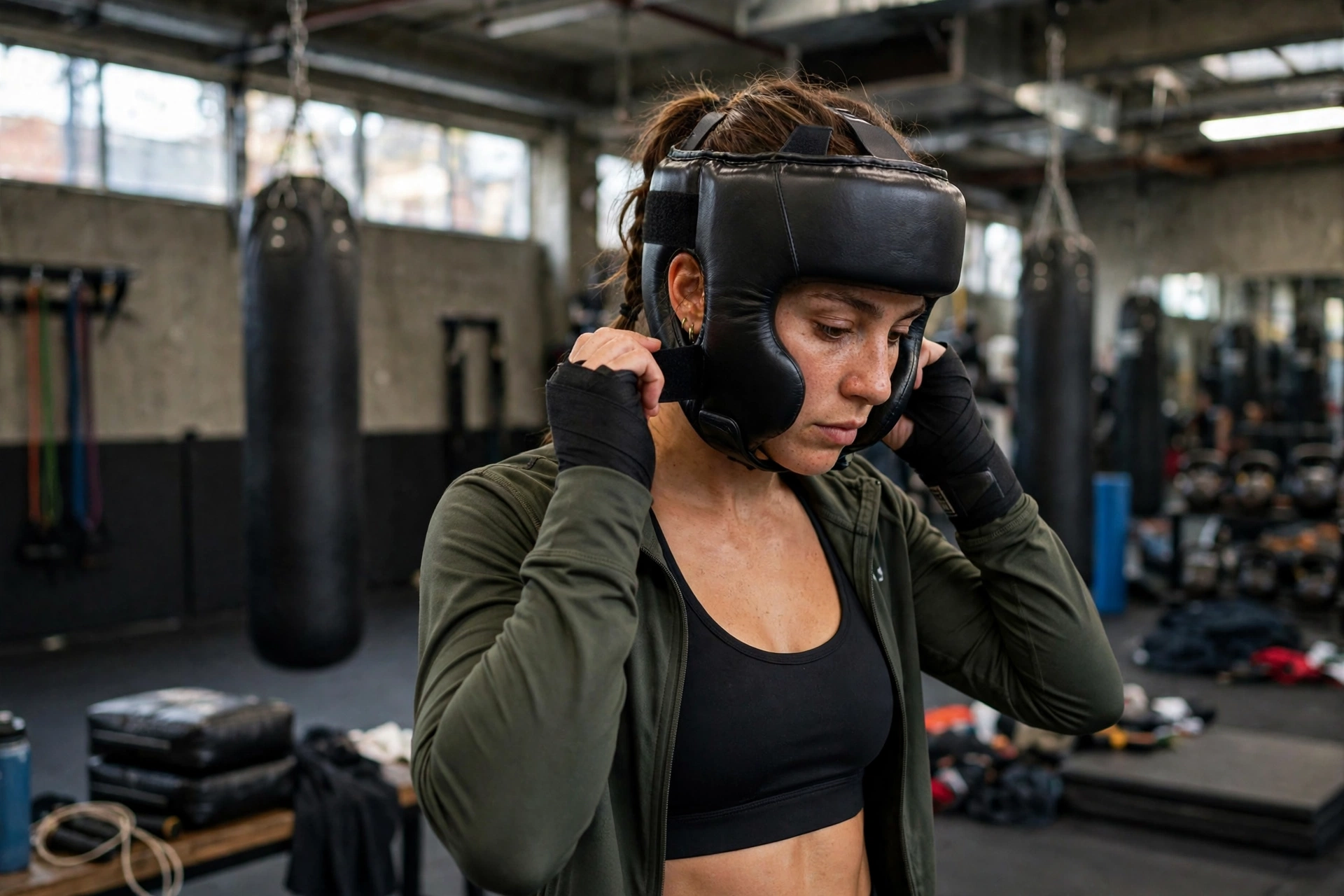
Check the cheek protection as well. It should sit close to your cheeks without squeezing them so hard that it hurts, and it should not press on your nose. You should be able to breathe through your nose and mouth, and to talk without the headguard shifting. The chin strap should sit snugly under your chin, with room for about two fingers, and it should hold the headguard firmly without digging in.
How Should a Headguard Work with a Mouthguard?
A mouthguard changes how your jaw sits, so always try a headguard on with your mouthguard in place. Put the headguard on first, then the mouthguard, and check that the chin strap still fastens comfortably. The strap should hold the headguard firmly without pulling it down or pushing it up, and you should be able to breathe and speak without the strap digging into your chin.
Also check that the headguard does not block your hearing too much. Some headguards cover the ears more than others, and you need to hear your coach and your partner clearly. If the ear coverage muffles sound too much, or if it presses hard on your ears, the model may not be right for you. Comfort around the ears matters over a long session, because pressure there is tiring and distracting.
What About Open Face and Full Coverage Headguards?
Boxing headguards come in different styles, from open face models that leave the face clear to fuller models with more cheek and chin protection. An open face headguard gives a wider view and better airflow, while a fuller model gives more coverage around the cheeks and jaw. The fit test stays the same for both: snug, level, and stable, with a clear view ahead.
Think about the kind of training you do. Sparring, bag work, and pad work may call for different levels of coverage, and your coach may have a preference for the sessions you take part in. In general terms, choose the style that suits your training, and make sure it fits well in that style — a fuller headguard that is too tight will be just as distracting as an open face model that is too loose.
What Else Should You Check Before You Buy?
Before you buy, check the headguard’s weight. A lighter headguard is less tiring over a long session, especially when you are working the bag or sparring for several rounds. Check the strap adjusters too: they should be easy to move, and they should stay in place once set. The fastening should open and close smoothly, even with gloves on, so you can adjust it between rounds without help.
Make sure the headguard meets the rules for the training or competition you take part in, because different clubs and events may have their own requirements for headgear. Check the maker’s guidance on replacement after a hard impact, and if you are unsure about the condition of a headguard, have it checked before you rely on it.
It can also help to understand the technology inside modern head protection. If you want to learn more about one of the features used in many helmets, reading about what MIPS is for helmets is a useful starting point, in general terms, before you compare models. Finally, take your time when you try a headguard on, wear it for several minutes, and see how it feels once the first impression passes.
Frequently Asked Questions
Q: Are women’s boxing headguards different from men’s?
A: In general terms, some are shaped for a slightly smaller or narrower head, and some have a ponytail opening. The fit test is the same: snug, level, stable, and comfortable for a full round.
Q: How tight should a women’s boxing headguard feel?
A: It should feel snug all round, with even contact and no hard pressure point. It should stay put when you shake your head, and the chin strap should be snug with room for about two fingers.
Q: Should I try a headguard on with my mouthguard?
A: Yes. Try the full set-up together, because a mouthguard changes how your jaw sits. Check that the strap still fastens comfortably and your view stays clear.

Olivia
Writer at Helmet Today, covering helmet reviews, fit and riding safety.