Yes, you can store a helmet safely while travelling by train — keep it in a padded bag, shell up, on your lap or in the luggage rack, where it cannot roll, fall, or be crushed by other bags. A train journey is gentler on a helmet than a flight or a long ride in a car boot, but the helmet still needs protection from knocks, rain on the platform, and the weight of luggage piled on top of it.
Train travel usually means carrying your helmet through stations, up steps, and along crowded platforms before you even reach your seat. That is when most damage happens: the helmet gets bumped against a door frame, dropped on a hard floor, or squeezed into an overhead rack under a heavy suitcase. A little planning before you leave home makes the whole trip easier, and it keeps your helmet in good condition for the ride at the other end.
What Is the Best Way to Carry a Helmet on a Train?
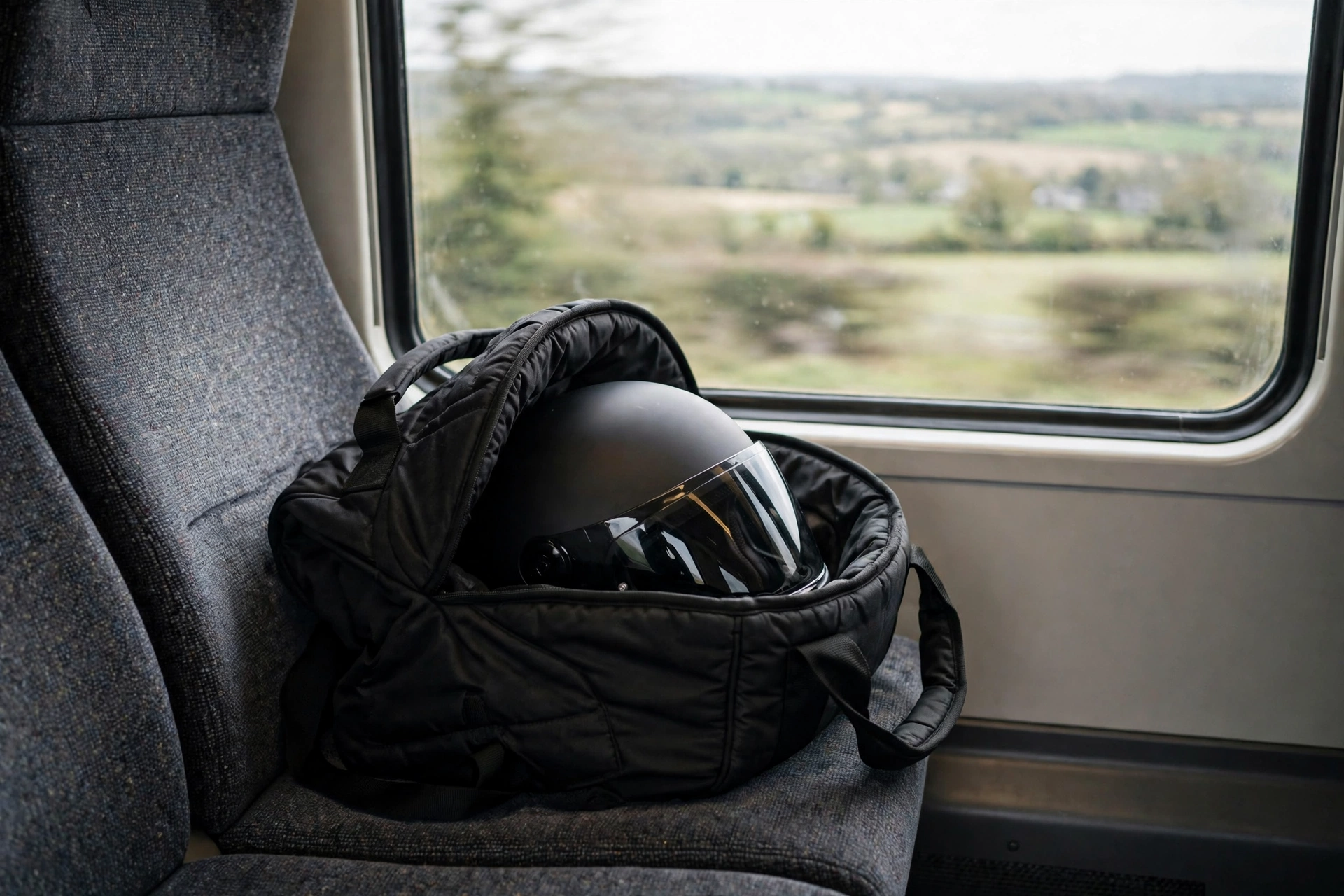
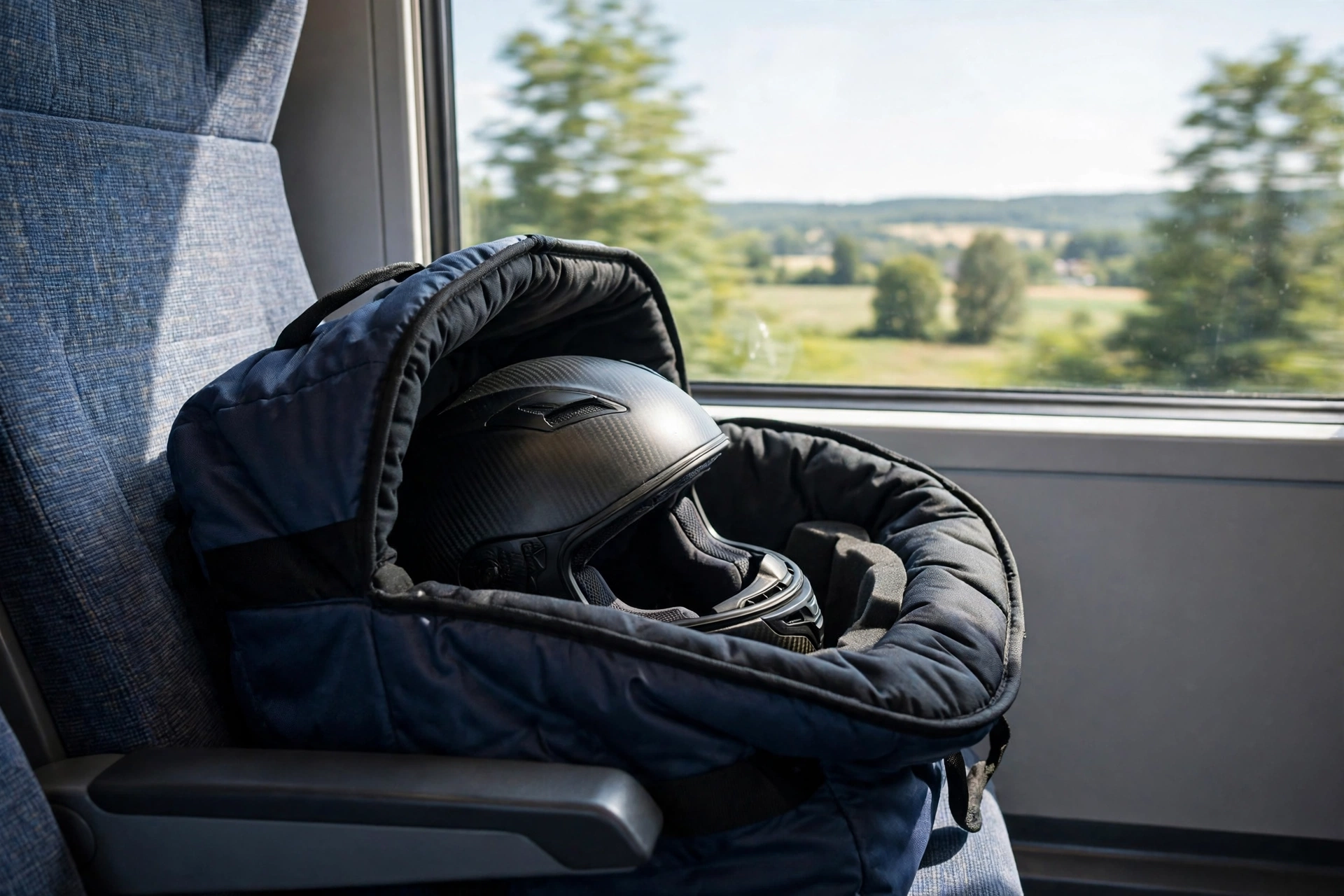
The best way to carry a helmet on a train is in a padded helmet bag with a shoulder strap or a carry handle. A padded bag protects the shell from scratches and light knocks, keeps the visor or peak from catching on things, and stops the helmet picking up dirt from station floors. It also makes the helmet much easier to carry when you are also managing a ticket, a phone, and a bag.
If you do not have a padded bag, a soft drawstring bag or a clean tote bag is better than carrying the helmet loose. Wrap the helmet in a soft cloth or a spare jumper inside the bag for extra padding, and keep the visor facing inward so it does not rub against zips or buckles. Avoid hanging the helmet from its chin strap on your arm or a bag hook, because it will swing and knock against seats, poles, and door frames every time the train moves.
Where Should You Put a Helmet Once You Are on the Train?
Once you are on the train, the safest place for your helmet is on your lap or on the seat beside you, if the seat is free. There it cannot fall, roll, or be crushed, and you can keep an eye on it for the whole journey. If you need the seat for another passenger, put the helmet on the floor between your feet, shell down or on its side, where your legs stop it rolling.
The overhead luggage rack is the next best option, but only if there is room to place the helmet gently without stacking anything on top of it. Put the helmet in its bag, place it shell up, and wedge it between soft items such as a coat or a small bag so it cannot slide when the train brakes or takes a curve. Never put a heavy suitcase on top of a helmet, and never force a helmet into a rack that is already full.
The luggage area at the end of the carriage is the least safe place for a helmet. Bags are piled there by many passengers, and your helmet can end up at the bottom of the stack or knocked onto the floor. If you must use that area, place the helmet on top of the pile, not underneath it, and check on it at stops. In general terms, the closer the helmet stays to you, the safer it is.
How Do You Protect a Helmet from Rain and Damp on a Train Journey?
Rain is the main weather risk on a train journey, and it usually strikes on the platform or on the walk to and from the station rather than on the train itself. A padded helmet bag gives some protection, but a waterproof cover or a plastic bag over the top keeps the helmet dry in heavy rain. If the bag is not waterproof, carry a small rain cover or a carrier bag you can slip over it quickly.
If the helmet does get wet, do not pack it away damp and forget about it. When you reach your destination, take the helmet out of its bag, wipe the shell dry with a soft cloth, and let the padding air dry in a ventilated room. Damp padding left sealed in a bag is a good place for mould and smells to develop, so give the helmet time to dry fully before you store it again.
Can You Store a Helmet in Your Main Luggage on a Train?
You can store a helmet inside a large suitcase or a holdall, but only if it is packed carefully. Put the helmet in the middle of the case, surrounded by soft clothes on all sides, with the opening facing up and the inside filled with soft items such as socks or a scarf. This stops the shell being squeezed and keeps the padding from being squashed out of shape.
Do not pack heavy items such as shoes, books, or tools on top of or beside the helmet. Heavy items press on the shell and can mark or crack a visor, and hard objects rattling against the helmet during the journey can scratch the finish. If the case is tightly packed, the helmet is better carried separately in its own bag.
What Should You Do with Your Helmet at Your Destination?
When you arrive, take the helmet out of its bag and check it before you use it. Look over the shell for scratches or cracks, check the visor for marks, and make sure the strap and buckle still work smoothly. A quick check takes less than a minute, and it is worth doing after any journey, because a knock during travel may not be obvious until you look closely.
If the helmet has been in a bag for several hours, let it air for a while before you put it on, especially if the journey was warm or damp. Fresh air keeps the padding dry and comfortable, and it stops stale smells building up. If you are staying somewhere for a few days, store the helmet in a cool, dry place out of direct sunlight, shell up on a shelf or a flat surface, rather than leaving it in the bag.
If you are learning how modern helmets handle impact, reading about what MIPS is for helmets can help you understand one of the technologies used in modern helmet design. And if your journey involved a fall or a hard knock to the helmet at any point, have it checked before you rely on it again, because damage to the inside of a helmet is not always visible from the outside.
Frequently Asked Questions
Q: Can I take a helmet on a train as hand luggage?
A: In general terms, yes. A helmet in a bag counts as ordinary hand luggage on most train services, but check your operator’s luggage rules before you travel if you are also carrying large bags.
Q: Is the overhead rack safe for a helmet?
A: Yes, if the helmet is in a padded bag, placed gently, and nothing heavy is stacked on top of it. On your lap or beside you is safer, because the helmet cannot slide or fall.
Q: What if my helmet gets wet on the platform?
A: Wipe the shell dry, then let the helmet air dry fully in a ventilated room before you pack it away again, so the padding does not stay damp and develop mould or smells.

Olivia
Writer at Helmet Today, covering helmet reviews, fit and riding safety.