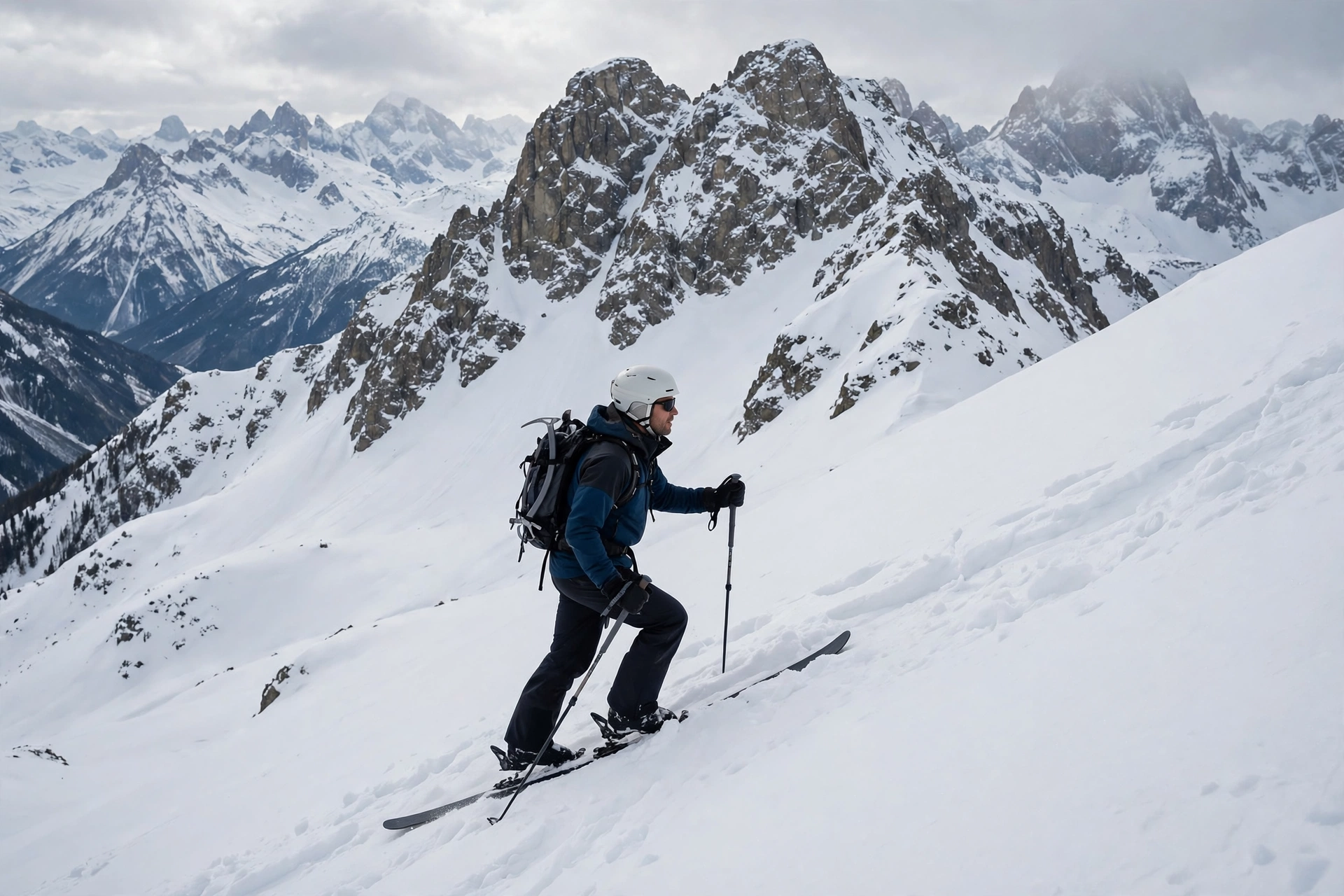
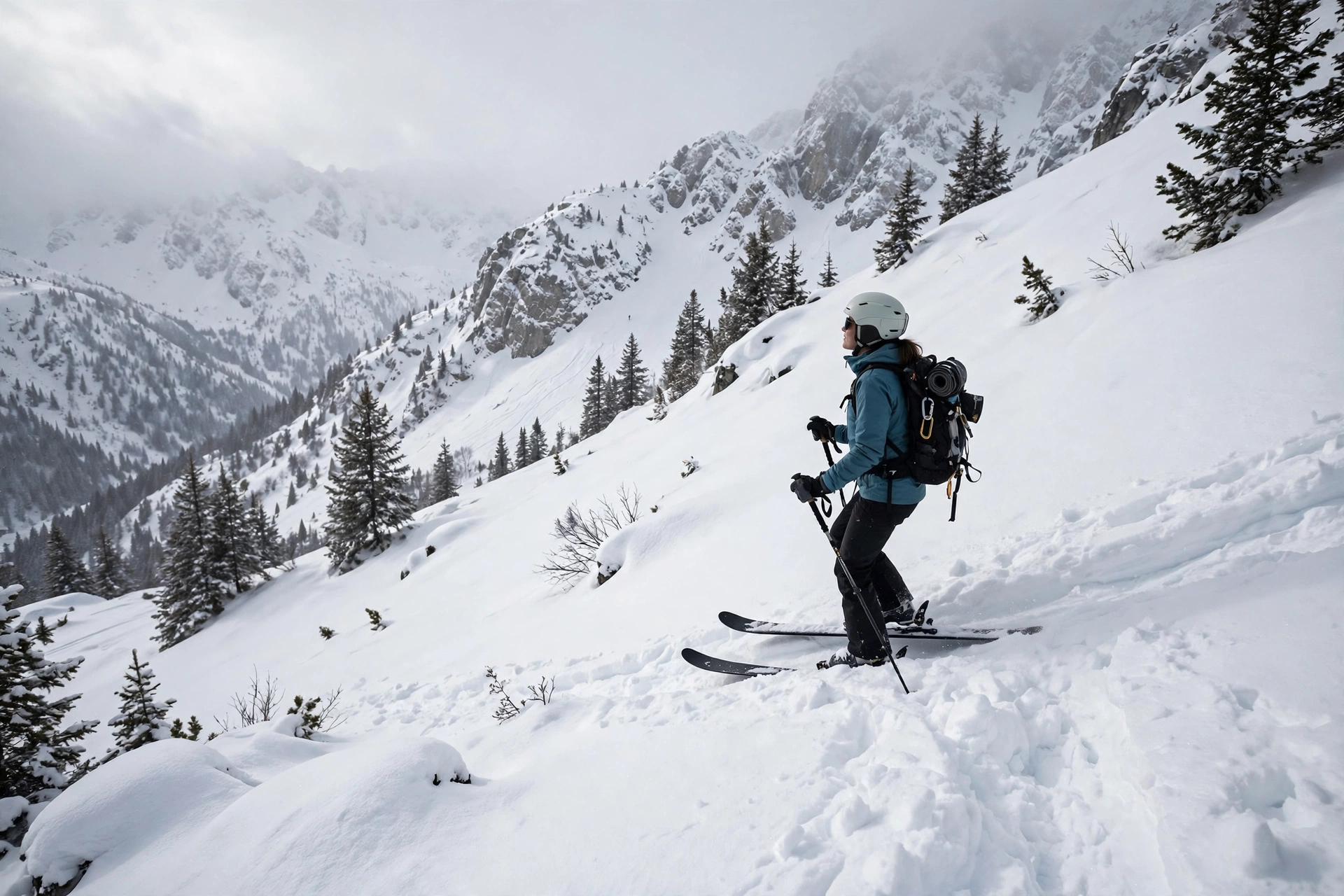
In general terms, helmet weight matters a great deal for ski touring — a lighter helmet makes the long climb up feel easier, causes less neck tiredness, and is more comfortable to wear for hours, which is why many ski tourers choose the lightest helmet they can find that still fits well and meets the right standard. Ski touring is different from resort skiing, because you spend hours climbing before you ski down, and every extra gram is carried uphill on your head.
A ski touring day can last many hours, with a long, steady climb followed by a short, fast descent. During the climb, you are working hard, sweating, and looking around, and a heavy helmet can feel like a burden. During the descent, the helmet needs to protect you, stay in place, and keep you warm. This guide explains how to balance weight with protection, warmth, and fit on a ski touring helmet.
Why Does Helmet Weight Matter So Much on the Climb?
On the climb, you are moving slowly and steadily, often for hours, and your head is held upright for most of that time. A heavy helmet pulls down on your neck muscles, and over a long climb that pull adds up to tiredness and soreness. A lighter helmet is less tiring, which leaves you fresher for the descent — the part of the day where you need your concentration most.
Weight also affects how the helmet feels when you look around. On a ski tour, you need to check the slope ahead, look back at your group, and scan for changes in the snow. A heavy helmet can make those head movements feel sluggish, while a light helmet moves easily with your head. That may sound like a small thing, but over a long day it makes the tour feel much more comfortable.
How Light Can a Ski Touring Helmet Be?
In general terms, ski touring helmets are among the lightest ski helmets you can buy, because they are designed for climbing as well as descending. They often use a lighter shell and thinner, well-placed padding to keep the weight down, while still meeting the safety standard for skiing. That does not mean they are fragile — they are built to protect you in a fall, just with less bulk than a resort helmet.
When you compare helmets, hold them in your hands and try them on. A difference that feels small in the shop can feel much larger after three hours of climbing. Let the helmet sit on your head for a few minutes, walk around, and move your head from side to side. The helmet that feels lightest and most comfortable is usually the right one, provided it fits well.
Do not chase the lightest helmet at any cost. A helmet that is light because it has very little padding may feel hard and uncomfortable, and a helmet that is too light for your head size may not fit properly. The goal is a helmet that is light enough to climb in happily, comfortable enough to wear all day, and snug enough to stay in place on the descent.
Does a Lighter Helmet Mean Less Protection?
Not necessarily. A lighter helmet is not automatically less safe, and a heavier helmet is not automatically safer. Protection depends on the helmet meeting the right safety standard, fitting correctly, and being worn properly. In general terms, a light touring helmet that meets the standard and fits well will protect you better than a heavy helmet that fits badly or that you leave in your pack because it is too uncomfortable to wear.
What matters most is the fit. A ski touring helmet should sit level, feel snug all round, and stay put when you shake your head. It should not press hard on your forehead or temples, and it should work well with your goggles, without a gap at the forehead or pressure on the nose. A helmet that fits well will stay in the right place in a fall.
Check the safety standard for your country or resort before you buy, and look for a label showing the helmet meets it. Then focus on weight, fit, and comfort. A helmet that meets the standard, fits well, and feels light enough for a long climb is a far better choice than a heavier one bought in the hope that weight means safety.
How Do Warmth and Ventilation Affect Helmet Weight?
Ski touring helmets need to balance warmth on the descent with cooling on the climb. On the way up, you are working hard and generating heat, so a helmet with good ventilation helps keep you cool and stops sweat building up inside. On the way down, you are moving fast through cold air, so you need the helmet to keep your head warm.
Many touring helmets have vents that you can open and close. Open them on the climb to let heat escape, and close them on the descent to keep the cold air out. Some helmets also have removable ear pads or liners, which let you adjust the warmth for the conditions. These features add a little weight, but they make the helmet much more versatile.
A lighter helmet often has less insulation, so it may feel colder on a windy descent. If you tour in very cold conditions, you may need a thin hat or balaclava under the helmet, or a helmet with more coverage. Try the helmet with the layers you normally wear, and make sure it still fits snugly without pressing too hard.
What Should You Look for in a Ski Touring Helmet?
Start with weight and fit together. Try on several helmets in your size, and choose the lightest one that sits level, feels snug, and stays put when you move your head. Check that it works with your goggles and your usual head layers, and that the strap fastens easily, even with gloves on.
Next, check the vents. They should be easy to open and close with gloves, and they should let enough air through on the climb without letting in too much cold on the descent. Also check the ear pads: they should keep your ears warm without pressing too hard, and they should not interfere with hearing your touring partners.
If you are learning about how helmets handle different kinds of impact, reading about what MIPS is for helmets can help you understand one of the technologies used in modern helmet design. Weigh that alongside weight and fit, and remember that a helmet you are happy to wear all day is the one that will protect you when it matters.
Frequently Asked Questions
Q: Should I wear my helmet on the climb or carry it in my pack?
A: In general terms, wearing it is safer, because you are protected if you slip or fall. Many tourers wear a light helmet from the start, and a lighter helmet makes that much more comfortable.
Q: Is a ski touring helmet safe enough for resort skiing?
A: In general terms, yes, if it meets the right safety standard and fits well. Touring helmets are built for skiing, though a resort helmet may feel warmer and more comfortable for lift-served days.
Q: How do I keep a light touring helmet warm on cold descents?
A: Close the vents, wear a thin balaclava or hat underneath if it still fits snugly, and check that the ear pads cover your ears. Try the combination before a long tour.

Olivia
Writer at Helmet Today, covering helmet reviews, fit and riding safety.