To avoid mould in a stored helmet, keep it dry, keep air moving around it, and never pack it away damp — mould needs moisture, warmth, and still air, so removing any one of those stops it growing. Mould in helmet padding is a common problem in humid climates and after wet rides, but it is almost always preventable with simple storage habits.
Mould is more than an unpleasant smell. It can stain the padding, irritate the skin and airways of the person wearing the helmet, and it is very hard to remove once it has taken hold deep in the foam. The good news is that the conditions mould needs are easy to control: dry the helmet properly, store it somewhere ventilated, and check it regularly. This guide explains how.
Why Does Mould Grow in Stored Helmets?
Mould grows where there is moisture, warmth, and little air movement. A helmet is an ideal home for it: the padding absorbs sweat on every ride, rain and damp get into the vents, and the inside of a helmet is dark and warm. If that helmet is then put away in a closed bag, a sealed box, or a damp cupboard, the moisture has nowhere to go, and mould can start to grow within days.
Humid climates make the problem worse, because the air itself carries moisture that settles into padding. A helmet stored in a garage, a shed, or a basement in a humid area is at greater risk than one stored in a dry, heated room. Even a helmet that feels dry on the outside can still be damp inside, because thick padding dries slowly.
Mould often starts where you cannot see it — under the cheek pads, behind the liner, or in the seams of the padding. By the time you notice a musty smell or dark spots, the mould may already be well established. That is why prevention matters more than cleaning, and why a quick drying routine after every ride is worth the effort.
How Should You Dry a Helmet Before Storing It?
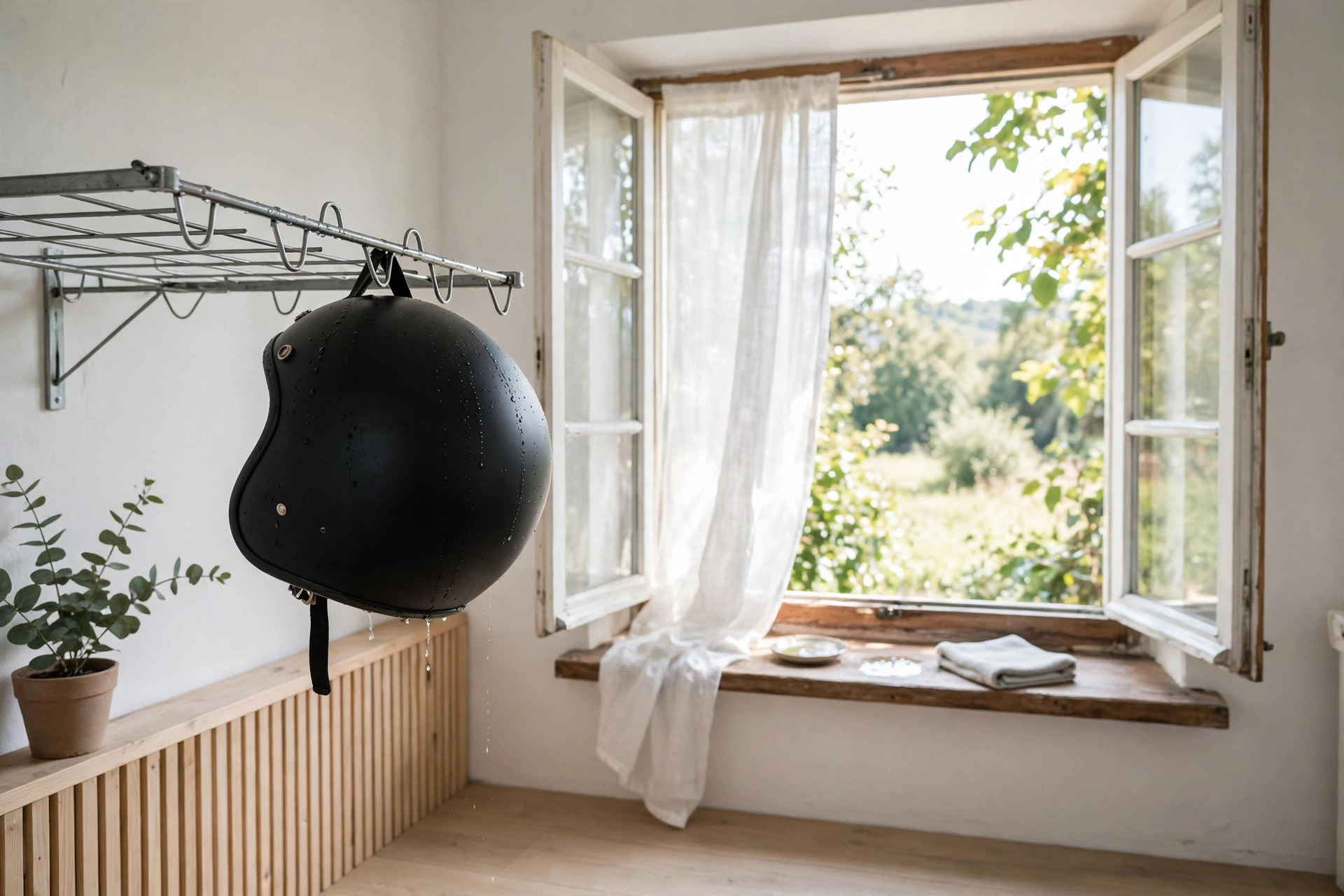
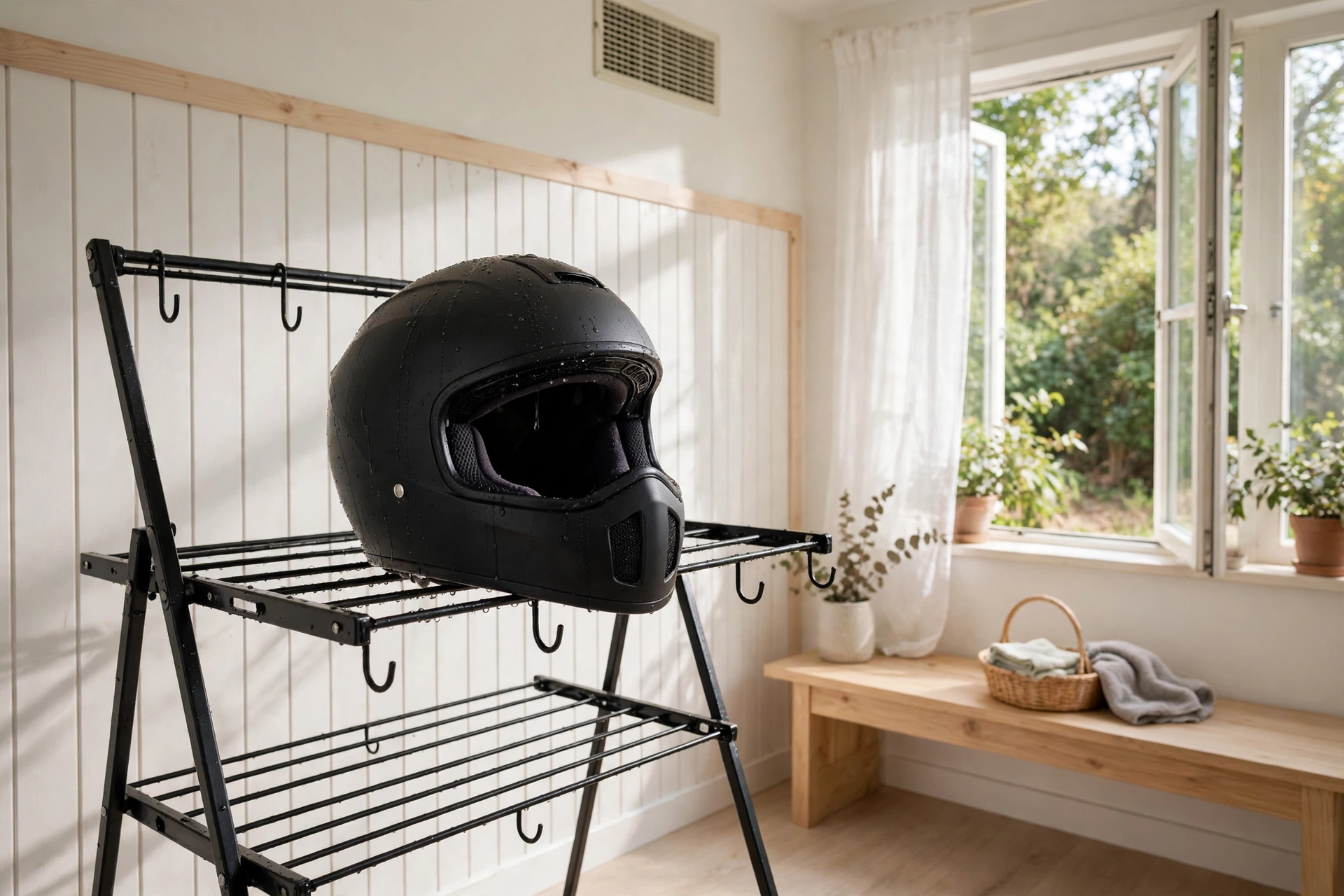
Always dry a helmet before you store it, even if it only feels slightly damp. After a ride, take the helmet indoors and leave it in a well-ventilated room, opening down, so air can circulate through it. If the padding is removable, take it out and let it dry separately — it will dry much faster out of the shell than inside it.
Do not dry a helmet on a radiator, near a fire, or with a hair dryer. Strong heat can damage the liner and the padding, and it can make foam brittle over time. Room temperature air, with a little movement, is the safest way to dry a helmet. A small fan nearby can speed things up, and stuffing the inside loosely with clean, dry newspaper or a dry cloth can help draw moisture out of the padding.
In humid weather, drying takes longer, so allow extra time. A helmet that is still damp in the morning should not be packed away — give it another day, or move it to a drier room. A helmet is only ready to store when the padding feels dry to the touch all the way through, not just on the surface.
Where Is the Best Place to Store a Helmet for Ventilation?
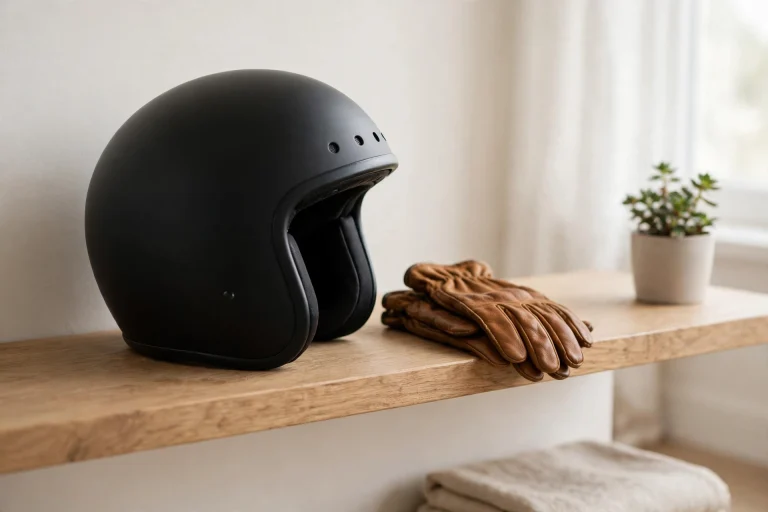
The best place to store a helmet is a cool, dry room with good airflow — a bedroom shelf, a wardrobe with the door left ajar, or a cupboard that is not sealed shut. The helmet should sit shell up on a flat surface or a wide shelf, with space around it so air can move freely. Avoid airtight containers, sealed plastic bags, and closed boxes, because they trap any remaining moisture inside with the helmet.
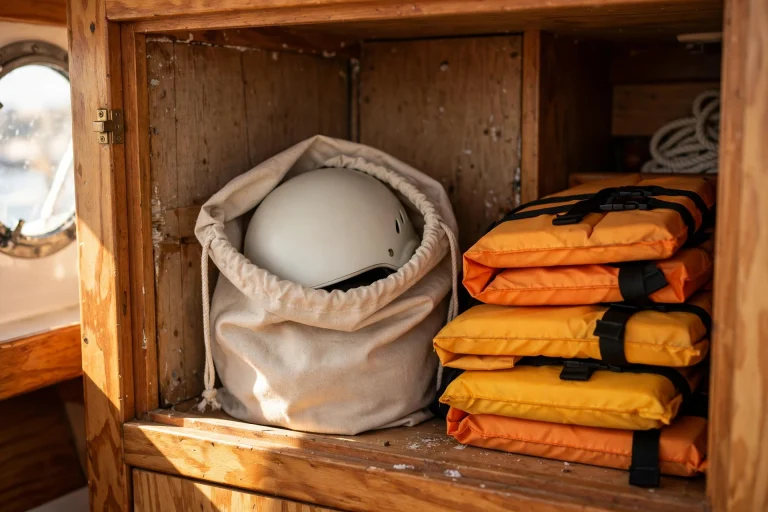
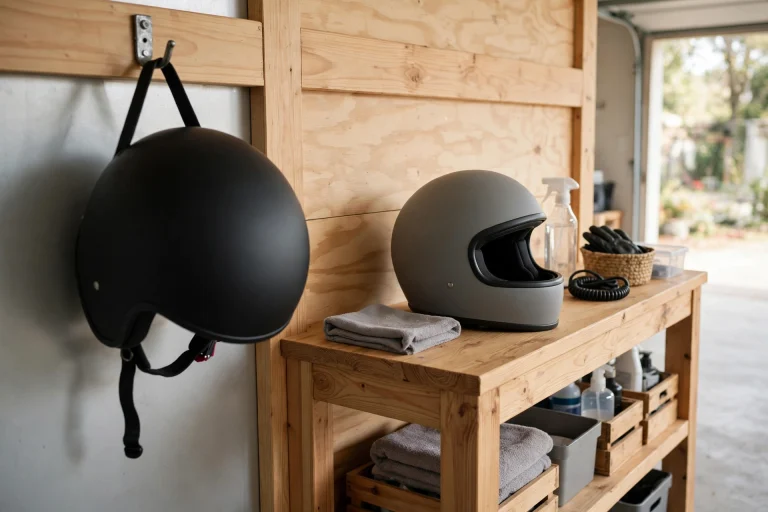
Garages, sheds, and basements are often the worst places for helmet storage, especially if they are damp. If you have no choice, keep the helmet off the floor, away from the walls, and out of a sealed bag. A breathable helmet bag, such as a cloth bag, is better than a plastic one, because it lets air through while keeping dust off the helmet.
What Should You Do If Mould Has Already Appeared?
If you find mould on the padding, act quickly and carefully. Take the helmet outside if you can, and remove the padding if it comes out. Wash removable padding by hand in warm water with a mild soap, rinse it well, and let it dry completely in fresh air before you put it back. Do not use bleach or harsh chemicals on padding, because they can damage the foam and irritate your skin later.
For padding that cannot be removed, wipe the surface gently with a damp cloth and a little mild soap, then wipe again with a clean damp cloth to remove the soap. Let the helmet dry thoroughly in a ventilated place. If the mould has gone deep into the foam, or the smell remains after cleaning, the padding may need to be replaced. Replacement pads are available for many helmets, and fresh padding is better than wearing mouldy foam against your skin.
If you are unsure whether a helmet is still safe to wear after mould, check the maker’s guidance for your model. In general terms, surface mould on removable padding is a cleaning problem, while mould deep in the liner is a reason to replace the padding or the helmet. If you are learning how helmets are built, reading about what MIPS is for helmets can help you understand one of the technologies used in modern helmet design.
How Can You Prevent Mould in a Humid Climate?
In a humid climate, prevention needs a little extra effort. Dry the helmet after every ride without fail, and store it in the driest room in the house rather than in a garage or a basement. A small dehumidifier in the storage room can help, and so can a moisture absorber or a bag of silica gel placed near the helmet — but never inside the helmet where it could press on the padding.
Check the helmet regularly, even when you are not riding. A quick look and a sniff once a week will catch mould early, when it is still easy to clean. If you are storing a helmet for the season, clean and dry it fully first, then store it in a breathable cloth bag in a dry place, and check it once a month.
Finally, keep the helmet clean. Sweat, skin oils, and dirt feed mould, so wiping the padding and the inside of the shell after sweaty rides makes a real difference. Clean padding dries faster and stays fresh longer, and a helmet that is cleaned regularly is much less likely to develop mould in storage.
Frequently Asked Questions
Q: Can mould in a helmet make you ill?
A: In general terms, mould can irritate the skin and airways, especially for people with allergies or asthma. Mouldy padding should be cleaned or replaced before the helmet is worn again.
Q: Is it safe to store a helmet in a sealed plastic bag?
A: No, not for long periods. A sealed bag traps moisture inside, which encourages mould. Use a breathable cloth bag instead, and only store the helmet once it is fully dry.
Q: How often should I check a stored helmet for mould?
A: Check it at least once a month in normal conditions, and once a week in a humid climate or if the helmet was put away after a wet ride.

Olivia
Writer at Helmet Today, covering helmet reviews, fit and riding safety.