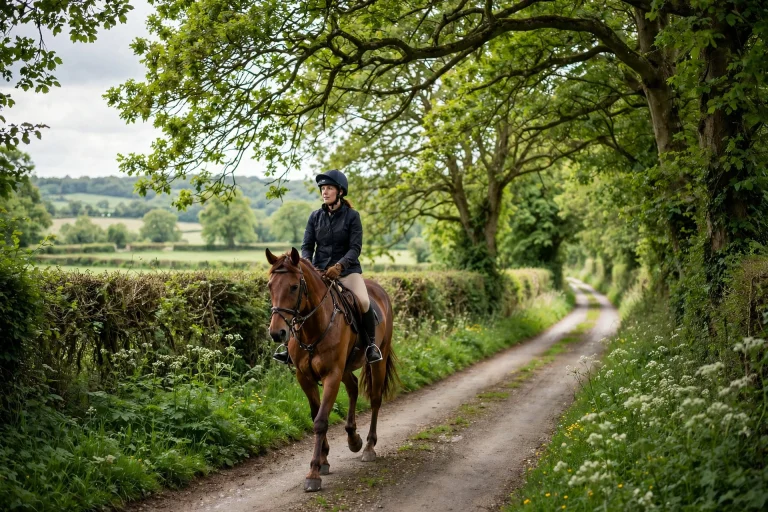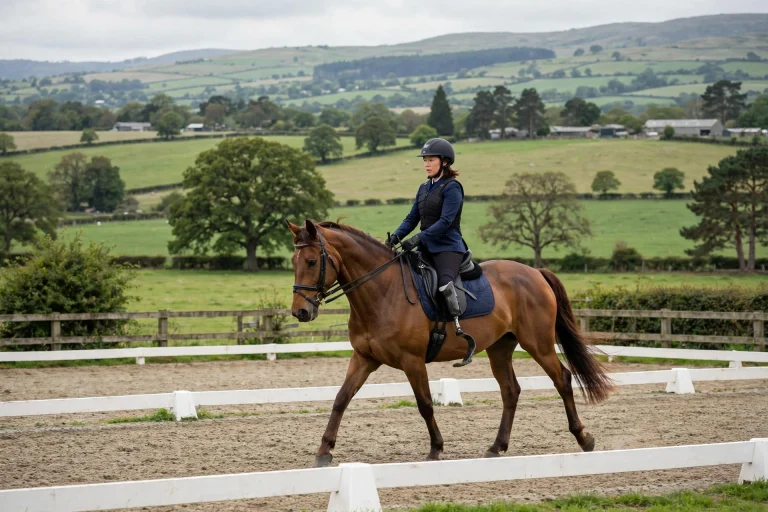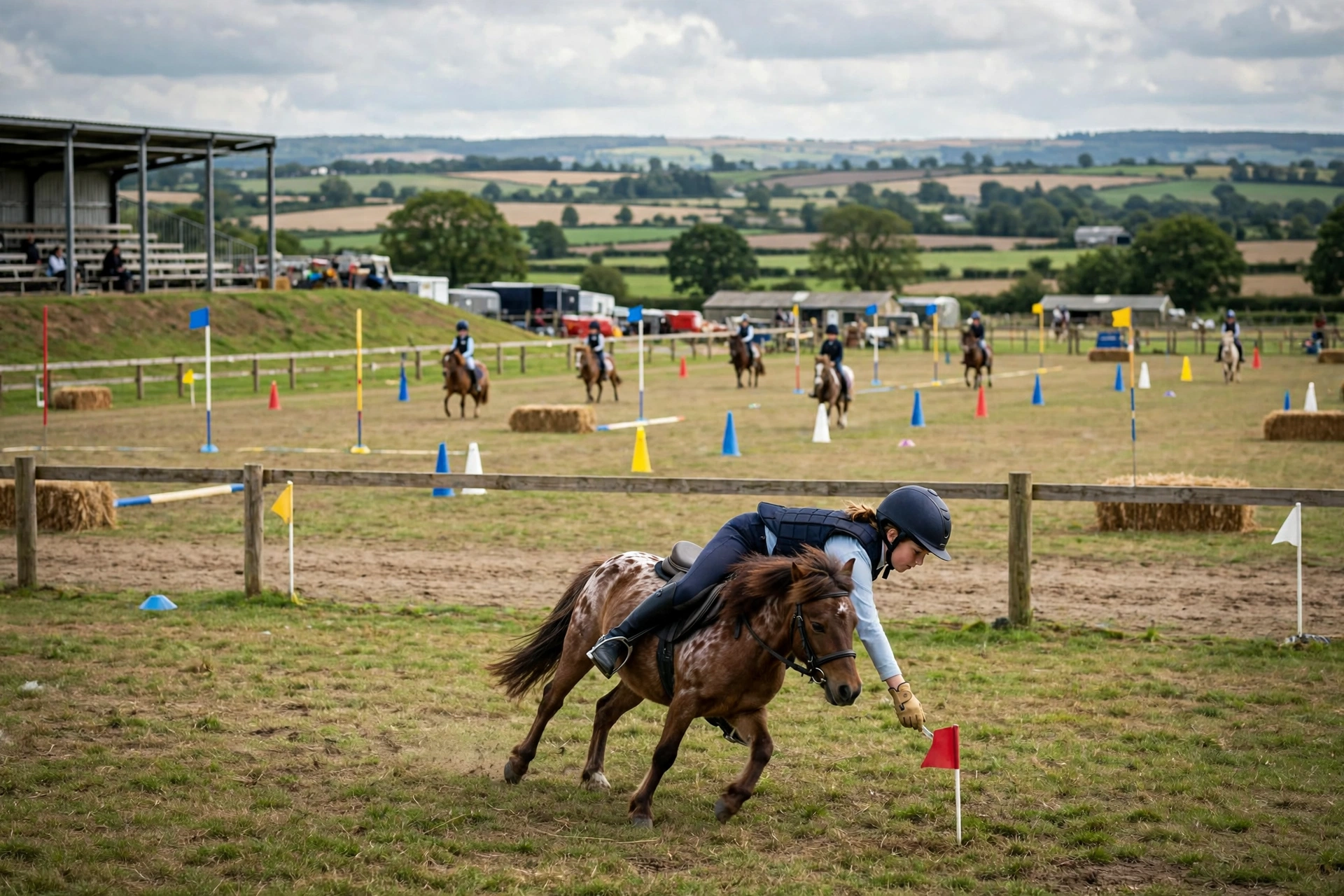
A mounted games helmet is a riding helmet worn for mounted games, a fast team sport on horseback in which riders race, pick up objects, and weave through poles and markers at speed. It is a standard riding helmet in most respects, with a hard shell, a snug fit, and a chin strap, but it is chosen for a sport where falls can happen at a gallop and where the rider is constantly leaning, reaching, and turning. A secure fit matters more than anything else in this sport.
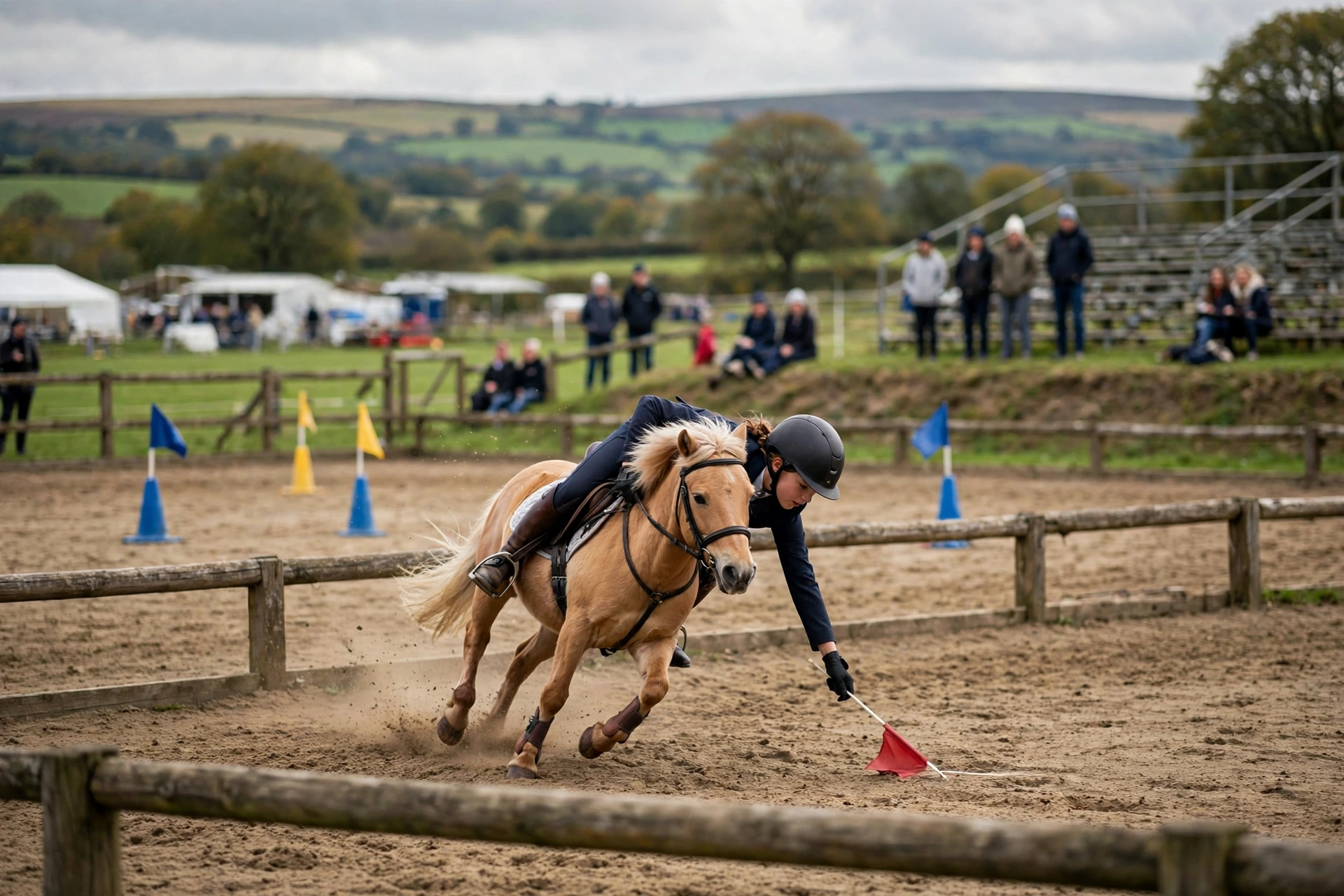
Mounted games are played by teams, often by young riders, on ponies. The races are short, fast, and noisy, with riders galloping down the arena, bending low to pick up a flag or a bottle, and turning sharply around a marker. The rider may lean right out of the saddle, reach down to the ground, and then sit up again in a few seconds. That kind of riding puts a lot of movement into the helmet, so it must stay firmly in place through every twist and turn.
What Happens in Mounted Games?
Mounted games include many different races, each with its own pattern. In some races the rider gallops to the far end, picks up an object, and gallops back. In others the rider weaves through a line of bending poles, or places flags in cones, or carries a ball to a bin. The races are timed, and teams compete side by side in lanes, so there is a lot of speed and a lot of excitement in a small arena.
The ponies are usually small, quick, and well trained for games, but they can still stop suddenly, shy, or turn sharply. A rider leaning low to pick up an object can easily lose their balance, and a rider turning at speed can slide in the saddle. Falls are a normal part of the sport, which is why a helmet is worn for every race, including practice and warm-up, not just for competition.
What Should a Mounted Games Helmet Do?
A mounted games helmet must stay in place. That is its most important job in this sport. The rider leans, reaches, twists, and gallops, and the helmet must not slide forward over the eyes or slip back off the head. A snug fit, a well-adjusted harness, and a fitting system that holds the helmet level are all important. If the helmet moves when you shake your head, it is not fitted well enough for games.
The helmet must also be comfortable enough to wear for a whole session. A games session can last for an hour or more, with many short races and waiting time between them. A helmet that presses hard on the forehead or feels heavy will distract the rider and may tempt them to loosen the strap, which is not safe. A light, well-ventilated helmet with a soft lining is easier to wear for a long session.
Protection is the third job. The helmet should meet the standard required by the games association or the riding club, and it should be checked for damage after any fall. The shell and liner are designed to absorb impact, but they can only do that if the helmet is in good condition and fitted correctly.
How Is It Different from Other Riding Helmets?
In general terms, a mounted games helmet is not a separate type of helmet. Most riders use a standard riding helmet, and the same helmet may be used for games, for hacking, and for lessons. The difference is in what the rider looks for when choosing it: a secure fit, a low profile, and a strap that stays fastened during fast, twisting riding.
Some riders prefer a helmet with a smaller peak or no peak at all for games, because a large peak can catch the wind at a gallop or get in the way when the rider leans low. Others prefer a helmet with good ventilation, because games are often played on warm days and the rider is working hard. These are matters of preference, and either choice can work if the helmet fits well and meets the required standard.
What Should You Look for When Choosing One?
Start with fit. The helmet should sit level, cover the forehead, and feel snug all round. It should stay put when the rider shakes their head, looks down, and leans to one side. The chin strap should fasten securely and sit close under the chin, and the fitting dial or pads at the back should hold the helmet without creating a pressure point.
Next, check the standard and the rules for your games association. Different associations may ask for different standards, so check before you buy. The label inside the helmet should show which standard it meets. If you are unsure, ask your instructor or the association, because a helmet that does not meet the required standard may not be accepted at a competition.
If you are learning about how helmets handle different kinds of impact, reading about what MIPS is for helmets can help you understand one of the technologies used in modern helmet design. Some riding helmets include this kind of system, and knowing about it can help you compare helmets when you shop for a games helmet.
How Do You Care for a Mounted Games Helmet?
Store the helmet in a cool, dry place, in a helmet bag or a box, away from sunlight and heat. Do not leave it in a hot car or in a damp tack room, and do not hang it by its chin strap. Games helmets get knocked about more than most, because they are carried to shows and stored with other kit, so a bag helps protect the shell from scratches and dents.
Clean the shell with a soft, damp cloth after a dusty day, and let it dry naturally. If the lining is removable, wash it according to the maker’s instructions and let it dry fully before you put it back. A clean lining is more comfortable and helps the helmet fit as it should. Do not use harsh cleaners or put the helmet in a washing machine.
Check the helmet before every session. Look for cracks, dents, or soft spots, and check that the strap, buckle, and fitting system still work. After any fall where the head hits the ground, have the helmet checked and, in general terms, replace it, even if you cannot see damage. The liner inside can be damaged in ways that are not visible from the outside.
Frequently Asked Questions
Q: Do mounted games riders have to wear a helmet?
A: Yes, in general terms. Helmets are required for mounted games in most associations and clubs, for practice as well as competition, because falls at speed are a normal part of the sport.
Q: Can a child use the same helmet for mounted games and lessons?
A: Yes, in general terms. A well-fitting riding helmet that meets the required standard can be used for both, as long as it still fits and is in good condition.
Q: How often should a child’s mounted games helmet be checked for fit?
A: Check the fit at the start of each season and whenever the child has a growth spurt. A helmet that has become too small or too loose should be replaced, because it may not stay in place in a fall.

Olivia
Writer at Helmet Today, covering helmet reviews, fit and riding safety.