Para triathletes wear a cycling helmet for the bike leg of the race — a standard road cycling helmet, chosen to suit the athlete’s bike setup, whether that is a standard bike, a handcycle, or a tandem. A triathlon has three legs: swim, bike, and run. The helmet is worn only for the bike leg, and it must be fastened before the athlete leaves the transition area and kept on until the bike is racked again. It protects the head in a fall or a collision, just as it does for any cyclist.
Para triathlon covers a wide range of athletes, including those with visual impairments, limb differences, and spinal cord injuries, and the bike leg looks different for each group. Some ride standard bikes, some use handcycles, and some ride tandems with a sighted pilot. The helmet rules are the same for all of them, but the choice of helmet depends on the bike and the riding position. This guide explains what helmet para triathletes wear, how the choice differs by bike type, and what to look for when buying one.
What Helmet Do Para Triathletes Wear?
Para triathletes wear a cycling helmet that meets the standard required by the race, usually a road cycling helmet with a hard shell, ventilation, and a secure chin strap. The helmet must be certified to the relevant standard for the country where the race is held, and it must be in good condition, with no cracks or damage to the shell or the lining. A time trial helmet with a long tail is allowed in some races, but most para triathletes use a standard road helmet, which is lighter, better ventilated, and easier to put on quickly in transition.
The helmet is put on in the transition area, after the swim, and it must be fastened before the athlete touches the bike. Race officials check this, and an athlete who leaves transition with an unfastened helmet can be penalised. The helmet stays on for the whole bike leg, including any stops, and it is taken off only after the bike is racked at the end of the leg. That rule exists because the bike leg is the fastest and most exposed part of the race, and the head needs protection from the moment the athlete is moving.
How Does the Bike Leg Helmet Differ for Para Triathletes?
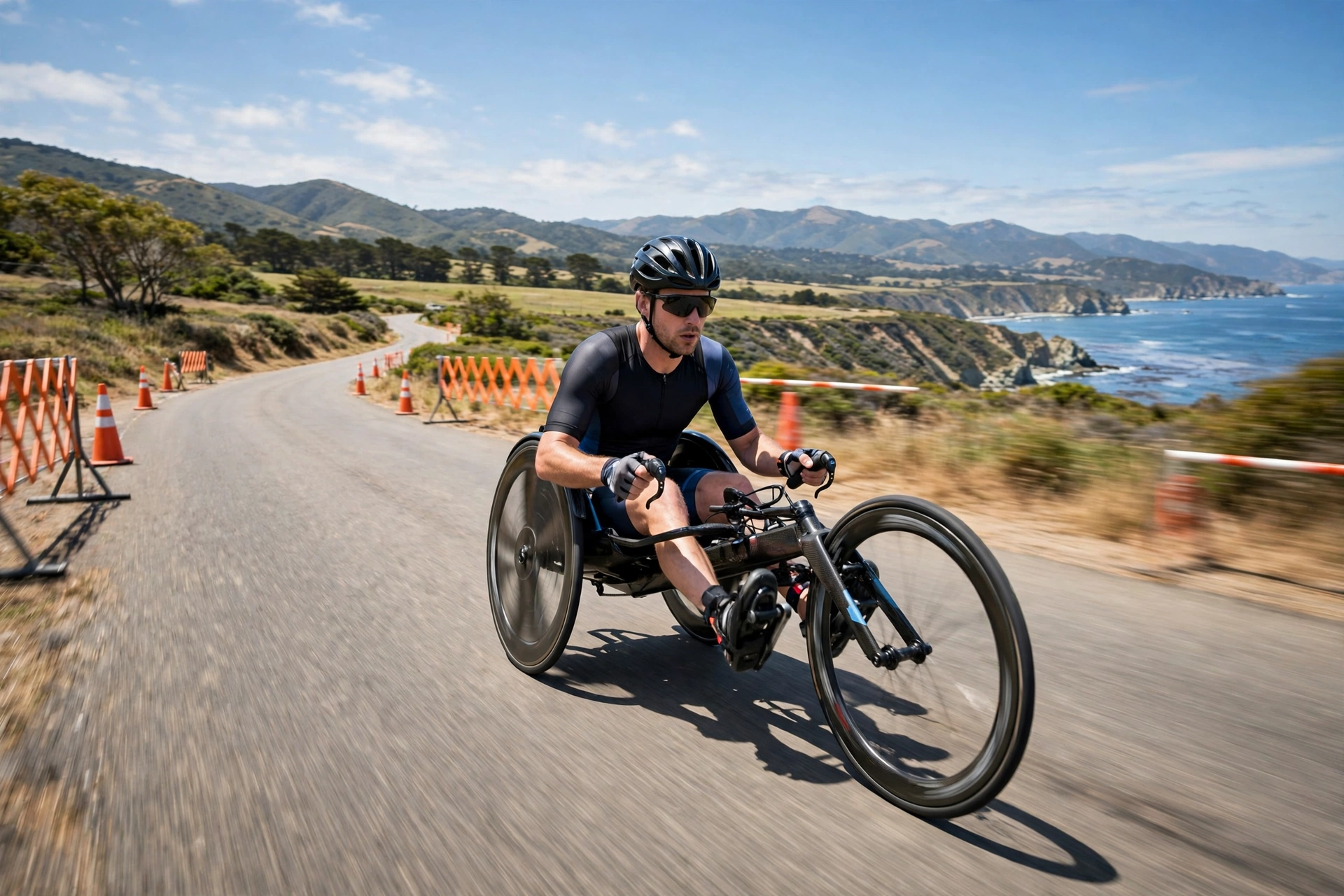
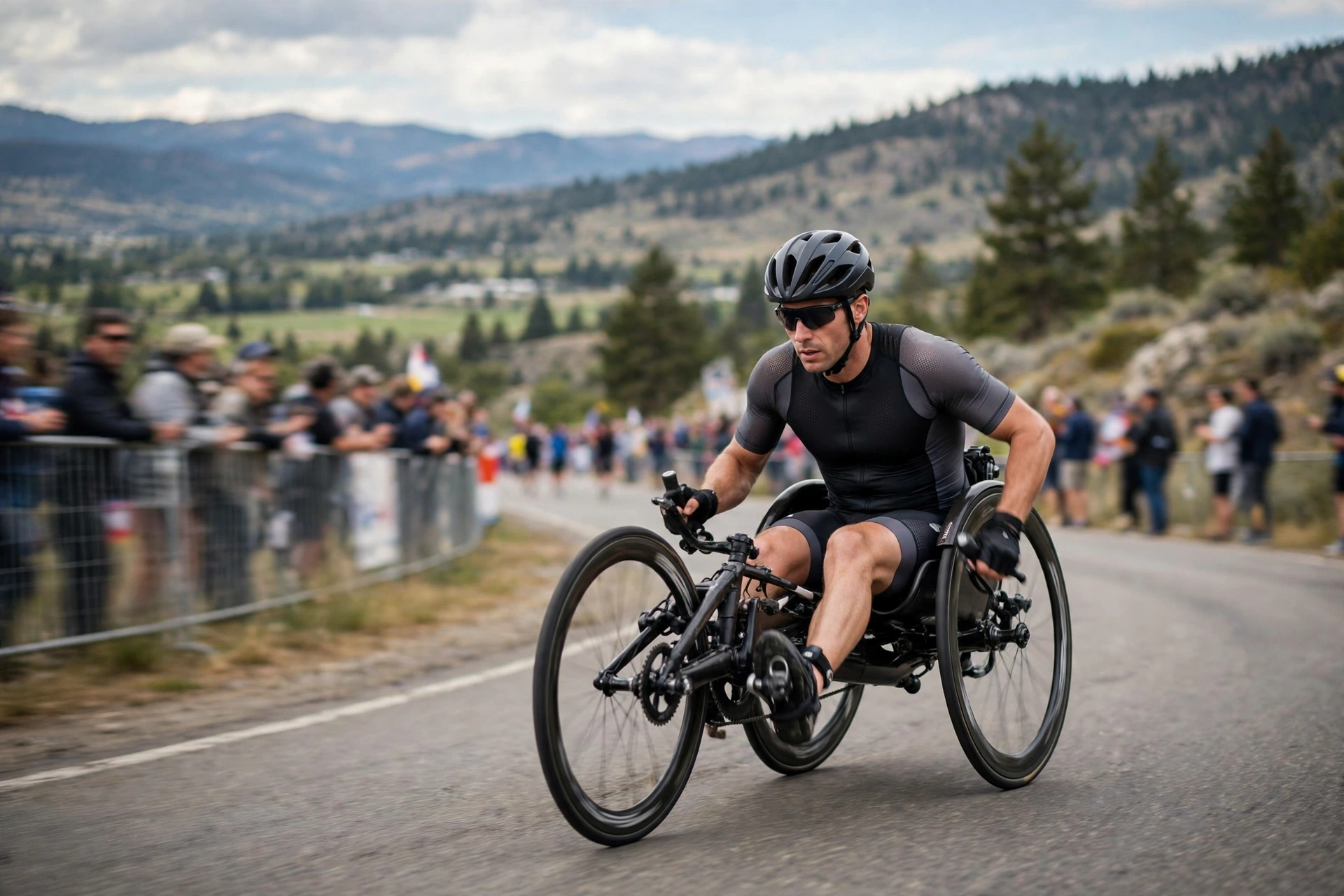
The main difference is the riding position, which depends on the type of bike. Athletes on standard bikes sit upright or in a road position, much like any other triathlete, and a normal road helmet suits them well. Athletes on handcycles lie back in a reclined position, with their head lower and further back, so the helmet must fit well in that reclined posture and stay stable when the rider is pushing hard with their arms. A helmet that fits perfectly upright may sit differently when the rider is lying back.
Tandem riders, who are usually athletes with a visual impairment riding with a sighted pilot, sit in the rear seat of a two-person bike. The pilot steers from the front, and the rear rider — the stoker — pedals and balances. Both riders wear helmets, and the rear rider’s helmet must fit well in the upright tandem position, with a clear view over the pilot’s shoulder. The helmets are the same type as any road helmet, but the fit has to work for the tandem geometry.
What Should Para Triathletes Look for in a Helmet?
Fit comes first. The helmet should sit level on the head, feel snug all round, and stay put when you shake your head or lean into your riding position. It should not press hard on the forehead or temples, and the straps should form a snug triangle around the ears and fasten firmly under the chin. Try the helmet on in your riding position — upright on a standard bike, reclined on a handcycle, or seated on a tandem — because the fit can change with posture.
Finally, check the certification and the condition. The helmet should carry the label of the standard required for your race, and it should be free of cracks, dents, or damage to the shell and lining. Check the straps and the buckle: they should fasten securely and be easy to adjust with one hand, because you will be putting the helmet on quickly in transition, often with wet hands. If you are learning about how helmets handle different kinds of impact, reading about what MIPS is for helmets can help you understand one of the technologies used in modern helmet design.
How Do Helmet Rules Work in Para Triathlon?
Helmet rules in para triathlon follow the same framework as in standard triathlon, with the race’s governing body setting the standard. The helmet must be certified, it must be fastened before the athlete mounts the bike, and it must stay fastened until the bike is racked. Officials in the transition area check helmets as athletes leave, and an athlete who breaks the rule can receive a time penalty or be disqualified, depending on the severity.
The rules also cover the condition of the helmet. A helmet with a cracked shell, a damaged lining, or a broken strap is not allowed, and officials can refuse to let an athlete start the bike leg with it. That is why it is worth checking your helmet the day before the race, not on the morning of it. Make sure the straps work, the buckle clicks shut, and the shell is undamaged, so there are no surprises in transition.
How Do You Care for a Para Triathlon Helmet?
After each ride or race, wipe the shell with a damp cloth and let the helmet air-dry in a well-ventilated place, away from direct sunlight and heat. The lining and pads can usually be removed and washed with mild soap, which keeps the helmet fresh and comfortable. Do not use harsh chemicals or solvents on the shell, and do not put the helmet in a washing machine or a dishwasher, which can damage the foam and the straps.
Check the helmet regularly for damage. Look for cracks in the shell, dents, or compressed foam in the lining, and check the straps and buckle for wear. A helmet that has been in a crash should be replaced, even if the damage is not visible — the foam inside can be damaged in ways you cannot see, and it may not protect properly in a second impact. In general terms, a helmet that has taken a hard hit has done its job and should be retired.
Frequently Asked Questions
Q: Do para triathletes wear a helmet for the whole race?
A: In general terms, no — the helmet is worn only for the bike leg. It goes on in transition after the swim and comes off once the bike is racked, before the run leg starts.
Q: Can para triathletes use a standard road cycling helmet?
A: In general terms, yes. Most para triathletes use a standard road helmet, though the fit should be checked in the athlete’s riding position — upright, reclined on a handcycle, or seated on a tandem.
Q: What happens if a helmet is not fastened in transition?
A: In general terms, the athlete can be penalised. The helmet must be fastened before the bike is touched, and officials check this as athletes leave the transition area.

Olivia
Writer at Helmet Today, covering helmet reviews, fit and riding safety.