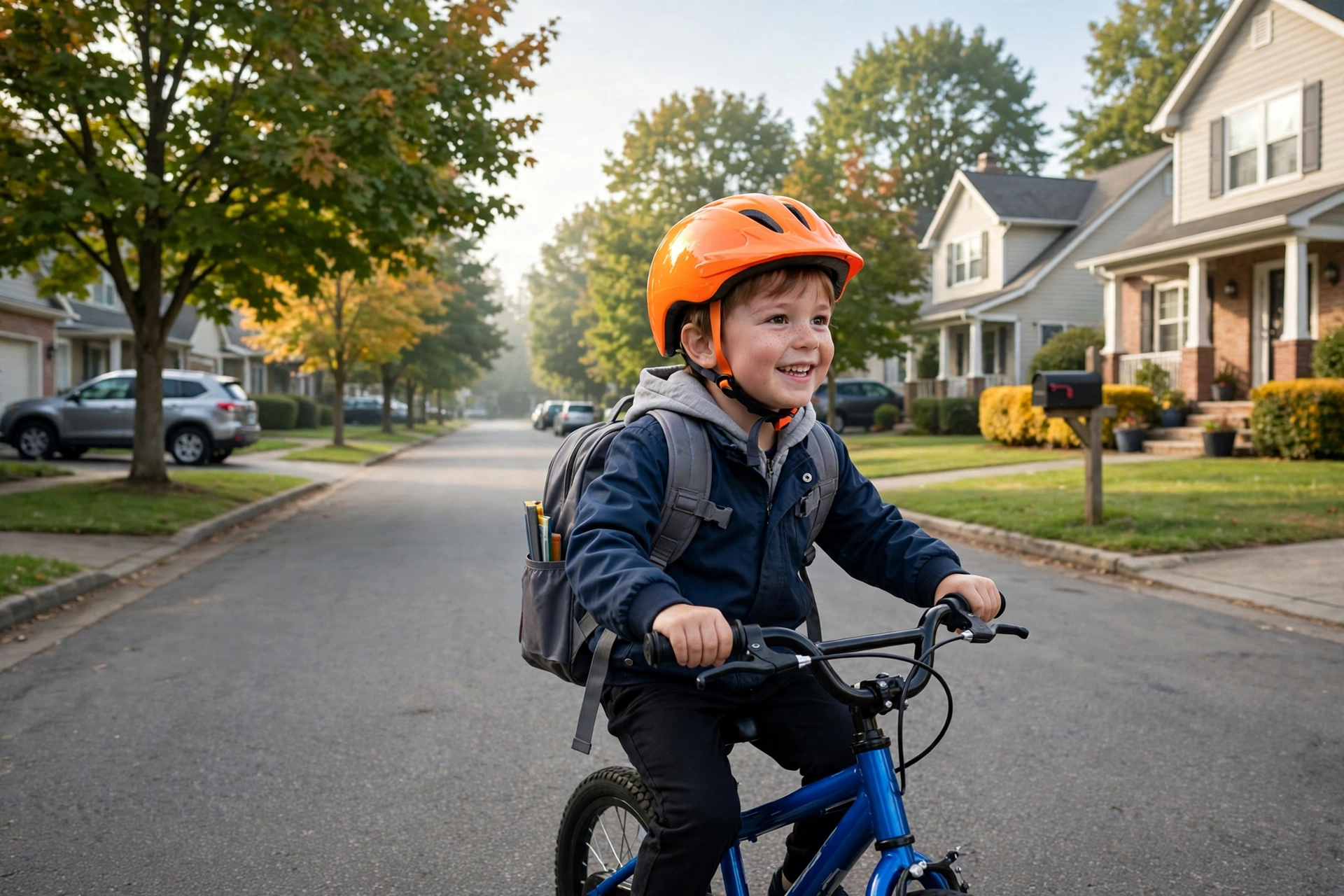
Yes — a five-year-old cycling to school should wear a helmet for every ride, without exception. A helmet is the most important piece of kit for a young rider, because the school run involves real roads, other people, parked cars and junctions. At five, children are still learning road awareness, and they need all the protection they can get.
Cycling to school is a big step for a five-year-old. It means longer rides, busier paths and more hazards than riding in the garden. This guide explains what kind of helmet suits a five-year-old, how to get the fit right, and how to build a safe school-run routine.
What Kind of Helmet Suits a Five-Year-Old?
A five-year-old needs a child’s helmet with a hard outer shell and a soft padded liner, in a size made for young school-age children. The helmet should sit low on the forehead, covering the top and sides of the head, and it should be light enough that the child can wear it for the whole ride without getting tired. A small peak or visor can help with sun and rain, and a rear light or reflective trim is a useful extra for the school run.
Visibility matters more at five than it did at three or four, because the school run may involve roads and crossings. A brightly coloured helmet is easier for drivers to see, and reflective stickers or trim help in dull light. The helmet should still be light and comfortable, because a child who finds it heavy or awkward will be tempted to leave it at home.
How Do You Get the Fit Right for a Five-Year-Old?
Start by measuring the child’s head with a soft tape measure, just above the eyebrows and around the widest part of the head. Use that measurement to pick the right size, and then try the helmet on. It should sit level, about two finger-widths above the eyebrows, and feel snug all round without pressing hard on one spot. If it rocks from side to side or slides forward over the eyes, it is the wrong size.
Next, adjust the straps. The side straps should meet in a V shape just below the ear, and the chin strap should be snug enough that you can only fit one or two fingers between the strap and the chin. The helmet should stay put when the child shakes their head. In general terms, a helmet that moves around is not protecting the head properly, however good it looks.
Check the fit every few weeks, because five-year-olds grow quickly. A helmet that fitted perfectly at the start of term may be too tight by the end of it, and a tight helmet is uncomfortable enough that a child will refuse to wear it. If the helmet presses on the forehead or leaves red marks, it is time to move up a size.
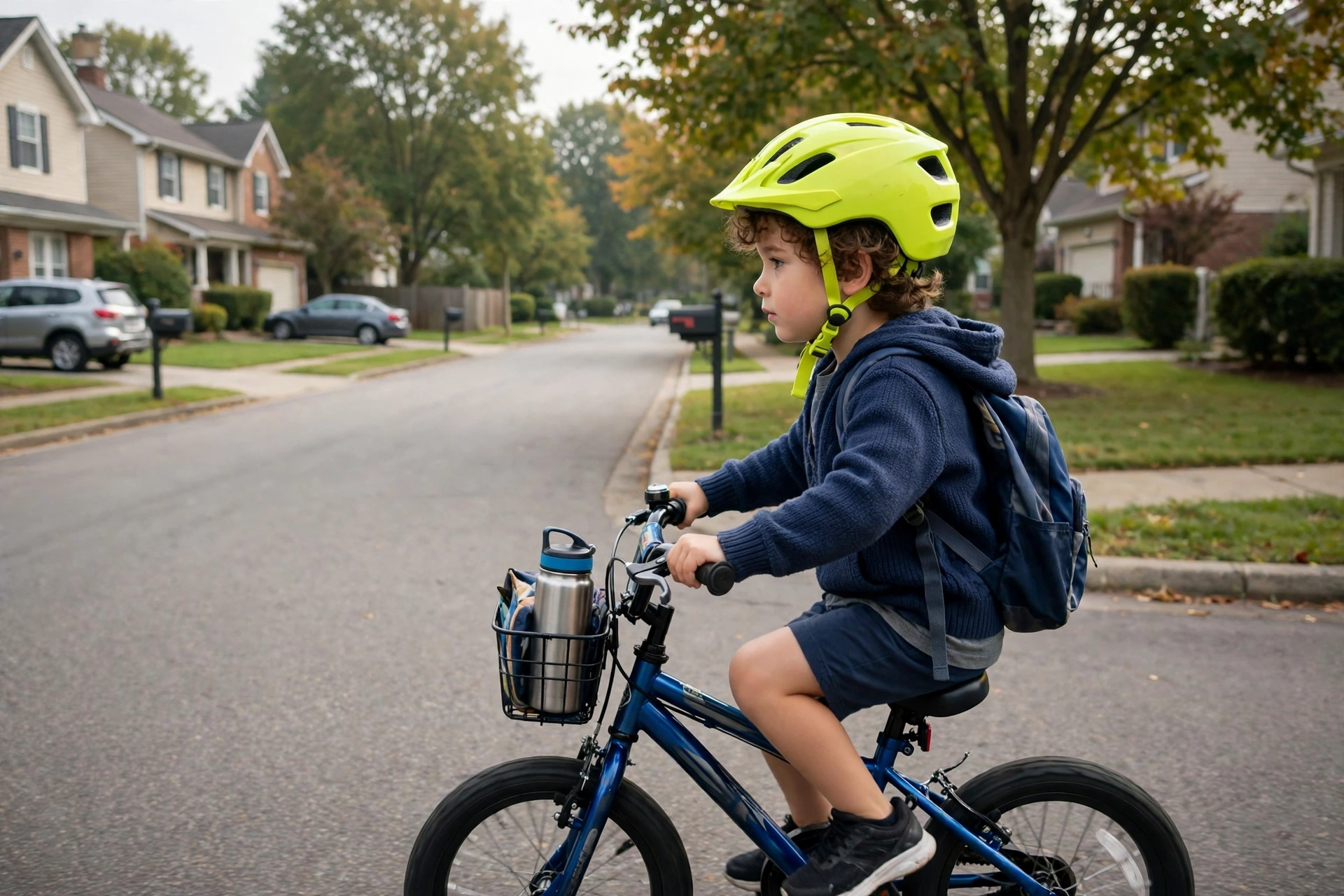
What Makes the School Run Different from Riding in the Park?
The school run involves other people. There are pedestrians on the pavement, cars pulling out of driveways, and junctions where the child must stop and look. A five-year-old is still learning to judge speed and distance, and they can be distracted by friends or by excitement about the school day. A helmet does not prevent a collision, but it protects the head if the child falls or is knocked off.
The route matters too. A quiet route with cycle paths is safer than a busy road, and a parent should ride the route with the child several times before letting them ride it alone. Even with a safe route, the helmet is non-negotiable, because the unexpected can happen on any road — a dog running out, a car door opening, or a pothole the child did not see.
What Should You Look for When Buying a Helmet for a Five-Year-Old?
Look for a helmet made for young children, with a light weight, a simple buckle that the child can learn to fasten alone, and a fit system that can be adjusted as the child grows. A dial or slider at the back can help fine-tune the fit, but it should be simple enough for a five-year-old to manage with a little help. Bright colours, reflective trim and fun patterns all help, because a child who likes their helmet is far more likely to wear it without a fuss.
Check that the helmet is comfortable enough for the whole school run. The liner should be soft, the straps should not rub, and the helmet should not press on the ears. A helmet that pinches or itches will end up hanging on the school fence, so comfort is not a luxury — it is what keeps the helmet on the child’s head. Try the helmet on in the shop if you can, and let the child wear it for a few minutes before you buy. If you are learning about how helmets handle different kinds of impact, reading about what MIPS is for helmets can help you understand one of the technologies used in modern helmet design.
How Do You Build a Safe School-Run Routine?
Make the helmet part of the morning routine, like shoes and a school bag. The helmet goes on before the bike leaves the house, and it stays on until the bike is parked at school. Riding together for the first few weeks helps the child learn the route, practise stopping at junctions, and get used to the rhythm of the school run.
Talk about the route with your child. Point out the places to slow down, the junctions to watch, and the spots where cars might pull out. A child who understands why they slow down is safer than a child who just follows rules they do not understand. The helmet is the last line of protection, and the routine around it is what keeps the child safe day after day.
Frequently Asked Questions
Q: Does a five-year-old need a helmet for a short ride to school?
A: In general terms, yes. Even a short ride involves roads and junctions, and a fall at low speed can still hurt the head. A helmet should be worn for every ride.
Q: How often should a child’s helmet be replaced?
A: In general terms, replace it when the child outgrows it, or after any hard knock. Check the fit every few weeks, because young children grow quickly and a tight helmet will not be worn.
Q: What if my five-year-old refuses to wear a helmet to school?
A: Let them choose the colour, make the helmet part of the morning routine, and wear your own helmet when you ride with them. Stay consistent — the helmet is part of cycling, every time.

Olivia
Writer at Helmet Today, covering helmet reviews, fit and riding safety.