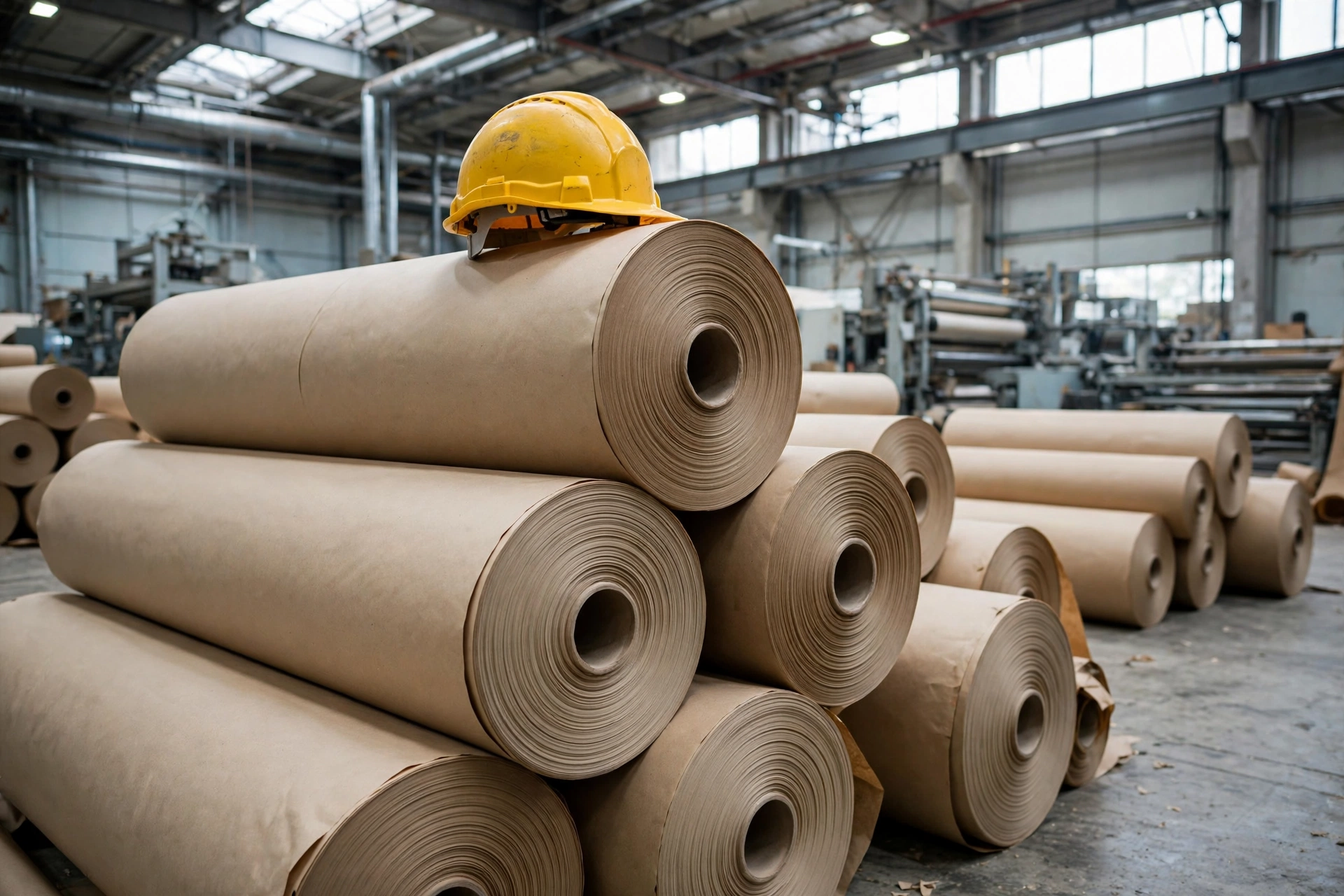
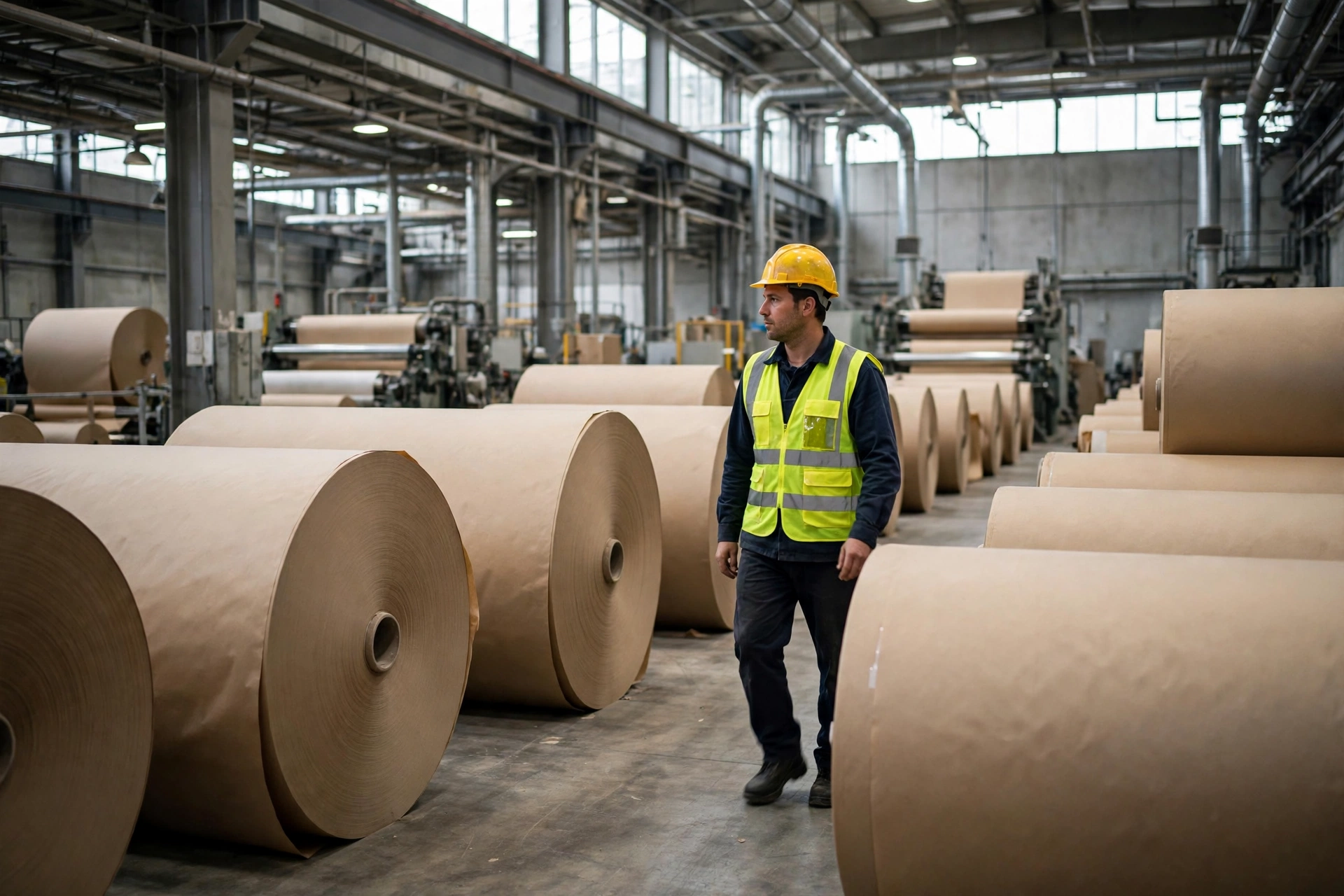
A paper mill worker helmet is, in general terms, a hard hat that protects the head from falling objects, knocks against machinery and the everyday hazards of a paper mill. Paper mills are large, busy industrial sites with tall machinery, overhead cranes, moving reels of paper and wet, slippery floors. A worker’s head is exposed to falling tools, swinging loads and low beams, so a helmet is a basic part of the protective gear worn on the mill floor, alongside high-visibility clothing, safety footwear and ear protection.
Making paper involves huge rolls of pulp and finished paper, heavy machinery that runs around the clock, and steam, heat and moisture throughout the building. Workers move between machines, climb stairs and walkways, and handle reels that can weigh a great deal. This guide explains what a paper mill helmet needs to do, which features help in a hot and humid mill, and how to look after one, all in general terms.
What Hazards Are Found in a Paper Mill?
The most obvious hazard is something falling from above. Tools, bolts, pieces of machinery and paper offcuts can drop from walkways, platforms and overhead cranes. A reel of paper can shed material as it is moved, and a load swinging on a crane can strike a worker who is standing in the wrong place. Even a small object falling from a height can cause a painful knock, and a heavier one can cause a serious injury.
Knocks and bumps are just as common. Mills are full of pipes, valves, beams and machine frames, often at head height and often in places where a worker is looking at the machine rather than at what is above them. Climbing stairs, ducking under a conveyor or stepping around a reel can all lead to a bump. These knocks are usually minor, but they happen often enough to make head protection worthwhile.
What Kind of Helmet Suits Paper Mill Work?
In general terms, the helmet for this work is a hard hat of the kind used across heavy industry. It has a rigid outer shell that spreads the force of an impact, and an inner suspension or padding system that holds the shell away from the head and absorbs some of the shock. This is the basic design that has protected industrial workers for many years, and it suits paper mill work well.
Some hard hats are made with a short peak at the front, which helps keep moisture and drips out of the eyes. Others have a slightly longer brim all the way around, which gives more protection from falling water and from objects dropping from above. Which one suits a mill depends on the work and the area, and many workers use the short-peak style because it is lighter and less likely to catch on machinery.
Fit is adjusted with a simple system at the back or sides of the helmet, often a dial or a sliding strap. The helmet should sit level on the head and feel snug without pressing painfully anywhere. It should not wobble when the wearer bends down or moves quickly, because a helmet that shifts around is a distraction on a busy mill floor. If you are learning about how helmets handle different kinds of impact, reading about what MIPS is for helmets can help you understand one of the technologies used in modern helmet design.
What Features Help in a Hot, Humid Mill?
Ventilation matters more in a paper mill than in many other workplaces, because the air is often hot and damp. Vents in the shell let heat and moisture escape from the head and help keep the wearer cooler. A helmet with good airflow is easier to wear for a full shift, and it is less likely to be taken off because it feels hot and uncomfortable.
The sweatband and padding inside the helmet matter too. They absorb sweat and moisture, and they should be easy to remove and wash or replace, because they will need cleaning often in a humid mill. A worn-out sweatband is uncomfortable, and padding that has gone flat or stayed damp does not cushion the head as well. Most helmets have replacement parts available, and swapping a sweatband is a simple job that makes a real difference to comfort.
How Does a Helmet Fit with Other Safety Gear?
A paper mill helmet rarely works alone. Workers usually wear ear protection, because the machines are loud, and they may need safety glasses or a face shield for certain jobs. The helmet should have slots or clips for attaching ear defenders, and it should leave room for safety glasses without pressing on the ears or the temples.
High-visibility clothing is also part of the standard gear, and the helmet should be easy to see as well. A helmet in a bright colour, such as white, yellow or orange, is easier for colleagues and crane operators to spot. Some helmets have reflective strips, which help in the darker corners of the mill and on night shifts.
How Should the Helmet Be Maintained?
A work helmet needs regular care if it is to keep doing its job. It should be cleaned often, because paper dust, moisture and grime can build up on the shell and the padding. Warm water and mild soap are usually enough, and the helmet should be left to dry naturally in a well-ventilated place rather than placed on a heater or in strong sunlight. Harsh chemicals and solvents should be avoided, as they can damage the shell.
The inside of the helmet deserves attention too. The suspension or padding system should be checked for wear, and any part that is frayed, cracked or flattened should be replaced. A helmet that has taken a heavy knock, been dropped from a height, or shows cracks or dents should be taken out of service, even if the damage looks minor, because the shell may have been weakened in a way that is hard to see.
- Inspect the shell and suspension before each shift for cracks or damage.
- Replace the helmet after any heavy impact, even if no damage is visible.
- Clean the shell and padding regularly with warm water and mild soap.
- Store the helmet in a cool, dry place away from sunlight and chemicals.
- Follow the maker’s guidance on the helmet’s working life.
Storage matters as well. A helmet should be kept somewhere cool and dry, away from direct sunlight, steam and chemicals. It should not be used as a seat, a step or a storage box, and it should not be thrown onto a pile of gear where it can be crushed or scratched. A helmet that is looked after lasts longer and protects better.
Frequently Asked Questions
Q: Does a paper mill worker need a helmet?
A: In general terms, yes. Paper mills involve falling objects, moving cranes and reels, low beams and regular knocks, so head protection is a sensible part of the mill’s protective gear, alongside ear protection and high-visibility clothing.
Q: What is the hardest part of wearing a helmet in a paper mill?
A: Heat and humidity are the biggest comfort challenges, because the mill air is often hot and damp. Good ventilation, a clean sweatband and a light helmet make the biggest difference to comfort over a long shift.
Q: How often should a paper mill helmet be replaced?
A: It should be replaced after any heavy impact or visible damage, and after the working life given in the maker’s guidance. In general terms, a hard hat in daily use is replaced after a number of years even if it looks fine, because the materials can weaken over time.

Olivia
Writer at Helmet Today, covering helmet reviews, fit and riding safety.