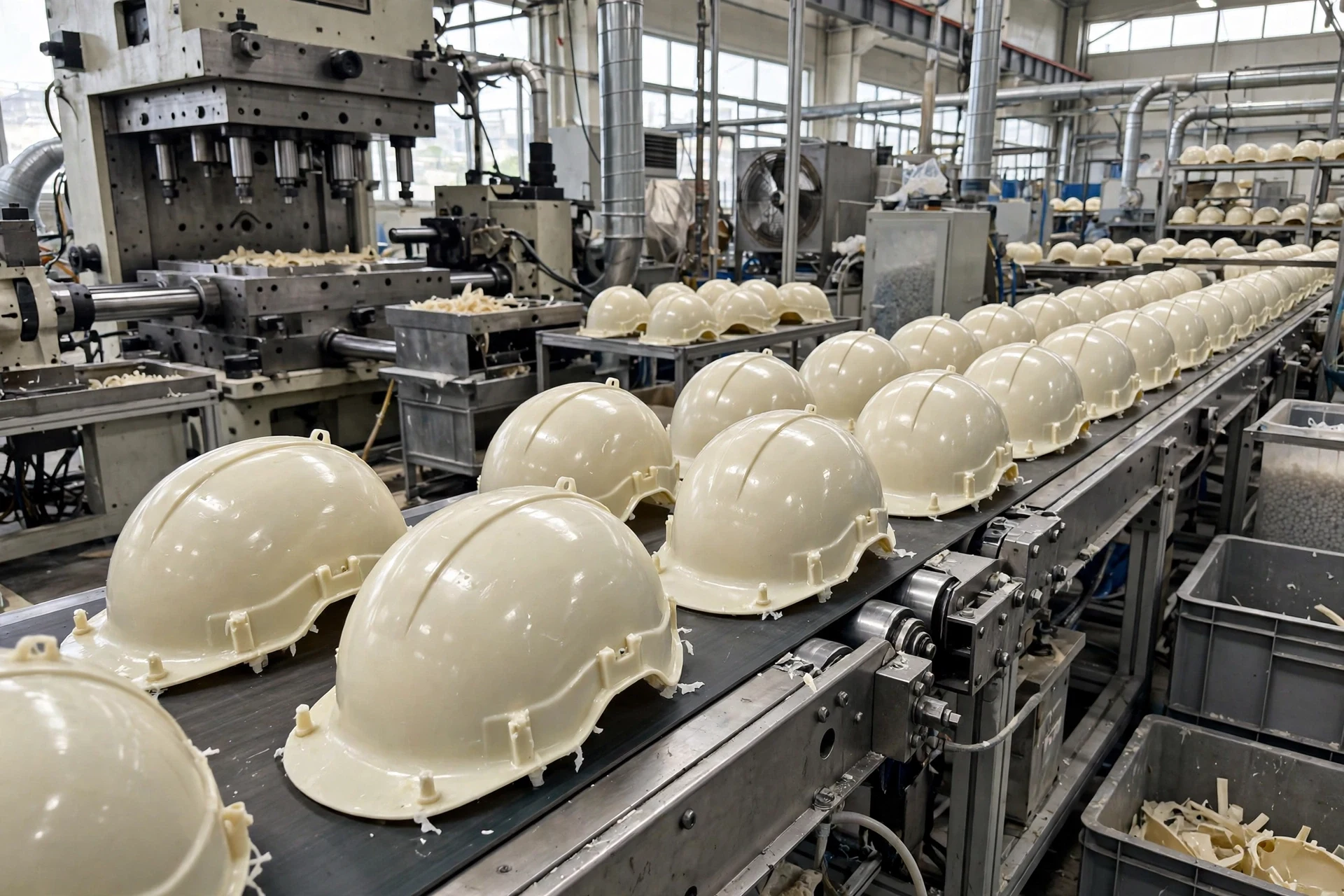
Injection-moulded helmet shells are made by heating plastic pellets until they melt, then forcing the melted plastic under pressure into a steel mould shaped like a helmet, where it cools and hardens into a finished shell. This is one of the most common ways of making helmet shells for motorcycle, bicycle, ski, and work helmets, because it produces strong, consistent shells quickly and at a reasonable cost. The process is largely automated once the mould is ready.
What Materials Are Used for Injection-Moulded Shells?
Injection-moulded helmet shells are usually made from thermoplastic materials, which are plastics that soften when heated and harden again when cooled. Common choices include polycarbonate, ABS, and various blends of the two, each chosen for a balance of strength, weight, and cost. Polycarbonate is known for being tough and resistant to cracking, while ABS is lighter on cost and easy to mould into detailed shapes.
Some makers add fibres or fillers to the plastic to improve its strength or stiffness, and the colour of the shell comes from pigments mixed into the pellets before moulding. Because the colour runs through the whole shell, a scratch on the surface is often less noticeable than it would be on a painted shell. The choice of material affects how the shell behaves in an impact and how much it weighs.
How Does the Injection Moulding Process Work?
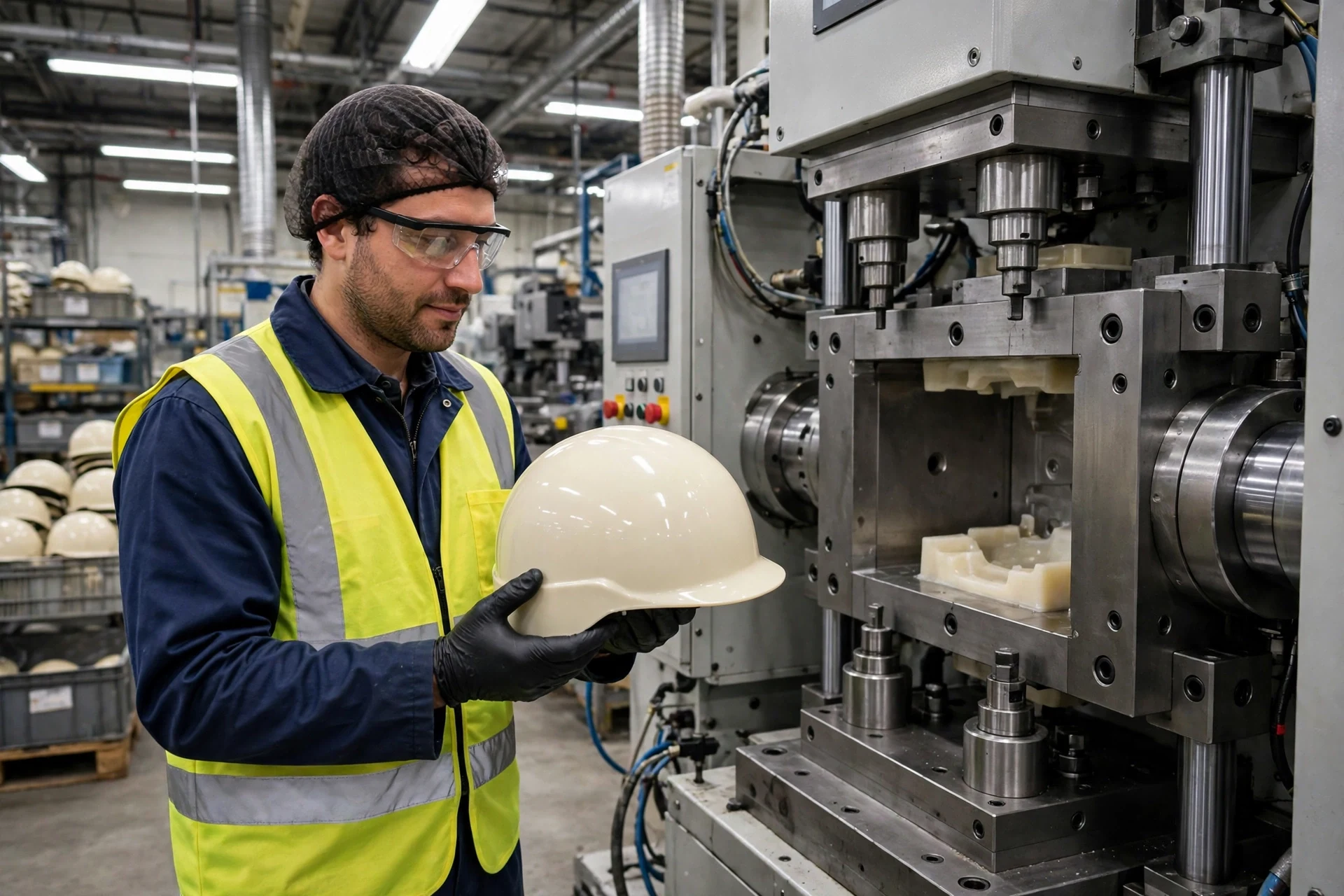
The process starts with small plastic pellets, which are fed into a heated barrel and melted into a thick liquid. A screw inside the barrel pushes the melted plastic forward and injects it at high pressure into a steel mould that has been machined into the shape of a helmet shell. The mould is usually made in two halves that close together, leaving a hollow space in the shape of the shell between them.
Once the plastic has filled the mould, it is held under pressure while it cools and hardens, which keeps it from shrinking unevenly. The mould then opens and the finished shell is removed, ready for trimming and finishing. If you want to understand one of the safety technologies used in modern helmets, reading about what MIPS is for helmets is a good place to start, though the shell-making process and the safety system are separate parts of the helmet’s design.
What Happens After the Shell Comes Out of the Mould?
After the shell comes out of the mould, it still needs several finishing steps before it becomes part of a helmet. The edges are trimmed to remove any extra plastic left where the mould halves met, and the shell is checked for defects such as thin spots, bubbles, or warping. Vents and holes for the visor or straps are then cut or drilled, if they were not formed directly in the mould.
The shell may then be painted, decorated with graphics, or given a clear protective coating, depending on the design. After that, the impact-absorbing foam liner is fitted inside, along with the comfort padding, straps, and any visor or peak. Each finished helmet is checked again before it is packed, so that only shells that meet the maker’s quality checks reach the shops. Some makers also test finished helmets in batches, checking that the shell and foam work together as designed before the helmets are boxed and sent out to shops.
What Are the Benefits of Injection Moulding?
One of the main benefits of injection moulding is consistency. Because every shell comes from the same steel mould, each one is almost identical to the next, which means the fit and the protection are reliable from helmet to helmet. The process is also fast once the mould is made: a single machine can produce many shells in a day, which keeps the cost of each helmet down.
The process also allows for complex shapes. Vents, ridges, and mounting points for visors can be formed directly in the mould, which would be harder and more expensive to do by hand. In general terms, injection moulding is a good fit for helmets that need to be made in large numbers at a price most riders can afford, while still meeting safety standards.
Are There Any Downsides to Injection-Moulded Shells?
Injection-moulded shells have some downsides. One is the cost of the mould itself: machining a steel mould in the shape of a helmet is expensive, so the process only makes sense when a large number of shells will be made from it. A small maker producing only a few helmets would find the cost hard to justify, which is one reason some high-end helmets use other methods.
The plastic used in injection moulding can also be sensitive to heat and to some chemicals. A helmet left in a hot car or exposed to strong solvents may warp or weaken over time, and the shell can become brittle with age in general terms. The shell is also limited by the properties of the plastic, so it may need to be thicker than a fibre-composite shell to reach the same level of strength, which can add weight.
How Do Injection-Moulded Shells Compare With Other Methods?
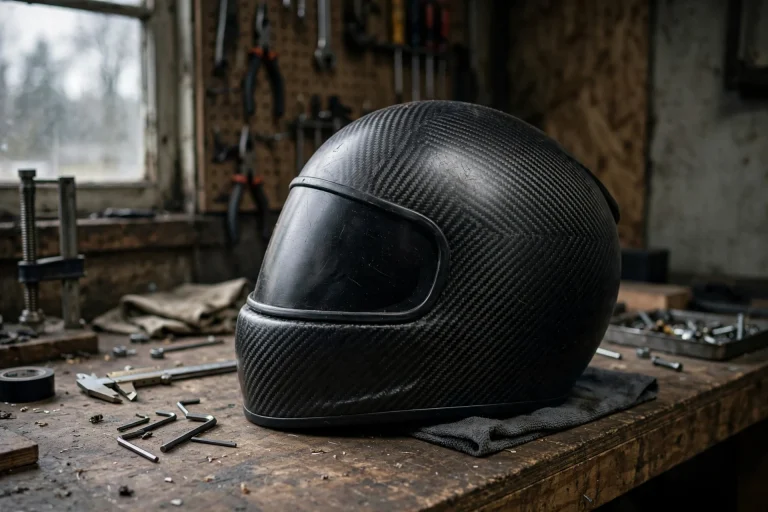
Injection-moulded shells are often compared with fibre-composite shells, which are made by laying sheets of fibre, such as fibreglass or carbon fibre, into a mould and bonding them with resin. Fibre-composite shells can be very strong and light, but they take more time and skilled labour to make, which makes them more expensive. Injection moulding, by contrast, is faster and cheaper, which is why it is used for most mid-priced helmets.
Another method is thermoforming, where a heated sheet of plastic is pressed over a mould. This is simpler than injection moulding but gives less control over thickness and detail. In general terms, each method has its place: injection moulding suits mass-produced helmets, fibre composites suit high-performance helmets, and thermoforming suits simpler, lower-cost designs. The safety of the finished helmet depends on the whole design, not just the method used to make the shell.
Are injection-moulded helmet shells safe?
Yes, in general terms they are safe when the helmet is well designed and meets a recognised safety standard for its intended use. The shell material, thickness, and foam liner all work together to protect the head.
What plastic is used for injection-moulded helmet shells?
Polycarbonate and ABS are the most common choices, sometimes blended together. Polycarbonate is known for toughness, while ABS is valued for its ease of moulding and lower cost.
Can an injection-moulded shell be repaired if it cracks?
No, a cracked helmet shell should not be repaired. A crack can weaken the shell in ways that are hard to see, so a helmet with a cracked shell should be replaced.

Olivia
Writer at Helmet Today, covering helmet reviews, fit and riding safety.