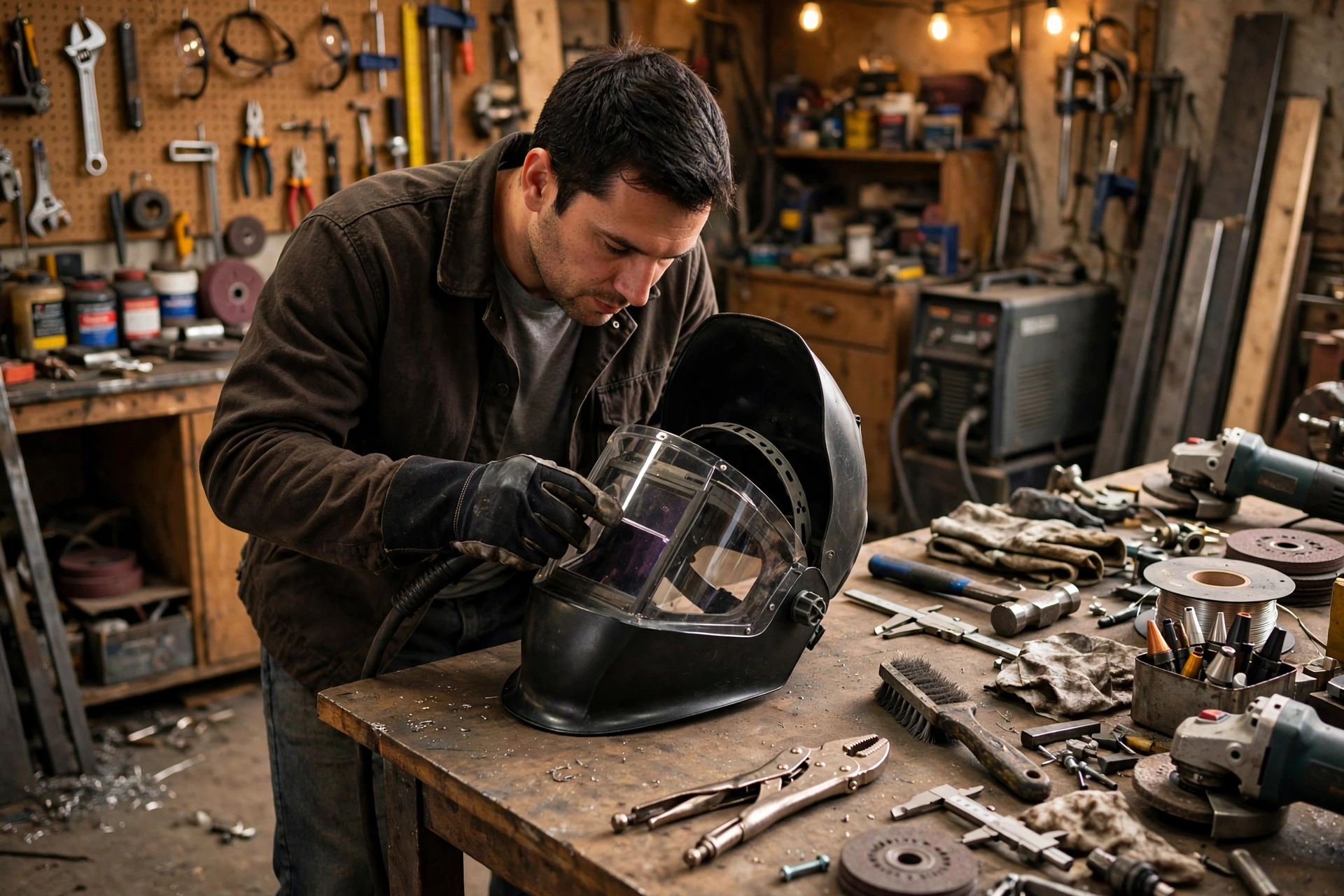
Welding helmet lens replacement means swapping a worn, scratched, or damaged lens in a welding helmet for a fresh one, so the welder can see clearly and stay protected. Most welding helmets have a clear outer cover lens, an auto-darkening filter or fixed shade lens in the middle, and sometimes a clear inner lens, and each of these can be replaced when it wears out. Lenses take a lot of abuse from sparks, spatter, and heat, so they need replacing far more often than the helmet shell. In general terms, a fresh lens is a cheap and simple job that keeps both vision and protection in good shape.
What Is a Welding Helmet Lens?
A welding helmet lens is the window the welder looks through, and it does two jobs at once: it lets the welder see the work, and it shields the eyes from the bright arc, sparks, and ultraviolet light of welding. In a modern auto-darkening helmet, the main lens is an electronic filter that darkens in a fraction of a second when the arc strikes, then lightens again when welding stops. Older or simpler helmets use a fixed shade lens that stays dark all the time.
Around the main filter sit the cover lenses: a clear outer lens that takes the brunt of sparks and spatter, and often a clear inner lens that protects the filter from the inside. These cover lenses are sacrificial parts, meant to be replaced regularly, while the filter itself lasts much longer. In general terms, the lens system works as a team, and keeping each part in good condition is what keeps the welder’s eyes safe.
When Should You Replace a Welding Helmet Lens?
A welding helmet lens should be replaced when it is scratched, pitted, cracked, or so dirty that it is hard to see through. The outer cover lens is the one that wears out fastest, because it sits closest to the sparks and spatter, and it may need replacing every few days or weeks depending on how much welding is done. Small pits and scratches scatter light and blur the view, which makes welding harder and less accurate.
The inner lens and the filter itself need replacing less often, but they should still be checked regularly. If the auto-darkening filter no longer darkens properly, flickers, or shows dark spots, it may need attention or replacement. If you want to understand one of the safety technologies used in modern helmets, reading about what MIPS is for helmets is a good place to start, though that system is not used in welding helmets. In general terms, any lens that impairs vision or protection should be replaced promptly rather than worked around.
What Tools and Parts Do You Need?
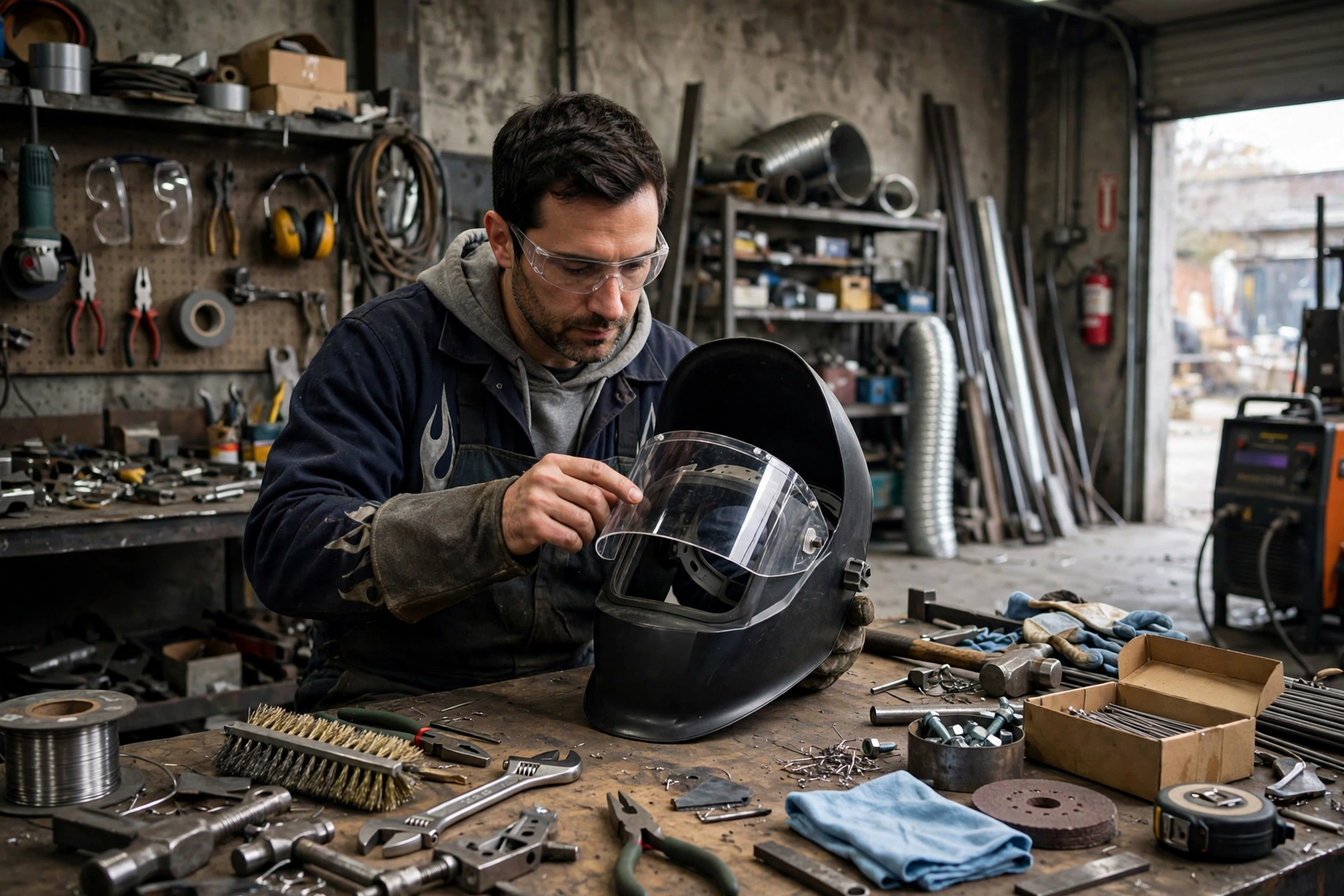
Replacing a welding helmet lens is usually a simple job that needs no special tools. Most helmets hold the lens in place with a frame, a retaining clip, or a set of small screws, and these can be undone by hand or with a basic screwdriver. The main thing to get right is the replacement lens itself: it must match the helmet model and be the correct size and shade, so checking the helmet manual or the markings on the old lens is a sensible first step.
It is worth having a clean cloth and a safe, flat surface to work on, so the new lens does not pick up dirt or scratches before it is fitted. The lens should be handled by its edges, since fingerprints and smudges on the viewing area can blur the welder’s view. Keeping a spare cover lens or two in the workshop is a good idea, since the outer lens is a part that wears out often and is easy to swap when a spare is close at hand.
How Do You Replace the Outer Cover Lens?
To replace the outer cover lens, first remove the lens frame or retaining clip from the front of the helmet, following the method for your helmet model. The old cover lens can then be lifted out and set aside. It is worth wiping the area behind it gently with a clean cloth, since dust and spatter can collect there, but the filter itself should be handled with care and not scrubbed.
Next, take the new cover lens and fit it into the frame in the same position as the old one, making sure it sits flat and is held securely all round. Then refit the frame or clip and check that the lens does not rattle or move. A quick look through the helmet before welding confirms that the view is clear and the lens is seated properly. In general terms, the whole job takes only a few minutes once you have done it once or twice.
How Do You Replace the Inner Lens and Filter?
The inner lens is replaced in a similar way to the outer one, but from inside the helmet. The retaining frame on the inside is removed, the old inner lens is lifted out, and a new one is fitted in its place. This lens protects the back of the filter from sweat and dust, and it can become cloudy or scratched over time, so replacing it restores a clear view through the helmet.
Replacing the auto-darkening filter itself is a bigger job, and it is worth checking the helmet manual first, since the filter is the most expensive part and is held in place differently from the cover lenses. In many helmets, the filter lifts out once the cover lenses and frame are removed, and a new one slots in the same way. If the filter is not darkening properly, it is worth checking the batteries or the solar cell first, since a flat battery is a common cause and a much cheaper fix than a new filter.
How Do You Keep Welding Lenses in Good Condition?
Welding lenses last longer when the helmet is stored properly and the lenses are handled with care. Storing the helmet in a bag or on a hook, away from dust and knocks, keeps the lenses cleaner for longer. Wiping lenses with a soft, clean cloth rather than a rough rag helps prevent scratches, and the lenses should not be cleaned with harsh solvents that can damage the coatings.
It is also worth keeping the helmet away from heavy spatter when it is not being worn, and replacing the outer cover lens as soon as it becomes pitted or scratched rather than waiting until the view is badly blurred. In general terms, a cover lens is a cheap, replaceable part, and changing it early protects the more expensive filter behind it. A little routine care keeps the view clear and the eyes protected, job after job.
How often should a welding helmet outer lens be replaced?
It depends on how much welding is done, but in general terms the outer cover lens is a wear item that may need replacing every few days or weeks of regular use. Replace it as soon as scratches or pitting blur the view.
Can I use any cover lens in my welding helmet?
No, the lens must match your helmet model in size and shape, and the filter must be the correct shade for the welding you do. Check the helmet manual or the markings on the old lens before buying a replacement.
Why is my auto-darkening lens not darkening?
A flat battery is a common cause, so check the batteries and the solar cell first. If the filter still does not darken, or it flickers or shows dark spots, it may need replacing.

Olivia
Writer at Helmet Today, covering helmet reviews, fit and riding safety.