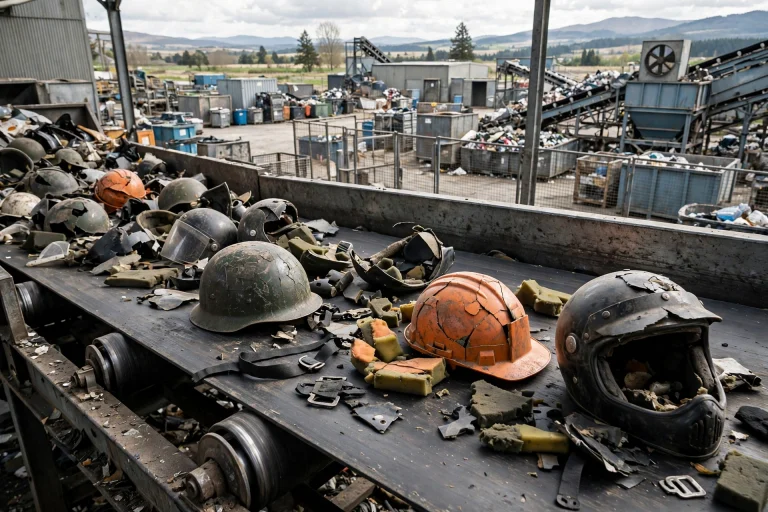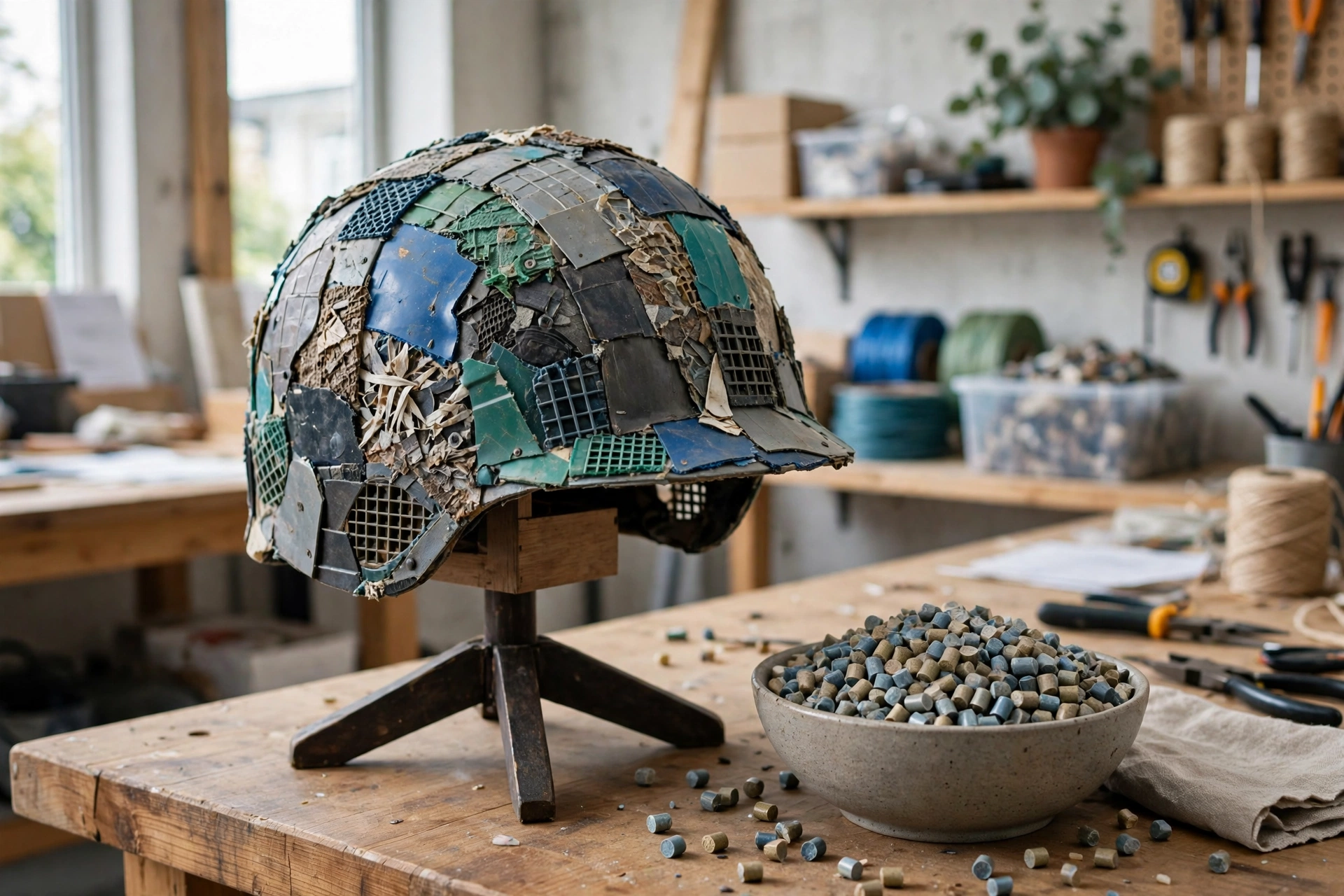
A circular economy helmet is a helmet designed so its materials can be repaired, reused, and recycled instead of being thrown away at the end of its life. In the usual way of making things, a helmet is made, sold, worn, and then thrown away when it is old or damaged. That is a straight line from factory to landfill. A circular economy helmet tries to turn that line into a loop: the materials are kept in use for as long as possible, and when the helmet can no longer be worn, its parts are recovered and used to make something new. The idea is simple, but it changes how a helmet is designed, sold, and dealt with when it is worn out.
What does circular economy mean for helmets?
The circular economy means keeping materials in use instead of throwing them away. In the usual linear economy, raw materials are taken from the earth, made into a product, used once, and then thrown away. The circular economy tries to break that pattern by designing products that last longer, can be repaired, and can be taken apart so their materials can be used again. For helmets, that means a helmet that is built to be fixed, not just replaced, and built so that its shell, foam, and straps can be separated when the helmet is worn out.
For a helmet, the circular idea touches every stage of its life. It starts with the materials: a circular helmet uses materials that can be recycled, or materials that are already recycled. It continues with the design: the helmet is made so that a broken strap or a worn pad can be replaced without throwing the whole helmet away. And it ends with what happens when the helmet is retired: instead of going to landfill, it is collected, taken apart, and its materials are used again. Each stage feeds into the next, and the loop keeps going.
How is a circular helmet designed differently?
A circular helmet is designed differently because the designer thinks about the end of the helmet’s life as well as the start. In a normal helmet, the shell is glued to the foam liner, the straps are riveted in place, and the pads are stuck on. That makes the helmet strong, but it also makes it almost impossible to take apart. A circular helmet uses screws, clips, and snap fittings instead of glue where it can, so that the parts can be separated without breaking them. The shell can be removed from the foam, the straps can be unclipped, and the pads can be taken out and washed or replaced.
The design also makes repair easier. A broken buckle or a worn strap should be a small fix, not a reason to buy a new helmet. A circular helmet is made with spare parts in mind, so that a rider can buy a new buckle, a new set of pads, or a new strap and fit them at home. The maker may sell those parts online, or the shop may stock them. This is a change from the usual approach, where a small fault often means the whole helmet is thrown away.
What materials do circular helmets use?
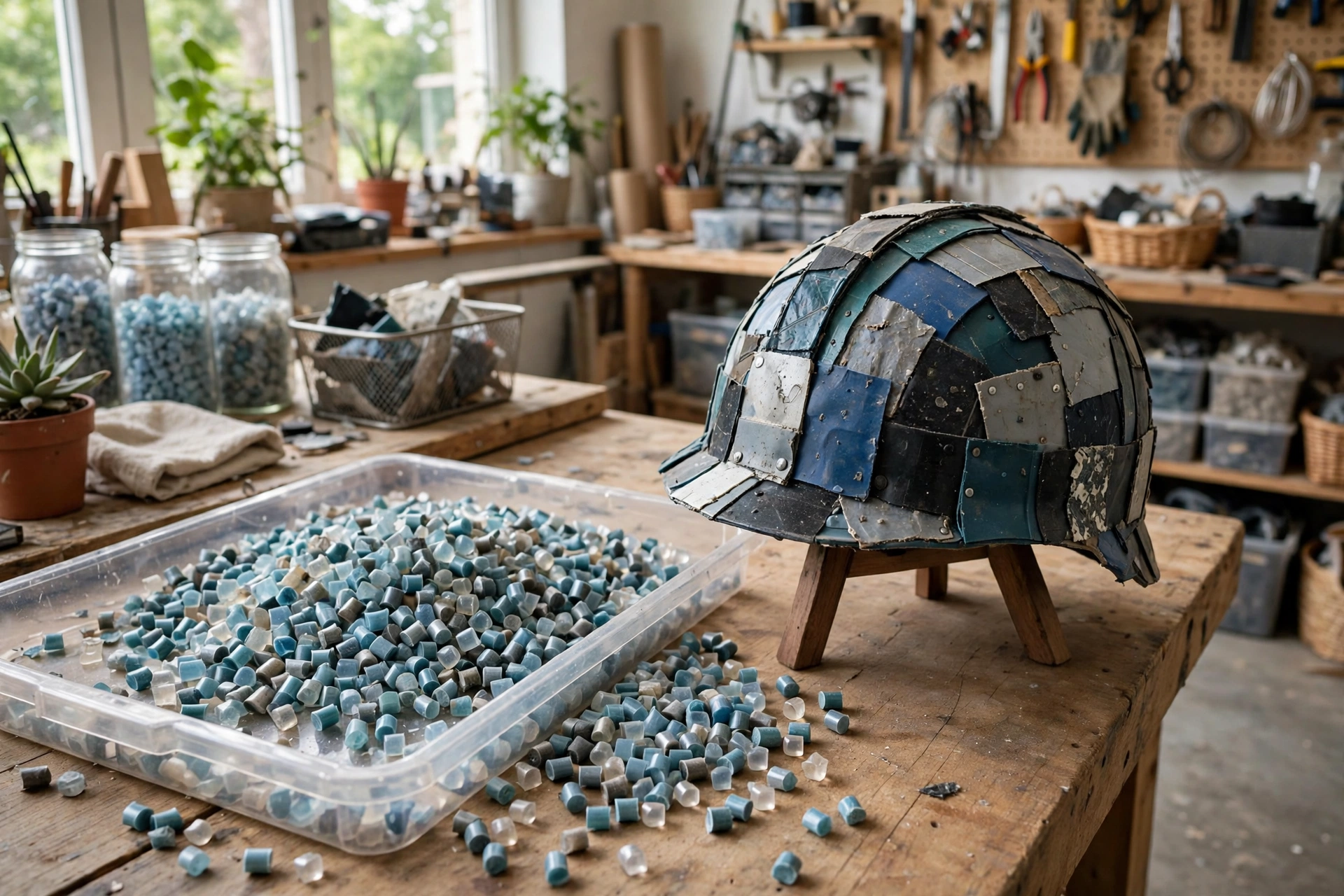
Circular helmets use materials that are chosen because they can be recycled, repaired, or reused. The shell may be made from a single type of plastic that is easy to recycle, rather than a mix of plastics that have to be separated. Some makers use recycled plastic for the shell, so that the helmet is made from material that has already been used once. Others use plastics that come from plants rather than from oil, although these are still uncommon in helmets and their recycling is not yet straightforward.
The foam liner is the hardest part to make circular, because expanded polystyrene is light, bulky, and hard to recycle. Some makers are testing liners made from other foams that can be recycled more easily, or from materials that can be composted. Others are looking at liners that can be replaced on their own, so that a helmet with a worn liner can be given a new one instead of being thrown away. These ideas are still new, and no single answer has become standard yet.
Can a circular helmet be repaired and recycled?
A circular helmet can be repaired more easily than a normal helmet, because it is designed with repair in mind. A broken buckle can be replaced, a worn pad can be swapped, and a strap can be changed without special tools. The maker may provide instructions online, and the parts may be available to buy separately. This means a helmet that would once have been thrown away can be kept in use for longer, which is the first and most important part of the circular economy: use things for longer before you recycle them.
Recycling a circular helmet is also easier, because it is designed to come apart. The shell can be separated from the foam, the straps can be unclipped, and the parts can be sorted by material. A recycler can then deal with each material on its own, without having to fight glue and rivets. The shell can be shredded and melted into pellets, the metal buckle can be melted down, and the foam can be collected for specialist recycling. The process is still not perfect, but it is much simpler than breaking down a normal helmet. A similar idea to MIPS shows how makers are adding new thinking to helmet design, and the circular economy is another example of that wider change.
How does the circular model change buying a helmet?
The circular model changes buying a helmet because it changes what the buyer is paying for. In the usual model, you buy a helmet, own it, and throw it away when it is worn out. In a circular model, you may lease the helmet, or buy it with a promise that the maker will take it back when you are done with it. Some makers offer a trade-in, where you return your old helmet and get a discount on a new one. Others run a subscription, where you pay a regular amount and the helmet is replaced when it needs to be, with the old one going back to the maker.
Are circular economy helmets available now?
Circular economy helmets are available now in a limited way, but they are not yet common. A few makers have started to design helmets that can be taken apart, repaired, and recycled, and some run take-back schemes where old helmets are collected and broken down. These are early steps, and the helmets are often sold in small numbers or in certain countries only. Most helmets on sale today are still made in the usual linear way, and most old helmets still end up in landfill.
What is the difference between a circular helmet and a normal helmet?
A circular helmet is designed to be repaired, taken apart, and recycled, while a normal helmet is usually glued together and hard to separate. The circular helmet keeps its materials in use for longer instead of sending them to landfill.
Can I recycle a circular helmet at home?
You can take it apart at home more easily than a normal helmet, because it uses clips and screws instead of glue. Check with the maker or your local recycling centre about which parts they accept.
Do circular helmets protect as well as normal helmets?
Yes, in general terms, a circular helmet must meet the same safety standards as any other helmet. The circular design changes how it is made and recycled, not how well it protects your head.

Olivia
Writer at Helmet Today, covering helmet reviews, fit and riding safety.