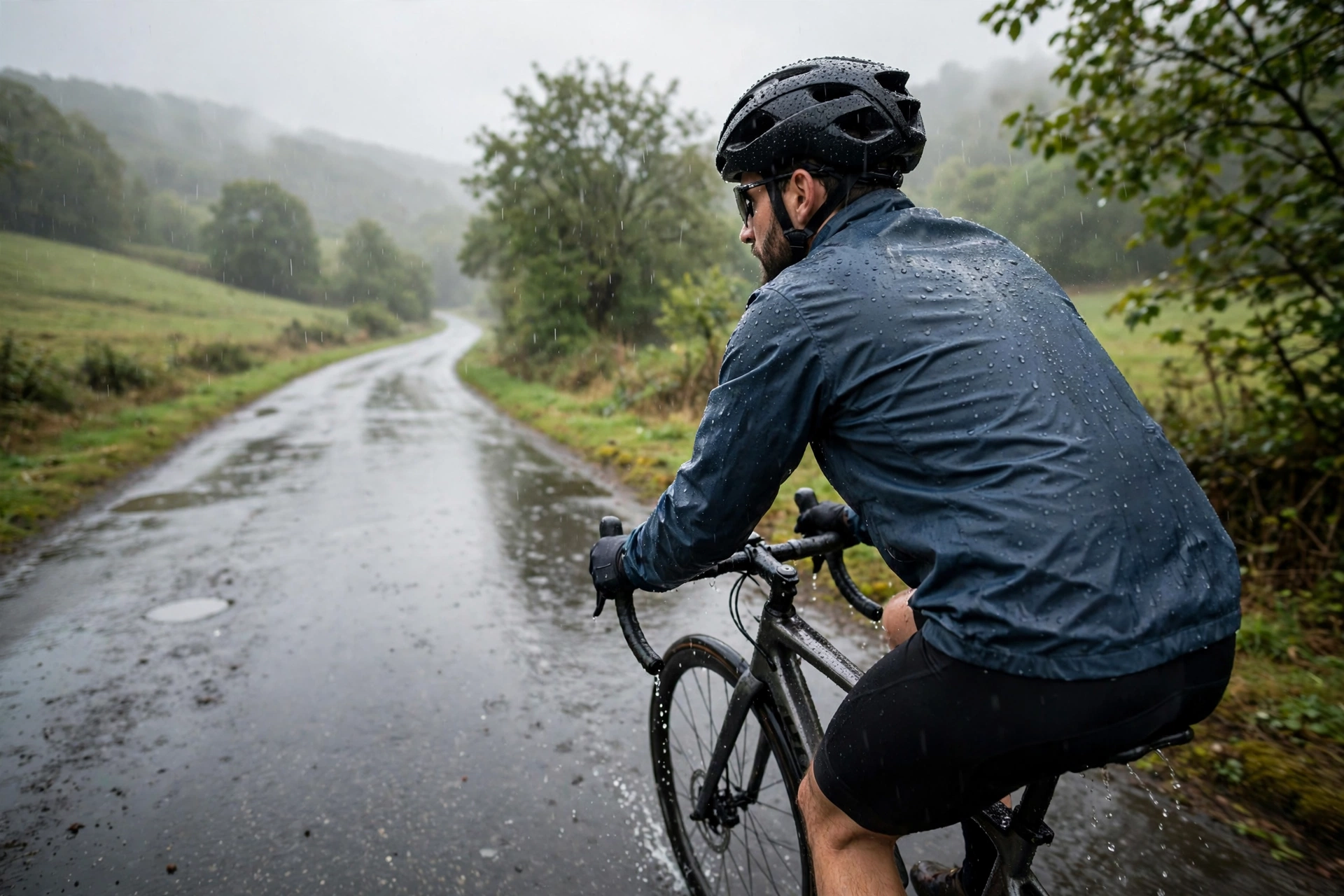
Can a helmet get wet in the rain? Yes, in general terms most helmets can get wet in the rain, and a short shower will not ruin a helmet, but you should dry the shell and the lining properly afterwards. Helmets are made to be used outdoors, and rain is part of riding, cycling, and working outside, so a well-made helmet is built to cope with getting wet from time to time.
That does not mean a helmet should be left soaking wet. The shell of most helmets is made to shed water, but the lining, the padding and the straps can hold damp, and if they stay damp they can start to smell, grow mould, or wear out sooner. A helmet that is dried properly after a wet ride will usually be fine, while one that is put away wet again and again will not last as long.
What happens when a helmet gets wet?
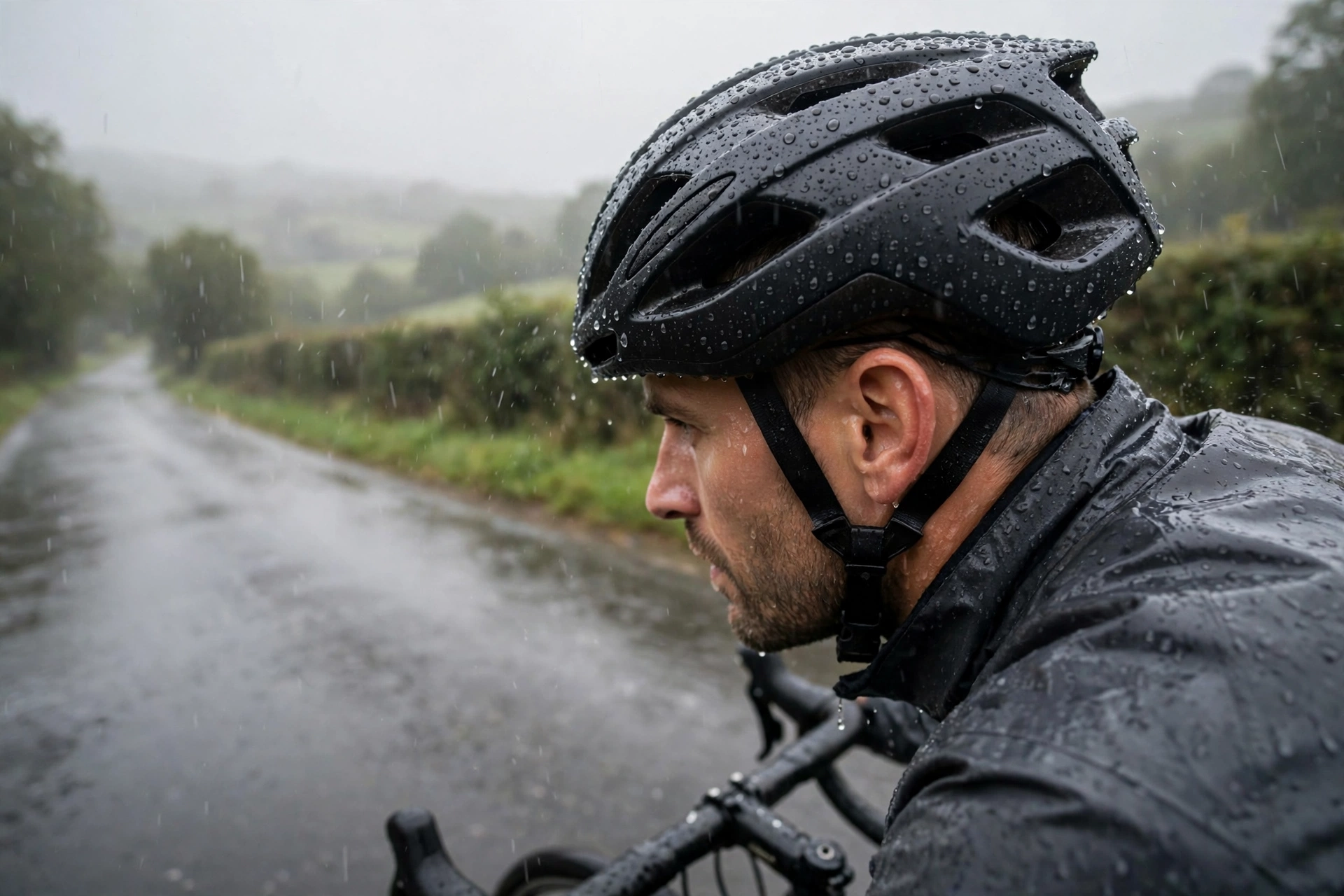
When a helmet gets wet, the outside shell usually sheds most of the water, and a little runs into the vents and onto the lining. The lining and the padding soak up water, and the straps can get damp too. The inner foam that absorbs impact in a crash is usually made from a material that does not soak up much water, but the soft comfort padding around it certainly can.
In the short term, a wet helmet is simply heavier and less comfortable to wear. The lining feels cold and clammy, and the straps can rub. In the longer term, if the helmet is left damp, the lining can start to smell, and in a warm, dark place it can grow mould. Damp can also weaken straps and stitching over time, and it can leave marks on the shell if the water is dirty.
Are some helmets more waterproof than others?
In general terms, some helmets cope with rain better than others. A smooth, hard shell sheds water well, while a helmet with a fabric cover or a soft outer can soak up more. Motorcycle helmets with a full visor keep the rain out of the face and off the lining better than an open-face helmet, and a helmet with a peak or a brim can help keep rain out of the eyes.
Ventilation plays a part too. A helmet with large, open vents lets rain in more easily, while a helmet with vents that can be closed keeps more water out. Some helmets are sold as water-resistant, which usually means the shell and the lining are made to cope with rain, not that the helmet will stay completely dry in a downpour. No ordinary helmet is fully waterproof in the sense of keeping every drop out in heavy rain.
How should you dry a wet helmet?
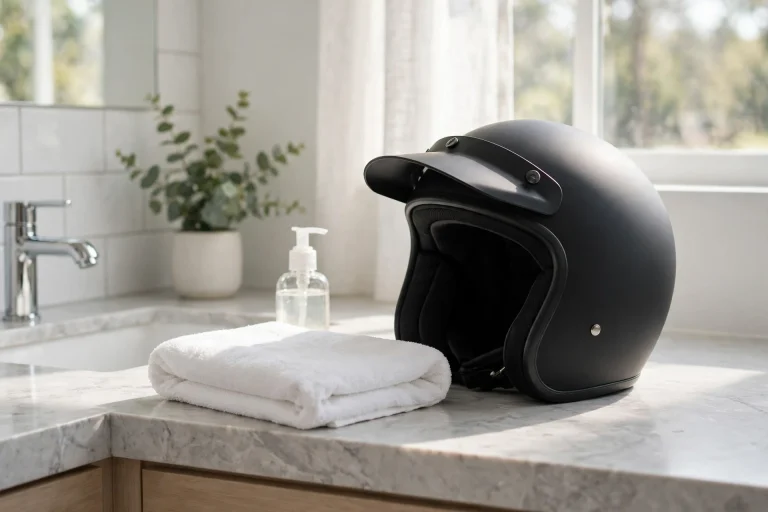
The best way to dry a wet helmet is to take it indoors, wipe the shell with a clean cloth, and leave it in a well-ventilated place at room temperature. Take out the lining if it is removable, and let the lining and the shell dry separately. Open the vents if they can be opened, and leave the helmet upside down or on its side so that air can move through it.
Do not use direct heat to dry a helmet. Do not put it on a radiator, in front of a heater, or in a tumble dryer, and do not leave it in a hot car, as heat can damage the materials inside over time. Do not use a hairdryer on a hot setting either. A fan blowing cool air, or simply time in a dry room, is the safest way to dry it. In general terms, a helmet should be fully dry before you wear it again or put it away.
Can rain damage a helmet?
Rain on its own does not usually damage a helmet, but staying wet can cause problems over time. A lining that is always damp can wear out sooner, straps can weaken, and metal parts such as buckles and rivets can rust if they are left wet. Dirty rainwater, road spray and salt can also leave marks on the shell and the visor, and can make the lining smell.
Some helmets include a system designed to reduce rotational forces in a fall, such as MIPS, and rain does not affect how that system works in normal use, as long as the helmet is dried and looked after properly. The main risk from rain is not to the safety foam inside, but to the comfort and the life of the helmet. A helmet that is dried after each wet ride will last longer than one that is put away wet.
How can you keep a helmet dry in the rain?
A simple rain cover is the easiest way to keep a helmet dry. Rain covers are made to fit over the shell, and they keep most of the water off the vents and the lining. A helmet with a peak or a brim also helps, and a visor keeps rain out of the eyes and off the face. Some riders wear a thin cap or a bandana under the helmet to soak up sweat, which also helps keep the lining cleaner.
On a long ride in the rain, stop now and then to wipe the visor and shake off the worst of the water. When you get home, dry the helmet as described above, and check the lining and the straps before your next ride. If the helmet has been in heavy rain or road spray, wipe the shell clean so that dirt and salt do not sit on it.
When should a wet helmet be replaced?
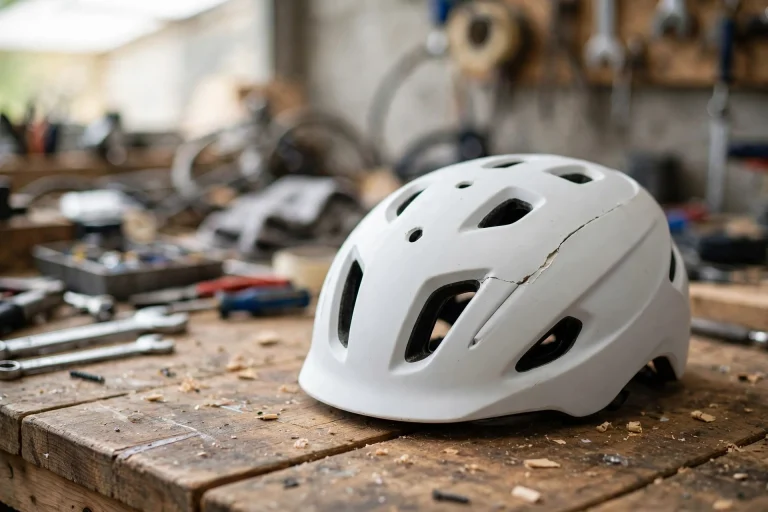
A helmet that has simply got wet in the rain does not need to be replaced, as long as it is dried properly and shows no damage. Replace it if the lining is falling apart, the straps are frayed or weakened, the buckle is rusted or stiff, or the shell is cracked or dented. In general terms, a helmet that has taken a hard knock in a fall should be replaced, even if it looks fine on the outside, because the inner lining may have been compressed.
Check the helmet regularly, and pay attention to smell. A lining that smells even after washing may be worn out, and a helmet that no longer fits well because the padding has gone flat should be replaced. When in doubt, replace it, and choose a new helmet that fits well and suits the riding you do.
Can a helmet get wet in the rain?
Yes, most helmets can get wet in the rain, and a short shower will not ruin one, but you should dry the shell and the lining properly afterwards so damp, smell and damage do not build up.
Is it safe to wear a wet helmet?
In general terms, yes, a wet helmet still protects your head, but it is heavier and less comfortable, and the straps can rub. It is better to wear a dry helmet when you can, and to dry a wet one fully before your next ride.
Can you dry a helmet with a hairdryer?
It is best not to use a hairdryer on a hot setting, as heat can damage the materials inside. Let the helmet dry naturally in a ventilated room, or use a fan blowing cool air.

Olivia
Writer at Helmet Today, covering helmet reviews, fit and riding safety.