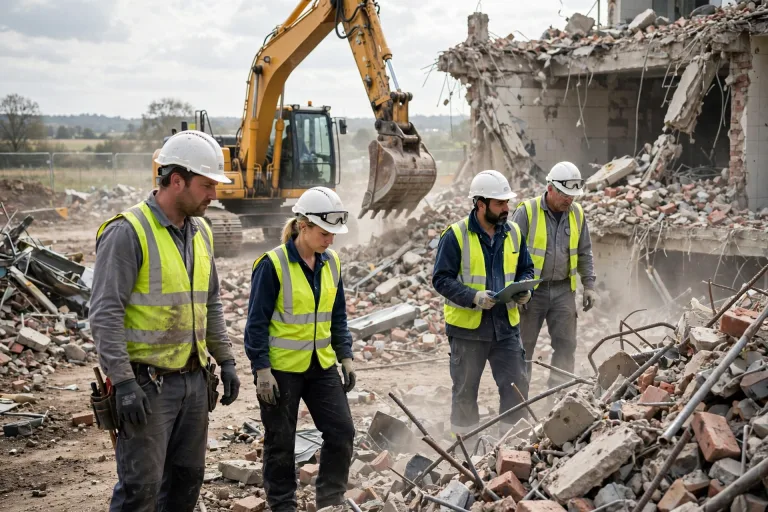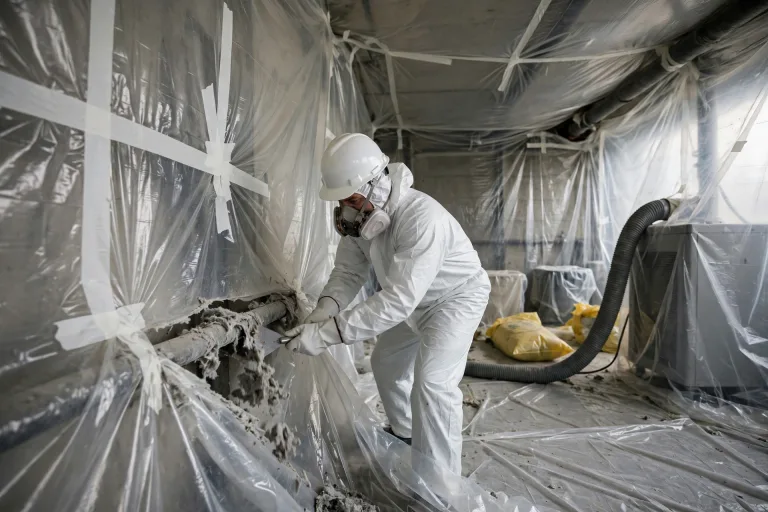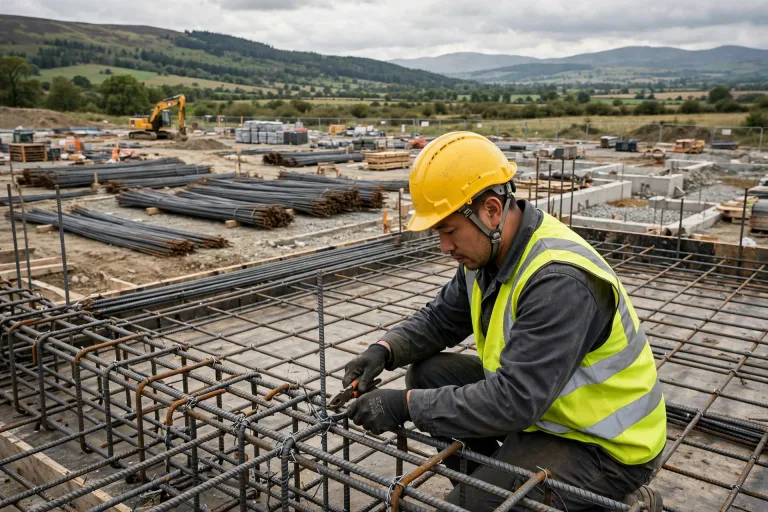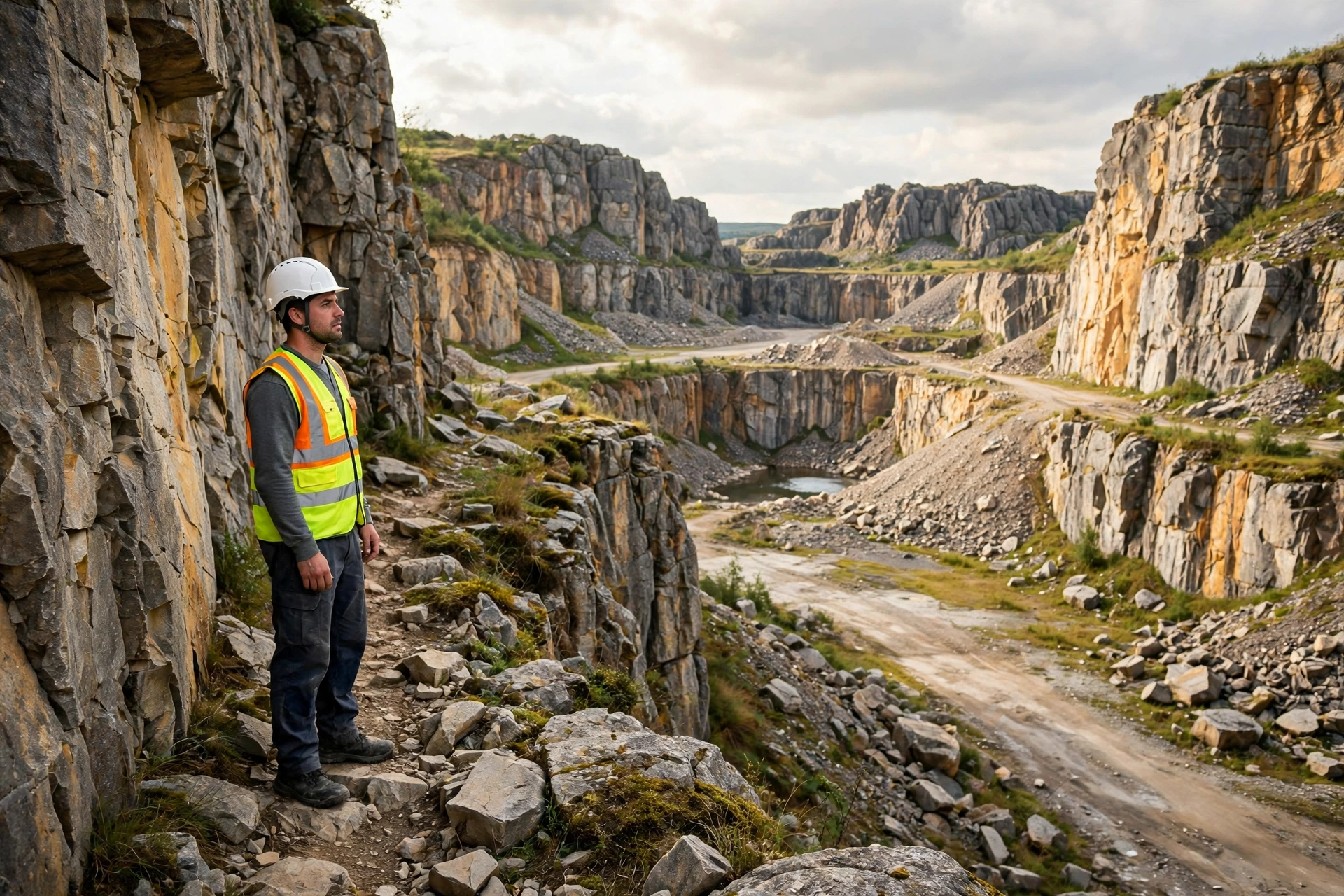
A helmet for quarry workers is a hard safety helmet worn on a quarry site to protect the head from falling rock, bumps against machinery, and knocks from equipment, and in general terms a well-fitting industrial hard hat is the standard choice. Quarries are open working sites where stone is cut, drilled, and moved, so the risk of something falling or swinging into the head is a real part of the job, and a helmet is one of the most basic pieces of protection a worker wears.
Quarry work takes place around high rock faces, heavy vehicles, and machines that break and load stone. Even on a quiet day, loose rock can fall from a face, a load can shift, or a worker can walk into a low beam or a piece of plant. A helmet will not make a quarry safe on its own, but it can reduce the force of a blow to the head, and that is why helmets are worn from the moment a worker steps onto the site until they leave it.
What is a helmet for quarry workers?
A helmet for quarry workers is an industrial safety helmet, often called a hard hat, made from a tough outer shell with a suspension system inside that holds the shell away from the head. The gap between the shell and the head is important: when something hits the shell, the suspension spreads the force and gives the helmet room to absorb the impact instead of passing it straight to the skull.
Most quarry helmets are made from hard plastic or a similar tough material, and they usually have a short peak at the front to shield the eyes from sun and light rain. Some have slots on the sides for ear defenders or a visor, and some have a chin strap to keep the helmet on in wind or when the wearer bends over. The helmet should be comfortable enough to wear for a full shift, because a helmet that is left in the cab is no protection at all.
Why do quarry workers need a helmet?
Quarry workers need a helmet because the main hazards of the job fall from above or swing at head height. Rock faces are worked with drills and explosives, and small pieces of stone can break away without warning. Loading shovels and dump trucks move large loads of rock overhead, and a stone that slips from a bucket can fall a long way before it lands.
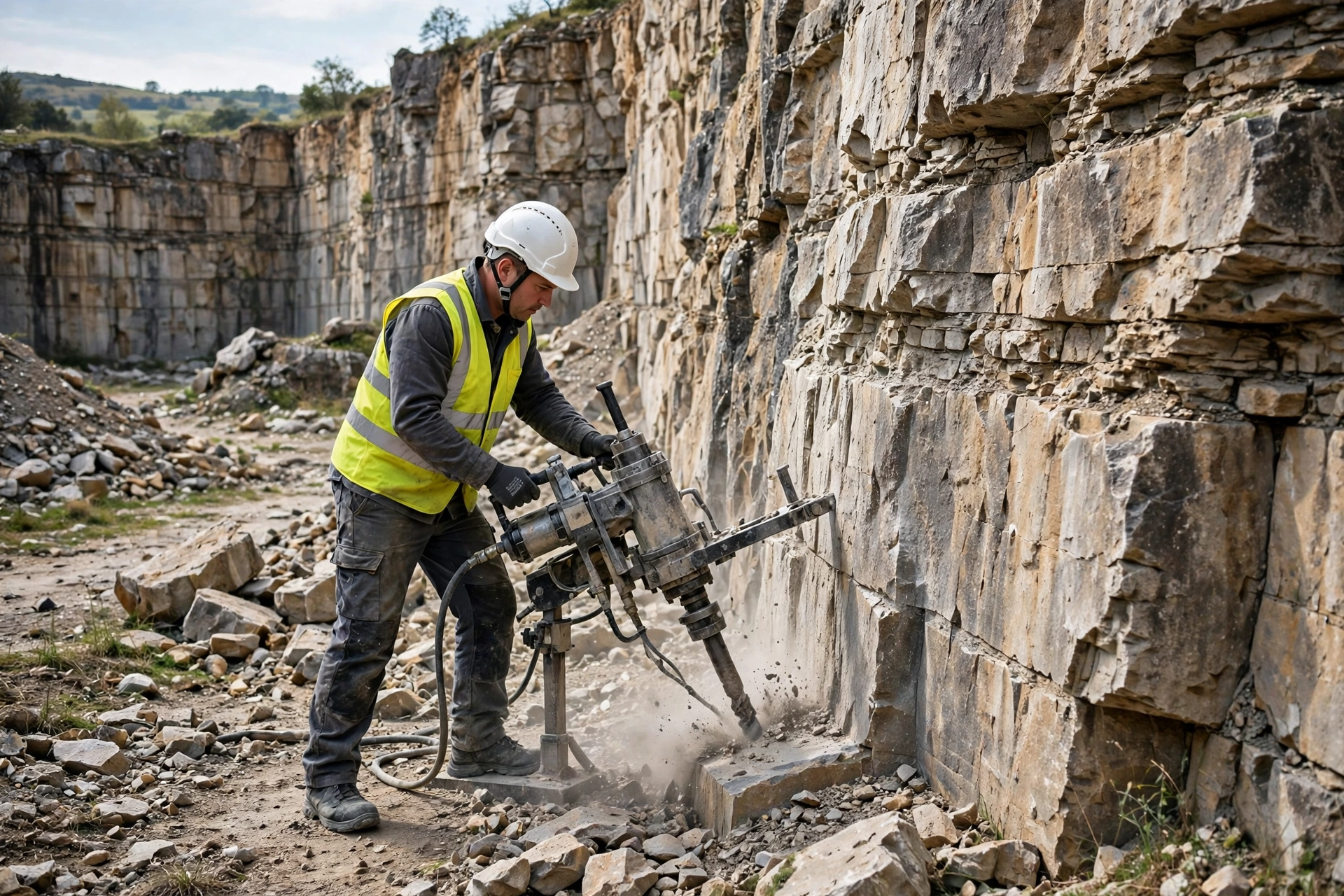
What type of helmet should a quarry worker wear?
In general terms, a quarry worker should wear an industrial safety helmet that is made for work on construction and extraction sites, with a strong shell and an adjustable suspension inside. The helmet should fit well and sit level on the head, low enough at the front to cover the forehead, and it should stay in place when the wearer bends down or looks up at a rock face.
Some quarry helmets have a chin strap, which is useful on windy open sites and when working at height on a face or a bench. Ventilation matters too, because quarry work is physical and often done in hot sun, so a helmet with vents can be more comfortable over a long shift. If the job also involves loud machinery, the helmet should work with ear defenders, either by having slots for them or by fitting comfortably over ear plugs. Whatever style is chosen, the helmet should be in good condition, with no cracks in the shell and a suspension that is not worn or damaged.
How should a quarry helmet fit?
A quarry helmet should sit level on the head, with the front edge just above the eyebrows and the suspension adjusted so the helmet feels snug all round without pressing painfully. It should not slide forward over the eyes or slip back when the wearer nods, and it should stay put when the head is shaken gently from side to side.
Most helmets have a dial or a sliding adjustment at the back that lets the wearer set the size, and the chin strap, if there is one, should be snug enough that only a finger or two fits between the strap and the chin. Try the helmet on with any other gear that will be worn with it, such as ear defenders or a dust mask, and make sure nothing pushes the helmet out of position. A helmet that fits well is far more likely to be worn all day, and a helmet that is worn is the one that protects.
How do you look after a quarry helmet?
A quarry helmet should be cleaned regularly, because dust from stone and drilling soon builds up on the shell and inside the suspension. Wipe the shell with a damp cloth and mild soap, rinse it, and let it dry naturally away from direct heat. Do not use strong solvents or paints on the shell, as they can weaken the material.
Check the helmet before each shift for cracks, dents, or damage to the shell, and check the suspension and chin strap for wear. Keep the helmet out of direct sunlight and away from heat when it is not being worn, and do not store heavy tools on top of it. In general terms, a helmet that has taken a hard blow from falling rock or a heavy object should be replaced, even if it looks fine on the outside, because the shell and suspension may have been weakened. The same applies to a helmet that has been dropped hard onto rock or concrete.
What other safety gear do quarry workers wear with a helmet?
A helmet is only one part of quarry safety gear. Workers also wear high-visibility clothing so that drivers of dump trucks and loading shovels can see them, safety boots with toe protection for the uneven rocky ground, and eye protection against dust and flying chips of stone. Ear protection is common near crushers, drills, and other loud plant, and gloves protect the hands when handling rock and equipment.
Some helmets are designed to work with this other gear, with slots for ear defenders and clips for a head torch or a visor. A helmet with a system designed to reduce rotational forces in a fall, such as MIPS, is also worth asking about when choosing work head protection. The key point is that the whole set of gear should work together: the helmet should not push the ear defenders out of place, and the high-visibility vest should not catch on the helmet’s peak.
Do quarry workers have to wear a helmet?
In general terms, yes, a helmet is standard on quarry sites, and most sites require one to be worn at all times in working areas. Site rules vary, so always follow the rules of the quarry you are working on.
How often should a quarry helmet be replaced?
Replace it after a hard blow, if the shell is cracked or damaged, or if the suspension and strap are worn. Even a helmet with no visible damage should be checked regularly, and many makers suggest replacing helmets after a set period of use.
Can a quarry worker wear a bicycle helmet instead of a hard hat?
No, a bicycle helmet is not a substitute for an industrial safety helmet on a quarry site. A hard hat is made for falling objects and site hazards, while a bicycle helmet is made for a different kind of impact.

Olivia
Writer at Helmet Today, covering helmet reviews, fit and riding safety.