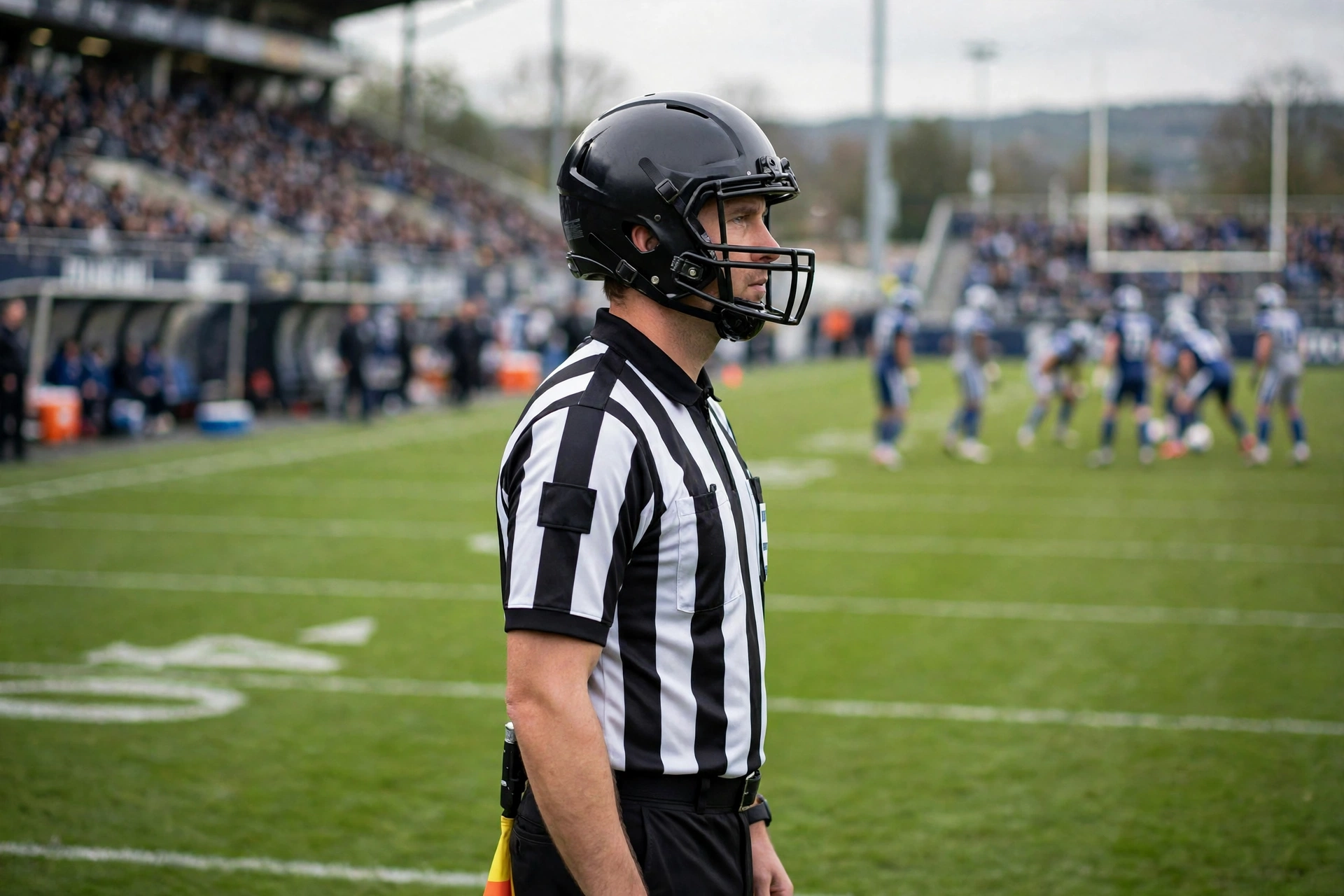
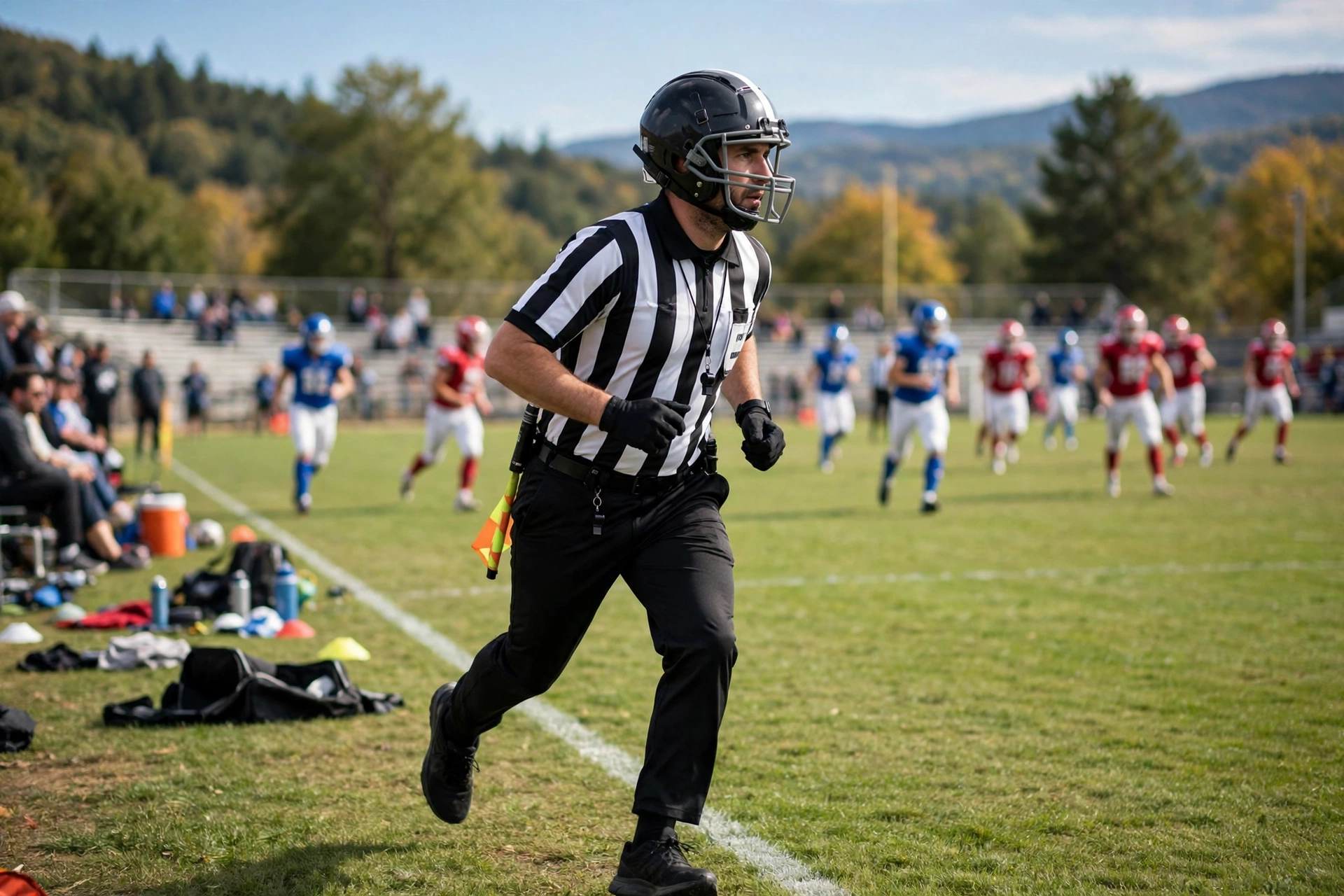
A helmet for football referees is a light protective helmet worn by match officials to guard the head from knocks during a game, and in general terms it is a soft padded helmet rather than the hard shell worn by players in American football. Referees spend the whole match close to play, moving across the pitch and watching challenges, and a knock to the head can come from a stray ball, a collision with a player, or a fall on hard ground.
Most referees do not wear a helmet, and in many leagues it is not part of the standard kit. Yet some officials choose one for extra protection, especially at youth level, in amateur matches, or when they have had a head knock before. A referee helmet is meant to be light, comfortable, and easy to wear for a full match, so it should not distract from the job of watching the game and making decisions.
Do football referees wear helmets?
In general terms, most football referees do not wear a helmet, because the laws of the game do not require one and the standard kit is a shirt, shorts, socks, boots, and a whistle. Referees are expected to keep out of the way of play where they can, and they do not take part in tackles or challenges in the way players do. For that reason, a helmet has never become a normal part of a referee’s kit at professional level.
That said, some referees do wear a soft padded helmet, often called a headguard, when they feel they need extra protection. This is more common in youth football, in amateur leagues, and in matches played on hard or frozen pitches, where a fall can hurt more. An official who has had a head injury before may also choose to wear one, after talking it through with a doctor and with the league or competition organiser.
What kind of helmet does a football referee wear?
A football referee who wears a helmet usually wears a soft padded headguard, the same type sometimes worn by players in rugby or by young footballers. It is made from soft foam padding covered in fabric, it fits close to the head, and it has straps that fasten under the chin. It is light to wear and does not have a hard outer shell, so it feels very different from a cycle helmet or a hard American football helmet.
A hard helmet would be a poor choice for a referee. It would be heavy over ninety minutes, it would limit hearing and the ability to talk with players and assistants, and it could look out of place on the pitch. A soft headguard, by contrast, is easy to forget once it is on, and it still gives a layer of padding if a ball strikes the head or if the official falls and hits the ground.
Why would a football referee wear a helmet?
The main reason is protection from a knock to the head. A referee stands close to play for the whole match, and a ball cleared at speed can travel towards the official without warning. Players can also run into the referee when play turns quickly, and a fall on a hard pitch can send the head towards the ground. A padded helmet will not stop these things from happening, but it can soften the force of a knock.
Some referees wear one after a previous head injury, because they want to reduce the risk of another knock while they are still gaining confidence. Others wear one in youth matches, where play can be less predictable and the ball can fly in any direction. In general terms, the decision is a personal one, based on the level of the game, the condition of the pitch, and how comfortable the official feels without one.
Is a helmet for football referees allowed by the laws of the game?
In general terms, a soft padded headguard is allowed, because the laws of the game do not ban protective headgear of this kind. Players are allowed to wear soft head protection, and the same thinking applies to officials. The key point is that the headgear must be safe for everyone on the pitch, so it should be soft, with no hard parts, no sharp edges, and nothing that could hurt another person in a collision.
A referee should still check with the league or competition before wearing one, because local rules can differ and some competitions set their own kit rules. It is also worth telling the other officials before the match, so there are no surprises at kick-off. A hard helmet, or anything with a rigid shell, would not be suitable, and a referee should not wear one in a match.
How should a helmet for football referees fit?
A helmet for football referees should sit level on the head, low enough at the front to cover the forehead, and snug all round without pressing painfully on the temples. It should not slide forward over the eyes when the referee runs, and it should not slip back when the referee turns to follow play. A good fit matters, because a helmet that moves about is a distraction during a match.
The chin strap should be snug enough that the helmet stays in place, but not so tight that it is uncomfortable over a full game. Try the helmet on with the rest of the kit, and run, turn, and look over each shoulder in it before match day, because a referee’s head is moving all the time. If the helmet feels hot, heavy, or loose, try another size or another style, because the best helmet is one the official can forget about once the game starts.
What should a football referee look for when choosing a helmet?
Comfort comes first, because a referee wears the helmet for the whole match, often in warm weather and while running. Look for light padding, soft fabric that does not rub, and a shape that sits well with the ears uncovered, so the official can hear players, assistants, and the crowd. A helmet that covers the ears can make communication harder, which is a real drawback for a referee.
Fit and fastening come next. The helmet should come in a range of sizes, with a strap that adjusts easily and a buckle that stays shut. Some helmets include a system designed to reduce rotational forces in a fall, such as MIPS, and it is worth asking about when you choose. Washable padding is also useful, because a helmet worn every week will need cleaning, and a helmet that is easy to wash is one that stays fresh and comfortable.
Do football referees have to wear a helmet?
No, in general terms referees do not have to wear a helmet, and most do not. A soft padded helmet is a personal choice for officials who want extra protection, especially in youth or amateur matches.
What is a football referee helmet made from?
It is usually made from soft foam padding covered in fabric, with straps that fasten under the chin. It is light and flexible, with no hard shell, so it is comfortable to wear for a full match.
Can a referee wear a hard helmet in a match?
No, a hard helmet would not be suitable for a referee. It would be heavy, it would limit hearing, and it could be unsafe for others in a collision, so a soft padded headguard is the right choice.

Olivia
Writer at Helmet Today, covering helmet reviews, fit and riding safety.