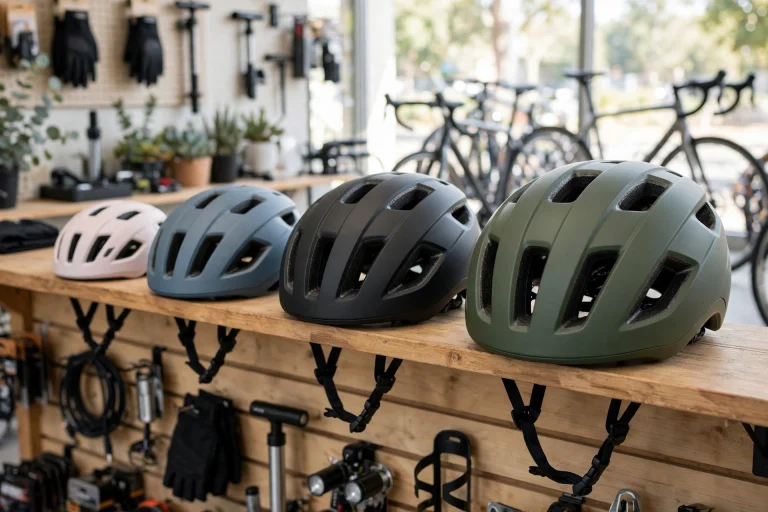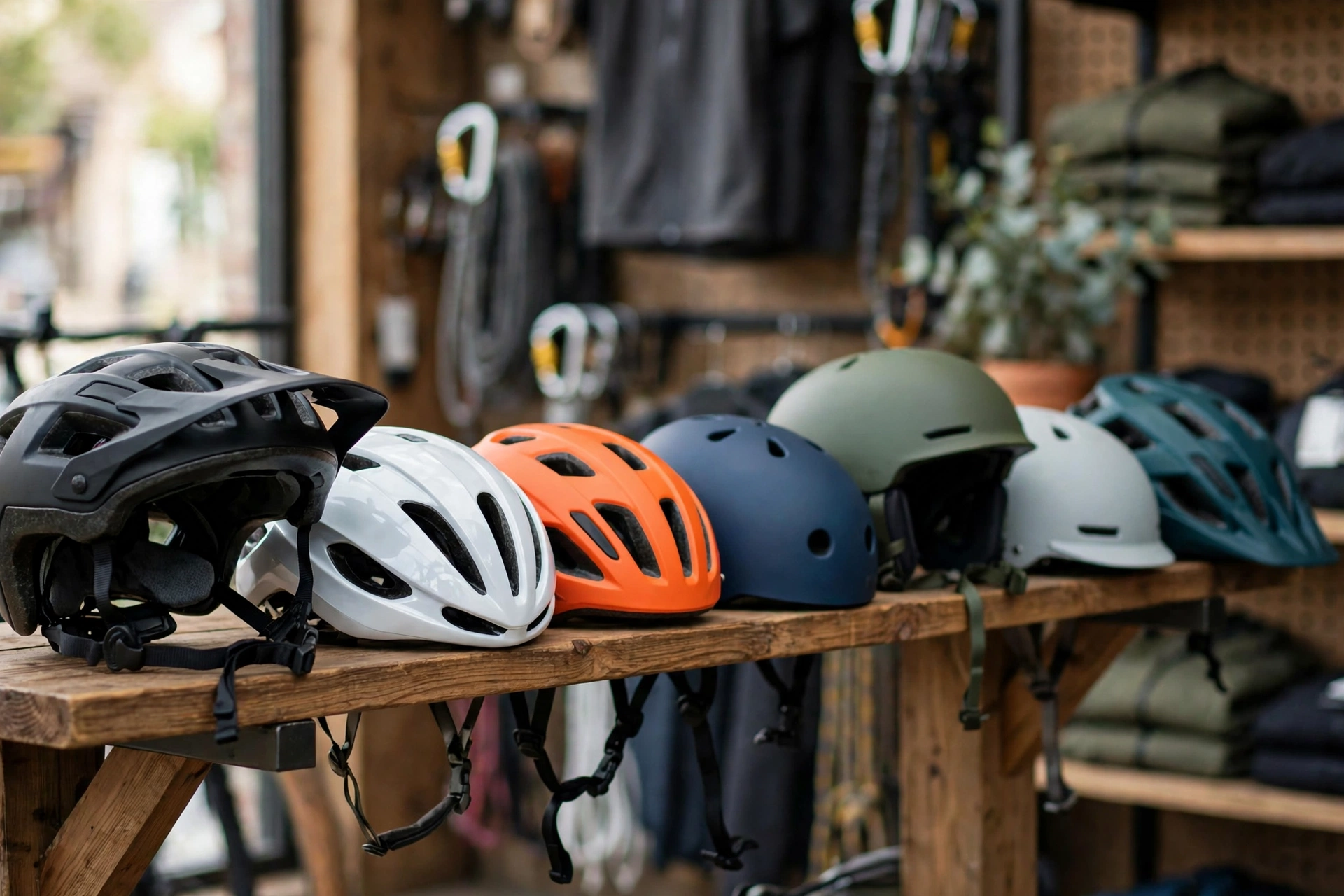
Helmet sizes vary by brand because each brand designs its helmets around its own head shape, its own sizing chart, and its own way of measuring, and in general terms there is no single standard size that all brands follow. A medium from one brand can feel quite different from a medium in another, even when both carry the same label, and that is why trying helmets on matters so much.
This can be confusing, especially when you are buying online and cannot try the helmet on first. You might measure your head, look up the size chart, order a medium, and find that it pinches at the temples or sits too high on your forehead. The problem is rarely your head: it is that the brand’s idea of a medium differs from the last brand you wore.
Why do helmet sizes vary by brand?
Helmet sizes vary by brand mainly because brands build their helmets on different head forms. A head form is the mould or model that a helmet is shaped around, and each brand develops its own. Some brands shape their helmets for a rounder head, others for a longer and narrower head, and that shape affects how the helmet feels even when the measurement in centimetres is the same.
Brands also differ in how they set their size ranges. One brand might make a medium to fit heads from 55 to 58 centimetres, while another makes a medium for 56 to 59 centimetres, so the overlap is only partial. Padding thickness plays a part too: a helmet with thick, soft padding can feel smaller than its shell size suggests, while a helmet with thin padding can feel roomier. Taken together, these differences mean that a size label alone tells you only part of the story.
How do brands measure helmet sizes?
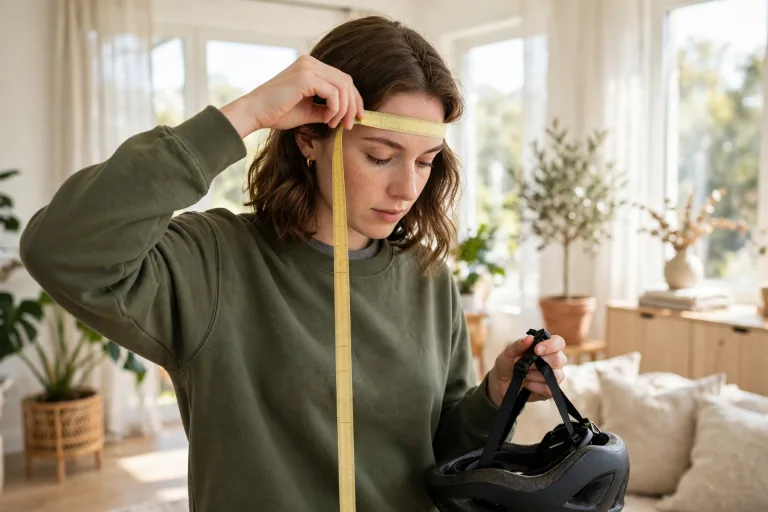
Most brands measure helmet sizes by head circumference, which is the distance around your head just above your eyebrows and ears. You measure it with a soft tape, keeping the tape level all the way round, and then you match the number to the brand’s size chart. In general terms, this is the most useful single measurement for choosing a helmet size, and it is the one most charts are built around.
However, brands do not all measure in quite the same way. Some measure the inside of the shell, some the inside of the padding, and some use the head size their test models were based on. A few brands also use different labels altogether: one might sell small, medium and large, while another sells numbered sizes or different centimetre ranges. That is why two helmets with the same label can fit differently, and why you should check the size chart for the exact helmet you are buying, not a chart from another brand.
Does a medium in one brand mean the same as a medium in another?
In general terms, no. A medium is a label, not a fixed measurement, and each brand decides for itself what its medium covers. One brand’s medium might fit heads from 55 to 58 centimetres, while another’s runs from 57 to 60 centimetres, so a rider who wears a medium in the first brand might need a large in the second, or might find the second brand’s medium too loose.
Shape matters as well as size. A helmet with the right circumference can still feel wrong if its shape does not suit your head. A round-headed rider in a long, narrow helmet may feel pressure at the front and back with gaps at the sides, while a long-headed rider in a round helmet may feel pressure at the sides instead. This is why experienced riders often stick with a brand that fits them: they have found a shape that suits their head, and switching brands means starting the fitting process again.
How do you find the right size across brands?
The best place to start is your head measurement. Measure your head with a soft tape just above your eyebrows and ears, take the measurement twice to be sure, and write the number down in centimetres. Then look up the size chart for the exact helmet you want to buy, and find the size that covers your measurement. If your number falls on the edge between two sizes, note that and think about the shape of the helmet as well.
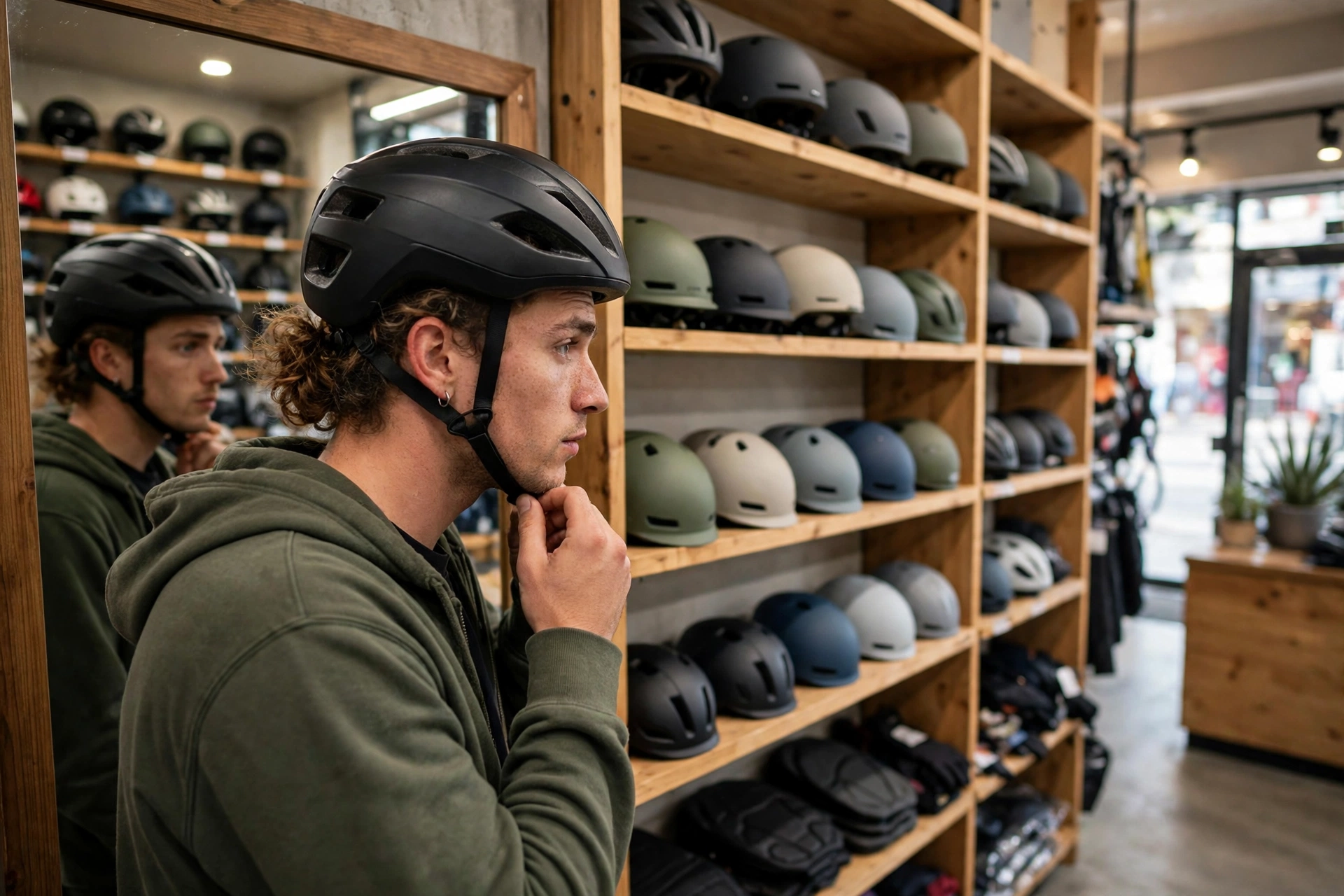
Wherever possible, try the helmet on before you buy it. Put it on, fasten the strap, and wear it for a few minutes to see if any pressure points appear. It should sit level on your head, low enough to cover your forehead, and snug all round without pressing painfully. Some helmets include a system designed to reduce rotational forces in a fall, such as MIPS, but that does not change the sizing, so fit still comes first. If you buy online, check the returns policy first, so you can swap the size if it does not fit.
What if you are between sizes in a brand?
If your head measurement falls between two sizes in a brand, the usual advice is to try both sizes if you can. Start with the smaller one, since helmet padding settles and compresses a little with use, and a helmet that feels slightly snug at first often becomes comfortable after a few wears. If the smaller size presses painfully on your temples or forehead, or gives you a headache after a few minutes, move up to the larger size.
Some helmets have adjustable fit systems, such as a dial at the back or interchangeable pads of different thicknesses, which can help you fine-tune the fit between sizes. These adjust how snugly the helmet sits, but they cannot fix a shell that is the wrong size or shape for your head. If neither size in that brand feels right, try a different model or a brand whose shape suits you better.
Do helmet sizes vary within one brand too?
Yes, helmet sizes can vary within a single brand as well. A brand may make several models, each built on a different head form, so a medium in one model might fit differently from a medium in another model by the same maker. Sports helmets, commuter helmets and full-face helmets from the same brand often have different shapes, because they are designed for different uses and different head positions.
Sizes can also change when a brand updates a model. A new version of a familiar helmet might have different padding, a different fit system, or a slightly different shell, and any of those can change how the size feels. That is why it is worth checking the size chart and trying the helmet on even when buying the same brand and size you wore before. Your head has not changed, but the helmet might have.
Why does my helmet size change between brands?
Because each brand uses its own head shape, size ranges and measuring method, so a medium from one brand is not the same as a medium from another.
Should I trust the size label or my head measurement?
Trust your head measurement matched against that exact helmet’s size chart, and try the helmet on where you can, since the label alone does not tell you how it will fit.
Is it better to size up or down if I am between sizes?
In general terms, try the smaller size first, since padding settles with use, but if it presses painfully or gives you a headache, move up to the larger size.

Olivia
Writer at Helmet Today, covering helmet reviews, fit and riding safety.