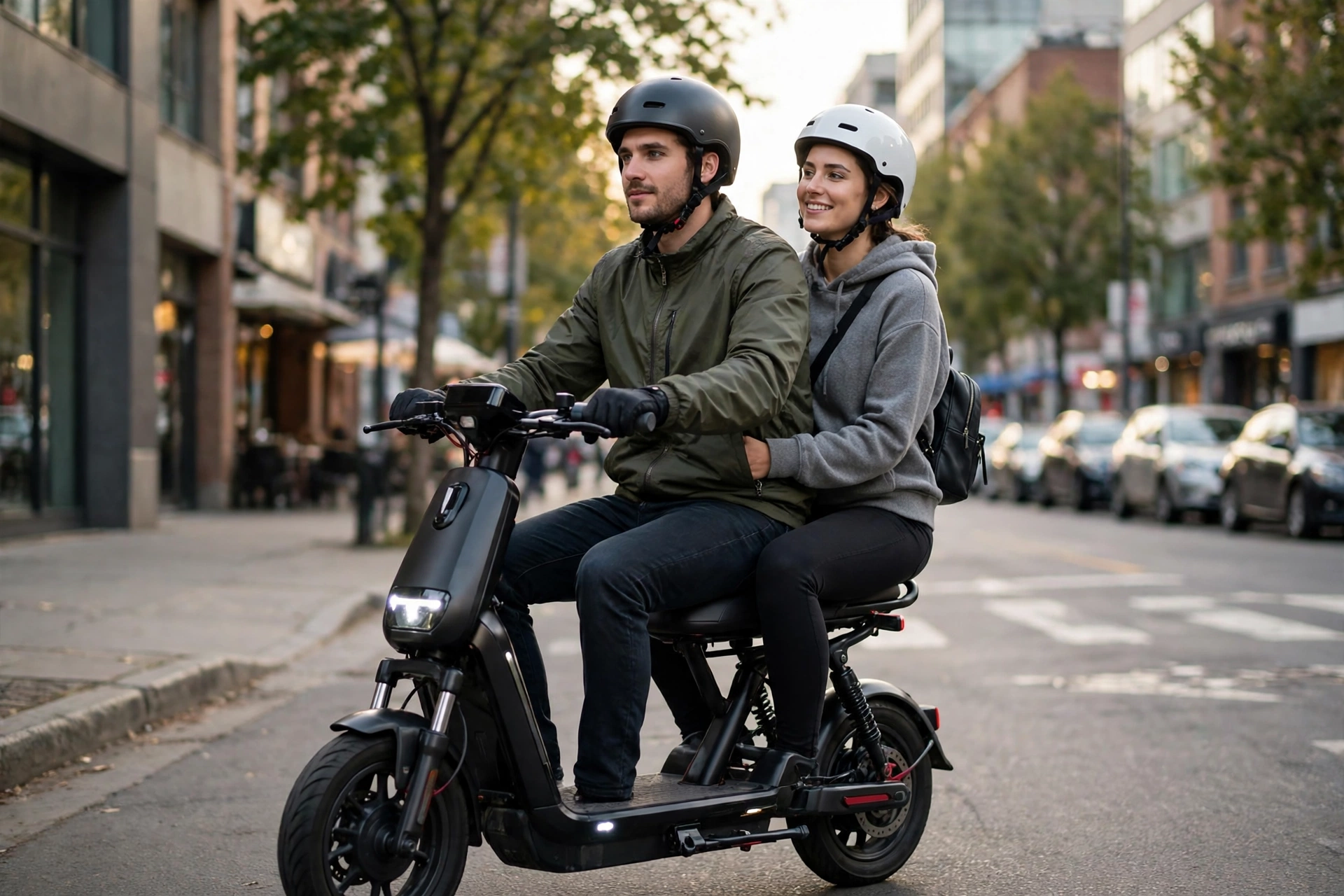
A helmet for e-scooter passengers is a protective helmet worn by the person riding on the back of an electric scooter, and in general terms it is the same kind of helmet the driver wears, since a passenger faces the same risk of a fall. A passenger has no handlebars to hold and no control over the scooter, so head protection matters just as much for them as it does for the person driving.
Many people think of the driver when they think of scooter safety and forget the passenger, but the passenger is in a more exposed position. They sit behind the driver, they cannot see the road ahead as clearly, and they cannot brace themselves if the scooter stops suddenly or hits a bump. A helmet is a simple way to give them the same protection the driver gets.
Do e-scooter passengers need a helmet?
Whether e-scooter passengers need a helmet depends on where you ride, since rules about helmets vary by place. In some areas, helmets are required for everyone on an e-scooter, driver and passenger alike, while in others the rules cover only the driver or do not mention passengers at all. Before you ride with a passenger, it is worth checking the local rules where you plan to travel.
Even where a helmet is not required by law, wearing one is sensible for a passenger. A passenger is just as likely to be hurt in a fall as the driver, and in some ways more so, because they cannot steer or brake and they may not see a hazard coming. In general terms, if the driver is wearing a helmet, the passenger should be wearing one too. It is a small step that can make a real difference if something goes wrong.
What kind of helmet should an e-scooter passenger wear?
In general terms, an e-scooter passenger should wear the same kind of helmet as the driver: a bicycle helmet or a skate-style helmet for slower riding, or a fuller helmet for faster riding. A standard bicycle helmet is light and well ventilated, which suits short trips around town. A skate-style helmet covers more of the back and sides of the head, which some passengers prefer, since a passenger can be thrown sideways or backwards in a fall.
For faster riding or for longer trips, a full-face helmet or a light motorcycle-style helmet may be a better choice, since it also protects the chin and jaw. Whatever style you choose, the helmet should be in good condition, with no cracks or damage to the shell or the lining, and it should fasten securely under the chin. A passenger helmet is not a place to cut corners: it needs to protect just as well as the driver’s helmet.
Why is a helmet important for a passenger?
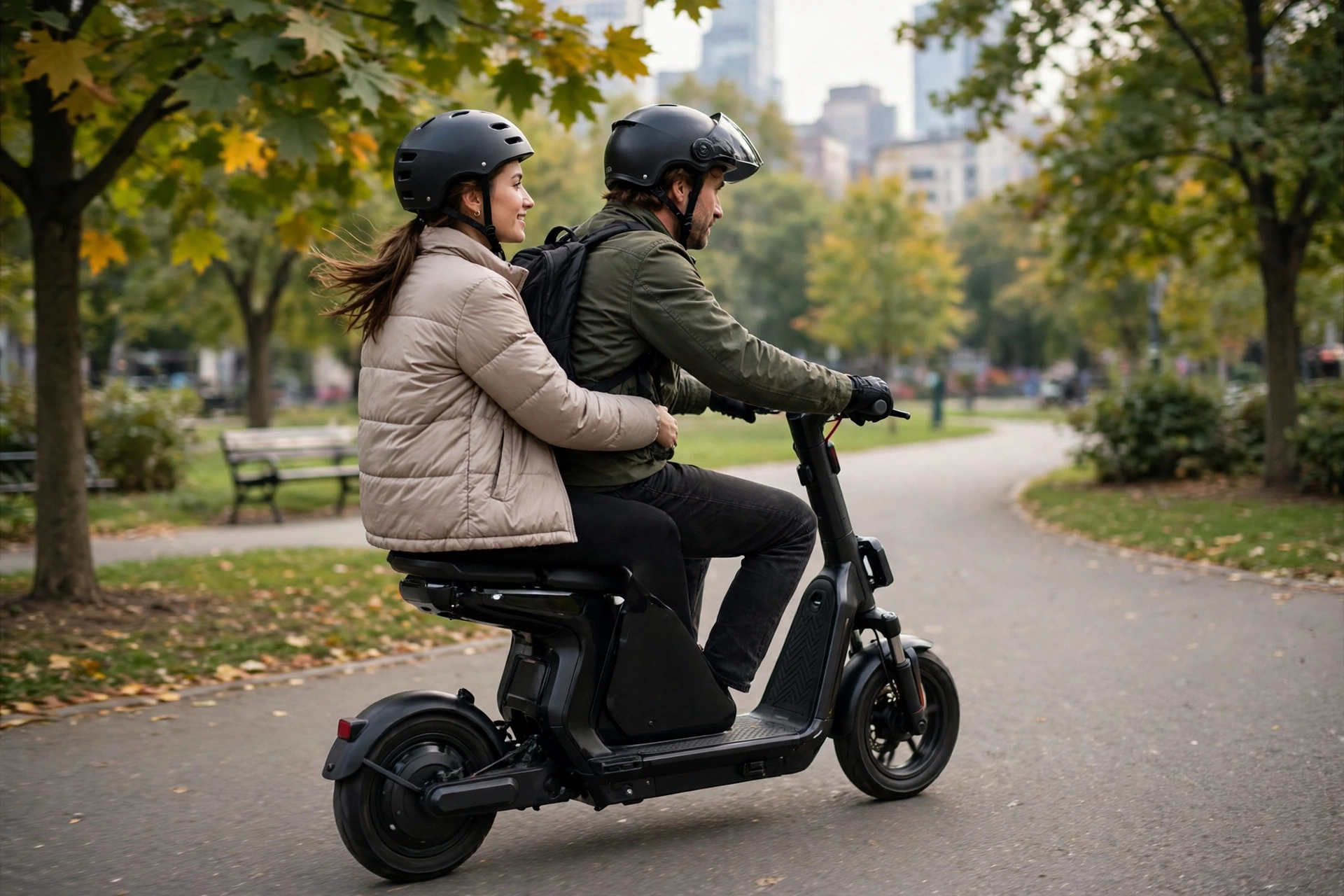
A helmet is important for a passenger because the passenger has less control over what happens on the ride. The driver steers, brakes and chooses the speed, while the passenger simply holds on and goes along. If the driver brakes hard, swerves to avoid something, or hits a pothole, the passenger can be thrown off balance with no warning and no handlebars to grab.
The passenger also sits higher and further back than the driver in many cases, which can mean a longer fall to the ground. They may not see a bump or a turn coming, so they cannot brace for it the way the driver can. A helmet protects the head in exactly those moments, and it also gives the passenger more confidence to relax and hold on properly, rather than tensing up and making the ride less stable for both people.
How should a passenger helmet fit?
A passenger helmet should fit in the same way as any other helmet: it should sit level on the head, low enough at the front to cover the forehead, and snug all round without pressing painfully on the temples. It should not tip forward over the eyes or slide back when the wearer nods, and it should stay in place when they shake their head gently from side to side.
The chin strap should be snug enough that you can fit only a finger or two between the strap and the chin. Check the fit before every ride, since a helmet that fitted well last month may have loosened as the padding settled. Some helmets include a system designed to reduce rotational forces in a fall, such as MIPS, and it is worth asking about when you choose. A passenger should never wear a helmet that is too big for them: a loose helmet can come off in a fall, which defeats the purpose of wearing it.
Can the passenger and driver share a helmet?
No, the passenger and driver should not share a helmet. Each person on the scooter needs their own helmet, fitted to their own head. A helmet that fits the driver will probably not fit the passenger properly, and a helmet that is too big or too small does not protect as well as one that fits. Sharing also means that one of the two people is unprotected whenever the helmet is on the other person’s head.
If you ride with a passenger often, it is worth keeping a second helmet for them, in their size, ready to go. That way there is no temptation to set off with only one helmet between you. If you only carry a passenger now and then, make sure you have a spare helmet that fits them before you set off, rather than hoping the driver’s helmet will do. In general terms, two people on a scooter means two helmets, every time.
What else should an e-scooter passenger wear?
Apart from a helmet, a passenger should wear sensible shoes with a good grip, since their feet are on a small platform and need to stay put. Closed shoes are better than sandals, which can slip off or leave the feet unprotected. Bright or light-coloured clothing helps other road users see both people on the scooter, especially in the evening or in dull weather.
Gloves can help the passenger hold on securely, and a jacket can protect against wind and light rain on longer rides. The passenger should also know how to ride safely: hold on to the driver or the handles provided, keep their feet on the platform, lean with the scooter rather than against it, and avoid sudden movements that could unbalance the driver. A passenger who rides calmly and holds on well makes the trip safer for both people.
Does a passenger on an e-scooter need a helmet?
Rules vary by place, but in general terms, yes: a passenger faces the same risk of a fall as the driver, so a well-fitting helmet is sensible even where it is not required.
What type of helmet is best for an e-scooter passenger?
A bicycle or skate-style helmet suits slower rides, while a full-face helmet is a better choice for faster riding, since it also protects the chin and jaw.
Can a passenger wear the driver’s spare helmet?
Only if it fits them properly. A helmet that is too big or too small will not protect well, so the passenger should have a helmet in their own size.

Olivia
Writer at Helmet Today, covering helmet reviews, fit and riding safety.