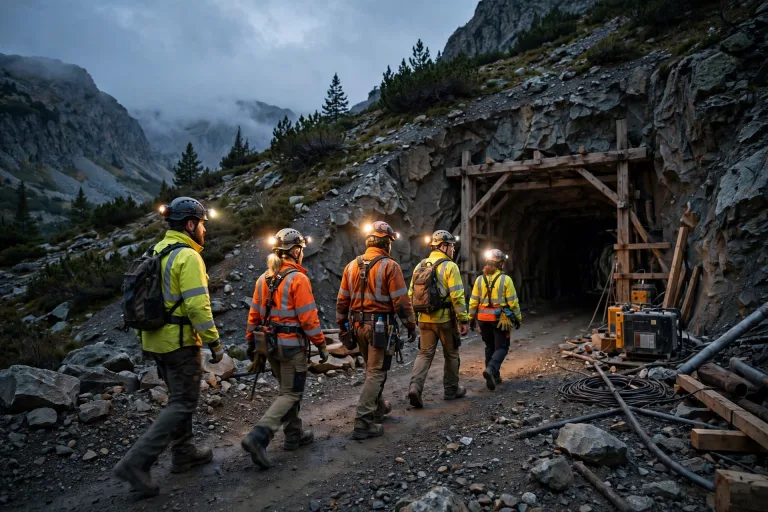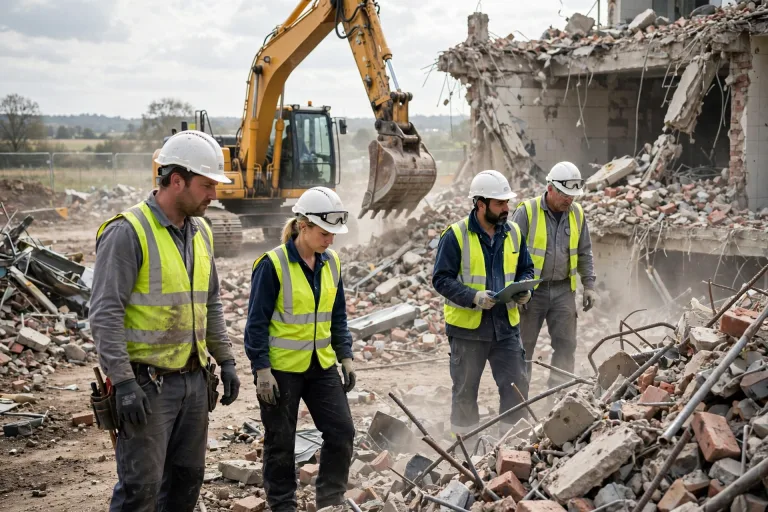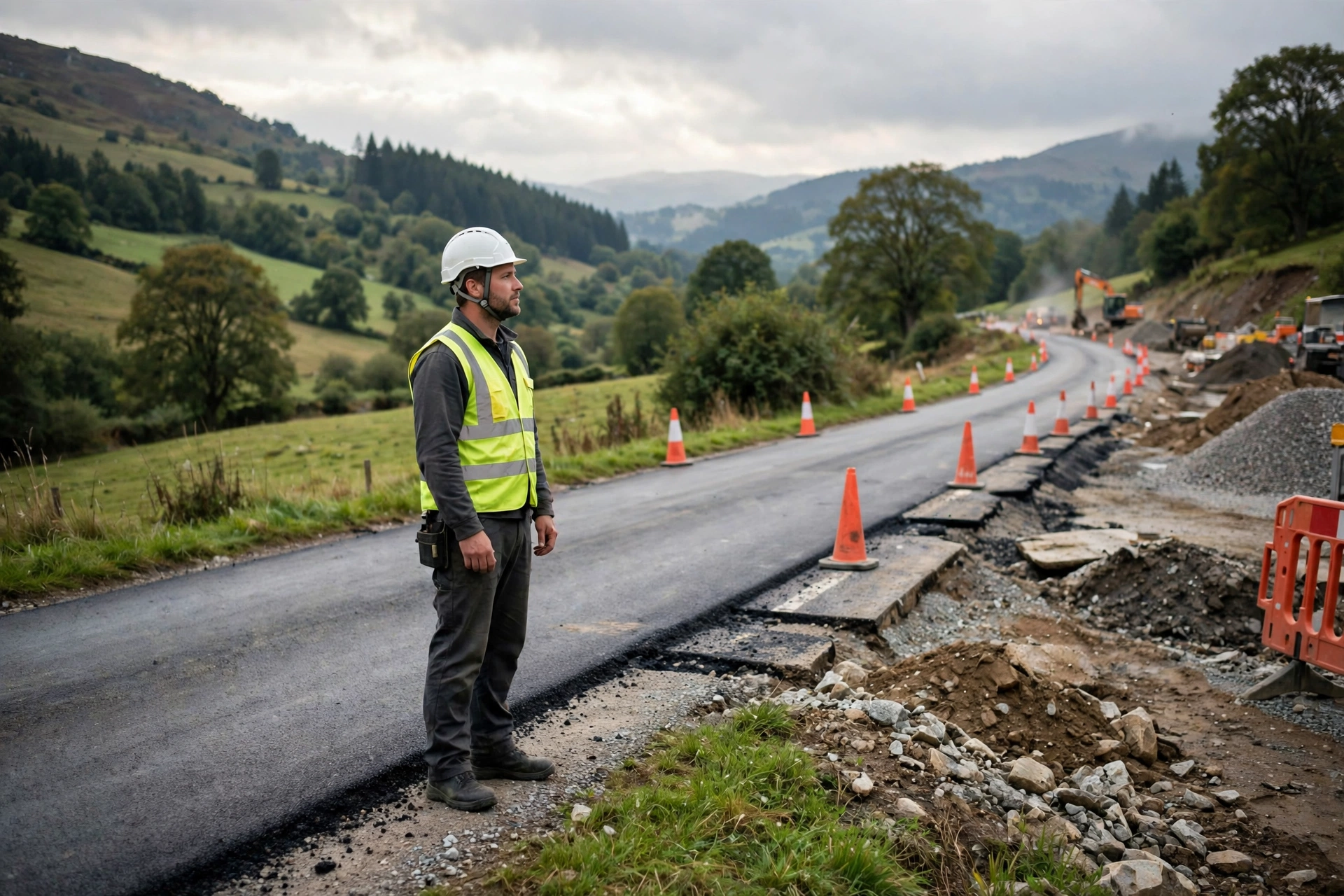
A helmet for road workers is a safety helmet worn by people who build, repair and maintain roads, and in general terms it is a hard hat that protects the head from falling objects, knocks against equipment, and bumps in a busy work zone. Road work takes place close to moving traffic and heavy machinery, so head protection is a basic part of the job.
Road workers face hazards from above and from the sides: tools and materials can fall from vehicles and scaffolding, parts of machinery can swing into the work area, and a worker can easily bump their head on a low beam, a vehicle mirror, or a piece of equipment. A safety helmet spreads the force of such a knock and helps protect the skull from injury.
What is a helmet for road workers?
A helmet for road workers is a hard safety helmet, often called a hard hat, made from a tough outer shell with a suspension system inside that holds the shell away from the head. The gap between the shell and the head is important: when something hits the helmet, the shell flexes and the suspension spreads the force, so less of it reaches the wearer.
Road worker helmets are usually white, yellow or orange, so the worker is easy to see, and many have a small brim that helps keep rain and sun out of the eyes. Some have slots on the sides for attaching ear defenders, a visor or a lamp, which are useful on a road site where noise, dust and poor light are common. In general terms, the helmet is part of a worker’s personal protective equipment, worn along with a high-visibility vest, safety boots and gloves.
Why do road workers wear helmets?
Road workers wear helmets because a road site is full of hazards that can strike the head without warning. Materials can fall from the back of a lorry or from a raised loader bucket, a tool can slip from a colleague’s hands, and a swinging barrier or sign can catch a worker off guard. Even a small object falling from a height can cause a serious injury if it hits an unprotected head.
Helmets also protect against the everyday knocks of the job. A worker may bump their head getting in and out of a vehicle, ducking under scaffolding, or moving around a cramped work area. Traffic is another reason: road workers often work just a short distance from passing vehicles, and anything thrown up or knocked loose by traffic can become a hazard. A helmet cannot remove these risks, but it can reduce the harm if something does hit the head.
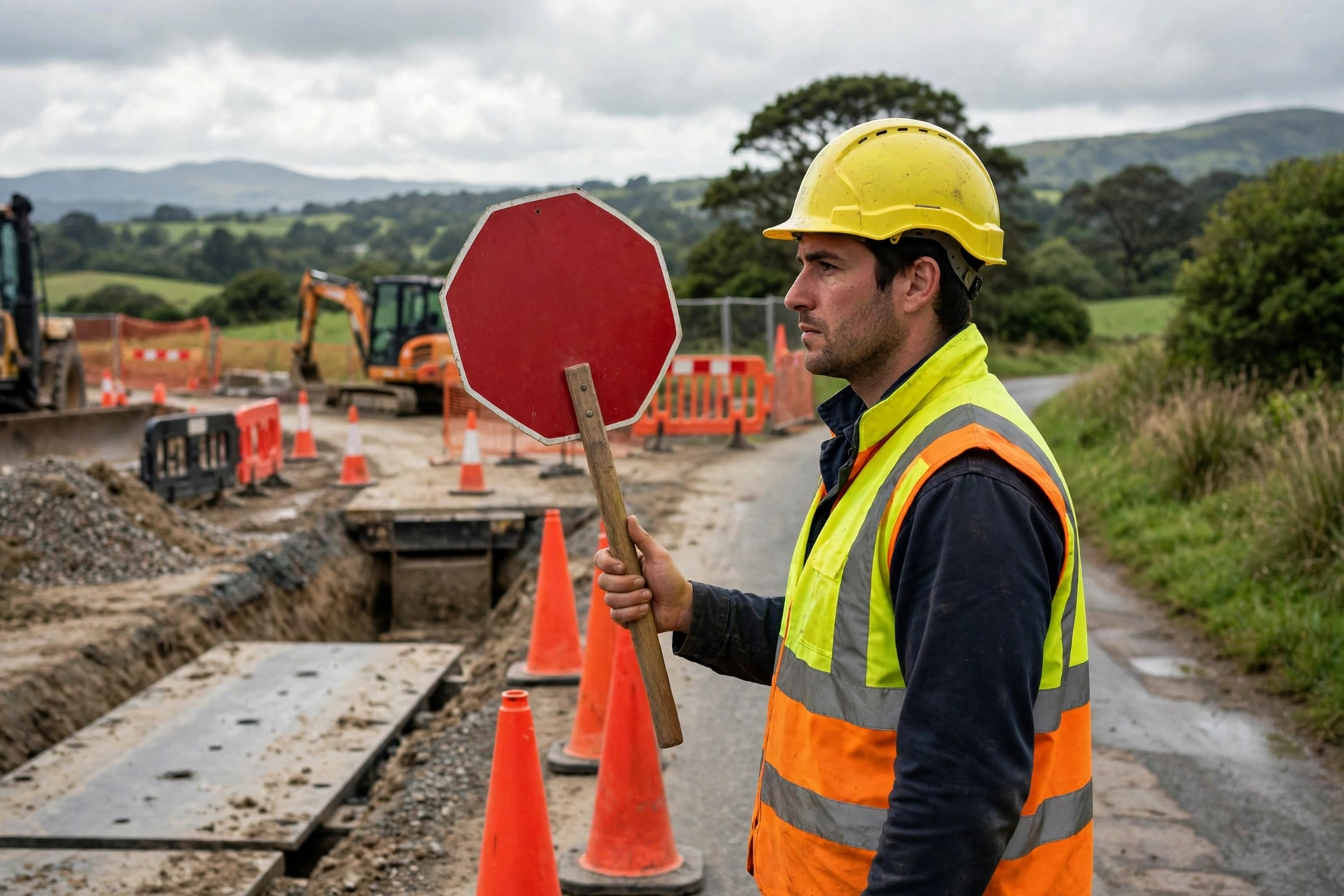
What kind of helmet do road workers wear?
In general terms, road workers wear an industrial safety helmet, which is the hard hat most people picture when they think of a building site. It has a rigid outer shell, usually made from tough plastic, and an inner harness that holds it off the head and spreads the force of an impact. The shell is often fitted with a short peak at the front and a small brim all round, which helps with rain and glare.
Some road workers wear a climbing-style safety helmet instead, which fits closer to the head and has a chin strap that keeps it on during bending and climbing. This style is often chosen by workers who need to look up frequently or work at height, since it stays in place better than a loose hard hat. Which style is used depends on the employer, the site rules, and the kind of work being done, but in all cases the helmet should meet the safety standard set for the job.
What features matter in a road worker helmet?
Fit and comfort matter a great deal, since a road worker may wear the helmet for a whole shift. A helmet with an adjustable harness and a padded sweatband is easier to wear for long hours, and good ventilation helps keep the head cool in warm weather. A helmet that is uncomfortable is more likely to be taken off, which leaves the worker unprotected, so comfort is a safety issue in its own right.
Visibility is another feature worth looking for. A brightly coloured shell makes the worker easier to spot, and some helmets have reflective strips or space for a headlamp, which helps on night work. Attachment points for ear defenders or a face shield are useful where the job involves loud machinery or flying debris. Some helmets include a system designed to reduce rotational forces in a fall, such as MIPS, and it is worth asking about when you choose. Weight matters too: a lighter helmet causes less strain on the neck over a long day.
How should a road worker helmet fit?
A road worker helmet should sit level on the head, with the harness adjusted so the shell sits evenly and does not tip forward over the eyes or slide back. The gap between the shell and the head should be even all round, since that gap is what lets the helmet absorb an impact. If the shell rests directly on the head, it cannot do its job properly.
The harness should be snug enough that the helmet stays in place when the worker bends over or looks up, but not so tight that it causes a headache. If the helmet has a chin strap, it should be fastened whenever the worker is in the work zone, especially when working at height or near moving machinery. Check the fit at the start of each shift, and adjust the harness if the helmet has been shared with another worker, since a helmet that fitted someone else may not fit you.
When should a road worker helmet be replaced?
A road worker helmet should be replaced if it has taken a heavy knock, even if the damage is not obvious from the outside. The shell can develop small cracks that are hard to see, and the harness inside can stretch or weaken after an impact. In general terms, a helmet that has protected its wearer in a serious incident has done its job and should not be relied on again.
Helmets should also be replaced when they show signs of wear. Check the shell regularly for cracks, dents, fading or deep scratches, and check the harness for fraying, loose stitching or broken fittings. Sunlight and heat can weaken the shell over time, so a helmet that has spent years in the sun may need replacing even if it has never been hit. If the maker’s guidance gives a service life, follow it, and when in doubt, replace the helmet: it is a low-cost item compared with the injury it is there to prevent.
Do road workers have to wear a helmet?
In general terms, yes: helmets are standard protective equipment on road sites, and employers usually require them wherever there is a risk of falling objects or head injury.
What is the difference between a road worker helmet and a bike helmet?
A road worker helmet is a hard industrial helmet built to resist falling objects and knocks on a work site, while a bike helmet is built to absorb the force of a fall from a bicycle, so they are made for different hazards.
Can a road worker helmet be shared?
It can be shared if the harness is adjusted to fit each wearer and the helmet is clean and undamaged, but in general terms each worker should have their own helmet for hygiene and fit.

Olivia
Writer at Helmet Today, covering helmet reviews, fit and riding safety.