Yes, helmet colour can affect heat in summer, but in general terms the effect is small compared with ventilation and fit. A dark helmet absorbs more heat from strong sunlight than a light-coloured one, so it can feel a little warmer on a hot day. The difference is usually modest, though, and how hot your head actually feels depends far more on airflow through the vents, the padding inside, and how long you spend riding in direct sun.
Many riders notice the question most in the middle of summer, when a helmet that felt fine in spring suddenly feels warm after half an hour in bright sunshine. Before blaming the colour, it helps to understand what is really making your head hot, and what you can do about it. In general terms, colour is only one small part of the picture, and a well-ventilated dark helmet will usually feel cooler than a poorly ventilated light one.
Does a dark helmet really get hotter in the sun?
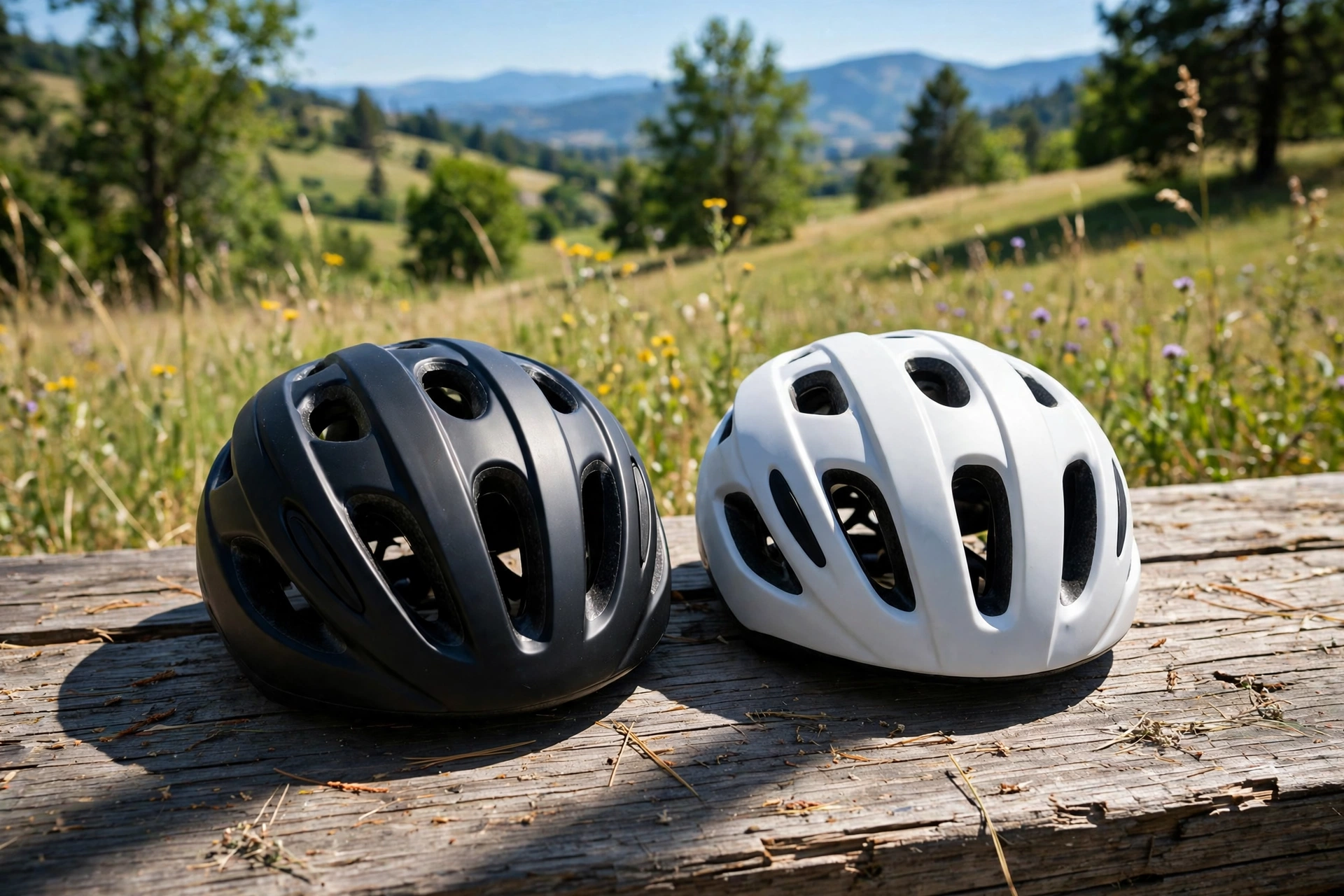
Yes, in general terms a dark helmet does get hotter in the sun than a light one. Dark colours absorb more of the sun’s energy, while light colours reflect more of it away. If you leave a black helmet and a white helmet side by side in strong sunshine, the black shell will feel noticeably warmer to the touch after a while, and the same is true of dark clothing, car roofs, and anything else left out in the sun.
What matters for the rider, though, is not the temperature of the outside of the shell but the temperature inside, next to your head. Between the shell and your head there is a layer of foam lining and usually a small air gap, and both of these slow the movement of heat inward. That means the extra warmth from a dark shell reaches your head slowly, and on a moving ride the air flowing through the vents carries much of it away before you notice it.
How much does helmet colour matter compared with ventilation?
Ventilation matters far more than colour. A helmet with large, well-placed vents lets moving air flow over your head and carry heat away, while a helmet with few vents traps warm air inside no matter what colour it is. On a hot day, the difference between a well-ventilated helmet and a poorly ventilated one is easy to feel, while the difference between a black helmet and a white one of the same model is often hard to notice at all.
The inside of the helmet matters too. The padding and the comfort liner sit against your head, and some helmets include a slip-plane liner such as MIPS, a thin layer designed to move slightly on impact. These liners are thin and light, and in general terms they make little difference to how hot a helmet feels. What does make a difference is whether the padding wicks sweat away from your skin and whether air can move freely between the pads.
Which helmet colours are best for hot weather?
In general terms, light colours are the cooler choice for hot weather. White, silver, and pale grey helmets reflect more sunlight and stay cooler to the touch, which is one reason many riders in warm climates choose them. Light colours also tend to show dirt and marks more easily, but that is a small trade-off for a helmet that feels a little cooler on a long summer ride.
That said, you do not need to avoid dark helmets in summer altogether. If the helmet you like best is dark, and it fits well and ventilates well, it will still serve you fine in hot weather. Some dark helmets are made with lighter-coloured panels or reflective details that help, and a dark helmet worn mostly in the shade, in the early morning, or on short rides will rarely feel uncomfortably hot.
Does helmet colour affect visibility as well as heat?
Helmet colour affects visibility as well as heat, and for many riders visibility is the more important of the two. Bright colours such as white, yellow, and orange are easier for other road users to spot, especially in low light or at a distance. A bright helmet can help you stand out in traffic, on a busy cycle path, or on a trail, and that extra visibility is worth having whatever the weather.
Dark helmets, by contrast, can blend into the background, particularly at dusk or on a grey day. If you ride in traffic, pairing a dark helmet with a bright jacket, reflective stickers, or a light on your helmet can make up the difference. In general terms, the safest choice is a helmet that other people can see easily, and if you can combine a bright colour with good ventilation, you get the best of both worlds.
How can you keep cool in a helmet on a hot day?
There are several simple ways to stay cooler in a helmet when the weather is hot. First, make sure the vents are open and not blocked by a cover, a camera mount, or a thick skull cap. Second, ride in the cooler parts of the day when you can, and take breaks in the shade on long rides. A quick stop to lift the helmet off and let the air reach your head can make a surprising difference.
You can also wear a thin, moisture-wicking skull cap or bandana under the helmet to draw sweat away from your skin, and keep yourself hydrated before and during a ride. After the ride, let the helmet dry out in the open air rather than leaving it in a hot car or a closed bag. In general terms, a helmet that is clean, dry, and well ventilated will feel cooler than one that is damp and clogged with sweat and dust.
Does a black helmet make you hotter in summer?
In general terms, yes, a black helmet can feel a little warmer than a light-coloured one in strong sun, because dark colours absorb more heat. The difference is usually small, though, and ventilation and fit matter far more.
Is a white helmet always cooler than a black one?
Not always. A white helmet with poor ventilation can feel hotter than a black helmet with large vents and good airflow. Colour helps, but it is only one part of how cool a helmet feels.
Should I choose a helmet by colour or by fit?
Choose by fit and ventilation first, and treat colour as a secondary choice. A helmet that fits well and keeps air moving will be more comfortable in summer than a poorly fitting light-coloured one.

Olivia
Writer at Helmet Today, covering helmet reviews, fit and riding safety.