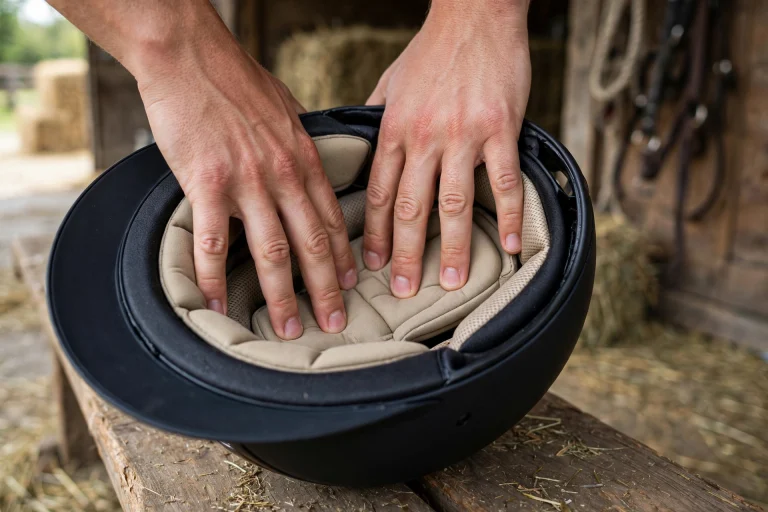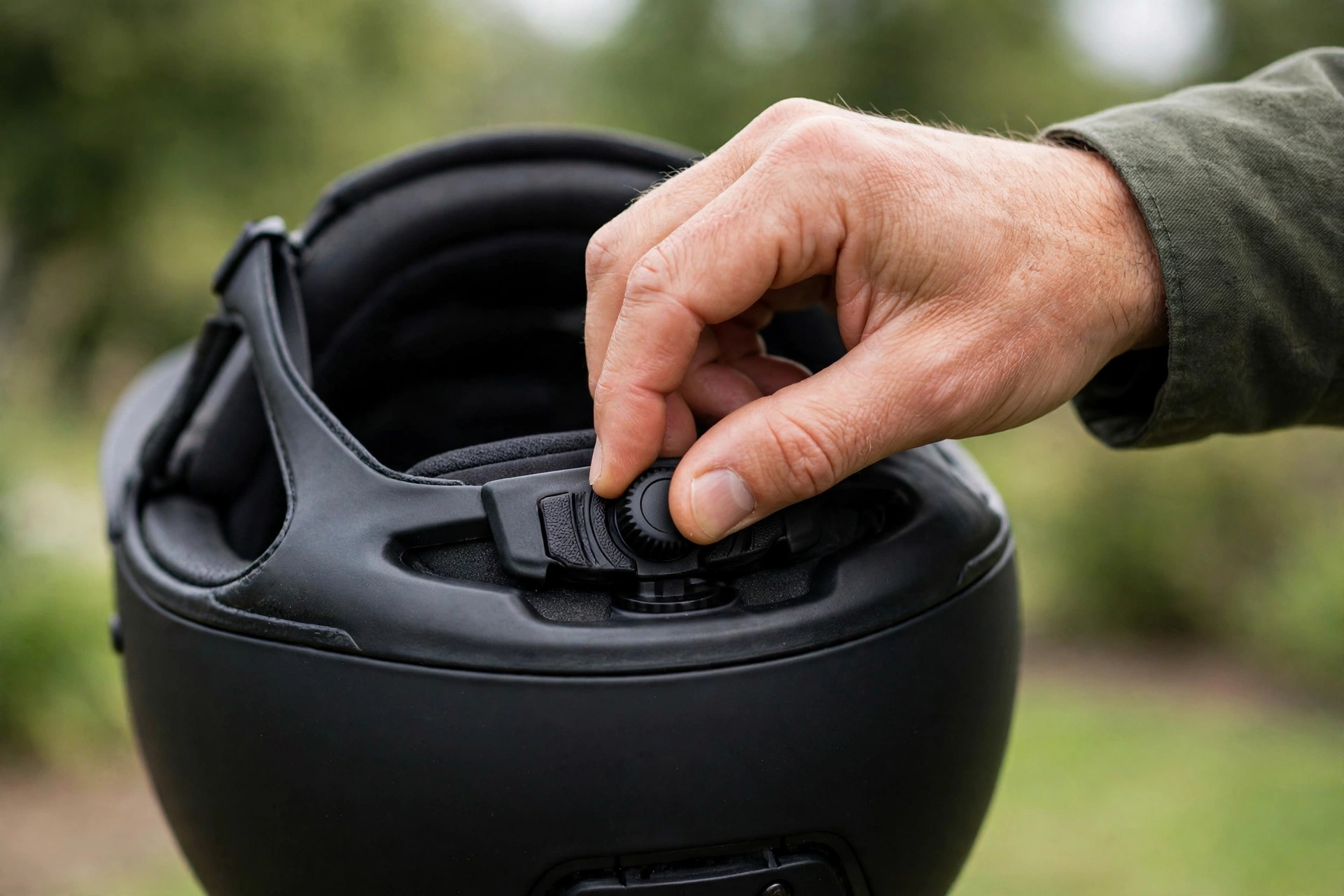
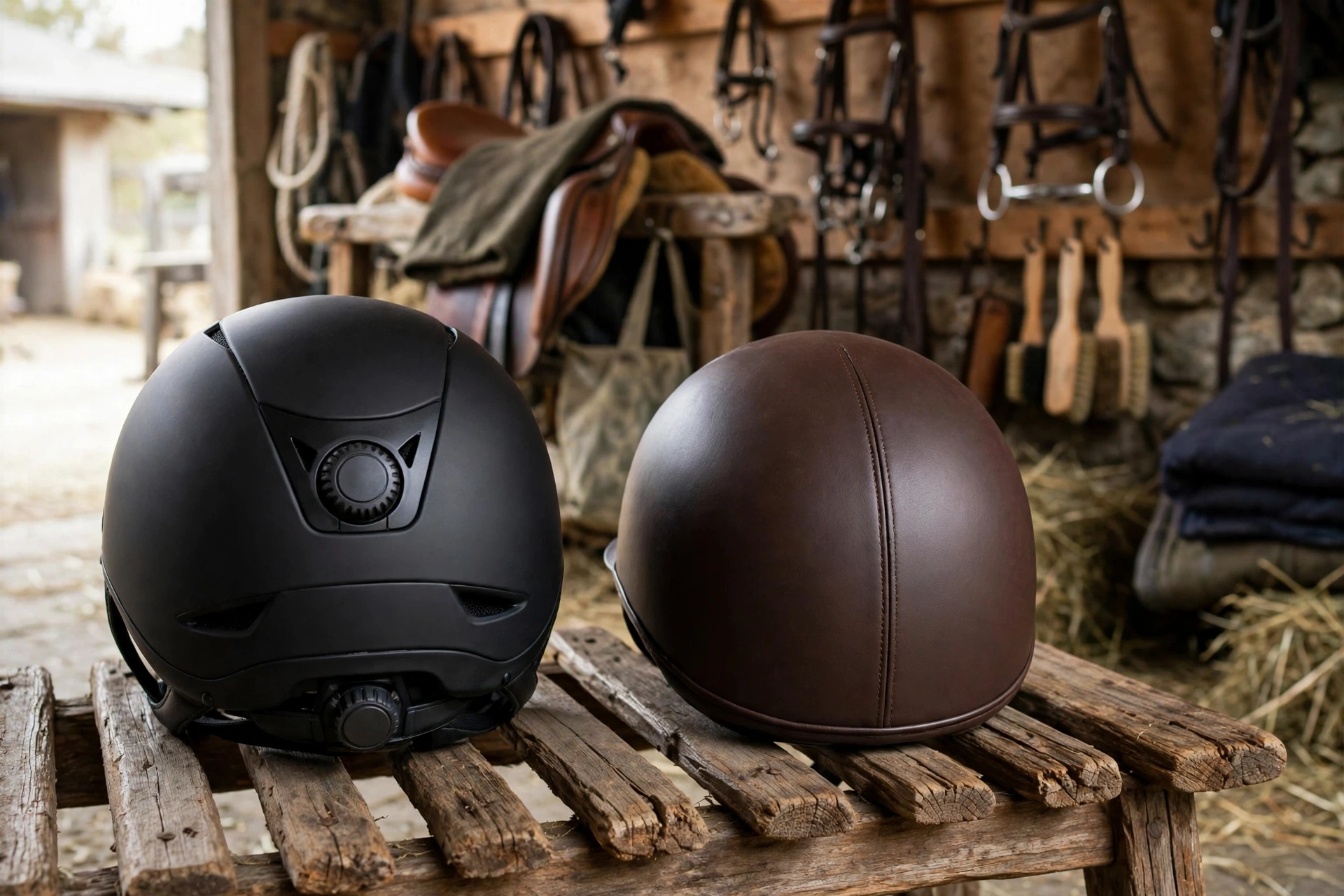
Neither system is automatically better — both dial-fit and fixed-size riding helmets can be certified to the same safety standards, so the better helmet is the one that fits your head correctly. Dial-fit helmets adjust with a wheel or dial across a range of sizes, which suits growing children, riding schools, and riders whose hair changes the fit; fixed-size helmets come in individual sizes and can give the cleanest, most precise fit when your size is exact — and the worst fit when you fall between sizes. Fit quality, not fit mechanism, is what you are really choosing between.
This guide explains how each system works, where each one wins, and how to judge fit in the shop whichever you pick.
How Does Each Fit System Work?
A fixed-size helmet is built the traditional way: the shell and its internal padding are made in a stated size, and the helmet fits heads within a narrow range around that size. What you try on is what you get — the padding compresses slightly with wear, but there is no adjustment beyond sometimes swapping liner thickness.
A dial-fit helmet covers a wider size range with an adjustable internal cradle or harness, tensioned by a dial or wheel, usually at the back. Turn the dial and the cradle tightens or loosens around your head, so one helmet can fit several head sizes — and the same head with hair up, hair down, or a winter layer of growth.
Both designs then rely on the same things to stay on and protect: the foam liner inside the shell, and the chin harness you fasten every ride. Certification testing applies to the finished helmet either way — both systems produce helmets that have passed the same laboratory bar.
Which System Gives the Better Fit?
It depends entirely on your head. If a fixed size matches your head shape and measurement exactly, it tends to feel the most uniform — even pressure all the way round, no mechanism, nothing to adjust.
If you fall between sizes, the picture reverses. A fixed helmet a size up will rock and shift; a size down will press at the forehead and temples. A dial-fit helmet can be tuned into that gap, and fine-tuned again as padding beds in over the first weeks — an adjustment a fixed helmet cannot make.
Head shape matters as much as size. Helmets from different makers are built on different shapes — rounder or more oval — and no dial can fix a shape mismatch: it will tighten onto the pressure points and still leave gaps elsewhere. Try both systems, in more than one brand, and judge by the fit checks below rather than by the mechanism’s promise.
Which Is Better for Children and Riding Schools?
For growing children, dial-fit is the pragmatic favourite. Heads grow in steps, and a dial helmet can follow a season or two of growth — provided it still fits properly at each stage, sits level, and passes the movement checks. Parents should re-check fit regularly rather than trusting the dial to keep up forever: once the cradle is at its limit, the helmet is done, however new it looks.
Riding schools and trekking centres are the other natural home of dial-fit. One helmet can be adjusted between riders through a day, which makes providing certified head protection for every client practical. The discipline has to match the convenience: staff must adjust and check the fit for each rider, every time — a dial helmet worn at yesterday’s setting is just a wrong-size helmet.
For a child with their own helmet who rides seriously, a well-fitted fixed-size helmet is equally sound, and many parents choose one for the cleaner fit and simply accept replacing it as the child grows.
What Are the Drawbacks of Each System?
Dial-fit’s drawbacks live at the dial. The cradle concentrates adjustment at the back of the head, and some riders feel a pressure point there on long rides. The mechanism itself is a moving part: dials can wear, stiffen, or break, and a helmet whose dial no longer holds tension is a helmet that no longer fits. The cradle also adds a little bulk and can interfere with very low ponytails, though many designs now route the cradle to accommodate them.
Fixed-size’s drawback is precision itself. Between-size heads are common, haircuts and hair styles change the equation, and the helmet cannot adapt as its padding compresses over its first season — a fixed helmet that was snug in spring can be merely adequate by autumn. It also means one helmet truly fits one person, which households sharing horses notice quickly.
Both share the universal limits: neither system rescues a wrong head shape, neither compensates for a worn-out helmet, and both are undone by an unfastened harness.
Does the Fit System Change How Safe the Helmet Is?
Only through fit. Certification — to ASTM/SEI, PAS 015, VG1, or another accepted standard — tests the helmet as a product, and both fit systems produce certified helmets. There is no separate, lesser standard for dial-fit. What the tests assume is a helmet sitting correctly on the head, and that is where the system choice touches safety: whichever mechanism gets the helmet snug, level, and stable on your head is the safer one for you.
That stability is what every protective feature depends on. The foam must be over the part of your head that strikes; advanced designs add rotational-impact systems like MIPS that manage twisting forces — but a helmet that has shifted or tipped before impact cannot put any of that technology where it belongs. Fit first, features second, mechanism last.
So run the checks in the shop: the helmet sits level, feels evenly snug with no single pressure point, does not rock when you shake your head or push the brim, and stays put when you nod and turn. If a helmet — dial or fixed — passes all of that and is certified and in date, you have made a good choice. If it fails, put it back and try the next one.
Frequently Asked Questions
Q: Are dial-fit riding helmets as safe as fixed-size ones?
A: Yes, when they are certified to the same standard and fitted correctly. Certification tests the finished helmet, and dial-fit models pass the same laboratory requirements. Safety differences come from fit, condition, and age — not from the adjustment mechanism. A well-fitted dial helmet protects better than an ill-fitting fixed one, and vice versa.
Q: Which is better for a rider with long hair or a ponytail?
A: Dial-fit often copes better, because you can open the cradle to accommodate hair worn up and tighten it when your hair is down, and many dial designs are shaped to let a low ponytail pass. Fixed sizes can work too if the fit is checked with your hair in riding style. Either way, do the fit check wearing your hair exactly as you ride.
Q: How do I know if a helmet’s fit is right, whichever system it uses?
A: It should sit level on your head, feel snug and even all the way round with no single painful spot, and stay in place when you shake your head, nod, and push gently at the brim — before you even fasten the harness. With the harness fastened, it should not roll or lift. If it moves independently of your head, it does not fit, whatever the size label or dial says.

Olivia
Writer at Helmet Today, covering helmet reviews, fit and riding safety.