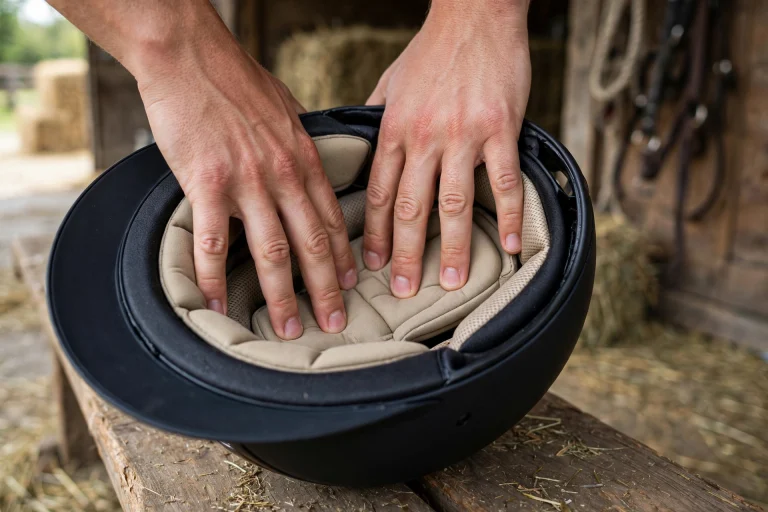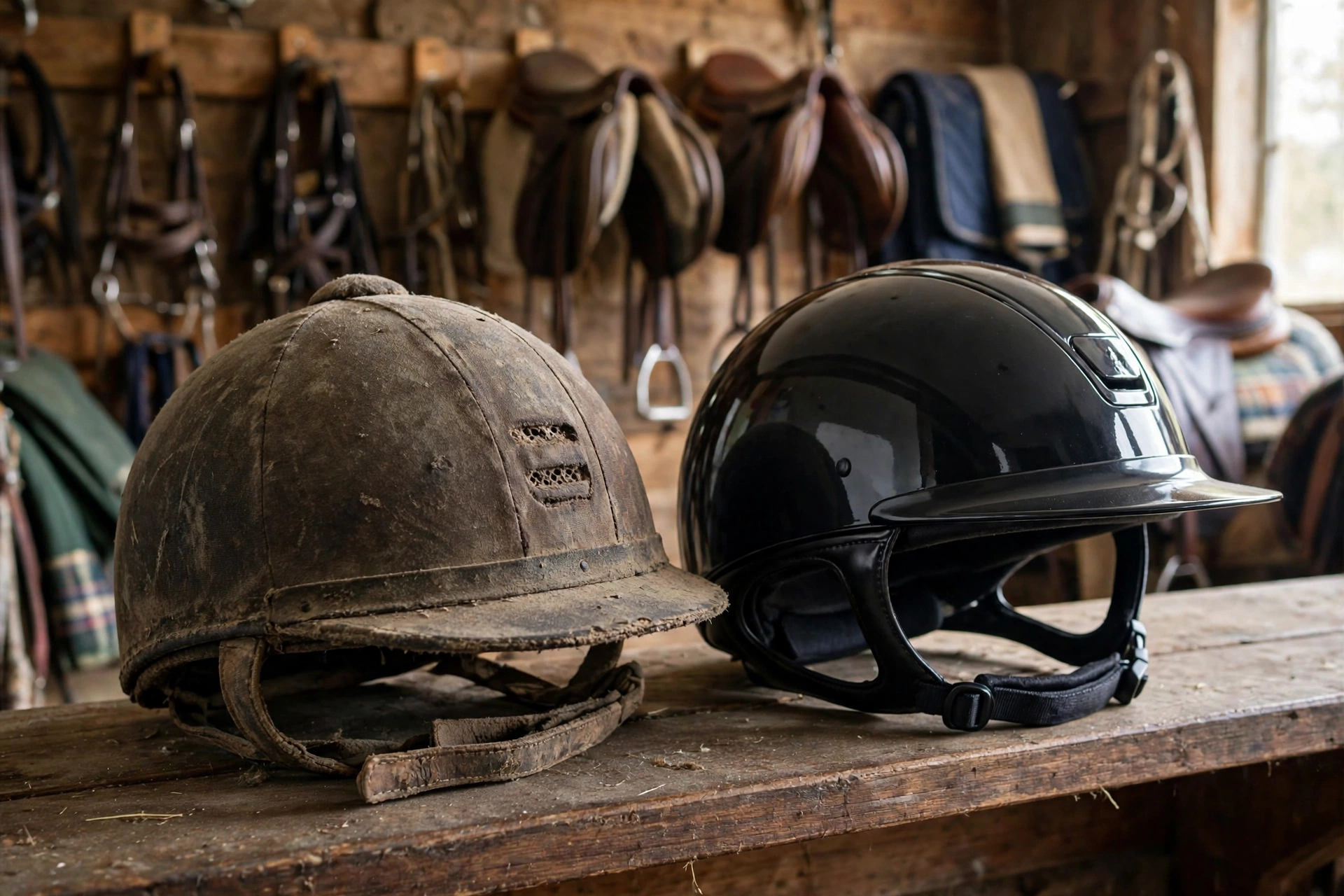
Yes, riding helmets expire in effect, even though no date is stamped on them. The foam that absorbs impact ages with sweat, heat, sunlight, and everyday knocks, so manufacturers generally recommend replacing a riding helmet after about five years of use — and immediately after any fall in which it hits the ground, even if it looks undamaged. A helmet past its service life may look perfect while its protection quietly drains away.
This guide explains why helmets age out, how to judge the one you own, and how to store a helmet so it reaches a full, honest service life.
Why Do Riding Helmets Age Out Over Time?
The protective heart of a riding helmet is a layer of energy-absorbing foam — typically expanded polystyrene — between the shell and the lining. In a fall, that foam crushes to slow your head down. The problem is that the same foam slowly changes with age and use: it can become more brittle and less able to crush as designed, so an old helmet passes less of a fall’s energy to the foam and more of it to you.
Everyday riding accelerates this. Sweat and the oils from your skin work into the foam and lining. Heat from a summer tack room or a car boot softens and stresses materials; sunlight degrades shells and straps; the small bumps of daily life — drops onto concrete, knocks in the tack box — add up. The harness webbing frays and stretches, buckles wear, and the comfort padding compresses until the helmet no longer fits as it did.
None of this shows dramatically from outside. That is the point of a service life: it is a limit based on how the materials behave, not on whether the helmet still looks smart.
How Long Does a Riding Helmet Usually Last?
In general terms, most manufacturers recommend replacing a riding helmet roughly every five years from when you start using it — some say four to five, some frame it as five years from purchase or first wear. That figure assumes normal use and no falls; it is a ceiling, not a target, and plenty of helmets should be retired sooner.
To judge your own helmet’s age, find the manufacture date on the label inside — usually printed under the lining alongside the standard and model. That date tells you when the helmet was made, which matters if it sat in a shop or warehouse: a helmet already several years old when bought new has less service life left than its price tag suggests.
Usage intensity cuts both ways. A helmet ridden in daily, sweated through lessons all summer, ages faster than the calendar suggests. A helmet worn twice a month and stored beautifully may be sound at five years — but the maker’s recommendation exists because you cannot inspect foam performance with your eyes. When in doubt, the calendar wins.
What Signs Say a Helmet Is Finished, Whatever Its Age?
The absolute rule comes first: after any fall where the helmet strikes the ground or another hard surface, replace it. The foam crushes invisibly in one spot, the shell often springs back unmarked, and that crushed zone will not protect the same place twice. This applies to falls from the horse and to serious drops — a helmet that falls from a hook onto concrete has taken a real impact.
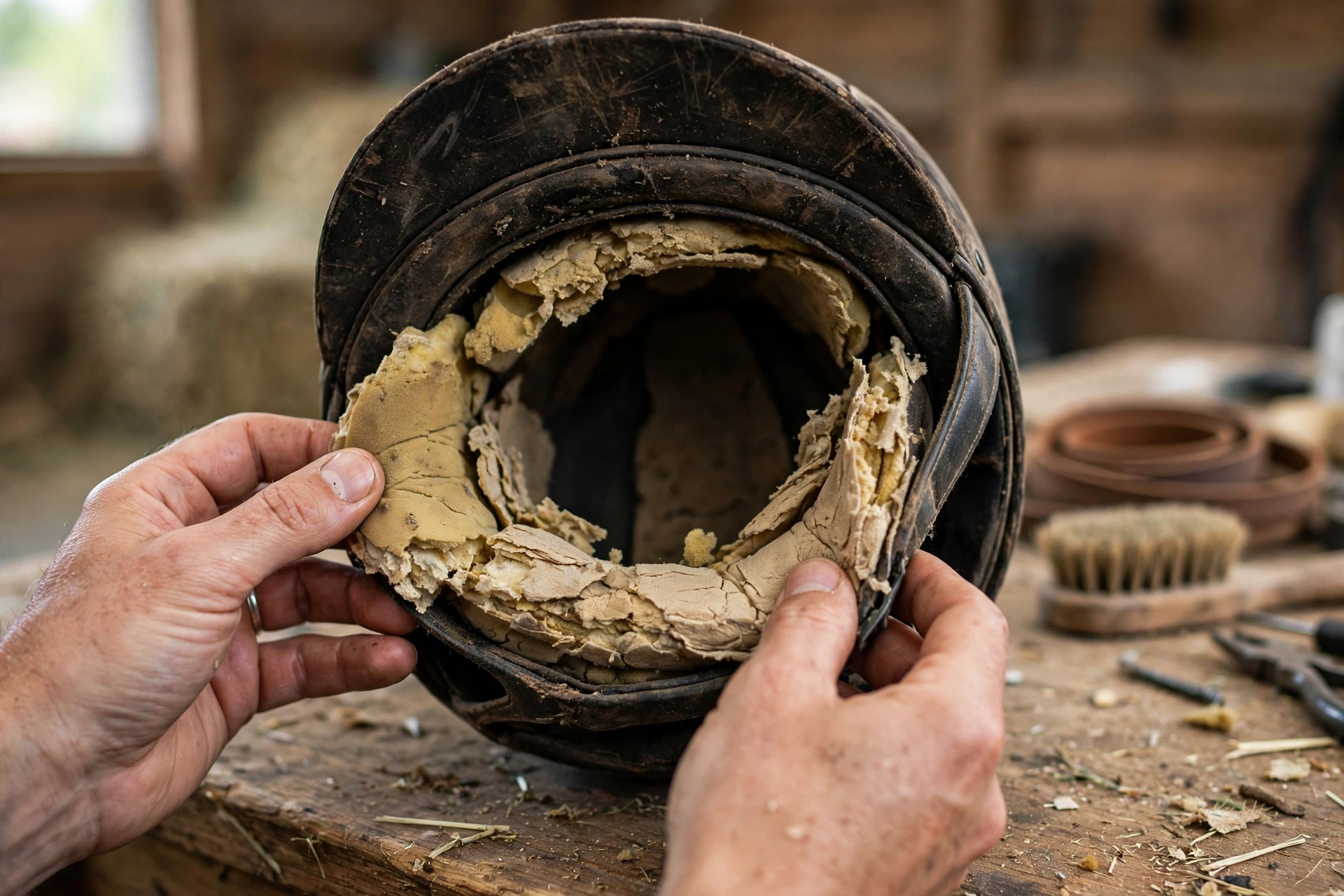
Then the wear signs. Look for cracks in the shell or foam, foam that feels crumbly, chalky, or separated from the shell, and a liner that no longer sits where it should. Check the harness: frayed or stiff webbing, a buckle that does not click positively, sliders that slip. Check the fit: a helmet that has gone loose or rocks where it once sat snug has compressed padding, and a loose helmet is a failing helmet.
Add two softer signs: a helmet that smells sour despite cleaning has sweat-degraded padding deep inside, and a helmet whose history you do not know — borrowed, inherited, or bought second-hand — should be treated as expired on arrival.
How Should You Store a Helmet to Make It Last?
Store it cool, dry, and out of the sun: a ventilated spot in the tack room or at home, ideally in its bag or a helmet box that keeps dust off while letting air move. Let it dry fully after sweaty rides before putting it away, and never seal a damp helmet in an airtight box.
Heat is the enemy to plan around. A car in summer sun, a tack room roof space, or a spot beside a heater will age foam and adhesives faster than riding does. The classic mistake is the helmet that lives permanently in the car boot — convenient, and quietly cooked. Bring it indoors as your default.
Keep it away from chemicals and sharp company. Solvents, fly sprays, and strong cleaners can attack shell plastics and foam, so store the helmet away from the spray shelf, and give it its own space rather than the bottom of a box of bits, boots, and tools. Handle it by the shell and rest it on a shelf or proper hook — not somewhere it can fall.
Can a Helmet Expire Before You Ever Wear It?
Partly, yes — and this surprises people. Materials age on the shelf too, just more slowly. A helmet stored for years in a hot warehouse before sale does not start its life with a full five years in hand, because the clock that matters is the materials’ age, not your first ride. This is why the manufacture date on the label is worth reading before you pay, especially on discounted, end-of-line stock.
That said, a new helmet from current stock, stored sensibly by the retailer, is the normal and safe purchase; shelf ageing at a good shop is measured in months, not years.
When you replace, you also gain whatever the standards and designs have added since — modern helmets increasingly offer features like rotational-impact systems like MIPS alongside their certified baseline. Think of replacement not as the old helmet failing you, but as a scheduled renewal of the one piece of kit whose whole job is a single bad second.
Frequently Asked Questions
Q: How do I find out how old my riding helmet is?
A: Check the label inside the helmet — under the lining or at the back of the shell. It shows the manufacturer, model, the standard it meets, and the date of manufacture. Compare that date with when you bought and started using it; the maker’s service-life guidance of roughly five years of use runs from the helmet’s early life, so count honestly.
Q: I dropped my helmet on the yard concrete. Must I replace it?
A: A serious drop onto a hard surface deserves the same caution as a fall. Inspect for cracks and foam damage; if the drop was from height onto concrete, the foam may have crushed in one spot invisibly. Many riders replace after any hard drop for exactly that reason — when in doubt, the cost of a helmet is small next to what it is for.
Q: My helmet has been in its box, unworn, for years. Is it still good?
A: Materials age slowly even in storage, faster in heat and sunlight. A helmet stored cool, dark, and dry for a couple of years is likely fine; one that has sat for many years, or anywhere hot, should be judged by its manufacture date and the maker’s service-life guidance — and if that says its time is up, believe it rather than the box.

Olivia
Writer at Helmet Today, covering helmet reviews, fit and riding safety.