The responsible way to dispose of an old helmet is to cut the straps first so nobody can pull it back out and reuse it, strip off the removable parts, and then recycle whatever your local programs accept — in general terms, most helmets still end up in household waste because the foam and shell are bonded together, but some brands and community schemes do take them back.
It feels wrong to throw a helmet in the bin, especially one that once protected you well. But a worn-out or crashed helmet is not a donation — it is a product that can no longer do its one job. The goal of disposal is to make sure it never ends up on someone else’s head while sending as little to landfill as you reasonably can.
Why Should You Cut the Straps Before Disposal?
A helmet in a bin or at a donation drop can look perfectly usable. The shell shines, the pads look clean, and nothing about it announces that the foam inside is aged, crushed, or cracked. If someone retrieves it — a thrift shopper, a kid, anyone who needs a helmet and spots a free one — they will ride believing they are protected when they are not.
Cutting the straps is the standard, simple safeguard. With the chin strap cut through, the helmet cannot be fastened, which instantly removes it from circulation far more reliably than good intentions. Cut each side of the strap close to the shell, and do the same with any retention straps.
Some riders go one step further for crashed helmets and mark the shell or crush it before disposal. That is optional; the cut straps are the essential part. Think of it as the helmet equivalent of shredding a document — you are not being wasteful, you are preventing a false sense of security.
Can an Old Helmet Actually Be Recycled?
In general terms, recycling a helmet is difficult, and it helps to know why. A helmet is several materials fused together: a plastic shell bonded to expanded polystyrene foam, with nylon straps, foam pads, and small metal and plastic fittings. Curbside recycling programs almost never accept mixed, bonded materials of that kind, so a helmet tossed in the recycling bin will usually be pulled out and sent to landfill anyway.
There are exceptions worth checking. Some helmet manufacturers run take-back programs, occasionally with a discount toward a replacement, and some local schemes collect helmets for material recovery or creative reuse. A quick search for your brand’s take-back policy and your municipality’s hard-to-recycle options takes five minutes and is the difference between “recyclable in principle” and actually recycled.
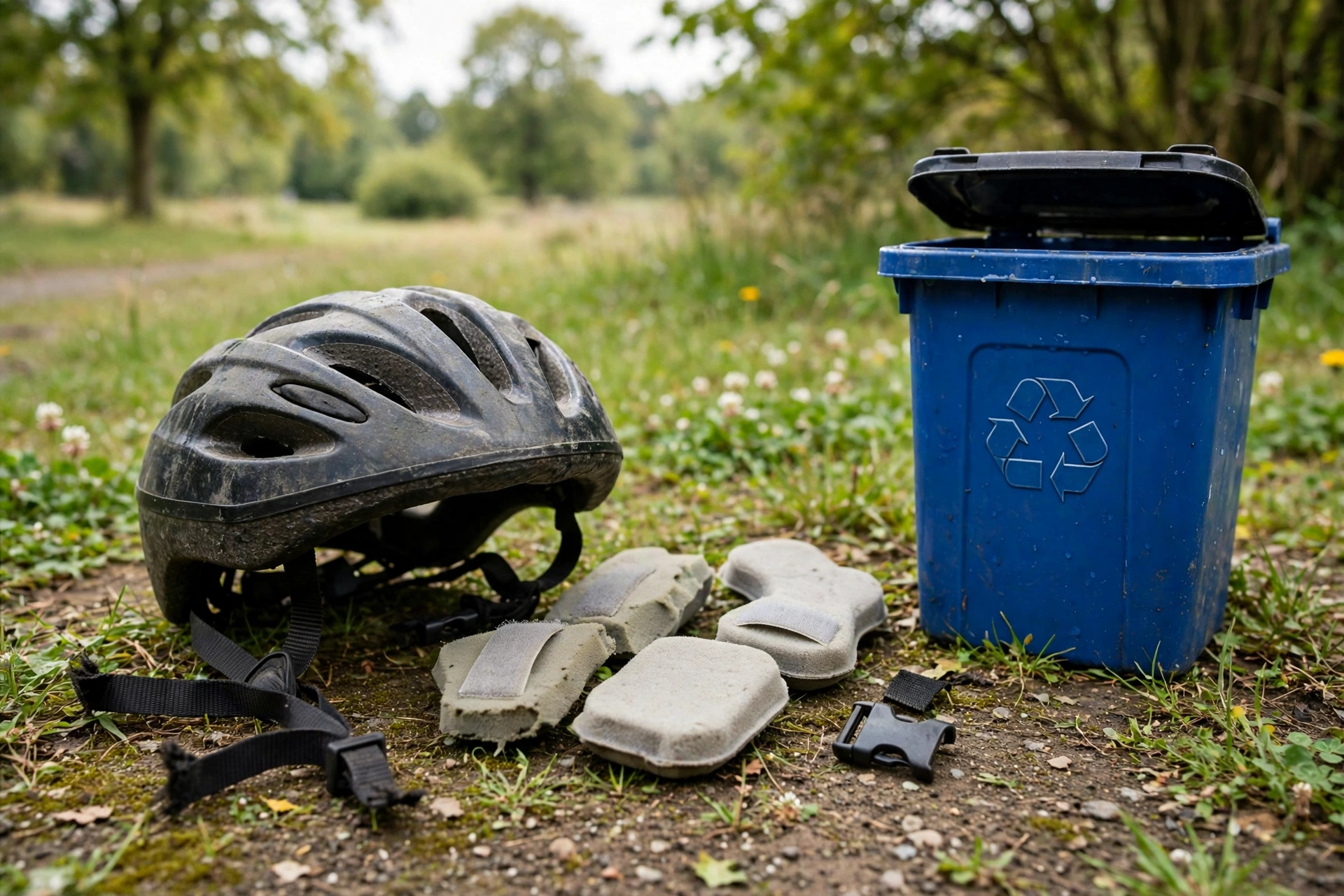
What you remove yourself changes the picture slightly. Pads, straps, buckles, and visors separated from the shell are individual items — some local programs take certain plastics or textiles — but the bonded shell-and-foam core remains the part almost nobody can process. Be honest about that rather than wish-cycling the whole helmet.
Can You Donate or Give Away an Old Helmet Instead?
For a helmet that is crashed, cracked, or past its service life: no. Donating it passes an invisible risk to someone who cannot assess it, and most charities and helmet programs will not accept used helmets for exactly that reason. The sizing and history of a helmet are personal — as with the fit guidance in our explainer on how modern helmet liner systems work, protection depends on details a secondhand user cannot verify.
The narrow exception is a helmet that is genuinely nearly new, undamaged, never crashed, well within its age limit, and given directly to someone you know with its full history disclosed — ideally with its receipt and manual. Even then, many safety organizations advise against it, because no one can fully verify the foam by looking.
There are better second lives that involve no heads. Retired helmets get used as training props for first-aid and safety courses, as shop displays, and as garden planters. If a local training organization wants old helmets for demonstrations, that is a responsible reuse — just cut or clearly mark them so they never drift back into actual riding.
What Should You Remove Before the Helmet Goes Out?
Work through the helmet in order. First, any electronics: lights, cameras and their mounts, and intercom units come off for reuse — check batteries are removed from anything being discarded with general waste, since batteries belong in battery recycling in most areas.
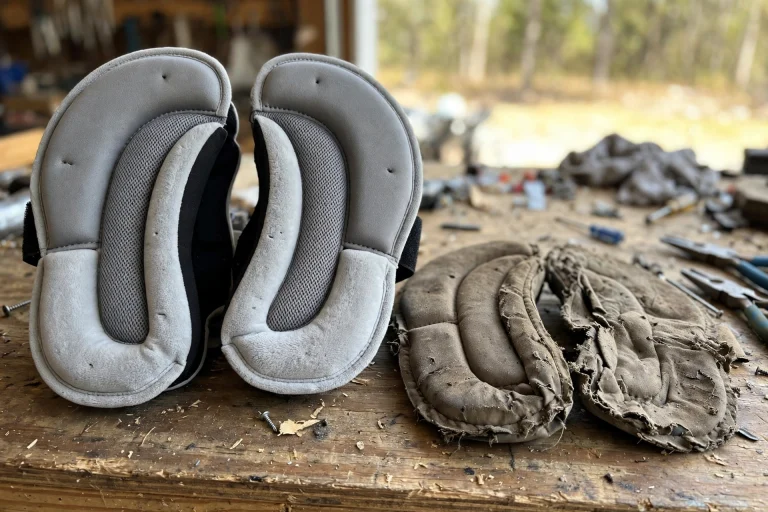
Next, the soft parts: comfort pads and liners usually pull out by hand, and the chin strap should already be cut. Visors and peaks typically unclip or unscrew; keep a good spare visor if it fits your next helmet of the same model. Small metal buckles and screws can go with scrap metal where local rules allow.
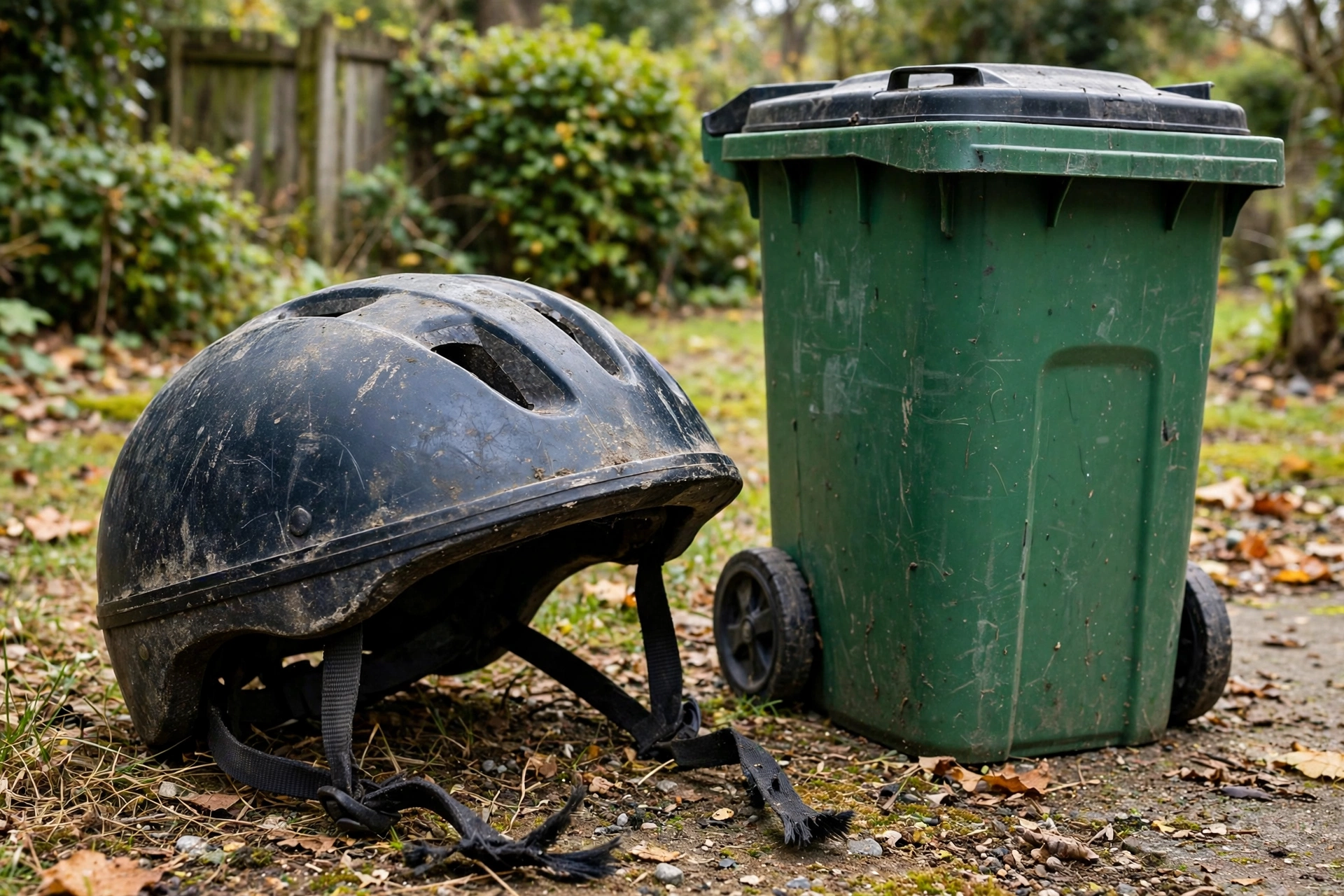
What remains is the shell bonded to the foam — the irreducible core. Write the helmet’s story on it if it helps whoever handles waste understand it is damaged, bag it so loose foam beads do not scatter, and put it out with the waste stream your local check indicated: take-back, special collection, or household rubbish, in that order of preference.
When Is a Helmet Actually Ready for Disposal?
Dispose and replace after any crash in which the helmet struck something, whether or not you can find the damage — that helmet has done its job once and cannot be trusted to do it again. The same applies when your inspection finds cracked or dented foam, a cracked shell, or failed straps or buckle.
Age is the other trigger. In general terms, manufacturers put a helmet’s service life at around five years of use, because sweat, sunlight, heat, and handling slowly degrade the materials. A helmet can look showroom-fresh at that age and still be due — materials do not send warnings before they underperform.
Finally, fit can retire a helmet: pads that no longer restore a snug fit, a retention system that slips, or a child’s helmet that has simply been outgrown. When any of these arrive, replace first, then dispose of the old one properly — cut straps, stripped parts, and the best waste stream you can find — so its protection story ends with you.
Frequently Asked Questions
Q: Will my recycling service take a helmet if I put it in the bin?
A: In general terms, no. Helmets are mixed materials bonded together, which curbside programs cannot process, so the helmet will most likely be removed and landfilled. Check for a brand take-back program or local hard-to-recycle scheme instead.
Q: Is it enough to just throw a crashed helmet away without cutting it?
A: It leaves a real risk that someone retrieves and uses a helmet that looks fine but cannot protect them. Cutting the straps takes ten seconds and guarantees the helmet cannot be worn again — always do it.
Q: Can I keep my crashed helmet as a spare or for a passenger?
A: No. A crashed helmet is a retired helmet, for every head. Spare and passenger helmets need to be undamaged, in-date, and properly fitted — keep an undamaged spare if you carry passengers, and dispose of the crashed one responsibly.

Olivia
Writer at Helmet Today, covering helmet reviews, fit and riding safety.