No — you cannot safely repair a cracked helmet shell, and the helmet must be replaced. Glue, epoxy, or filler might make the crack vanish on the surface, but none of them can restore the way the shell and foam were engineered to absorb an impact. A repaired crack is a cosmetic fix on a safety device, and riding in it means trusting your head to a patch that was never tested to protect anything.
This answer disappoints people, especially when the helmet was expensive or the crack looks small. But helmet construction leaves no room for a different answer, and this guide explains why — plus what you can legitimately repair on a helmet, and how to tell a crack apart from harmless cosmetic damage.
Why Can’t a Cracked Helmet Shell Be Repaired?
A helmet is not a rigid box; it is a tuned system. The thin outer shell is designed to spread an impact over a wide area and, in some crashes, to slide and even split in controlled ways while the foam liner beneath crushes progressively to absorb energy. The shell and the foam work as one bonded unit, tested and certified together.
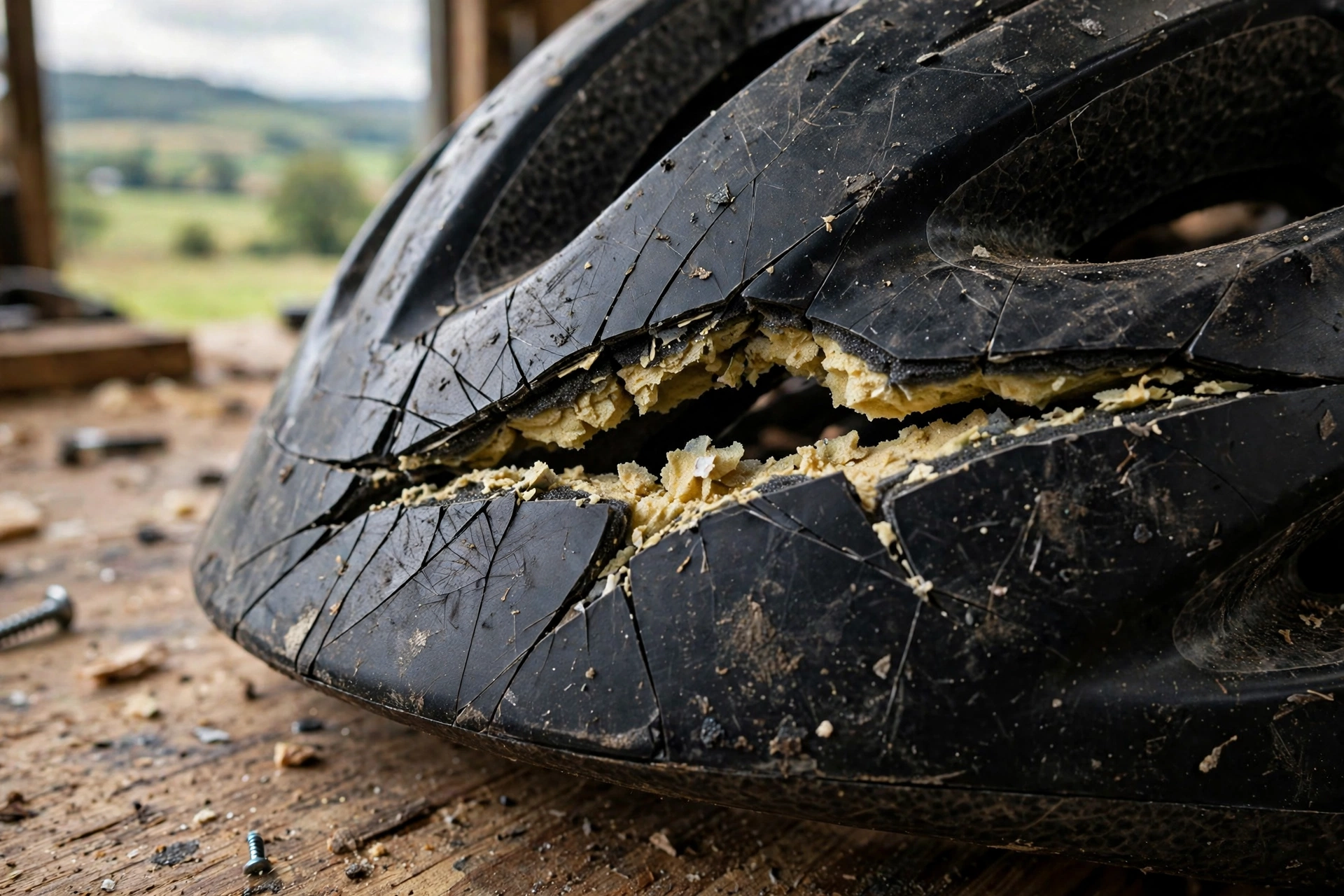
A crack breaks that system twice. First, the cracked area can no longer spread force the way the design intends — the load concentrates at the crack instead of dispersing. Second, a crack in the shell almost always means the foam underneath took the same event: shells rarely crack from nothing, and the impact that split the surface typically compressed or fractured the liner below it, where you cannot see.
That is why certification matters here. Your helmet was certified as it left the factory, in one piece. No glue joint, filler, or home fiberglass job has been through that testing, and no repairer can honestly tell you how a patched helmet will behave in the next crash. The protection is simply unknowable after a crack — and unknowable is not good enough for head protection.
What About Glue, Epoxy, or Filler on a Small Crack?
It is the most common suggestion, and it fails on the details. Adhesives strong enough to bond the shell are often solvents in disguise for the foam beneath: many glues and epoxies attack expanded polystyrene, softening or dissolving the very liner that does the absorbing. A repair can therefore leave the helmet weaker than the crack did, while looking better than ever.
Even a perfectly compatible adhesive would only rejoin the visible line. It cannot un-crush foam, restore the shell’s original flex pattern, or recreate the factory bond between shell and liner. Fillers add a further problem of their own — they change the shell’s weight and rigidity in one patch, creating a hard spot the design never intended.
Manufacturers are unambiguous on this in general terms: their instructions prohibit repairing or modifying the shell, and a repaired helmet is a helmet used against its maker’s instructions, with any warranty gone. If a crack is small enough to tempt you, it is because it looks cosmetic — and the next section covers how to tell when damage really is only cosmetic.
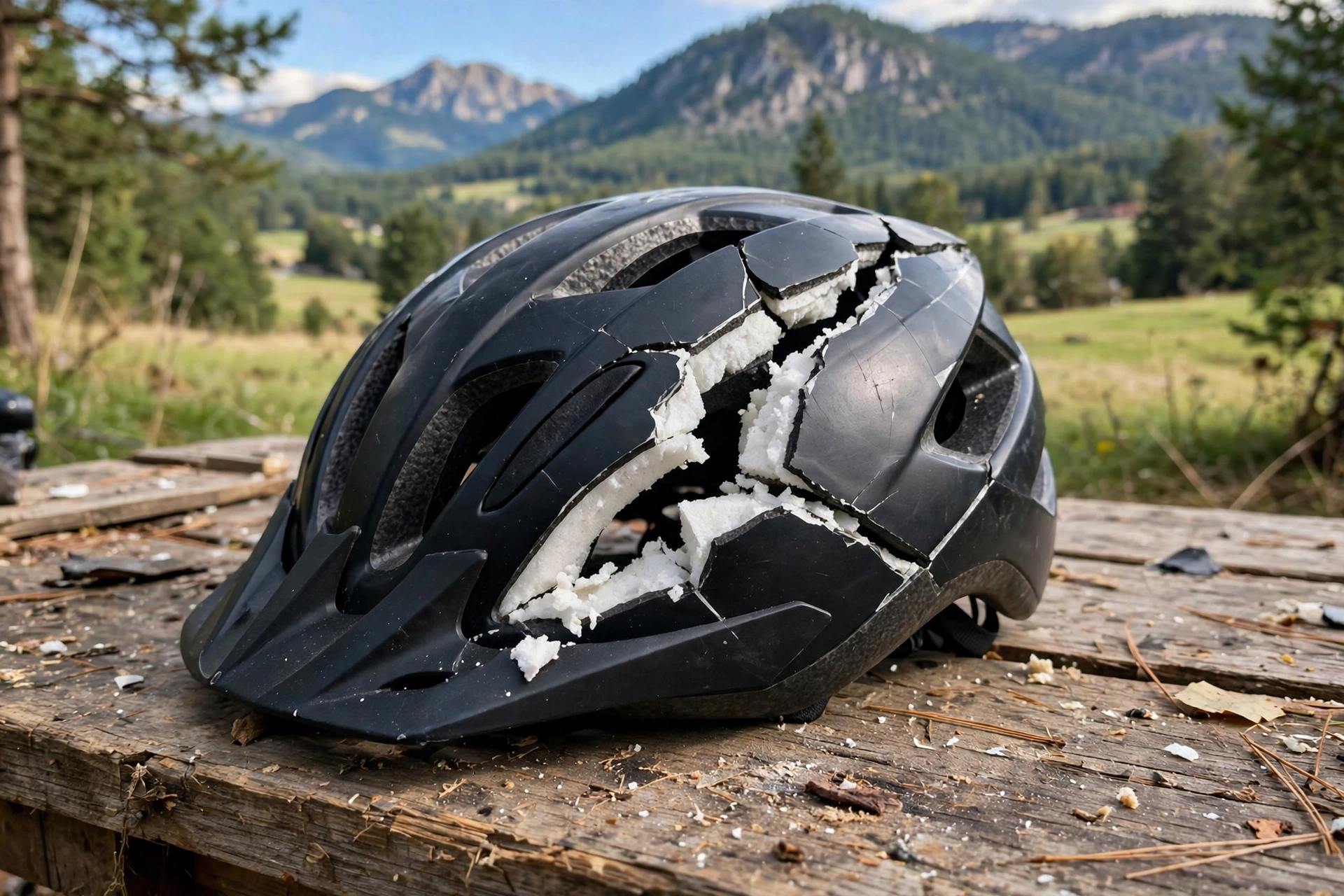
Is a Scratched, Scuffed, or Dented Shell the Same as a Crack?
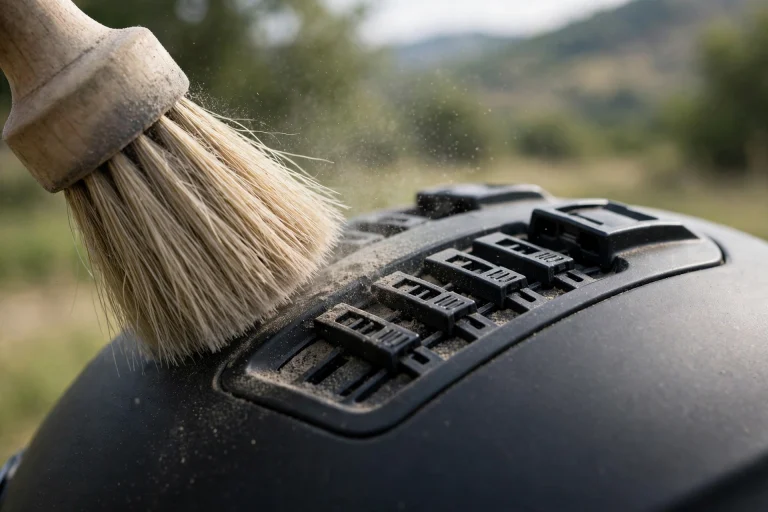
No, and the distinction is worth learning because it saves good helmets. Surface scratches in the paint or clear coat, light scuffs from being set down, and minor cosmetic marks do not break the shell’s structure. A helmet with those can be inspected and, if the foam is undamaged, kept in service.
A crack is different in kind: it is a split that goes through the shell material. Run a fingernail across the suspect mark — a scratch catches slightly on the surface, while a crack has depth and edges you can feel, and the shell may flex or creak around it when pressed gently. Cracks most often appear after a drop onto a hard edge, a crash, or around vents and mounting points where the shell is thinnest.
Dents sit in between and deserve respect. A dent in the shell usually means the foam below has compressed — press the liner inside at that spot and feel for a soft or thinned area. A dent with damaged foam retires the helmet just as a crack does, even though nothing visibly split. Modern internal systems, like the rotational liners described in our guide to MIPS and rotational protection, sit just under that foam, so liner damage matters beyond the shell alone.
What Can You Legitimately Replace or Fix on a Helmet?
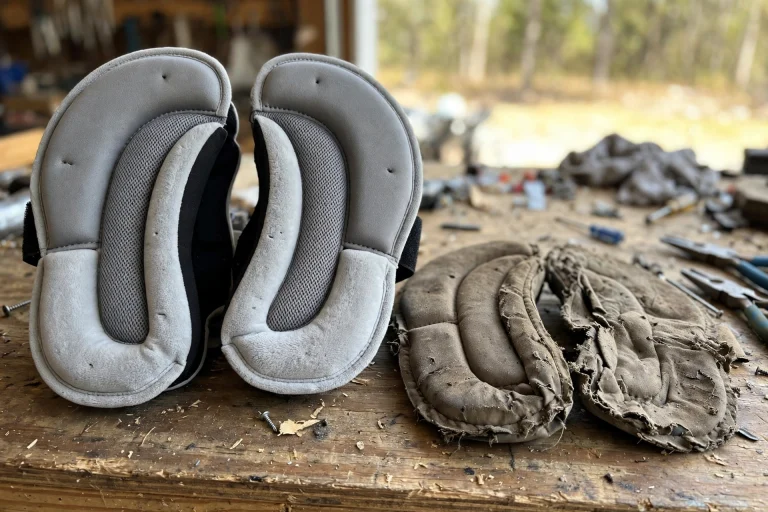
Quite a lot — everything except the protective structure itself. Comfort pads and liners are consumables: they swap out for fresh or different-thickness sets from the manufacturer, which is also how you fine-tune fit. Visors and peaks are replaceable parts, as are their pivots and screws on many models. Straps on some helmets, cheek pads, breath guards, chin curtains, and vent sliders are all serviced or replaced by design.
The dividing line is simple: if a part is listed by the manufacturer as a replaceable spare, it is safe to replace, using that maker’s genuine part. If the “repair” involves the shell, the impact foam, or the bond between them, it is not a repair — it is the end of the helmet.
Use only the maker’s own parts, fitted as instructed. A visor from another model or pads hacked to fit can alter how the helmet sits or behaves, and once you are improvising parts you are back in untested territory.
What Should You Do With a Cracked Helmet?
Retire it properly, and make sure it stays retired. Replace the helmet first — certified, correctly sized, fitted in the shop the same way as the one it replaces. Many brands run crash-replacement programs that discount a new helmet when you return or document the damaged one, so check before you buy; keep the receipt and, if the crack came from a crash involving another party, photographs for any insurance claim.
Then dispose of the old helmet so it cannot protect — or fail to protect — anyone else: cut the straps so it cannot be fastened, remove lights, cameras, and other reusable accessories, and put it out through the best waste route available locally.
It is fair to feel the sting: a good helmet is not cheap, and retiring one over a thin crack feels wasteful. Reframe it as the helmet completing its service. What you are buying with the replacement is the one thing the repair could never give you — a helmet whose behavior in a crash is known, tested, and certified, end to end.
Frequently Asked Questions
Q: The crack is tiny and the helmet was expensive. Can I keep it for short, slow rides?
A: No. Crashes do not check your trip length or speed in advance, and a cracked helmet’s protection is compromised at any speed. Replace it — a crash-replacement discount from the manufacturer can soften the cost.
Q: Can a professional shop repair a cracked shell properly?
A: No legitimate repair exists for the protective structure of a helmet. A shop can replace visors, pads, and other listed spare parts, but no workshop can re-certify a patched shell-and-foam unit — reputable shops will tell you to replace the helmet.
Q: My helmet cracked when I dropped it, not in a crash. Same rule?
A: Yes. What matters is the damage, not how it happened. A shell that cracked from a drop has still lost its designed structure, and the foam beneath it likely took a knock too. Inspect, and if the shell is truly cracked through, retire the helmet.

Olivia
Writer at Helmet Today, covering helmet reviews, fit and riding safety.