Yes, you can replace a helmet retention dial — but only with the exact replacement system made by your helmet’s brand for your specific model. Retention dials are not universal parts. The dial, cradle and arms are designed to clip or screw into mounting points molded into that helmet’s liner, so a dial from another brand, or even from a different model by the same brand, usually will not fit safely. If the maker sells the part, the swap is a quick, no-glue job. If it does not, the honest answer is a new helmet.
The retention system is what keeps the helmet snug and level on your head, so it matters that any replacement fits exactly as the original did. Here is how to identify your part, fit it correctly, and know when replacement is the wrong plan.
What Does the Retention Dial Actually Do?
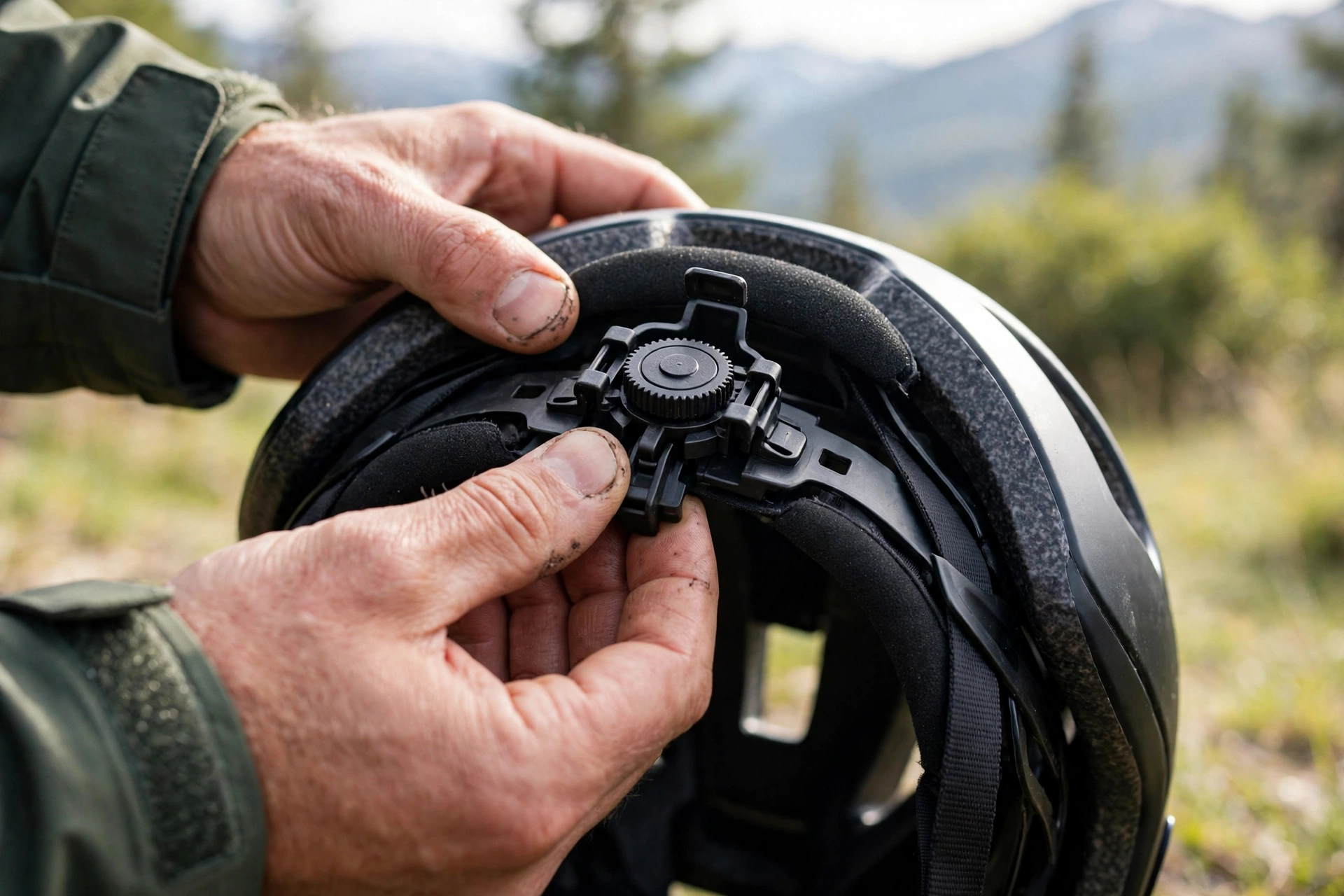
The retention system is the adjustable cradle at the back (and sometimes the sides) of the helmet. Turning the dial reels in a band or pulls the cradle arms inward, tightening the fit around your head. It is what turns a roughly right-sized helmet into a snug, stable one that does not rock when you shake your head.
Because the dial tensions the whole fit system, a worn or clicking dial is not just an annoyance. If the mechanism slips, skips teeth or will not hold tension, the helmet can loosen as you ride — and a helmet that moves in a fall protects noticeably less well than one that stays put. That is why a failing dial is worth fixing properly rather than ignoring or over-tightening the chin strap to compensate.
Retention failure is also different from crash damage. A dial worn out by years of adjustment is a parts problem. A dial cracked in a crash is a helmet problem: the foam may have absorbed an impact, and the helmet should be replaced whole.
How Do You Find the Right Replacement Part?
Start by identifying your helmet precisely. Look inside the liner or on the underside of the shell edge for the brand, model name and size — these are usually printed on a sticker along with the manufacture date. Photograph the label so you have it when ordering.
Next, search the manufacturer’s own parts or support pages for your model. Many brands sell replacement retention systems, pads and visors as spares for their current and recent models, and some bike shops can order them for you. If the brand lists a retention system for your exact model and size range, that is the part to buy. If they only list a system for a different model, do not assume it crosses over — ask the maker’s support team first.
Use only the genuine, model-correct part. Off-brand “universal” dial kits are not a safe substitute: the mounting geometry differs, and a cradle that pops loose under load defeats the purpose of the system. Also check what else rides on the same assembly — some helmets integrate the rear light or the MIPS low-friction liner mounting into the retention cradle, so the correct spare keeps everything working as designed.
How Do You Swap the Dial Step by Step?
Work on a clean, well-lit surface and take a phone photo of the old system before you remove anything — routing of straps and cradle arms is easier to copy than to guess. In general terms, most systems come out in one of two ways:
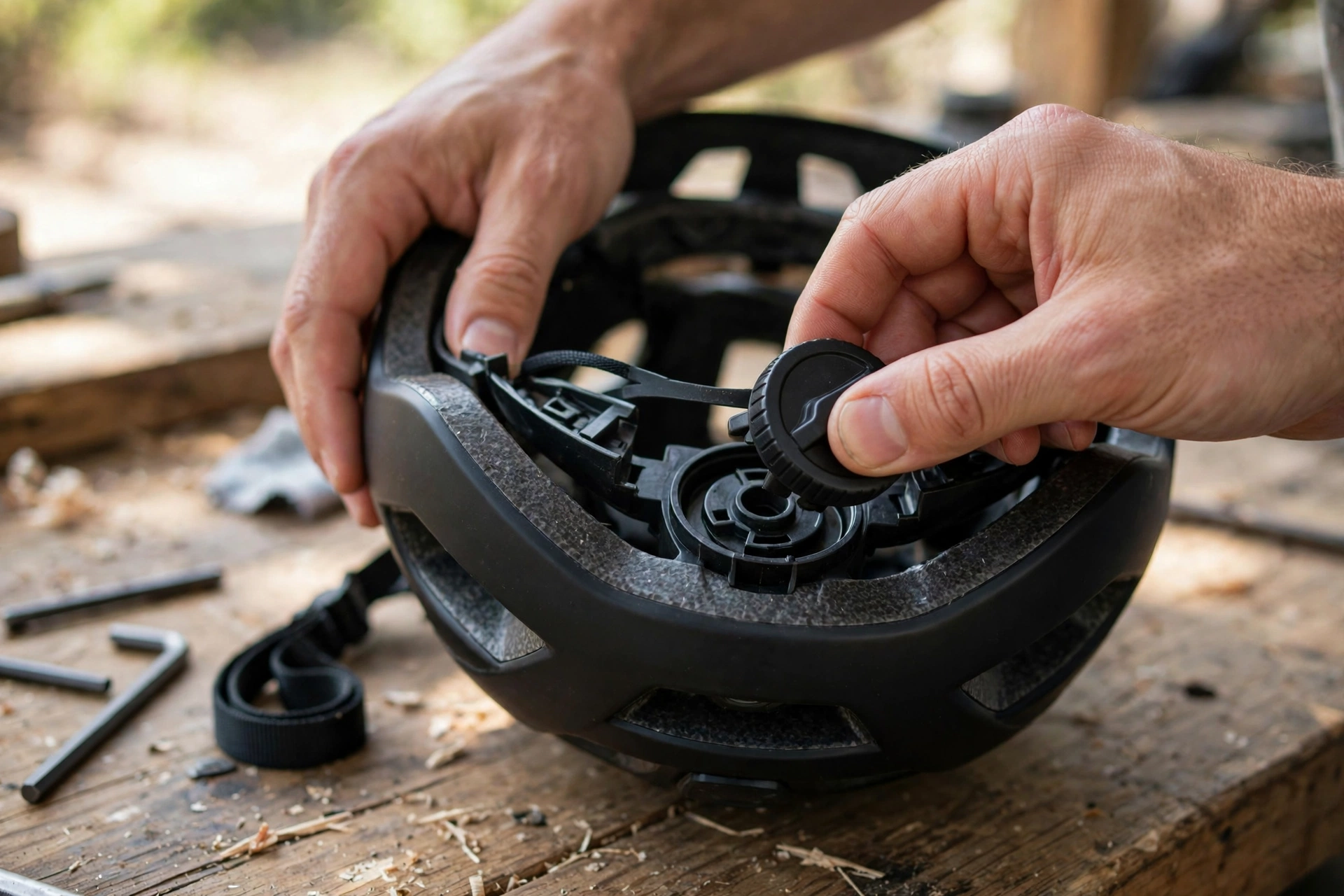
- Clip-in systems: the cradle arms end in small posts or tabs that press into sockets in the foam. Grip the arm close to the socket and pull straight out with steady pressure. Do not lever against the foam with a screwdriver; dented foam is damaged foam.
- Screw-fixed systems: a small screw passes through the shell or a bracket. Remove it, note its length and position, and keep it safe — replacements sometimes ship without hardware.
Remove the old cradle and dial as one unit if it comes that way. Fit the new system by reversing the process: seat every post fully in its socket until it clicks or sits flush, or refit the screw snugly without crushing the liner. Route any straps through the new cradle exactly as your photo shows.
Finish with a fit test. Put the helmet on, dial it snug, and shake and nod your head. The helmet should move with your head, the dial should hold tension without slipping, and one or two fingers should fit under the chin strap. If the cradle creaks, pops or feels asymmetric, stop and re-seat it.
What If Your Brand Does Not Sell the Part?
This is common with older, discontinued or budget helmets, and it is the point where honesty beats thrift. If the manufacturer no longer offers the retention system for your model, there is no safe third-party route. A dial is part of the helmet’s tested design; the helmet was certified as a complete system, not as a shell you can rebuild with mixed parts.
Your options narrow to two. If the dial still works but feels gritty, clean it first (see below) — many “failed” dials are just full of sand and dried sweat. If it is genuinely broken — cracked housing, stripped teeth, a snapped cradle arm — retire the helmet and replace it. That feels wasteful, but a helmet that cannot be tensioned properly is no longer the helmet you bought.
When you do replace it, consider models whose makers publish a parts list. Brands that sell spare retention systems, pads and straps make a helmet much cheaper to keep in service for its full life.
Can You Clean or Service a Dial Instead of Replacing It?
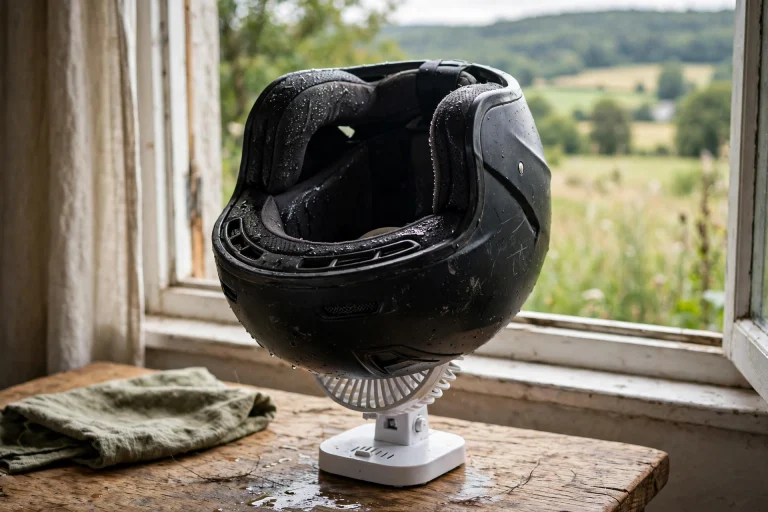
Often, yes. Grit is the usual culprit when a dial starts to feel rough or slip. Remove the pads, and rinse the retention assembly with lukewarm water and a drop of mild soap, working the dial back and forth to flush debris from the mechanism. A soft toothbrush helps around the teeth. Rinse well and air-dry completely before riding.
Do not use solvent sprays, penetrating oils or silicone lubricants to free a sticking dial unless the helmet maker explicitly approves them — chemicals that migrate into EPS foam can damage it, and oily residue attracts more dirt. If cleaning does not restore smooth, positive clicks, the mechanism itself is worn and it is replacement time, for the part or the helmet.
Going forward, a quick rinse of the dial and straps when you wash the pads — every few weeks in summer — keeps sweat salt from building up and extends the life of the replacement part too.
Frequently Asked Questions
Q: Are helmet retention dials universal?
A: No. Each dial and cradle is designed around the mounting points of a specific model. Only use the replacement listed for your exact helmet model and size, ideally the genuine part from the original brand.
Q: My dial still turns but will not stay tight. Is that fixable?
A: First rinse the mechanism thoroughly — grit often causes slipping. If it still slips after cleaning, the ratchet teeth are worn and the system needs replacing with the correct spare part, or the helmet needs replacing if no spare exists.
Q: Is it safe to glue a broken retention cradle back together?
A: No. Glue cannot restore the strength or tested behavior of the fit system, and solvents in many adhesives can damage helmet foam. A cracked cradle means a genuine replacement system — or a new helmet.

Olivia
Writer at Helmet Today, covering helmet reviews, fit and riding safety.