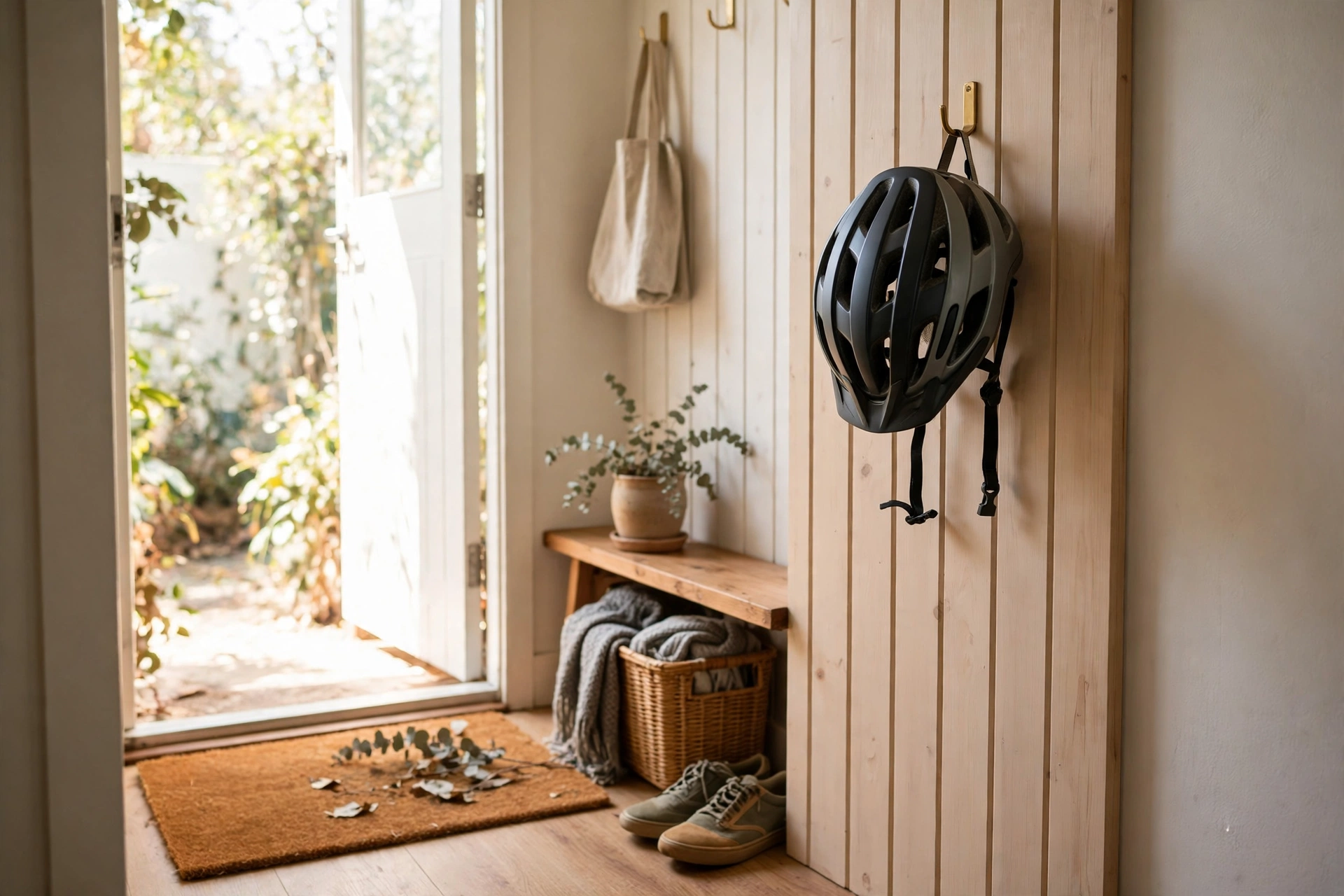
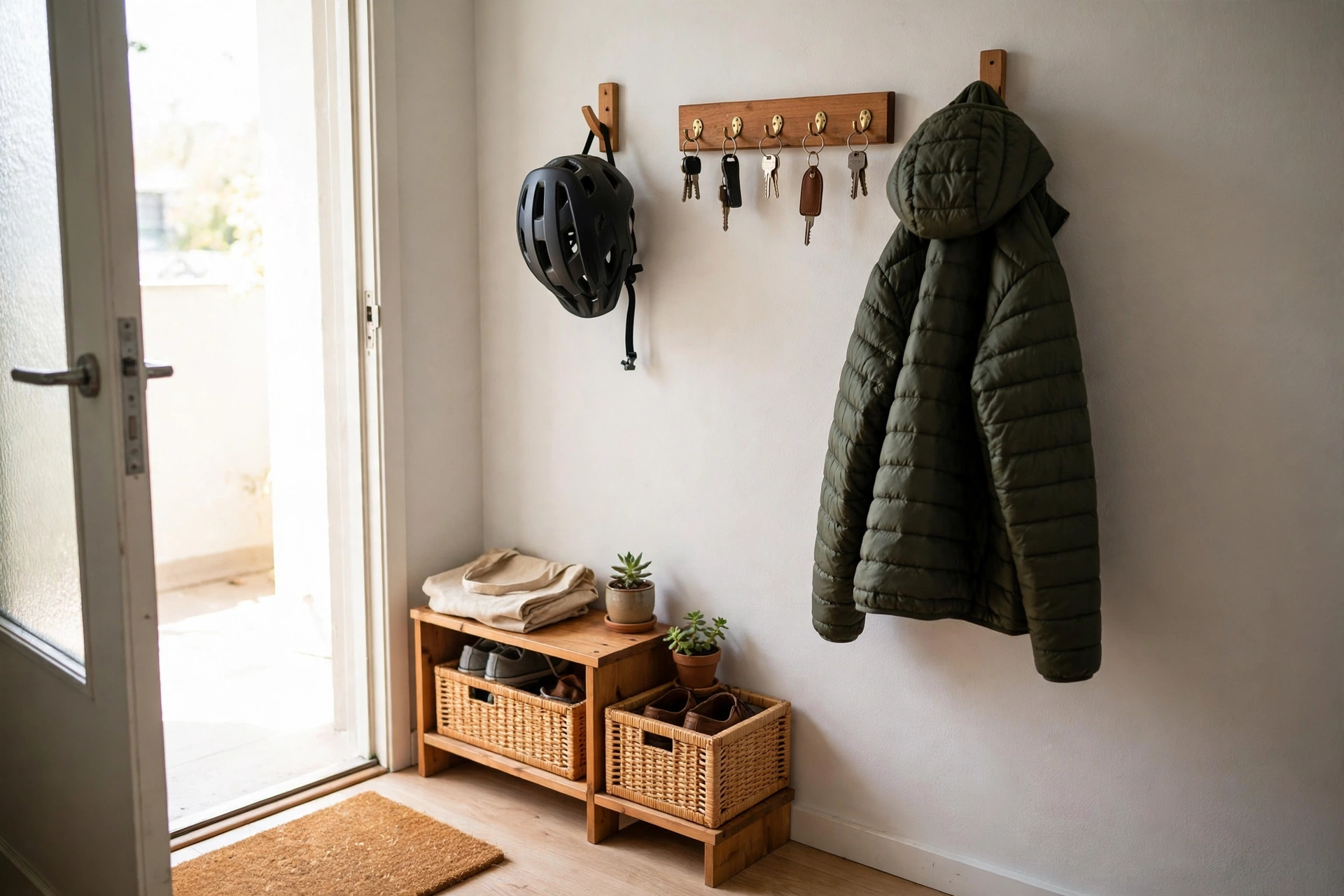
The best way to store a bike helmet in a small apartment is on a wall hook or over-door hook in the entryway, where it stays aired out, off the floor, and away from heat and direct sunlight. A helmet stored where you grab your keys becomes part of your routine, and a helmet stored somewhere dark, dry, and ventilated stays in good condition longer.
Small apartments punish bulky gear, and a helmet is the wrong shape for most storage: round, awkward, and too fragile to shove into a drawer. The default solutions — tossed in a closet, balanced on a shelf edge, left on the bike — each cause a slow problem, from mildew to hidden damage. This guide covers hook-and-shelf options for tight spaces, the places to avoid, and storing multiple helmets.
Where Is the Best Spot for a Helmet in a Small Apartment?
Start with the entryway if you have one. It is where the helmet is needed, it is usually ventilated, and a single hook takes almost no space. A helmet by the door is a helmet you remember to wear, which matters more than any storage cleverness.
The other requirements are about conditions, not location. A good storage spot is:
- Dry and ventilated, so sweat moisture can escape and pads do not mildew
- Out of direct sunlight, since UV light ages the shell and foam over time
- Away from heat sources like radiators, water heaters, and sunny windowsills, because heat degrades foam and adhesives
- Off the floor, where the helmet can be kicked, knocked, or crushed by something dropped on it
- Free of chemical fumes — not on a shelf shared with solvents, paints, or strong cleaners, whose vapors can affect helmet materials
A bedroom wall, the inside of a wardrobe door, or a hallway corner usually checks every box. The spot to avoid is a sealed plastic bin in a closet: it traps moisture, hides damage, and turns the helmet into out-of-sight, out-of-mind clutter.
Which Hooks and Mounts Work Best?
A simple wall hook is the workhorse of small-space helmet storage. Mount one sturdy hook and hang the helmet by its straps or rest it crown-down over a wide hook. Adhesive hooks suit renters who cannot drill, but choose a strong one and check it periodically — a helmet that falls from head height onto a hard floor has taken a real drop.
Over-door hooks are the other renter-friendly option. A rack over the entry or bedroom door holds a helmet plus a jacket and bag, using space that is otherwise wasted, and keeps everything at grab-and-go height. Door hooks also keep the helmet aired, since the door side of a room moves air every time it opens.
If you prefer the helmet off display, an open shelf with a small stand keeps it stable and ventilated. A breathable fabric helmet bag on a hook looks tidier, but skip airtight bags and boxes, which trap moisture. Whatever mount you choose, the helmet should sit still and supported — not balanced on its edge where a bump sends it rolling off.
Where Should You Never Store a Helmet?
Heat is the biggest enemy. Never store a helmet near a radiator, in a boiler cupboard, in a car, or in a sun-baked storage cage. Sustained heat ages EPS foam and weakens the adhesives holding the helmet together, quietly shortening its life even if it looks perfect.
Sunlight runs a close second. A helmet living on a bright windowsill or balcony collects UV exposure every day, which degrades the shell finish and materials over time. Balconies add rain and temperature swings on top of that, so they are out.
Avoid damp spots too: a bathroom shelf, a basement corner, or a sealed container while the pads are still sweaty. Moisture, warmth, and darkness are the mildew recipe. Finally, do not leave a helmet swinging from a narrow peg where it bangs against the wall — repeated small knocks add up, and interior tech such as rotational liners, covered in our explainer on MIPS and rotational protection, works best when the helmet has not been knocked around in storage.
How Do You Store Multiple Helmets in a Tight Space?
Households with two or more riders — or one rider with a road helmet and a commuting helmet — need a system, not a pile. A vertical row of hooks on one wall or door stores several helmets in the footprint of one, each aired and visible. Labeling hooks by rider ends the morning argument about whose helmet is whose.
A narrow over-door rack with multiple hooks does the same job without drilling. For families, a small entryway shelf unit with one cubby per helmet keeps pads from being crushed and lets each helmet dry between rides. The principle in every case: helmets should not be stacked inside each other or wedged under other gear, because sustained pressure and trapped moisture both do damage.
Guest helmets and out-of-season helmets can live slightly further away — a closet shelf in a breathable bag is fine for a helmet that is clean, fully dry, and not in weekly use. Just bring it out for a quick inspection before it goes back on a head: straps supple, foam uncracked, pads intact.
How Do You Keep a Stored Helmet Fresh Between Rides?
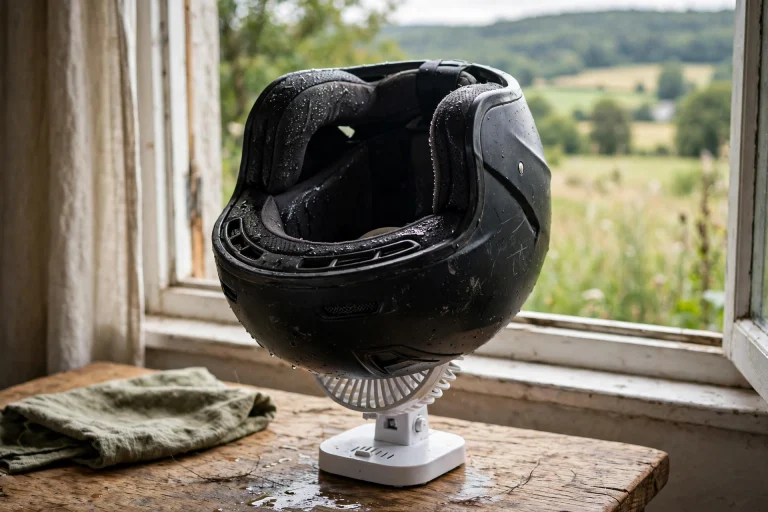
Storage hygiene starts the moment you walk in. Hang the helmet up rather than setting it down sweaty-side on furniture, and leave the straps unbuckled and the vents open so air can move through. If the pads are soaked after a hot ride, removing them to air separately speeds drying and prevents odor from setting in.
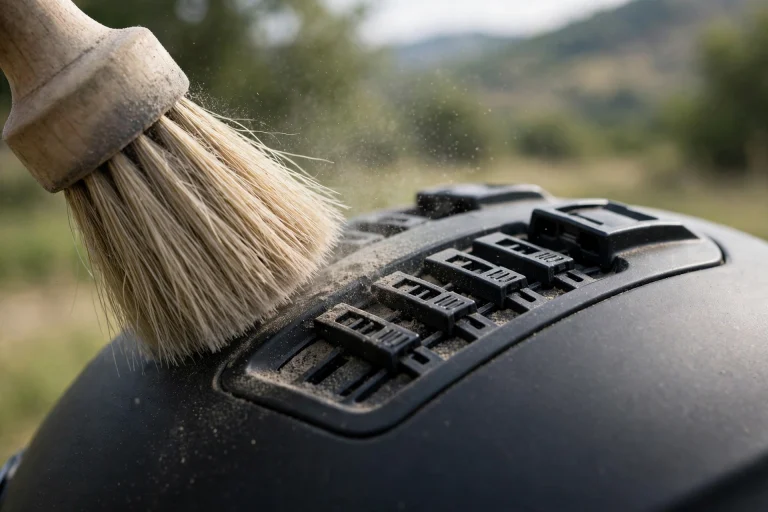
Wipe salt lines off straps occasionally and wash the pads when they start to stiffen or smell — mild soap and water, air-dried fully before the helmet goes back on its hook. A helmet that goes back on the wall clean and dry will stay fresh for a long time with no other effort.
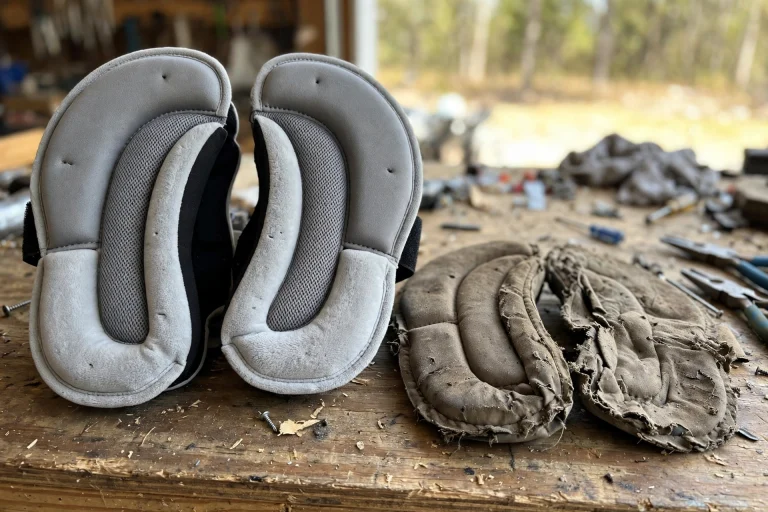
Finally, do a quick condition check whenever you notice the helmet looking tired: shell cracks, frayed straps, crumbling foam edges, or pads that no longer spring back are all signs that storage is no longer the question — replacement is. In general terms, even a perfectly stored helmet should be replaced after a crash and retired after several years of use, because materials age regardless of how carefully they are kept.
Frequently Asked Questions
Q: Is it OK to hang a bike helmet by its straps?
A: Yes, for everyday storage a sturdy hook through the straps is fine and keeps the helmet aired. Use a wide, secure hook, hang it somewhere it will not swing and bang against the wall, and make sure the hook can hold the weight so the helmet never falls to a hard floor.
Q: Can I store my helmet in a plastic storage box?
A: A sealed box is a poor choice for a helmet in regular use because it traps moisture and can grow mildew. If you must box a helmet for long-term storage, clean and fully dry it first, use a breathable bag or leave ventilation, and keep the box somewhere cool, dark, and dry.
Q: Can I keep my helmet on the bike in a shared hallway or garage?
A: It is risky. Shared spaces expose the helmet to knocks, theft, temperature swings, and damp — and a helmet left hanging on a locked bike is an easy target. In a small apartment, one entryway hook solves the space problem and keeps the helmet safer than any communal area.

Olivia
Writer at Helmet Today, covering helmet reviews, fit and riding safety.