For most bouldering, no — a helmet is not standard kit. Bouldering falls are short and land on mats or pads, and indoors especially, helmets are rarely worn. The exception is outdoors, where awkward falls from highball problems, uneven rocky landings, and loose rock above can make head injury a real risk — in those situations, some boulderers choose to wear a climbing helmet, and for beginners on rock it is a reasonable precaution.
This guide explains why helmets are uncommon in bouldering, the outdoor situations where one makes sense, what actually protects you when you boulder, and what to consider for children.
Why Don’t Most Boulderers Wear Helmets?
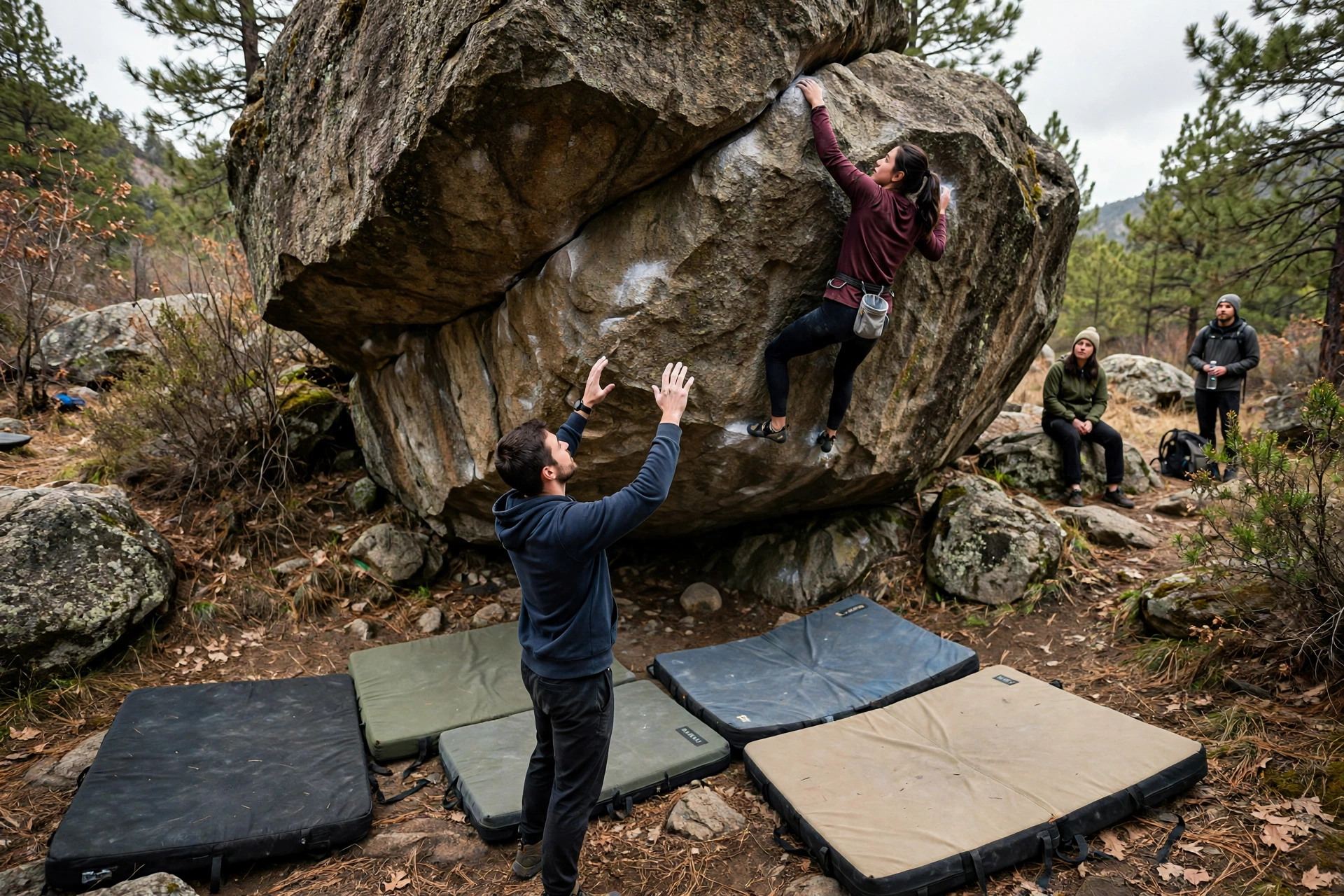
Bouldering is built around falling safely. Problems are short, you fall a few feet at most, and the landing is a mat in the gym or a stack of pads outdoors, with spotters guiding your fall. In that controlled setup, the typical fall lands on your feet or backside — not your head — and generations of boulderers have climbed without helmets.
There are practical reasons too. Bouldering involves dynamic movement, heel hooks, and upside-down positions where a helmet can catch, shift, or get in the way, and climbers value the freedom and feel of climbing unencumbered close to the ground. Indoors, gyms set problems and provide flooring on the assumption that climbers are bare-headed, and helmets are a rare sight.
So the honest answer for the climbing gym and for well-padded, low problems outdoors is that a helmet is not expected, not required, and not part of the usual safety system. The safety system is the mats, the spotting, and how you fall.
When Does a Helmet Make Sense for Bouldering?
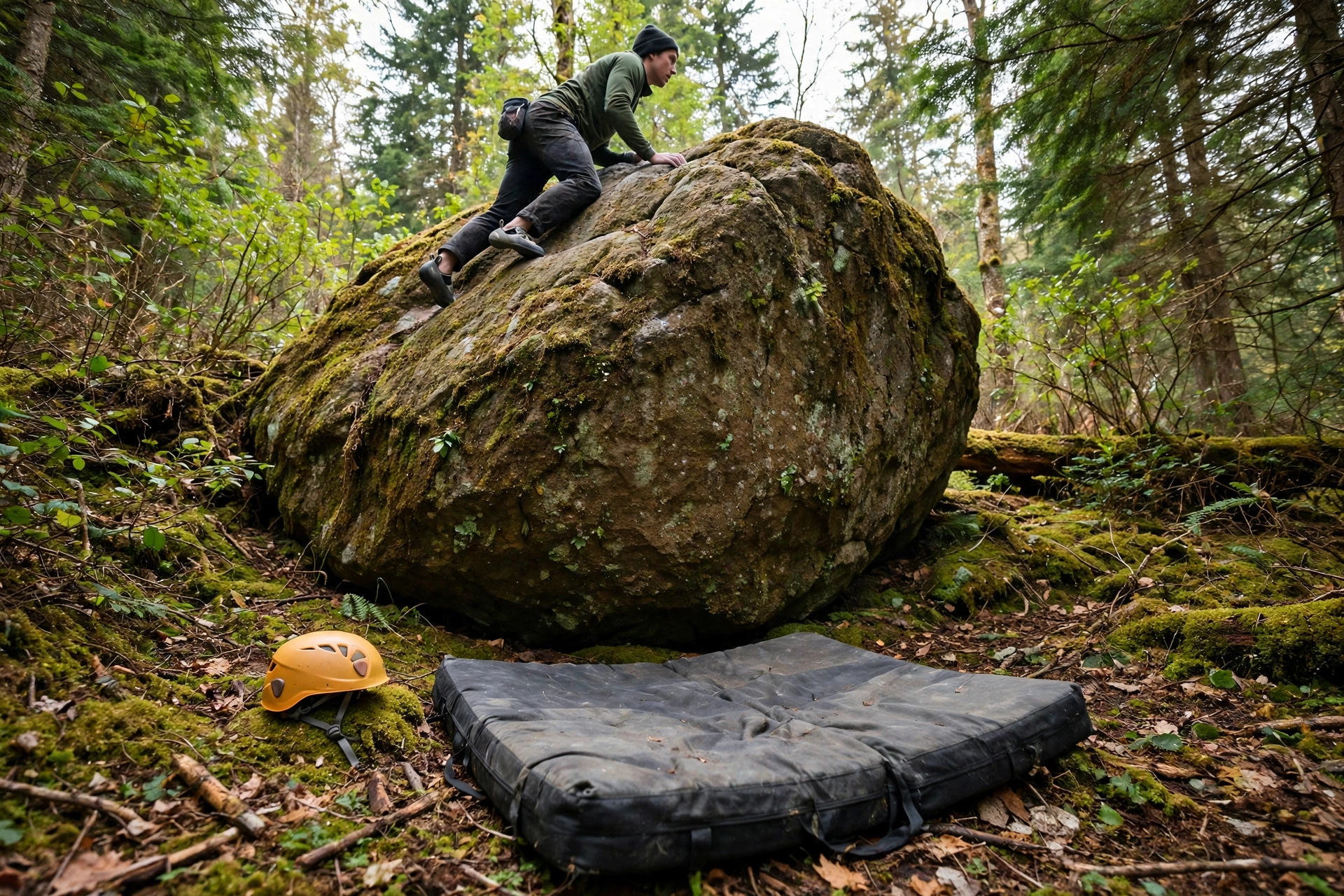
Outdoor bouldering changes the calculation. Natural landings are uneven — rocks, roots, and slopes hide between and around the pads — and an uncontrolled fall can tip you backwards or sideways in ways a flat gym floor never does. If your head could reach a rock outside the pad zone, a helmet starts to make sense.
Highball bouldering is the clearest case. As problems get taller, falls get longer and harder to control, and the line between bouldering and a short, unroped climb blurs. Some climbers wear a helmet on high, committing problems for the same reason a roped climber does.
Loose rock is the other trigger. On newly developed areas, crags with crumbly edges, or problems under roofs and overhangs where a swing could put your head into the rock, a helmet protects against both falling debris and your own momentum. Beginners on real rock — whose falls are the least predictable — are also sensibly helmeted by many instructors and parents.
What Protects You When Bouldering Instead?
The pads are the foundation. Indoors, that is the gym’s matting — keep it clear of water bottles, brushes, and other climbers. Outdoors, arrange your own pads to cover the landing zone with no gaps between them, and extend coverage in the direction a fall would actually throw you, which experienced climbers judge from the problem’s moves.
Spotting is the second half of the system. A good spotter does not catch you; they stand ready with arms up, guide your hips so you land on your feet on the pads, and protect your head and back from swinging out beyond the mats. On head-risk falls, the spotter’s whole job is keeping your upper body from reaching the ground or the rocks.
Falling technique finishes the picture: try to land on your feet, absorb with bent legs, and fall away from the wall rather than grabbing at holds on the way down. Practising small, controlled falls off low problems builds exactly the instincts that keep heads out of bouldering accidents.
Should Kids Wear Helmets When Bouldering?
This is a judgment call for parents and instructors, and both choices are common. Indoors, on low traverse walls and kids’ areas with full matting, most children boulder without helmets, supervised and falling small distances onto mats. Many organised sessions run exactly this way.
Outdoors, the balance shifts. Children’s falls are less controlled, natural landings are rocky, and a child’s head is proportionally larger and heavier — so many parents put a properly fitting children’s climbing helmet on young boulderers outside, especially on taller problems or anywhere near rocks at the landing’s edge.
Whatever you decide, if a child does wear a helmet, fit it properly: level, snug, straps adjusted, no rocking. A loose helmet that slides over a child’s eyes mid-problem creates a problem of its own. And supervision, pads, and sensible problem choices matter more than any single piece of gear.
If You Do Wear One, What Helmet Should It Be?
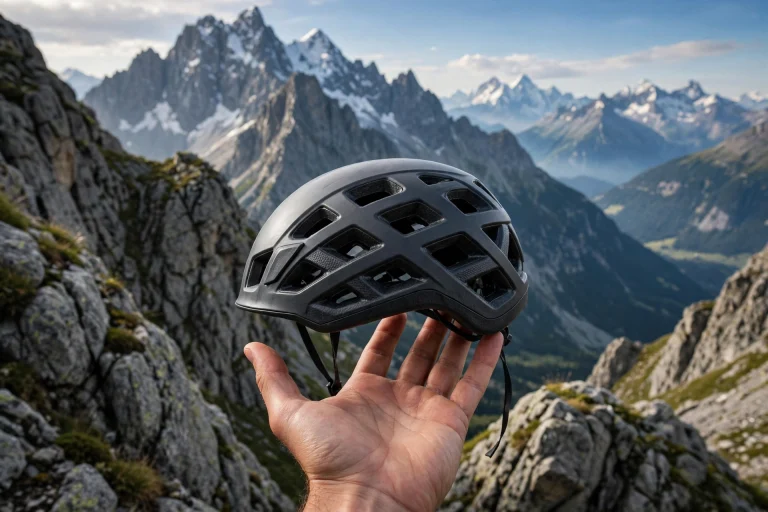
A standard climbing helmet — the same one you would use for roped climbing — is the right choice. It is certified for climbing falls and rock impact, covers the top, sides, and back of the head, and its retention system is designed to stay on in a tumbling fall. Some climbing helmets also include rotational-impact features (see our guide to what MIPS is for helmets) that suit the angled, twisting falls bouldering can produce. Bike helmets and skate helmets are built and certified for different accidents and are not the tool for this job.
Choose comfort and low bulk, because a helmet that annoys you will be left in the pad pile. Lightweight models with good ventilation are popular for bouldering sessions, and a secure fit matters doubly in bouldering’s inverted moments — check that the helmet stays put when you hang upside down or shake your head hard.
Above all, do not let the helmet change how you manage risk. A helmet is a backup for the fall that goes wrong, not a licence to skip pads, spotters, or judgment about whether a highball above a bad landing is a good idea today.
Frequently Asked Questions
Q: Do climbing gyms require helmets for bouldering?
A: In general terms, no. Indoor bouldering is done onto full matting at low heights, and helmets are not standard or usually required. Each gym sets its own rules, so check with yours — but expect bare-headed bouldering to be the norm.
Q: Can a helmet cause problems when bouldering?
A: A badly fitting one can. A helmet that shifts, slips over your eyes, or catches on the wall during dynamic or inverted moves is a distraction and a hazard. If you wear one outdoors, fit it snugly and check it stays put when you hang upside down.
Q: When is bouldering high enough to justify a helmet?
A: There is no fixed height. Consider a helmet when the landing is uneven or rocky, when a fall could swing your head into the rock, or on highball problems where falls become long and hard to control. Judge the landing and the fall, not just the height of the problem.

Olivia
Writer at Helmet Today, covering helmet reviews, fit and riding safety.