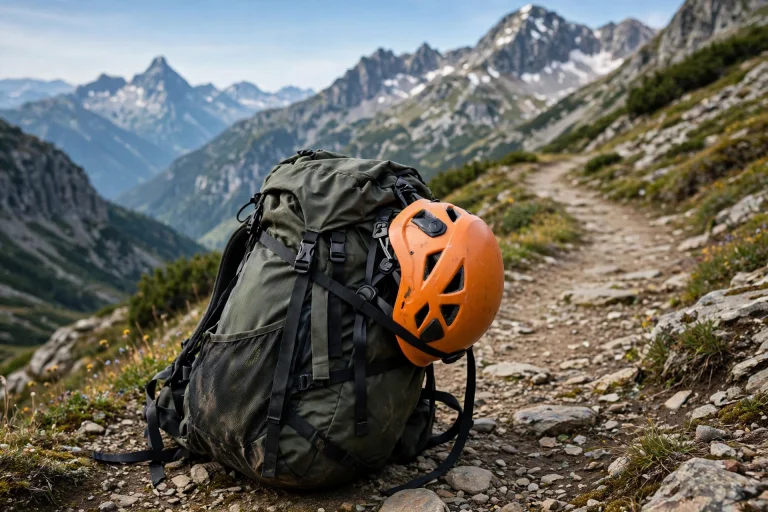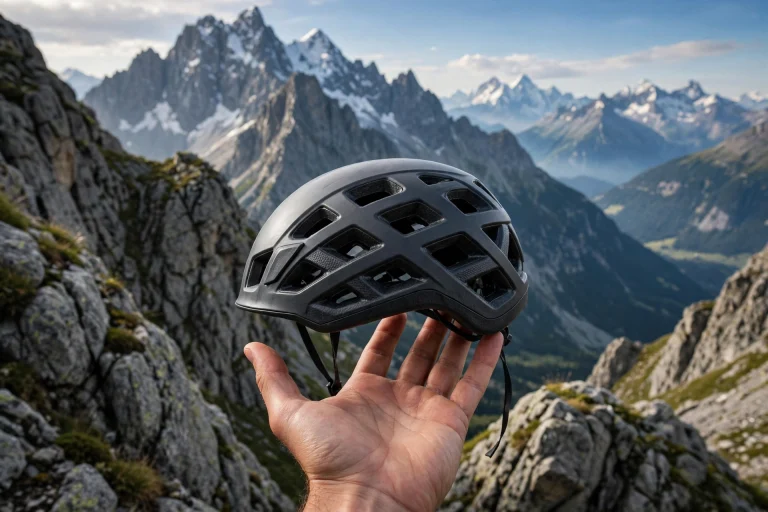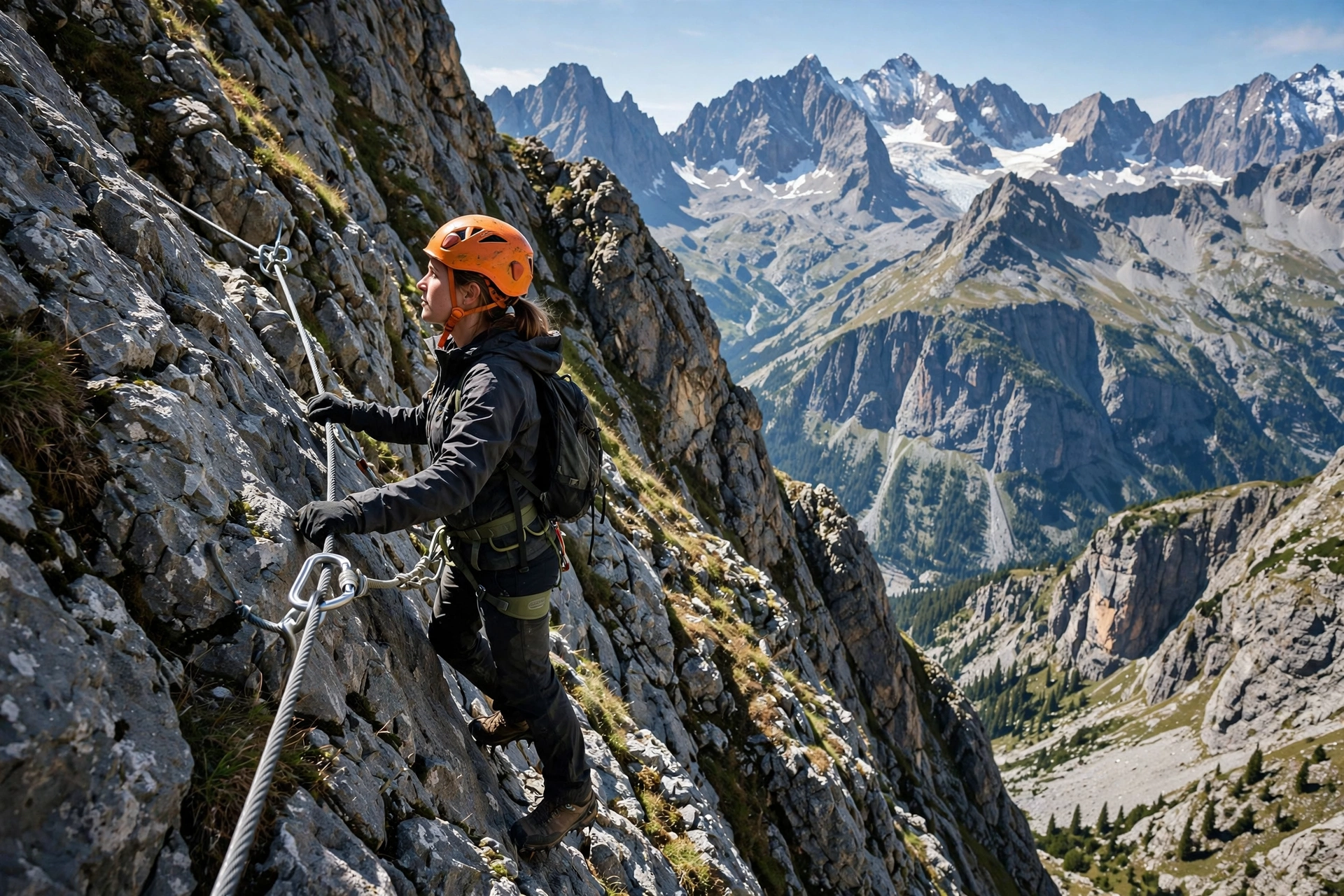
For via ferrata, look for a climbing-certified helmet that fits securely, stays comfortable for a full day, covers the sides and back of your head as well as the crown, and has good ventilation and headlamp clips. A via ferrata helmet is essentially a climbing helmet — there is no separate via ferrata standard — so choose the climbing helmet whose fit and features best suit long, exposed days on ladders, cables, and rock.
This guide explains why a helmet is essential on via ferrata, what to prioritise when buying, and how the fit demands differ slightly from ordinary rock climbing.
Do You Need a Helmet for Via Ferrata?
Yes. Via ferrata routes combine several head-injury risks at once: rockfall from parties above you, loose stones kicked down on steep approach slopes, and falls in which your body is arrested by a lanyard while your head can swing into the rock face, a ladder rung, or an iron staple. Rental shops at popular routes treat helmets as standard kit alongside the harness and lanyard set, and so should you.
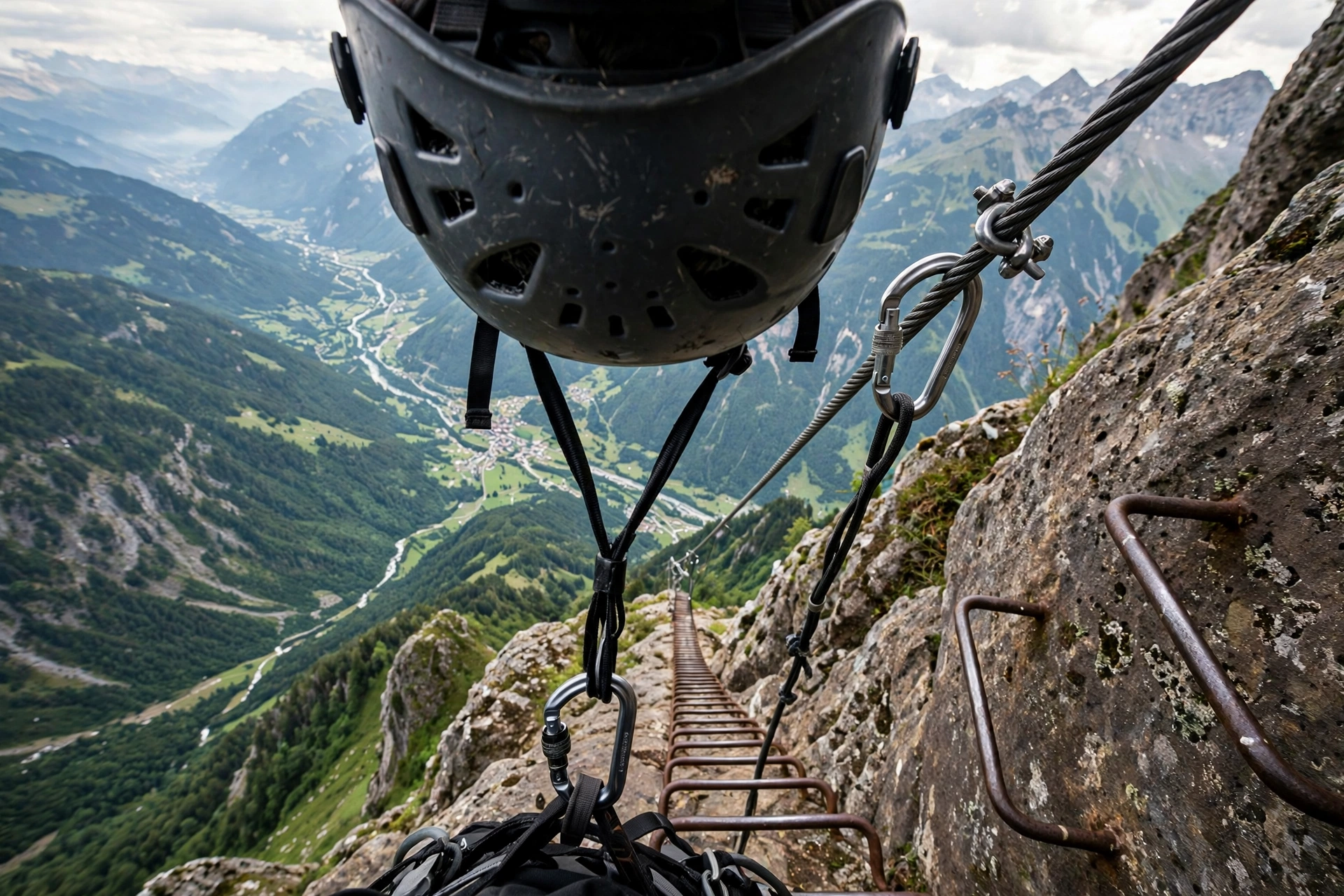
The fall dynamics make the helmet especially important. On a via ferrata you are clipped to a cable with an energy-absorbing lanyard, and a slip can mean a short, sharp fall and a swing into whatever ironwork is nearby. The helmet absorbs the energy of those knocks by crushing its foam in a controlled way, and some modern climbing helmets add rotational-force protection of the kind explained in our guide to what MIPS is for helmets — directly relevant to these swinging, angled impacts. Your head is close to rungs, staples, and rock for much of the route, even just while climbing ladders and bridges.
It is also worth remembering the people above you. On a busy route, the commonest impact is not your own fall but a stone dislodged by another party — exactly the crown strike a climbing helmet is designed around.
What Should You Look for in a Via Ferrata Helmet?
Certification first: the helmet should be certified as a climbing and mountaineering helmet, which is the standard that covers via ferrata use. Beyond that, coverage is the headline feature. Look for a helmet whose foam wraps reasonably low around the sides and back, because via ferrata falls and swings threaten more than the crown.
Comfort for long days comes next. Ferratas can keep you out for four to eight hours, often in strong sun, so ventilation matters — generous vents and a fit that does not create hotspots will decide whether the helmet stays on your head at hour five. Weight matters for the same reason; a lighter helmet is kinder on your neck during a day of looking up.
Then the practical features: headlamp clips for tunnels, early starts, and routes that run late; a simple, glove-friendly adjustment dial; and straps that play nicely with sunglasses. If you wear a sun cap or buff in summer, check the helmet still fits over it properly.
How Should a Via Ferrata Helmet Fit?
The standard climbing helmet checks apply, with extra emphasis on security. The helmet should sit level, grip evenly, and not shift when you shake your head — then add the via ferrata test: look straight up, as you will at the climber above you, and straight down at your feet, and hang your head sideways as if checking a clip. The helmet must stay planted through all of it.
Straps matter more here than in many sports because you spend so much time tilted. A rear cradle that cups the back of the skull stops the helmet sliding forward when you look down at a ladder, and a properly snug chin strap — one or two fingers’ clearance — stops it lifting when you look up.
If you are renting, take the fit seriously rather than grabbing the first helmet offered. Ask for a different size if the helmet rocks or perches, and adjust the dial and straps properly at the start of the day, not after the first hour of discomfort.
Is a Via Ferrata Helmet Different From a Climbing Helmet?
In general terms, no — and that is useful to know. There is no separate via ferrata helmet category or standard; the helmets sold for via ferrata are climbing helmets, and any climbing helmet that fits you well will serve on a ferrata. Marketing that implies a distinct via ferrata helmet is describing features and styling, not a different certification.
Within climbing helmets, though, some models suit ferrata better than others. Durable hard-shell or hybrid designs shrug off knocks against ladders and rock on busy routes, while ultra-light foam helmets save weight for fast alpine days but mark more easily. For a dedicated ferrata and general climbing helmet, many climbers pick the durable middle ground.
The reverse also holds: your via ferrata helmet is your climbing helmet. Buy one good climbing helmet that fits, learn its adjustments, and it covers rock climbing, mountaineering, and via ferrata without needing a second purchase.
What Else Should You Check Before a Via Ferrata Trip?
Check the helmet’s condition as part of your kit check. Look for cracks or dents in the shell, tired foam, and straps and buckles in good order — and retire the helmet if it has already taken a significant impact, even on a previous trip. A helmet with an unknown knock in its past is not the one to trust above a valley floor.
Try the complete system on at home: helmet over your sun layer, sunglasses on, headlamp fitted if your route has tunnels or an early start, and gloves on to confirm you can work the buckle and dial. Ferrata days run smoothly when the fiddly checks happen at home instead of on a ledge.
Finally, if the route involves hiring gear locally, inspect rental helmets as carefully as your own — check straps, foam, and shell, and do not accept one that is cracked, loose-fitting, or missing parts. Your head does not care who owns the helmet.
Frequently Asked Questions
Q: Can I use a bike helmet for via ferrata?
A: No. Bike helmets are designed and certified for cycling falls, not for rockfall and climbing use, and their coverage and retention are wrong for via ferrata. Use a helmet certified for climbing and mountaineering — it is the standard that covers via ferrata.
Q: What certification should a via ferrata helmet have?
A: The climbing and mountaineering helmet certification — the same one used for rock climbing helmets. There is no separate via ferrata standard, so a certified climbing helmet that fits you well is exactly what you need.
Q: Should a via ferrata helmet cover the ears?
A: It should cover the sides of the head with foam down towards the ears, which protects against sideways swings into rock and ironwork. Full ear coverage like a whitewater helmet is not needed; good side and rear foam coverage is what to look for.

Olivia
Writer at Helmet Today, covering helmet reviews, fit and riding safety.