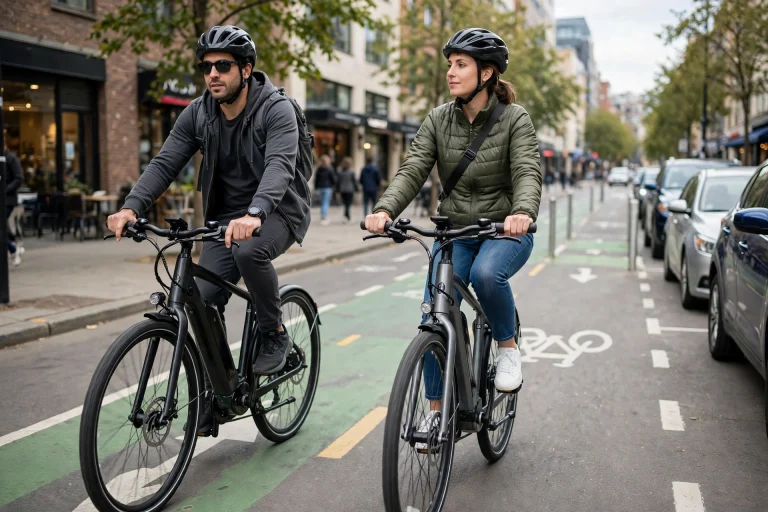
The main difference is impact protection at higher speeds: an e-bike helmet is built and tested for faster crashes, with deeper coverage at the back and sides, while a regular bike helmet is certified for lower-speed pedal-bike falls. If you ride a Class 3 e-bike at up to 28 mph, that extra protection matters.
Both helmets look similar on a shelf, and both are far better than no helmet. But motors changed the crash math. An e-bike is heavier, accelerates faster, and often cruises at speeds a casual cyclist rarely reaches. This guide breaks down exactly where e-bike helmets differ, where a regular helmet is still fine, and how to choose based on the class of bike you actually ride.
What Certification Does Each Helmet Carry?
Every bike helmet sold for road use in the US must meet the CPSC bicycle helmet standard. That standard was written around pedal-bike speeds and a single impact test. A regular bike helmet that meets CPSC is legal and proven for ordinary cycling.
E-bike helmets often add the Dutch NTA 8776 certification, which was designed specifically for speed pedelecs and faster e-bikes. In general terms, NTA 8776 tests impacts at higher energy and requires more coverage, especially around the temples and the back of the head. Some e-bike helmets carry both CPSC and NTA 8776 labels.
That extra testing is not marketing fluff. At 28 mph you carry roughly twice the kinetic energy of 20 mph, and your helmet’s foam has to manage that energy in a crash. If your e-bike regularly travels above 20 mph with motor assistance, an NTA 8776-certified helmet is the closer match to the riding you actually do.
How Does Coverage Differ Between the Two?
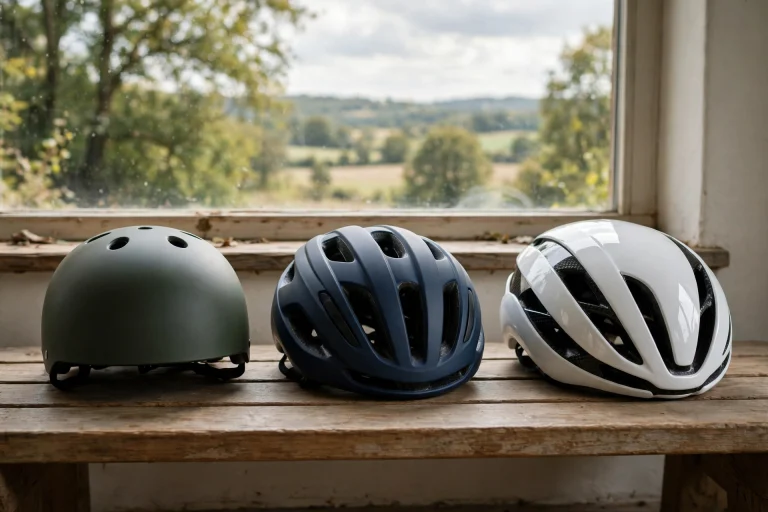
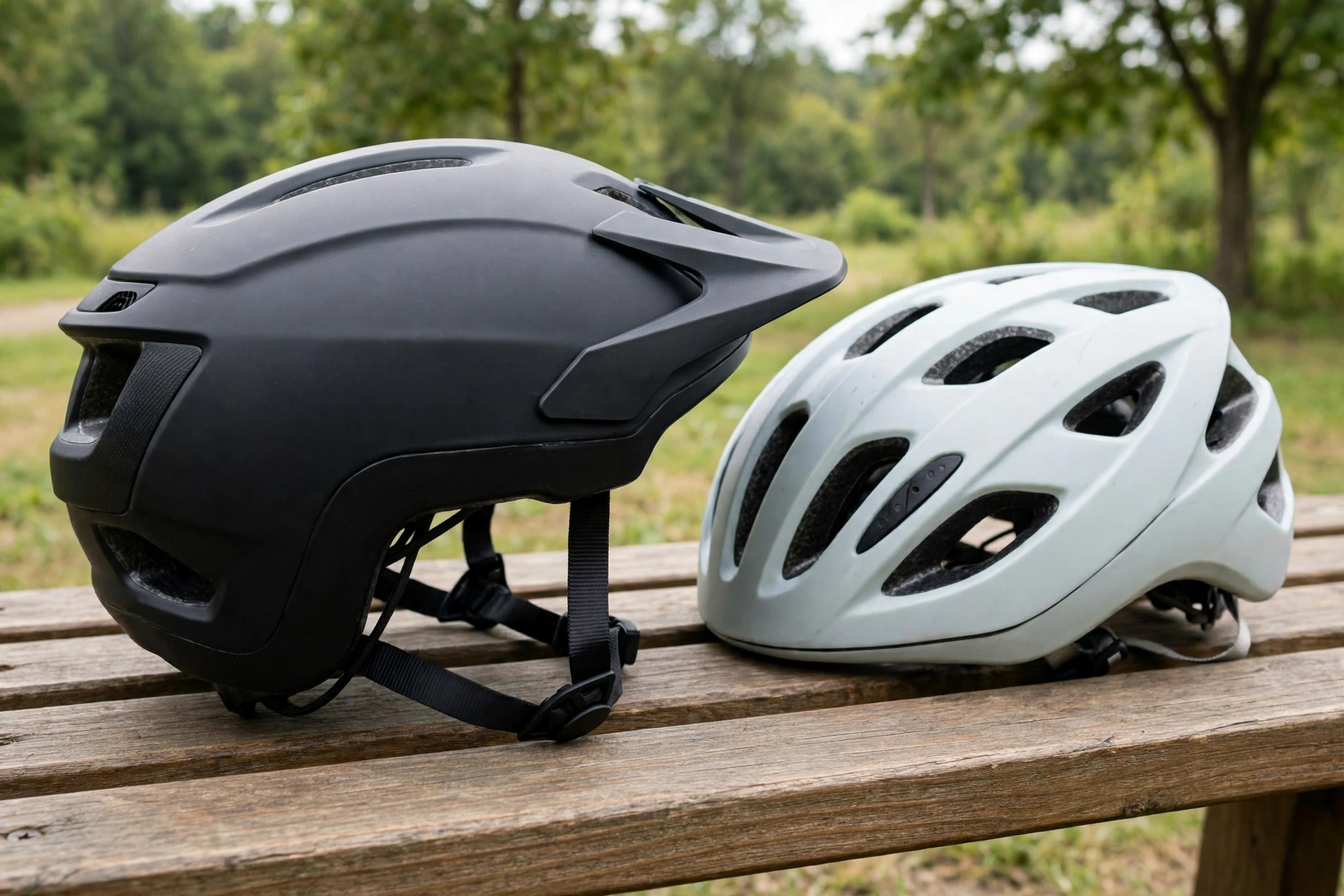
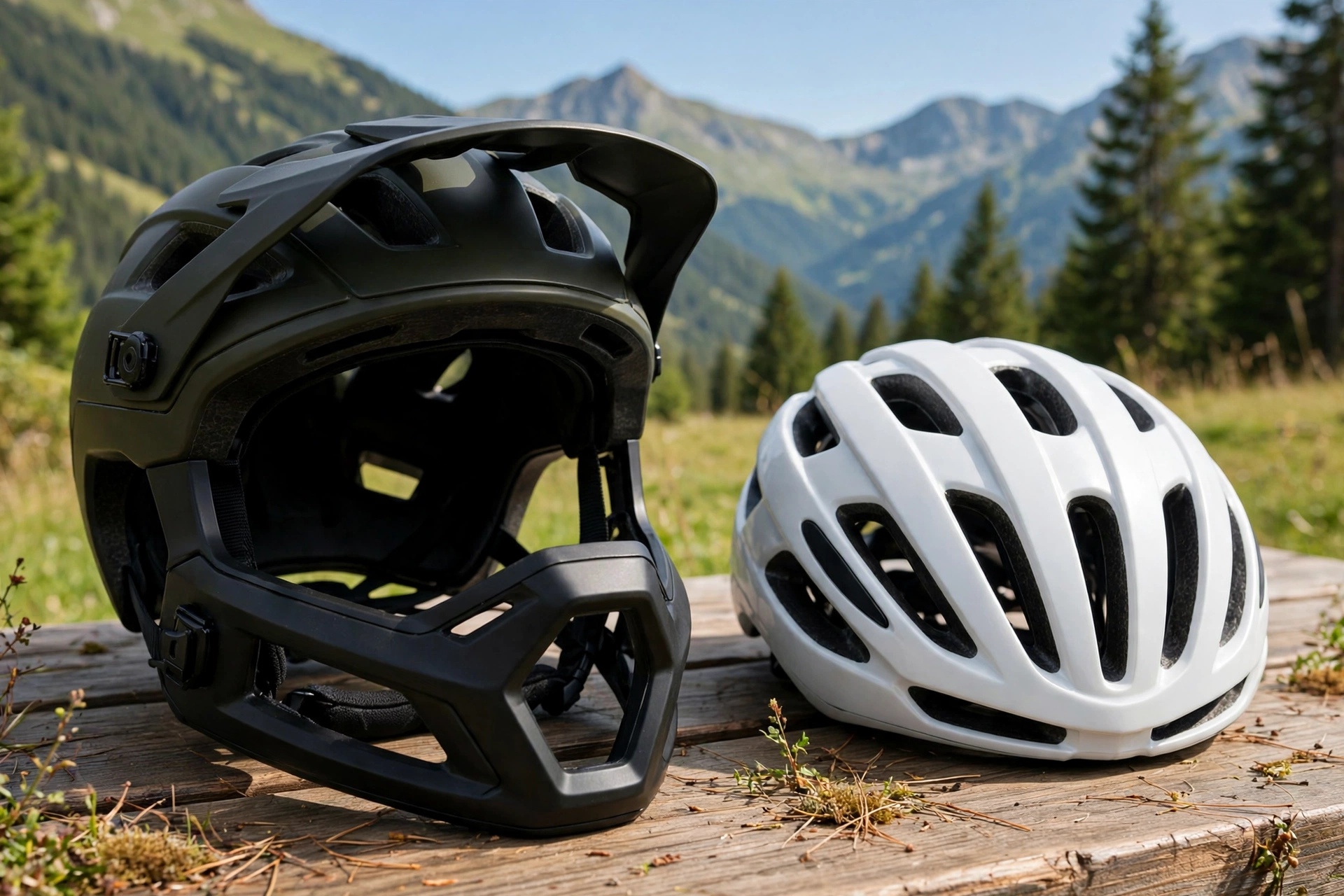
Look at both helmets from the side and the difference is obvious. A regular bike helmet sits higher on the head, with a shorter rear drop. An e-bike helmet extends lower at the back and sides, wrapping more of the skull, and many models add a small brim or visor.
That deeper shell protects areas that are vulnerable in the most common e-bike crash: a sideways or backward fall where the back or side of the head strikes pavement. Temple coverage is also thicker on most e-bike models, guarding a fragile area that a higher-cut road helmet leaves exposed.
Some e-bike helmets go further with an extended chin area or a removable chin bar, borrowing from mountain bike designs. A standard road helmet almost never covers the chin at all. Whether you need that depends on your speed and traffic, which we cover below.
Is an E-Bike Helmet Heavier and Hotter?
Usually, yes — a little of both. More coverage and thicker foam add weight, so an e-bike helmet typically weighs more than a lightweight road helmet and can feel warmer on a summer climb. Manufacturers compensate with larger vents and internal channeling, and most commuter e-bike helmets ventilate well at city speeds.
On a pedal bike, you generate your own speed and work harder, so a light, airy road helmet makes sense. On an e-bike the motor does much of the work, so most riders happily trade a small weight increase for stronger protection. If you ride slowly on a Class 1 bike and overheat easily, a well-ventilated regular helmet may still be the more comfortable daily choice.
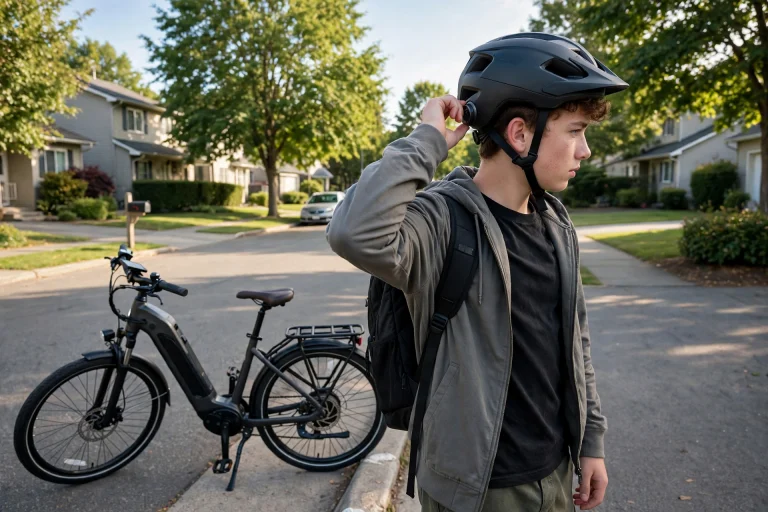
Fit matters more than the label either way. A helmet should sit level, snug all around, with the front edge about an inch above your eyebrows and no rocking when you shake your head.
Which Helmet Do You Need for Class 1, 2, and 3 E-Bikes?
Match the helmet to the class. Class 1 e-bikes assist only while you pedal, up to 20 mph. Class 2 bikes add a throttle, also capped at 20 mph. Class 3 bikes pedal-assist up to 28 mph. Speeds are covered in general terms here, and local rules vary.
For Class 1 and 2 riding at bike-path speeds, a quality CPSC regular bike helmet is a reasonable choice for most adults, especially in low-traffic areas. For Class 3, an NTA 8776 e-bike helmet is strongly recommended, because your assisted cruising speed sits well above what the basic standard was designed around.
Whatever you choose, look for modern rotational protection. Our explainer on what MIPS is and how it works covers how low-friction liners help in angled impacts, which are common in real crashes. MIPS and similar systems are available in both regular and e-bike helmets, so you do not have to give up that feature either way.
Can You Use a Motorcycle Helmet on an E-Bike Instead?
You can, but most riders should not. A DOT motorcycle helmet is certified for much higher speeds, yet it is heavy, hot at bicycle speeds, blocks hearing more, and is tiring on the neck during a long pedal-assisted ride. It is overkill for a Class 1 or 2 bike and uncomfortable enough that people stop wearing it.
The exception is high-powered machines that blur into moped territory — bikes that sustain speeds well above 28 mph or travel in fast traffic. At that point you are effectively riding a light motorcycle, and motorcycle-level protection becomes a sensible conversation. For true Class 1–3 e-bikes, a bicycle-standard or NTA 8776 helmet is the right tool.
Also skip novelty helmets with no certification label. If there is no CPSC sticker inside, it is not a protective helmet, whatever the product page claims.
How Do You Decide Which One to Buy?
Start with your real riding. Note your bike’s class, your typical assisted speed, and where you ride — quiet paths, suburban roads, or dense city traffic. Higher speed plus heavier traffic pushes you toward the e-bike helmet every time.
Then check the label. Look for CPSC at minimum, NTA 8776 if you ride Class 3 or want the extra coverage, and a rotational liner if your budget allows. Try the helmet on for ten minutes in the shop; pressure points that feel minor at minute two become headaches at minute forty.
Finally, budget honestly. E-bike helmets cost somewhat more than basic bike helmets, but the difference is small next to the cost of the bike itself. Buy the helmet that matches your fastest regular ride, not your slowest one, and replace it after any crash or every few years as the foam ages.
Frequently Asked Questions
Q: Is it legal to wear a regular bike helmet on a Class 3 e-bike?
A: In most US states, yes — the law usually requires a bicycle helmet meeting CPSC, and some states require helmets specifically for Class 3 riders. NTA 8776 is a stronger safety choice at 28 mph even where it is not legally required. Check your state and local rules.
Q: What does NTA 8776 mean on an e-bike helmet?
A: It is a Dutch certification created for faster e-bikes and speed pedelecs. In general terms it tests higher-energy impacts and requires more head coverage than the standard bicycle test, which is why it suits Class 3 riding.
Q: Can I use my e-bike helmet on a regular pedal bike?
A: Yes. An e-bike helmet exceeds the protection of a standard bike helmet, so it works fine for pedal cycling. It may feel slightly warmer or heavier on long climbs, but there is no safety downside.

Olivia
Writer at Helmet Today, covering helmet reviews, fit and riding safety.