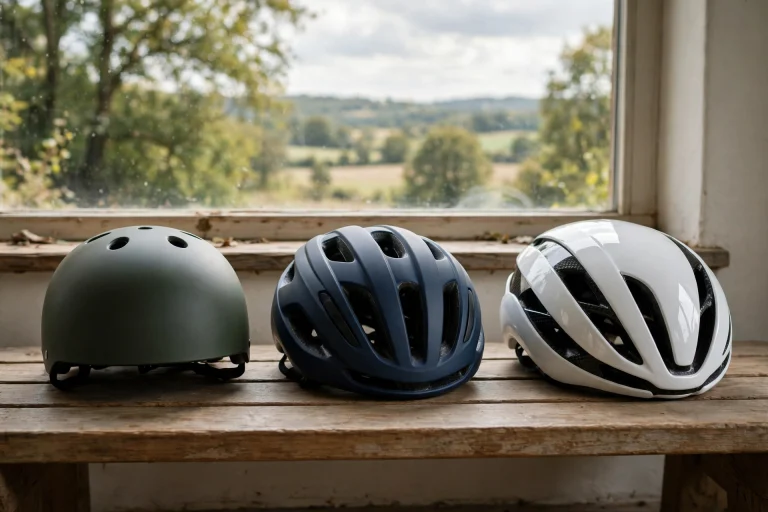
To choose an e-bike helmet size, measure the circumference of your head about an inch above your eyebrows and ears, then match that number in centimeters to the manufacturer’s size chart. Do not guess from hat size or buy the same size you wore years ago. A correctly sized e-bike helmet sits level, feels snug all around without painful pressure, and does not rock when you shake your head.
E-bikes add speed compared with a casual pedal bike, so a helmet that shifts in a fall protects far less than it should. Brands cut their shells differently and many riders fall between sizes, so this guide walks through measuring, reading a chart, and testing fit in person.
How Do You Measure Your Head for an E-Bike Helmet?
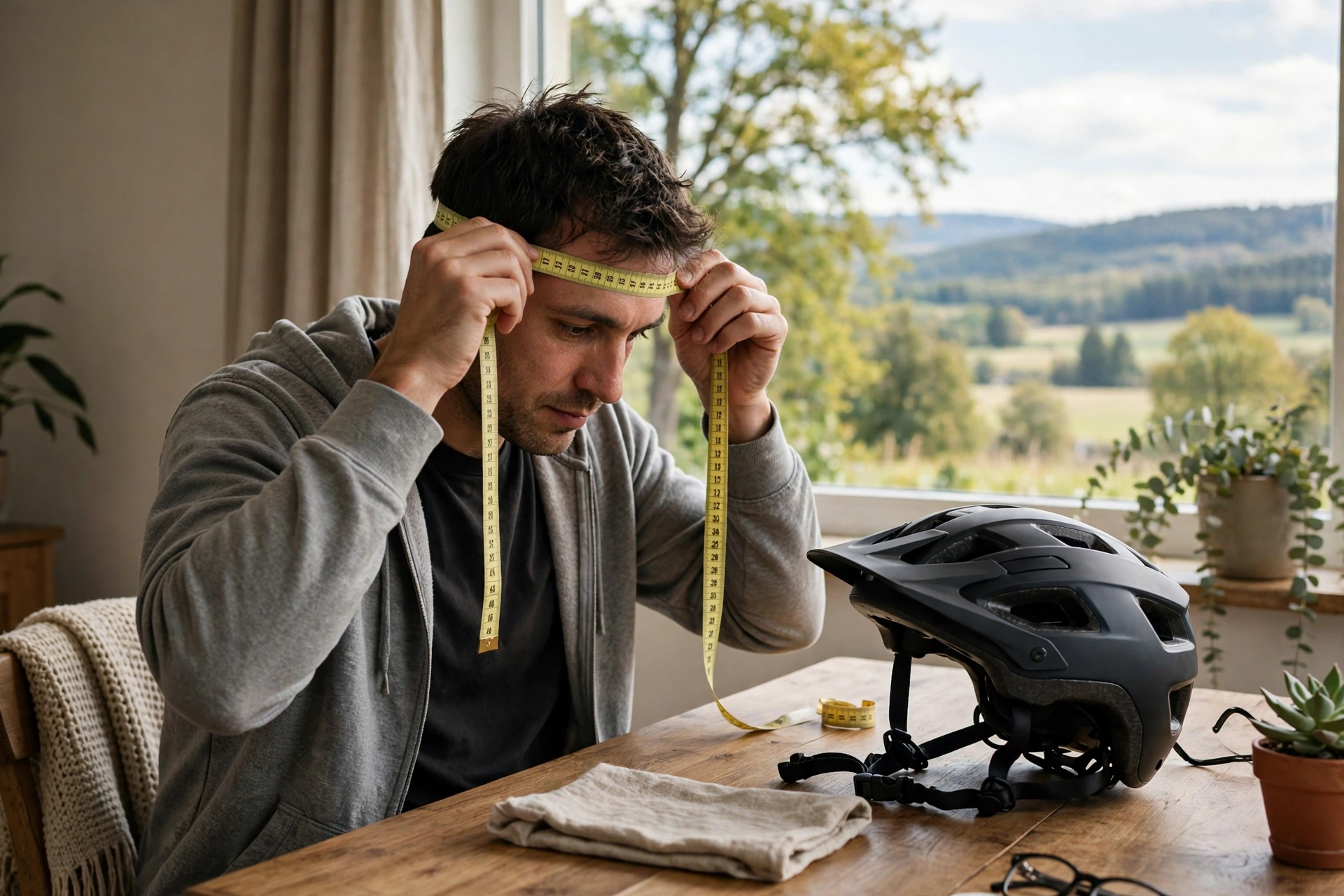
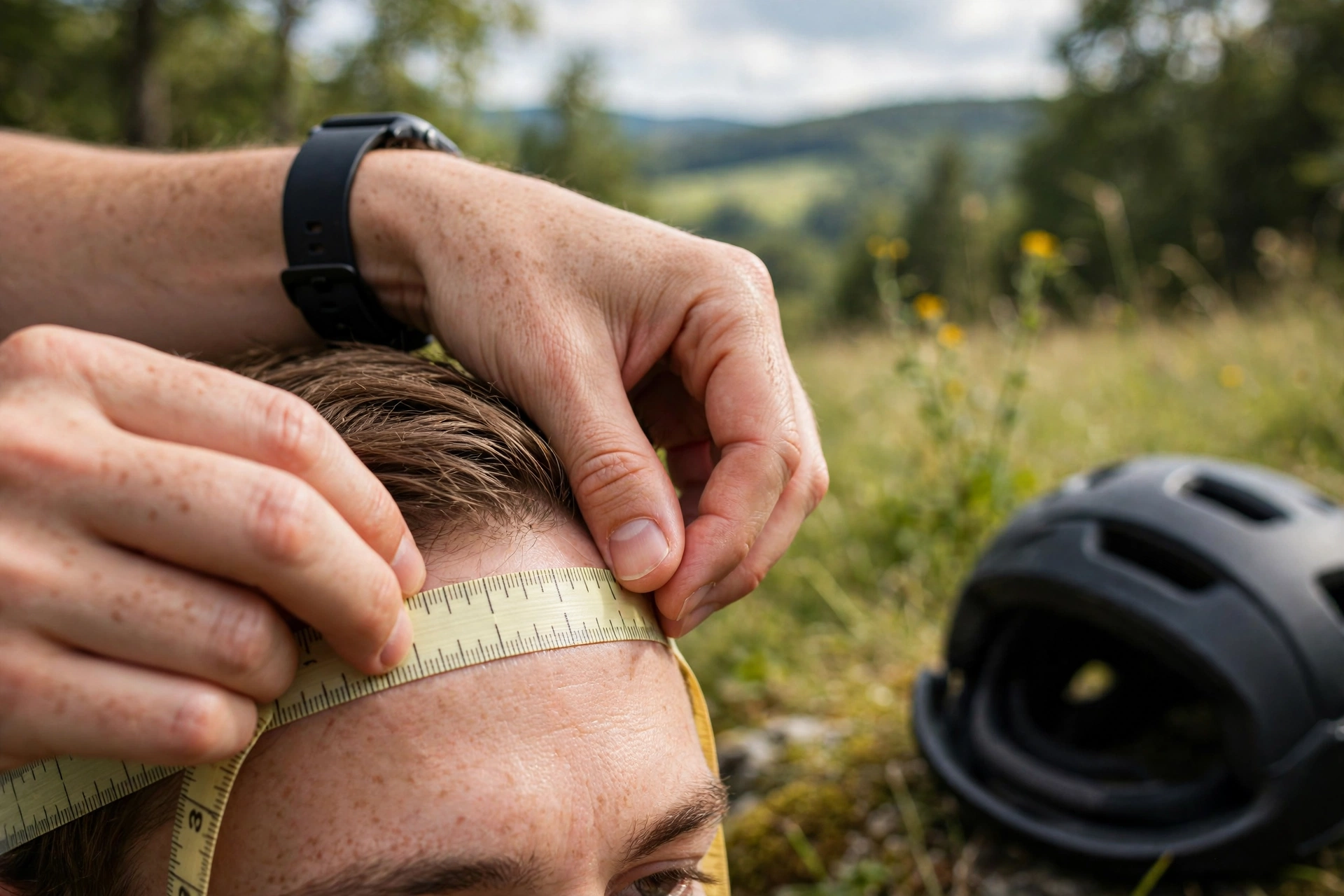
Use a soft tailor’s tape measure. Wrap it around the largest part of your head, roughly one inch above your eyebrows and ears and across the bump at the back of your skull. Keep the tape level, snug, and flat against your hair, but do not pull it tight enough to indent the skin. Read the measurement in centimeters, because most helmet charts are built around centimeters even in the United States.
Take the measurement two or three times and use the largest consistent reading. Hair makes a real difference: measure with your hair worn the way you will ride. A thick ponytail, bun, or winter liner underneath can change the effective size, so decide on your usual riding setup before you order. If you do not own a soft tape, wrap a piece of string or a phone charging cable around your head, mark where it meets, and measure that length against a ruler.
Write the number down before you shop — a single centimeter can move you into a different size, and if your result sits on a boundary between sizes, the between-sizes advice later in this guide will matter for you.
How Do You Match Your Measurement to a Size Chart?
Every brand publishes its own chart, and there is no universal standard that makes a medium from one maker identical to a medium from another. As a rough orientation, adult sizes often run from extra small around the low 50s in centimeters through extra large in the low 60s, but you should always check the exact chart for the exact model you are buying. Some e-bike helmets are offered in only two or three broad sizes with a dial adjuster covering the range, while others use more shell sizes for a closer fit.
Pay attention to shell sizes too. Many ranges build several labeled sizes on one shell, using thicker or thinner pads to change the fit. A helmet built on a shell closer to your head usually feels less bulky and sits lower, which matters most at the small or large end of the range.
Head shape matters alongside circumference. Helmets tend toward round, intermediate, or long-oval internal shapes. A long-oval head in a round helmet often gets forehead pressure and loose sides, while a round head in a long-oval helmet can feel squeezed at the temples. If a helmet in your measured size creates one sharp hot spot within minutes, the shape is probably wrong, not the size. Technologies inside the helmet, such as rotational liners — our explainer on what MIPS is and how it works covers how those systems function — do not change sizing, but they are worth understanding once the fit is right.
What Fit Checks Should You Do When You Try It On?
Put the helmet on level, with the front edge low on your forehead, about one to two finger widths above your eyebrows. It should feel snug and even all around, like a firm handshake, with no single point digging in. Wear it for at least ten to fifteen minutes in the shop or at home, because pressure points that are invisible in the first minute often announce themselves by minute ten.
Then run the movement tests. Shake your head side to side and nod firmly: the helmet should move with your head, and your forehead skin should move with the helmet rather than the helmet sliding over it. Try to roll the helmet forward and backward with both hands; it should resist. Open your mouth wide and tug upward on the helmet — with the strap fastened correctly, it should not lift off your forehead.
Check the straps as part of sizing. The side straps should form a V just below each ear, and the chin strap should allow roughly one or two fingers underneath. A helmet that only stays put because the strap is painfully tight is the wrong size, and one that shifts once you ride is too big regardless of the chart.
What Should You Do If You Fall Between Sizes?
Between-sizes riders are common, and the usual advice is to start with the smaller size, because comfort pads compress slightly with use while a loose helmet never becomes snug. Try the smaller size first and wear it for a full fifteen minutes. If the pressure is even and there is no pain, numbness, or lingering red mark on your forehead, it is likely the right choice, especially if the model offers thinner replacement pads to fine-tune later.
Choose the larger size only if the smaller one causes genuine pain or a persistent hot spot, and then use the fit system honestly: tighten the rear dial, and if the brand offers thicker pads, fit them. Never fill a too-large helmet with a thick hat, extra foam, or stacked liners that the manufacturer did not supply. Those improvised fixes change how the helmet sits and can reduce its protection.
If neither size works, change models rather than forcing it. A different brand or internal shape will often fit a between-sizes head perfectly in a standard size — circumference is only one dimension of the match.
Does an E-Bike Helmet Fit Differently From a Regular Bike Helmet?
The sizing method is identical, but e-bike helmets often cover more of the head, extending lower at the back and sides, and some are certified to standards intended for higher-speed cycling. That extra coverage means the fit around the ears and the back of the head deserves extra attention: check that the lower edge does not press on your ears or collide with sunglasses, and that the rear coverage does not push the helmet forward when you look up from a riding position.
If you can, simulate your ride: wear the helmet, sit on your bike, look over each shoulder as you would in traffic, and confirm it stays level rather than creeping or tilting. Finally, recheck fit every season — pads compress, straps stretch, and hairstyles change, so a quick shake test and a look at pad condition a few times a year will tell you whether your size is still doing its job.
Frequently Asked Questions
Q: Should an e-bike helmet feel tight when it is new?
A: It should feel snug and even, but never painful. Firm pressure that fades as pads settle is normal; a headache, numbness, or a single sharp hot spot means the size or shape is wrong.
Q: Can I rely on the size I wear in another brand?
A: No. Size charts and internal shapes differ between brands and even between models. Always measure your head in centimeters and check the chart for the specific helmet you are buying.
Q: How do I know if my e-bike helmet is too big?
A: If it rocks when you shake your head, slides toward your eyes when you bend forward, or can be rolled on your head with the strap fastened, it is too big — size down or try a different shape.

Olivia
Writer at Helmet Today, covering helmet reviews, fit and riding safety.