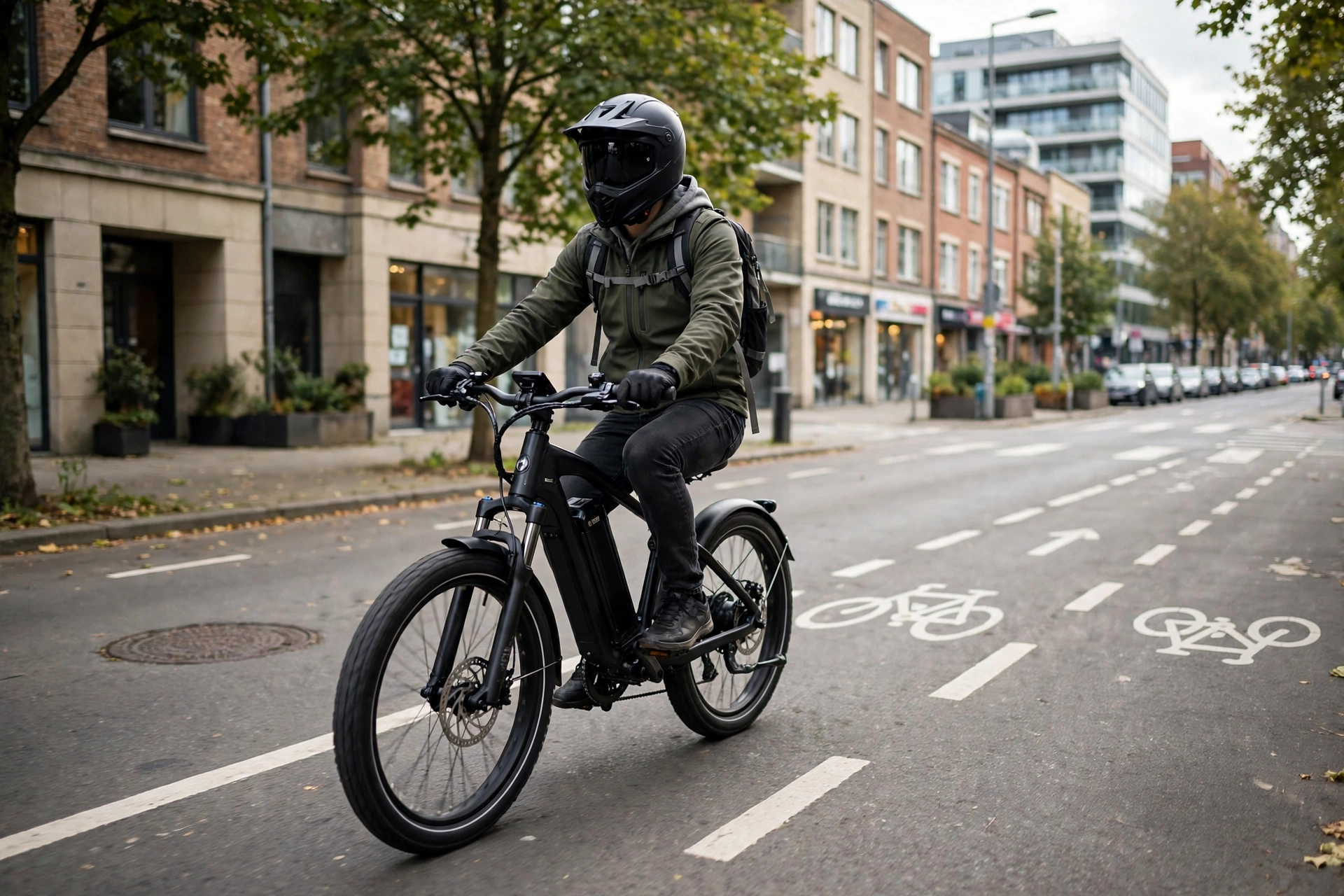
A full-face helmet gives e-bike riders chin and face protection that a regular open helmet cannot, and for fast Class 3 riding, rough roads, or heavy traffic, that protection is a real advantage. The trade-offs are weight, heat, and cost — so the right answer depends on how and where you ride.
Facial injuries are common in bicycle crashes because riders tend to pitch forward. On an e-bike traveling at 20 to 28 mph, a chin bar can be the difference between a scare and dental surgery. This guide weighs the honest pros and cons, explains which e-bike riders benefit most, and shows what to look for if you decide to go full-face.
What Protection Does a Full-Face Helmet Add?
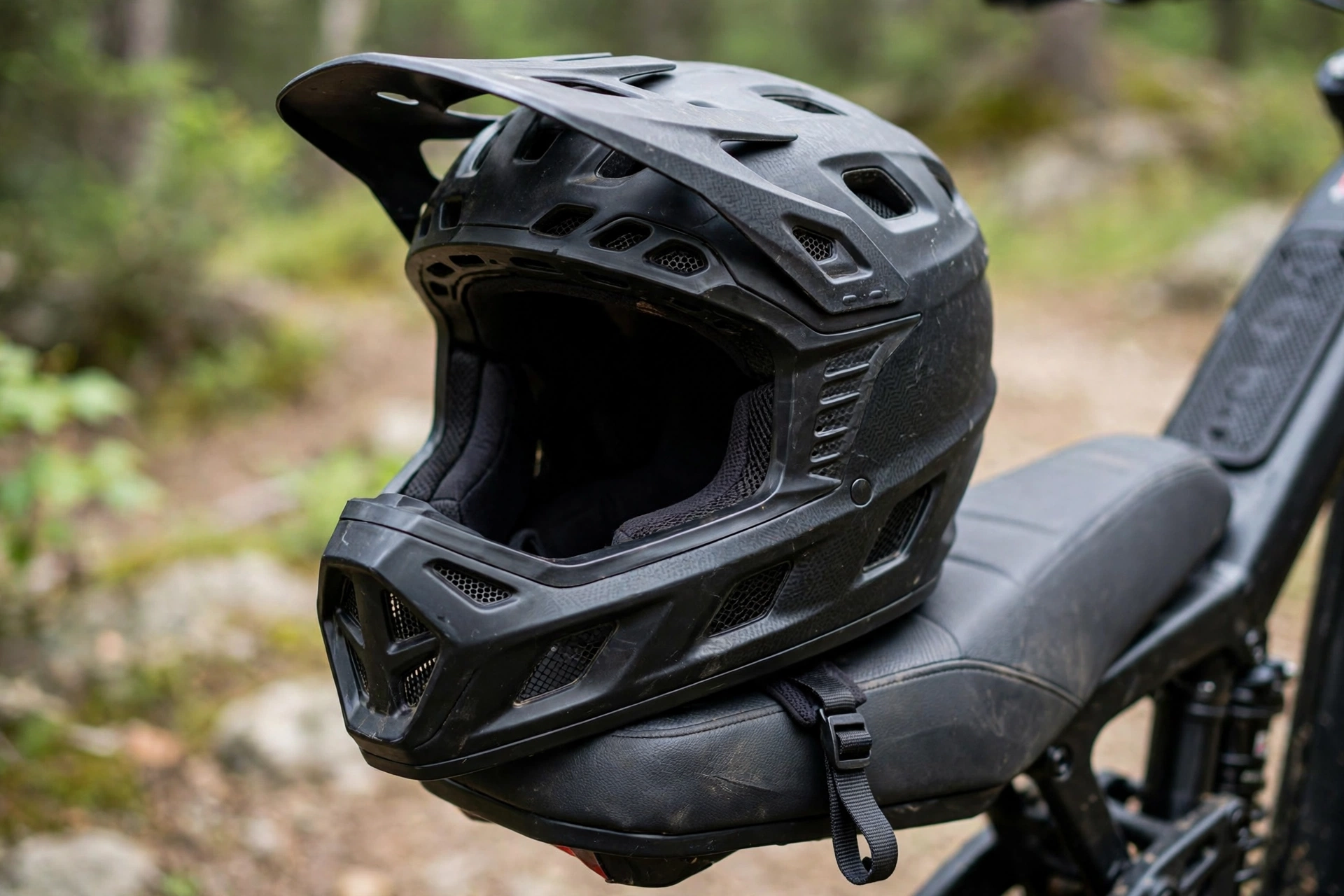
A full-face helmet wraps the entire head in one shell, including a rigid chin bar across the jaw. That bar absorbs and spreads impact energy in a face-first fall, protecting your chin, jaw, teeth, and lower face — areas an open-face or standard bicycle helmet leaves completely exposed.
Full-face models built for cycling and e-bikes are usually certified to the CPSC bicycle standard, and many downhill-rated models also meet the ASTM standard for downhill mountain biking, which includes chin bar strength testing. Some e-bike-focused full-face helmets add NTA 8776 certification for higher-speed impacts, in general terms the closest match to Class 3 riding.
The rest of the coverage is also deeper than a typical commuter helmet, with a lower rear drop and stronger temple protection. Combined with a goggle or a built-in visor, a full-face helmet is the most complete head protection you can wear on an e-bike short of a motorcycle helmet.
What Are the Downsides of a Full-Face Helmet?
Weight is the first one. A cycling full-face helmet typically weighs noticeably more than a half-shell commuter helmet, and you feel that on longer rides, especially looking over your shoulder in traffic. Fit has to be excellent, or the extra mass becomes neck fatigue by the end of a commute.
Heat is the second. A chin bar restricts airflow around your face, so full-face helmets run warmer in summer and at low climbing speeds. Good models fight this with large intake ports and exhaust vents, and the motor’s help on an e-bike means you exert yourself less, which helps. Still, a July ride in stop-and-go traffic is where the difference shows.
There are practical costs too: full-face helmets cost more, muffle your voice and hearing slightly, make drinking and quick conversations awkward, and can feel like overkill on a five-minute bakery run. Glasses wearers should also check that the helmet goes on without bending their frames.
Which E-Bike Riders Benefit Most From Full-Face?
Class 3 commuters are the clearest case. At 28 mph in mixed traffic, crash energy is closer to a light motorcycle than to a beach cruiser, and a chin bar earns its keep. Riders whose route includes fast descents, gravel, or poorly maintained roads are in the same group.
Off-road and trail e-MTB riders already know this world: full-face helmets are standard on aggressive terrain because rocks and roots do not care how your bike is powered. If your e-bike riding mixes trail and street, a certified lightweight full-face can serve both.
At the other end, casual Class 1 riders on protected paths at low speeds will usually find a quality open helmet more comfortable and perfectly reasonable. New riders should also think honestly about consistency: the safest helmet is the one you will actually wear on every ride, in August as well as October.
Full-Face vs. a Helmet With a Removable Chin Bar?
Convertible helmets split the difference. The chin bar clips on for fast or rough rides and comes off for slow cruises, giving you two helmets in one. For e-bike riders whose week mixes trail rides and coffee runs, that flexibility is genuinely useful.
Check the certification carefully, though. A convertible should be certified in both configurations, and downhill-rated convertibles are tested with the bar attached. A removable bar that is only decorative — some cheap ones are — adds little real protection, so buy from brands that publish their test standards.
Also consider modern liner technology while you compare. Our guide to what MIPS is and how it works explains how rotational liners reduce twisting forces in angled falls, and several full-face and convertible models include them. At e-bike speeds, that angled-impact protection pairs well with the chin bar’s direct-impact protection.
How Should a Full-Face E-Bike Helmet Fit?
Fit follows the same rules as any helmet, with extra attention to the cheeks and jaw. The helmet should sit level and snug all around, with firm, even cheek pad pressure — full-face helmets often feel tight on the cheeks when new, and the pads break in slightly. There should be no rocking when you shake your head and no forehead hotspot after ten minutes of wear.
The chin bar should sit close to your chin without pressing on it, and the strap must fasten snugly under your jaw. Try talking and yawning in the shop; you should be able to open your mouth, but the helmet should not shift when you do. If you wear glasses, put them on with the helmet in the store, not at home.
Ventilation checks matter too. Look for chin bar intake vents you can open and close, and a visor or goggle setup that resists fogging in cool weather. A breath guard helps in winter. Finally, weigh the helmet in your size if you can — published weights vary by size, and lighter full-face models exist if neck comfort is a concern.
Frequently Asked Questions
Q: Is a full-face helmet legal to wear on an e-bike?
A: Yes. Helmet laws in general require a certified bicycle helmet, and a CPSC-certified full-face helmet meets that requirement. Where a state specifies helmets for Class 3 riders, a certified full-face model qualifies.
Q: Is a full-face helmet too hot for summer commuting?
A: It is warmer than an open helmet, especially at low speeds. Large vents, a light-colored shell, and the motor doing most of the work make it manageable for many riders. If your commute is slow and very hot, a convertible with a removable chin bar is a good middle ground.
Q: Can I use a motorcycle full-face helmet on my e-bike instead?
A: You can, but it is usually a poor trade: motorcycle helmets are much heavier, poorly ventilated at bicycle speeds, and tiring on long rides. A cycling-certified full-face gives you the chin protection in a far lighter, better-ventilated package.

Olivia
Writer at Helmet Today, covering helmet reviews, fit and riding safety.