To fix a helmet visor that will not stay up, first clean the visor mechanism and check that the visor is seated correctly on both sides, and in general terms most visors that drop down on their own are caused by dirt, a worn pivot, or a visor that is not clicked fully into place. A visor that will not stay up is a common and annoying fault. It drops down at the wrong moment, blocks the view, and distracts the rider, but it is often a simple fix that needs no new parts and only a few minutes of care.
A helmet visor is held up by a pivot mechanism on each side of the helmet, with small teeth, springs, or friction plates that hold it in position. When those parts are clean and in good condition, the visor clicks into place and stays there. When they are dirty, worn, or damaged, the visor slips. Working through the causes from the simplest to the most serious is the best way to fix it.
Why won’t my helmet visor stay up?
A helmet visor will not stay up when the pivot mechanism cannot grip it firmly enough. The most common cause is dirt, dust, or dried road grime in the pivot, because grit stops the small teeth or friction plates from engaging properly. A visor that has been removed and put back on the wrong way, or that is not seated fully on one side, can also slip, because the two pivots need to work together and one loose side lets the whole visor drop.
Wear is another common cause. The pivot parts are small and they move every time the visor is opened or closed, so after a long time they can wear smooth and lose their grip. A cracked pivot cover, a missing screw, or a spring that has lost its tension can have the same effect. In general terms, a visor that drops slowly on its own is more likely to be worn, while a visor that drops suddenly is more likely to be dirty or not seated correctly.
How do I clean and check the visor mechanism?
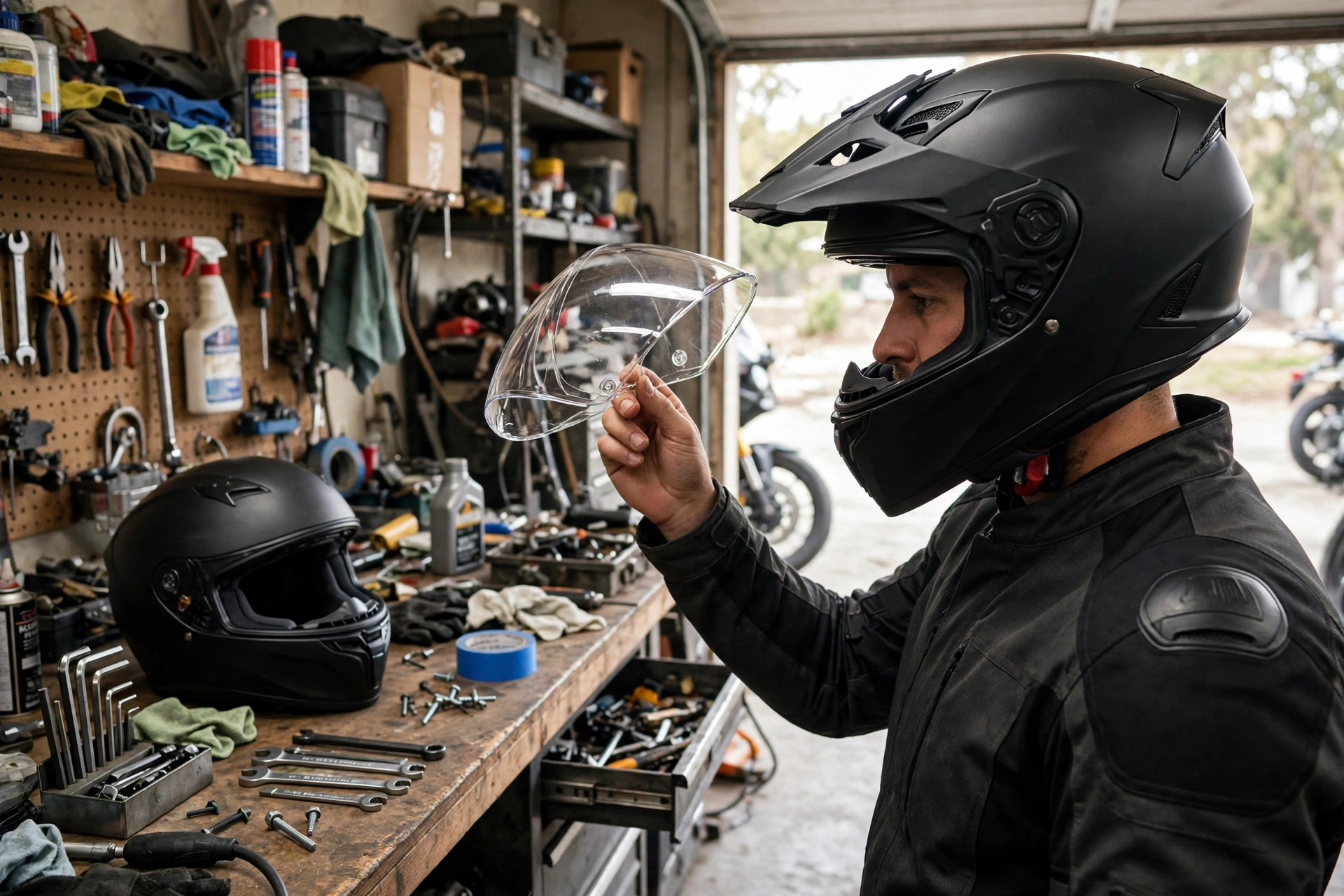
To clean and check the visor mechanism, first remove the visor if the helmet allows it, following the maker’s instructions for that model. Look at the pivot on each side for dirt, grit, or dried grime, and clean it gently with a soft brush and a damp cloth. Do not use harsh cleaners or strong solvents, because they can harm the plastic parts. Let the parts dry fully before putting the visor back on.
When the visor is off, check the pivot plates, screws, and springs for cracks, wear, or missing parts. Tighten any loose screws gently, without forcing them, because over-tightening can crack the plastic. Then put the visor back on carefully, making sure that it clicks fully into place on both sides. Open and close it a few times to feel whether it clicks into each position and holds. If it holds after cleaning, the dirt was likely the cause.
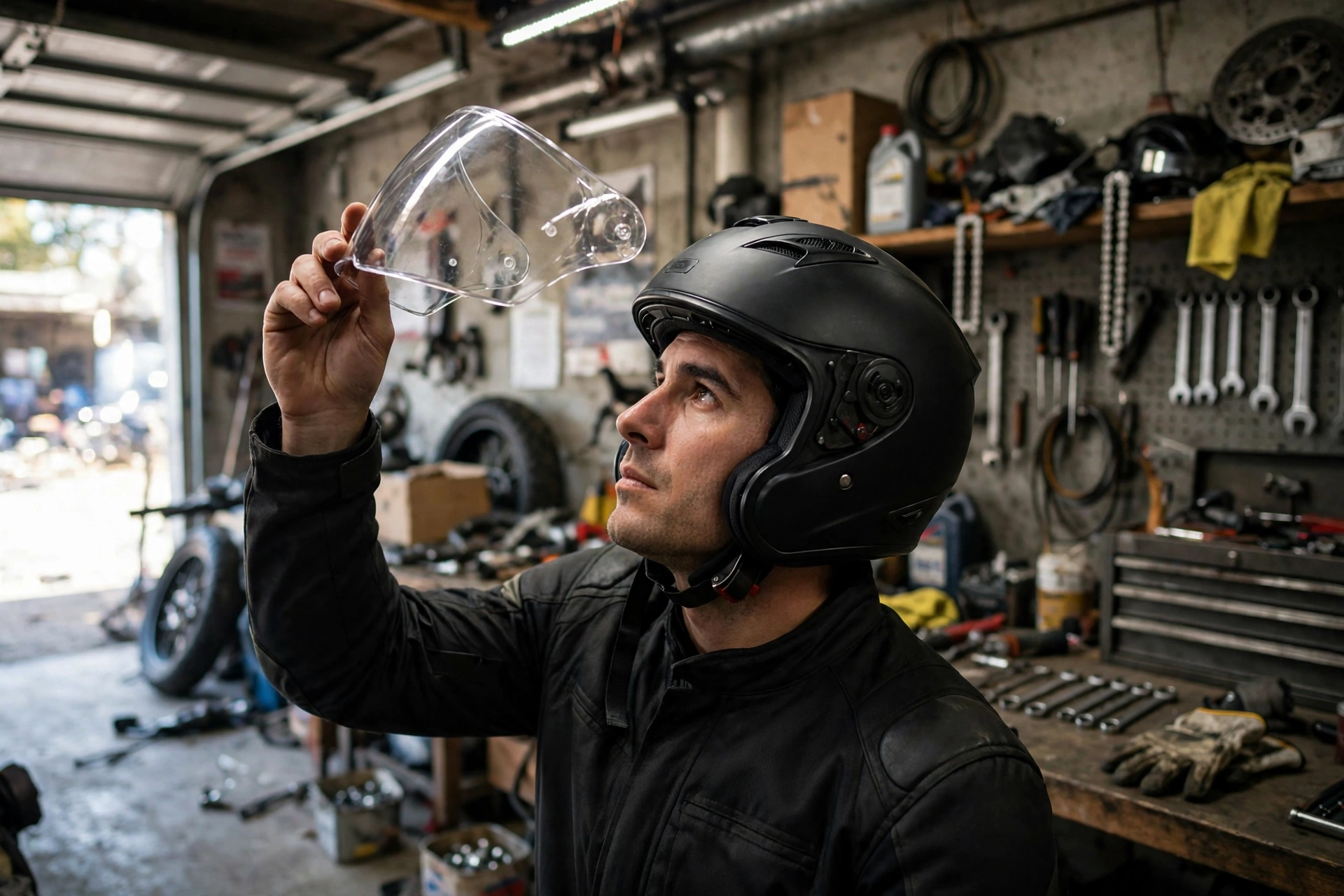
Can a worn visor pivot be repaired?
Yes, in general terms a worn visor pivot can often be repaired by replacing the small parts that have worn out. Many helmet makers sell pivot kits, screws, springs, and side covers as spare parts, and replacing them is a straightforward job for most riders. The rider should use parts made for the exact helmet model, because a part from another model may look the same but may not fit or hold the visor correctly.
If the pivot housing itself is cracked or the shell around it is damaged, the repair is harder, and the helmet should be looked at with care. A cracked shell near the pivot can weaken the helmet, and in general terms a helmet with a damaged shell should be replaced rather than used again. The rider should also check that the visor itself is not bent or cracked, because a bent visor can put uneven pressure on the pivots and cause it to drop.
What if the visor still won’t stay up after cleaning?
If the visor still will not stay up after cleaning and correct fitting, the next step is to replace the pivot parts. Order the correct kit for the helmet model, fit it following the maker’s instructions, and test the visor through its full range of movement. A new pivot kit often restores the firm click that the visor had when it was new. The rider should also check that the visor is the correct one for the helmet, because a visor from another model can sit slightly wrong and slip.
If a new pivot kit does not fix the problem, the visor or the helmet may be at the end of its useful life. A visor that is scratched, cloudy, or bent should be replaced anyway, because it affects vision. A helmet that has taken a serious impact should be replaced rather than used again, even if the visor seems like the only problem, because the damage may not be easy to see. In that case, a new helmet with a fresh visor mechanism is the safer choice.
How can I keep a helmet visor working well?
A helmet visor can be kept working well with regular cleaning and gentle handling. The visor should be cleaned with water and a soft cloth, and the pivot area should be kept free of dirt and grit. The visor should be opened and closed with a smooth motion, without forcing it past its stops, because forcing it can wear the pivot teeth and bend the visor. Storing the helmet in a bag keeps dust out of the mechanism between rides.
The rider should also check the visor and the pivots as part of a regular helmet check, along with the shell, the lining, and the chin strap. A small problem caught early is easier to fix than a worn-out mechanism. Riders who are choosing a new helmet may also want to learn about features that can help in a fall, including a system designed to reduce rotational forces, such as MIPS, which is found in some motorcycle helmets. A well-kept visor, checked often, gives a rider a clear view and a helmet that works as it should.
Can I ride with a visor that won’t stay up?
In general terms, it is not a good idea to ride with a visor that drops down on its own, because it can block the view at the wrong moment. The rider should fix it first, or ride with the visor fully down or removed if the maker allows it, and wear eye protection.
Do I need special tools to fix a visor?
No, in general terms most visor pivots can be cleaned and checked with no tools or with a simple screwdriver. A pivot kit replacement may need only basic tools, and the maker’s instructions for the model should be followed.
When should I replace the visor instead of repairing it?
A visor should be replaced when it is scratched, cracked, cloudy, or bent, or when a new pivot kit does not stop it from dropping. A clear visor in good condition is essential for safe riding.

Olivia
Writer at Helmet Today, covering helmet reviews, fit and riding safety.