For a girls’ BMX helmet, the right fit means a helmet that sits level on her head, feels snug all round without pressing, and stays put when she shakes her head — and the best way to get there is to measure her head first and try the helmet on before you buy. BMX riding involves jumps, berms, and the odd fall, so a helmet that slides around or sits too high on the forehead does not give her the protection she needs. A good fit is simple to check, and this guide walks you through each step.
Parents often buy a helmet a size too big so their child can grow into it, but that is a mistake with BMX helmets. A helmet that is too large can shift in a crash or slide down over her eyes on the track. It is better to buy the size that fits her now and replace it as she grows.
How Do You Measure a Child’s Head for a BMX Helmet?
Use a soft tape measure and wrap it around her head just above the eyebrows and ears, at the widest point. Keep the tape level and snug, and take the measurement twice. Note the number in centimetres, since most helmet size charts use centimetres.
Compare the measurement with the maker’s size chart for the helmet you are considering. Children’s helmets usually come in sizes such as small, medium, and large, each covering a range of a few centimetres. If her measurement falls between two sizes, try both, because the shape of the helmet matters as much as the number.
Measure with her hair as she normally wears it for riding. A ponytail or plaits can change how a helmet sits, so check the fit with her usual hairstyle. A low ponytail usually works better than a high one, which can lift the back of the helmet.
What Does a Good BMX Helmet Fit Look Like?
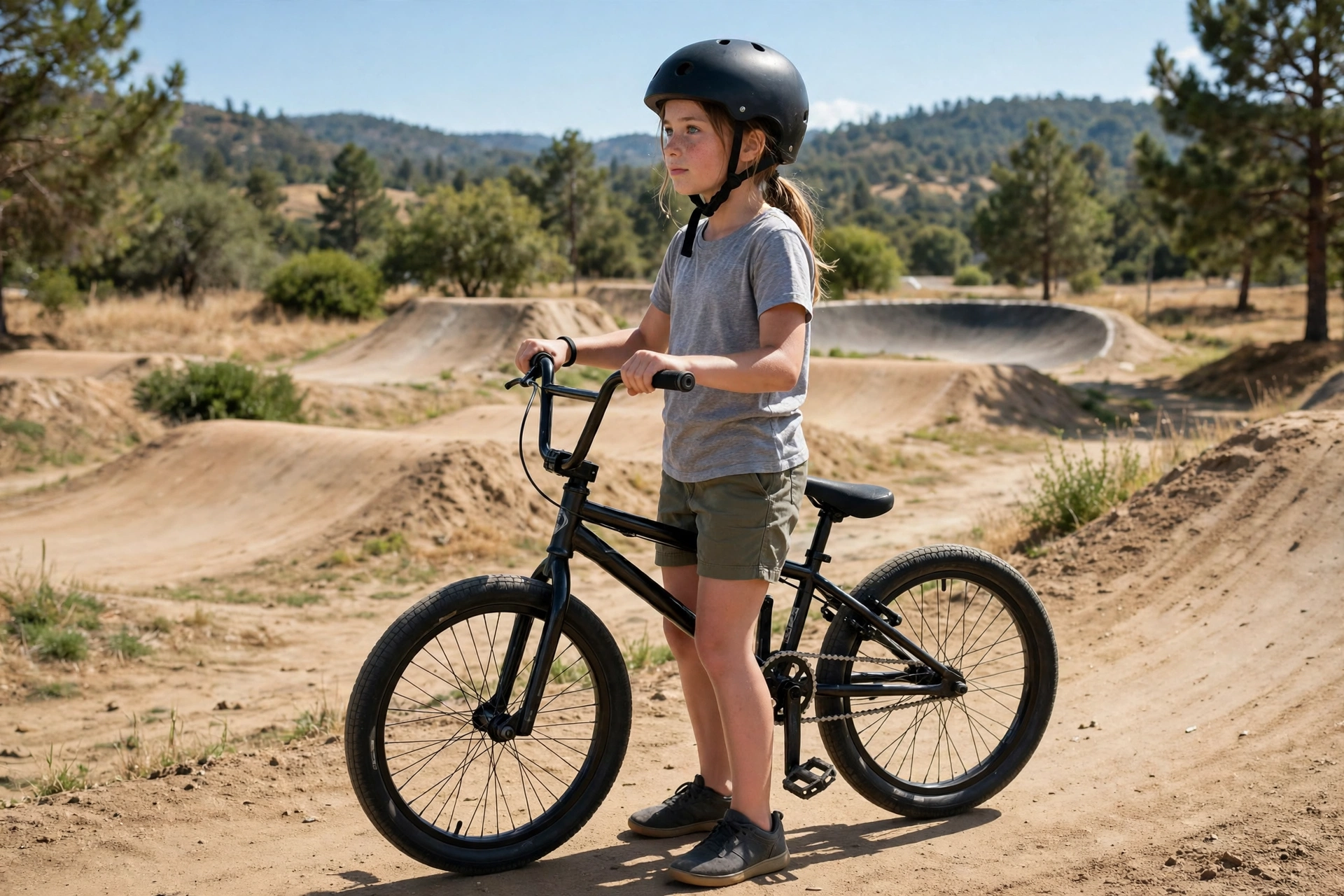
The helmet should sit level on her head, covering the forehead down to just above the eyebrows. It should not tilt back like a cap or slide forward over her eyes. Look at her from the side: the bottom edge of the helmet should run in a straight line from front to back, not slope up at the front.
Ask her to shake her head gently from side to side and up and down. The helmet should move with her head, not slide around on its own. If it wobbles or rocks, it is too big. If it presses hard on her forehead or temples after a few minutes, it may be too small or the wrong shape for her head.
Check the sides too. The straps should form a neat V under each ear, with the buckle sitting just below the earlobe. The helmet should feel snug, but she should be able to talk, smile, and breathe comfortably while wearing it.
How Do You Adjust the Straps and Fit System?
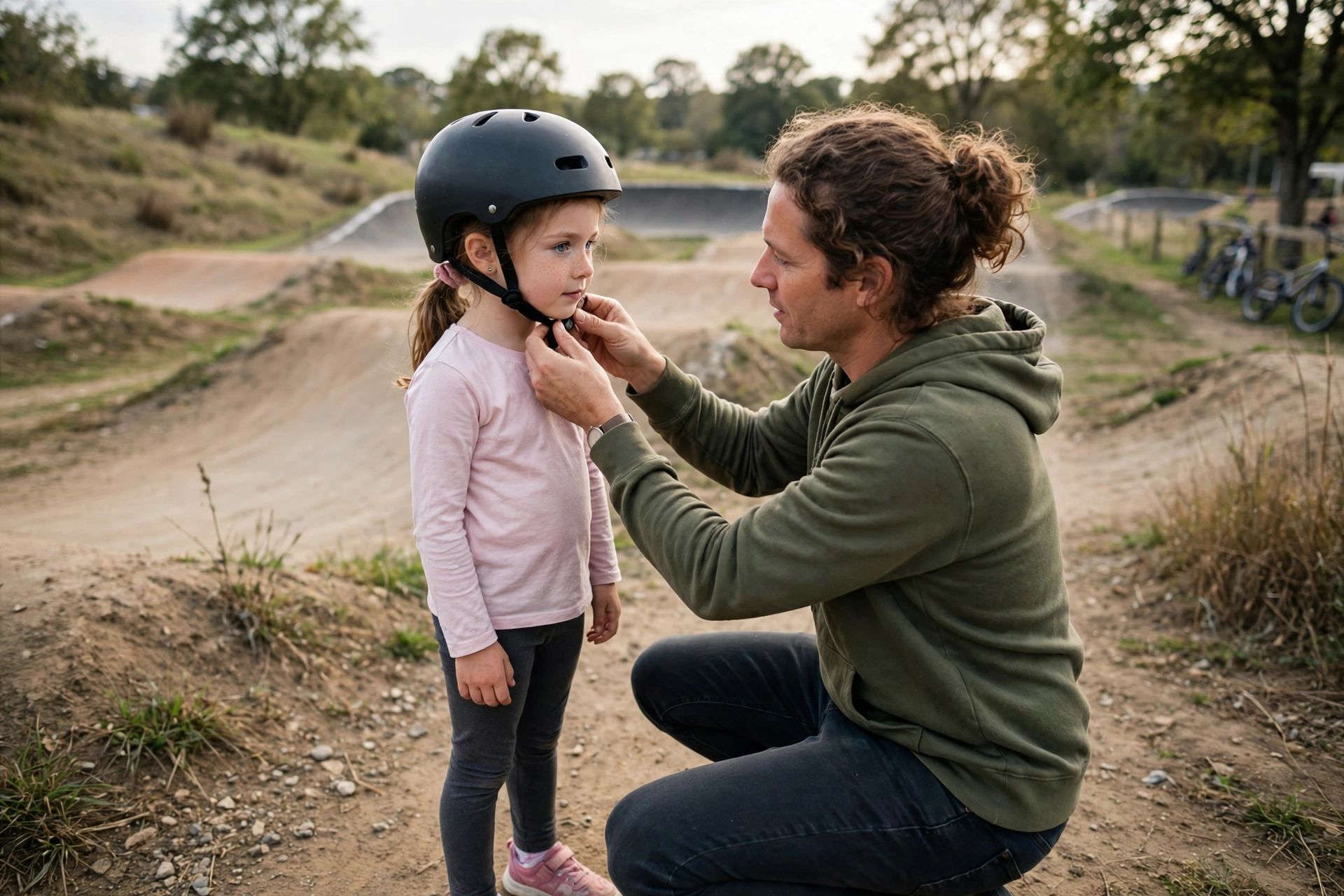
Start with the fit system at the back of the helmet, if it has one. Many BMX helmets have a dial or pads that let you fine-tune the fit. Set it so the helmet feels snug all round, then check the straps. The side straps should meet in a V just below each ear, and you should be able to slide them along the strap to get the V in the right place.
Next, fasten the chin strap. It should sit snugly under her chin, with room for about one finger between the strap and her chin. If the strap is too loose, the helmet can come off in a fall. If it is so tight that it digs in, loosen it slightly and check again.
Let her wear the helmet around the house for ten minutes before the first ride. This gives her time to notice any pressure points, and it lets you see whether the helmet stays level as she moves. A helmet that feels fine for a minute but hurts after ten needs adjusting, or a different size.
Should You Choose a Full Face BMX Helmet for a Girl?
For BMX racing, a full face helmet is the usual choice, because it protects the chin and jaw as well as the top of the head. Racing involves jumps and close riding, and falls can happen at speed. A full face helmet gives more coverage in those situations, and most BMX tracks and clubs expect riders to wear one.
For casual BMX riding at a pump track or skate park, an open face helmet may be enough, but a full face helmet still gives more protection. Talk to her coach or the staff at your local track about what is expected, and think about the kind of riding she does most often.
Full face helmets are heavier and warmer than open face ones, so comfort matters. Make sure she tries it on and wears it for a few minutes before you buy. A helmet she finds comfortable is one she will wear happily every time she rides. If you are learning about how helmets handle different kinds of impact, reading about what MIPS is for helmets can help you understand one of the technologies used in modern helmet design.
What Else Should Parents Check Before Buying?
Check that the helmet meets a recognised safety standard for cycling, and look for the certification label inside the helmet. A certified helmet has been tested to a known standard, which gives you more confidence than a helmet with no label at all.
Look at the ventilation. BMX riding is hard work, and a helmet with good vents will feel cooler and more comfortable. Check that the vents are not so large that they let in too much dirt, and that the padding inside is removable so you can wash it.
Finally, let her choose a colour or design she likes, within the models that fit her properly. A helmet she is proud to wear is one she will put on without being asked, and that matters more than any colour or graphic. In general terms, the best helmet is the one that fits well, meets the standard, and gets worn every ride.
Frequently Asked Questions
Q: How often should I check my daughter’s BMX helmet fit?
A: Check it every few months, because children grow quickly. Also check it after any growth spurt, and whenever she says the helmet feels different or uncomfortable.
Q: Should I buy a BMX helmet a size bigger so she grows into it?
A: In general terms, no. A helmet that is too big can slide around and may not protect her properly. Buy the size that fits now, and replace it as she grows.
Q: When should a BMX helmet be replaced?
A: Replace it after a hard crash or impact, even if you cannot see damage, and when it no longer fits. Also replace it if the straps, buckle, or padding are worn out.

Olivia
Writer at Helmet Today, covering helmet reviews, fit and riding safety.