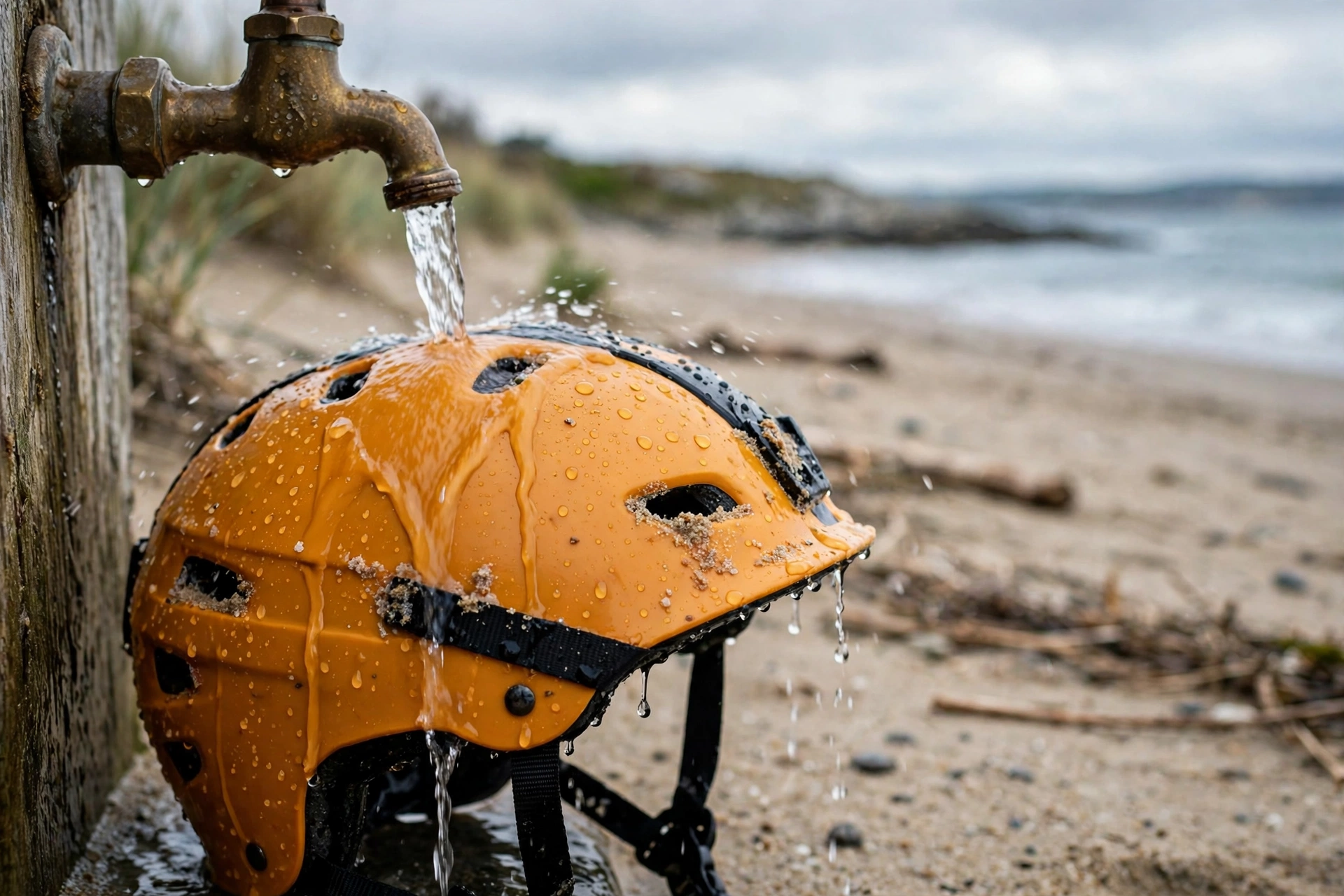
After saltwater exposure, rinse your helmet with fresh water as soon as you can, wash it gently with mild soap, and let it dry fully in moving air — salt left on a helmet can corrode metal parts, stiffen straps, and damage padding. Saltwater is far harsher than rain, because salt crystals remain after the water dries and keep drawing moisture from the air. A quick rinse after every saltwater outing makes a large difference to how long your helmet lasts.
Helmets used for sailing, kayaking, surfing, jet skiing, and other water sports meet saltwater often, and so do helmets worn on boats or near the sea. Even a helmet that only gets splashed needs care, because salt can hide in vents, under padding, and around buckles. This guide explains what saltwater does to a helmet, how to clean it properly, and when to replace parts.
What Does Saltwater Do to a Helmet?
Saltwater attacks a helmet in several ways at once. Salt crystals left on metal buckles, rivets, and screws can cause corrosion, which weakens the metal and can make a buckle stick or fail. Salt can also stiffen fabric straps and padding, making them rough and less comfortable, and it can leave white marks on the shell and the visor.
Inside the helmet, salt can build up in the foam liner and the padding, where it holds moisture and encourages mould and bad smells. Vents and small crevices trap salt easily, and once it dries there it is hard to remove without a proper rinse. In general terms, the longer salt stays on a helmet, the more damage it can do, so prompt cleaning matters more than deep cleaning later.
Saltwater can also affect the clear parts of a helmet, such as a visor or a face shield. Salt deposits can scratch the surface if they are wiped while dry, and they can leave cloudy marks if they are left for a long time. A visor that is scratched or cloudy gives a poorer view, which is a safety problem as well as a cosmetic one.
How Should You Rinse a Helmet After Saltwater?
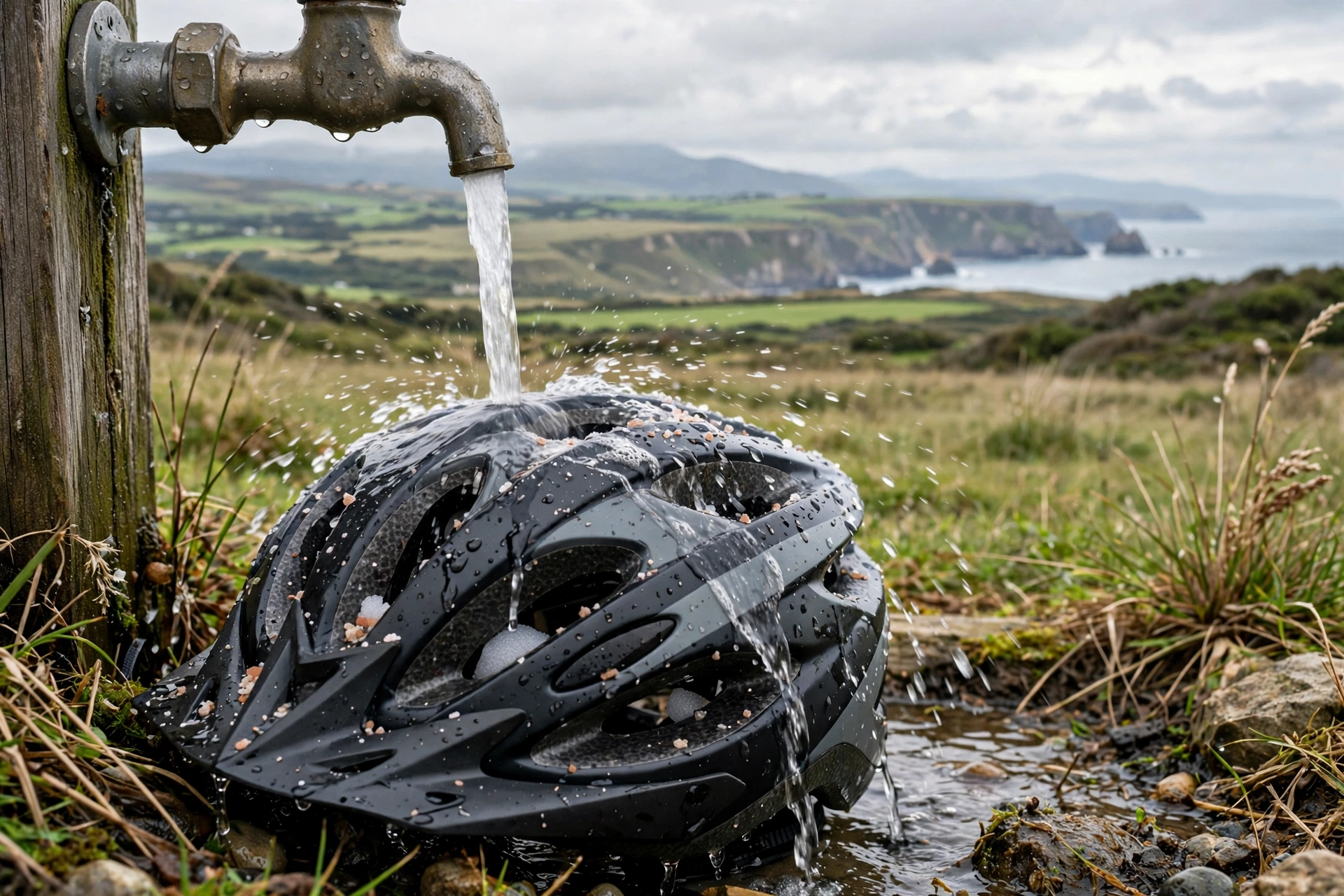
Rinse the helmet with clean fresh water as soon as you are out of the saltwater. Hold it under a tap or a shower and let the water run through the vents and over the padding, turning the helmet so the water reaches every part. Pay attention to the strap, the buckle, and the areas around the vents, where salt collects most.
After the first rinse, wash the helmet gently with lukewarm water and a small amount of mild soap. Use your hands or a soft cloth, and work the soapy water through the padding and the vents. If the padding is removable, take it out and wash it separately. Rinse the helmet again with fresh water until no soap remains, because soap residue can attract dirt and hold moisture.
Do not use a pressure washer, a strong jet, or harsh detergents, because they can force water into places it should not go and can damage foam, glue, and coatings. A gentle rinse and a soft wash are enough. If the helmet has electronic parts, such as an intercom, check the manufacturer’s guidance before you rinse it, and remove any parts that should not get wet.
How Do You Dry a Helmet After Saltwater Exposure?
Dry the helmet in moving air, with the vents open and the opening facing the airflow. If the padding is removable, dry the pads separately so air can reach both sides. A fan helps, especially in humid weather, and the helmet should be left until it is fully dry inside and out before it is stored or used again.
Avoid drying the helmet in strong direct sunlight for a long time, and avoid strong heat from a radiator or a hair dryer on a high setting, because heat can damage foam and adhesives. Warm, moving air at room temperature is the safest choice. Turn the helmet from time to time so air reaches all of the padding.
Check the metal parts as the helmet dries. If a buckle feels gritty or stiff, rinse it again with fresh water and work it open and closed a few times to flush out any remaining salt. A tiny drop of a suitable lubricant on a metal buckle may help, but check the manufacturer’s guidance first, and keep lubricant away from the padding and the shell.
What Parts Need Extra Attention After Saltwater?
The buckle and the strap need the closest check, because they are the parts that hold the helmet on your head. Look for corrosion, stiffness, fraying, or a buckle that no longer clicks firmly. Rinse these parts thoroughly, and replace them if they show signs of damage. If the manufacturer does not sell a replacement strap for your model, the helmet itself may need to be replaced.
Vents and visor fittings also trap salt, so flush them well and check that vents still open and close smoothly. Look for white salt marks around screws and joints, and wipe them away with a damp cloth. If a vent is stuck or a screw is corroded, do not force it, because forcing a corroded part can break it.
The padding deserves attention too. If it still smells of the sea or feels stiff after washing, wash it again or replace it. Padding that stays salty will hold moisture and can irritate the skin. If you are learning how helmet liners work, reading about what MIPS is for helmets can help you understand the layer that sits between the shell and the padding.
When Should a Saltwater-Exposed Helmet Be Replaced?
A helmet that has been rinsed and dried promptly after saltwater use can last a long time, but one that has been left salty for weeks may be beyond saving. Replace the helmet if the buckle is corroded and cannot be fixed, if the strap is frayed or stiff, or if the padding cannot be cleaned and still smells or feels rough. These are signs that salt has done lasting damage.
Also replace the helmet if it has been in a crash or a hard impact, whatever the saltwater history. Salt damage and impact damage are separate problems, and either one alone can be a reason to retire a helmet. In general terms, a helmet that has taken a hard impact should be checked and usually replaced, even if the outside looks fine.
Keep a simple routine for water sports: rinse after every outing, dry fully, and store the helmet in a dry, ventilated place. A helmet that is cared for after each saltwater trip will stay comfortable and reliable for much longer than one that is left salty in a bag until the next outing.
Frequently Asked Questions
Q: Do I need to rinse my helmet after every saltwater outing?
A: Yes. A quick fresh-water rinse after every outing removes most of the salt before it can corrode metal parts or stiffen the padding, and it takes only a few minutes.
Q: Can saltwater damage a helmet shell?
A: In general terms, saltwater is hardest on metal parts, straps, and padding, but salt left on the shell can mark the finish and hide in vents and fittings. Rinsing the whole helmet protects the shell as well.
Q: How do I clean a saltwater helmet visor?
A: Rinse the visor with fresh water first to wash away salt crystals, then wash it gently with mild soap and a soft cloth. Do not wipe a dry, salty visor, because the crystals can scratch it.

Olivia
Writer at Helmet Today, covering helmet reviews, fit and riding safety.