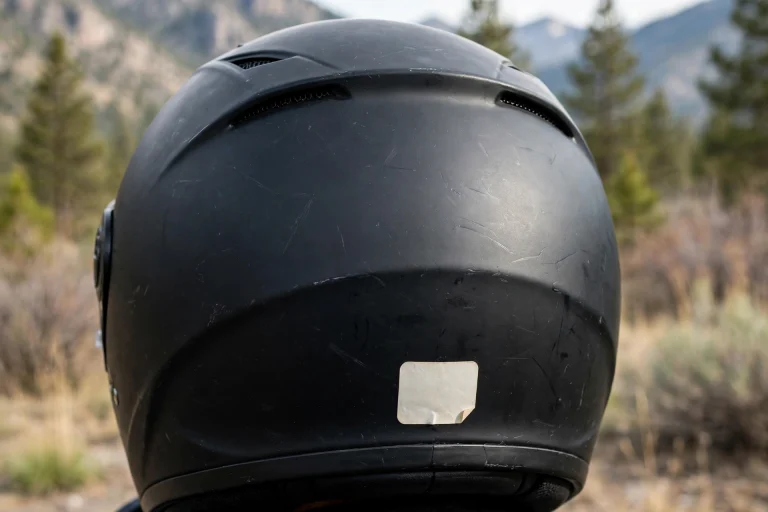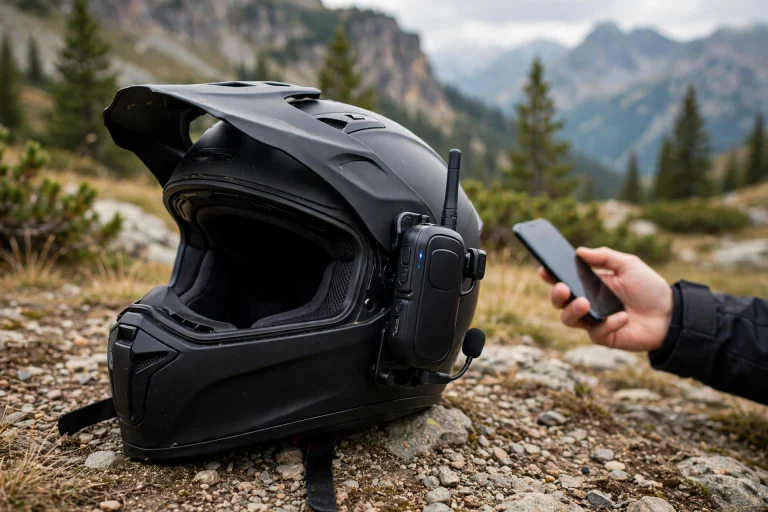
Helmet fit sensors are small sensors inside a helmet that check whether it is sitting correctly on your head and tell you, usually through a light or a phone app, when the fit is wrong. They are designed for one of the most common helmet problems: a helmet that is worn too loose, tilted back, or unfastened, which protects far less well than the same helmet worn correctly. For beginners who are still learning how a helmet should feel, that feedback can be genuinely useful.
This guide explains how fit sensors work, what they can and cannot detect, and whether they are worth seeking out when you buy your first helmet.
How Do Helmet Fit Sensors Work?
Fit sensors typically use pressure or contact sensors placed at key points inside the helmet — around the forehead, the sides, and the back of the head. When the helmet is on, the sensors check whether each point is in contact with the head and whether the pressure is even. If the helmet is tilted, sitting too high, or loose on one side, the pattern of contact looks wrong and the system flags it.
Some systems add a chin-strap sensor that checks whether the strap is fastened. That is a simple check with a big payoff, because an unfastened helmet can come off in a crash. A reminder to fasten the strap is one of the most useful things a sensor can do.
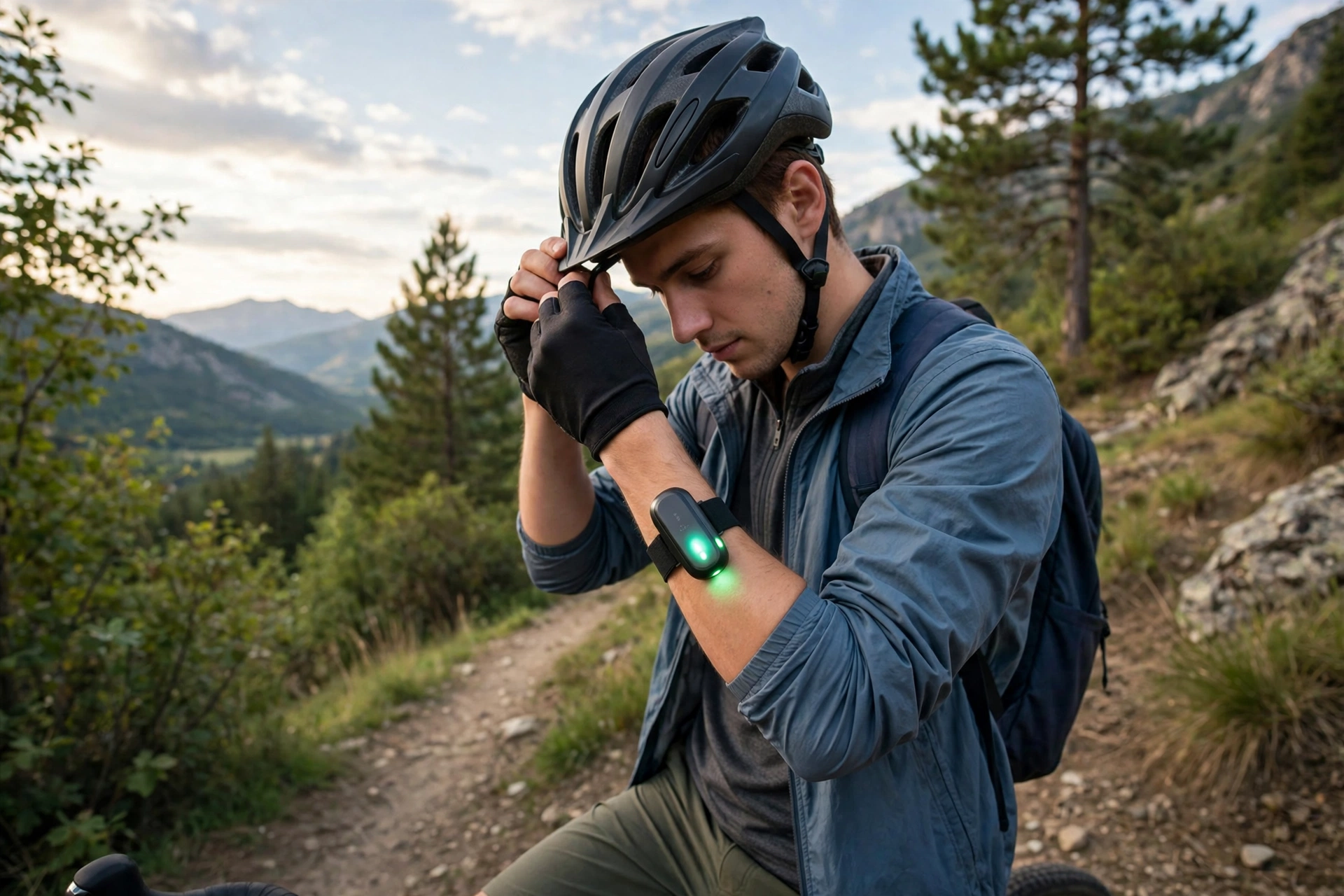
The feedback itself varies. Basic systems use a small light on the helmet that turns green when the fit is right and red when it is not. More advanced systems send a message to a phone app with guidance on what to adjust, such as tightening the rear dial or levelling the helmet.
Why Is Helmet Fit So Important for Beginners?
Fit is the foundation of helmet protection. A helmet that is too loose can shift or roll off in a crash, exposing the head it is meant to protect. A helmet tilted back leaves the forehead exposed, which is one of the most commonly injured areas in a fall. A helmet that is too tight is painful and gets left at home.
Beginners often get fit wrong without realising it. A new rider may not know that a helmet should sit level, cover the forehead, and feel snug all round. Shop staff can help at the point of sale, but once the rider is at home, there is no one checking. Fit sensors fill that gap by checking every time the helmet goes on.
Children’s helmets show the same problem even more sharply. A child grows fast, and a helmet that fitted in spring may be loose by autumn. A sensor that flags a poor fit can prompt a parent to readjust or replace the helmet before the next ride.
What Can Fit Sensors Not Detect?
Fit sensors check position and contact, not protection. They cannot tell you whether the helmet’s foam liner is damaged, whether it has been crashed, or whether it is the right size category for your head — a helmet two sizes too big may still trigger all its sensors if it is jammed on tightly.
They also cannot judge the helmet’s overall condition. A cracked shell, a frayed strap, or aged foam will not show up in a fit reading, so the usual visual checks still matter. Think of fit sensors as a complement to inspection, not a replacement for it.
Battery dependence is another limit. Sensor systems need power, usually from a small rechargeable or replaceable battery, and a flat battery means no feedback. A rider who relies on the sensor alone could miss a bad fit on a day the battery is dead, so learning the manual fit checks still matters.
Do Fit Sensors Actually Help Beginners?
In general terms, yes — with a caveat. For a beginner who is unsure what a good fit feels like, a simple correct-or-not signal builds confidence and good habits. Riders who get immediate feedback tend to adjust their helmets more carefully and wear them more consistently, which is exactly the behaviour change that improves safety.
The caveat is that sensors can create false confidence. A green light means the helmet is positioned correctly, not that it is the right helmet or in good condition. Beginners should still learn the basic manual checks: two fingers above the eyebrows, straps forming a V under the ears, and a snug feel when shaking the head gently.
For experienced riders, the value is lower. Someone who has worn helmets for years can usually judge fit by feel, and a sensor adds little. The technology is most useful precisely where experience is thinnest: first-time riders, children, and anyone returning to cycling after a long break.
Should You Buy a Helmet With Fit Sensors?
If you are a beginner, or buying for a child, a helmet with fit sensors is worth considering — provided the helmet itself fits well, is certified, and is comfortable. The sensor is a bonus on top of a good helmet, not a substitute for one. Never choose a poor-fitting helmet just because it has sensors.
Also consider cost and maintenance. Sensor helmets cost more than equivalent conventional helmets, and the electronics need charging or battery changes. If the added cost would push you toward a cheaper helmet that fits worse, the trade-off is not worth it.
Whatever helmet you choose, understanding how it protects your head helps you judge its value. Modern liners that reduce twisting forces in angled falls are an important part of that picture, and this explanation of MIPS technology describes how one widely used system works.
Frequently Asked Questions
Q: Do helmet fit sensors check if my helmet is damaged?
A: No. Fit sensors check position and contact, not condition. You still need to inspect the shell, foam, and straps yourself and replace the helmet after a crash.
Q: Will a fit sensor tell me if my helmet is the wrong size?
A: Not reliably. A helmet that is far too big can still trigger the sensors if it is forced into contact. Use the maker’s sizing guide and try the helmet on to judge size.
Q: Do fit sensors work without a phone app?
A: Many systems use a simple light on the helmet and work without a phone. More detailed guidance usually needs the app, so check what a given system offers before buying.

Olivia
Writer at Helmet Today, covering helmet reviews, fit and riding safety.