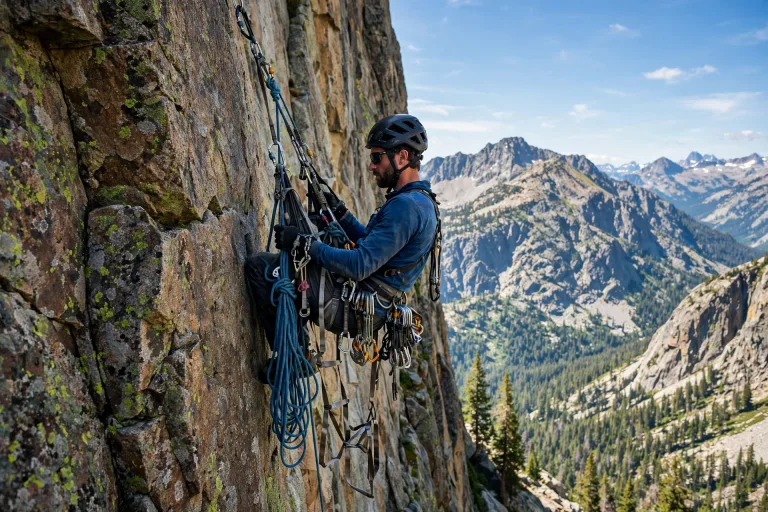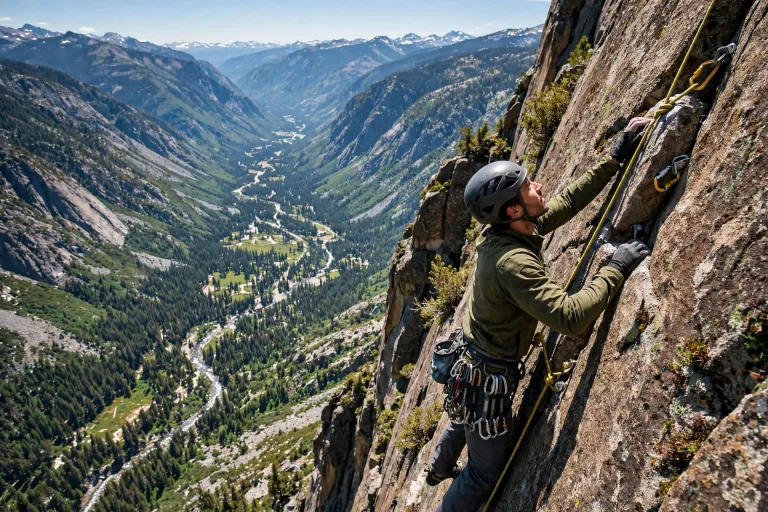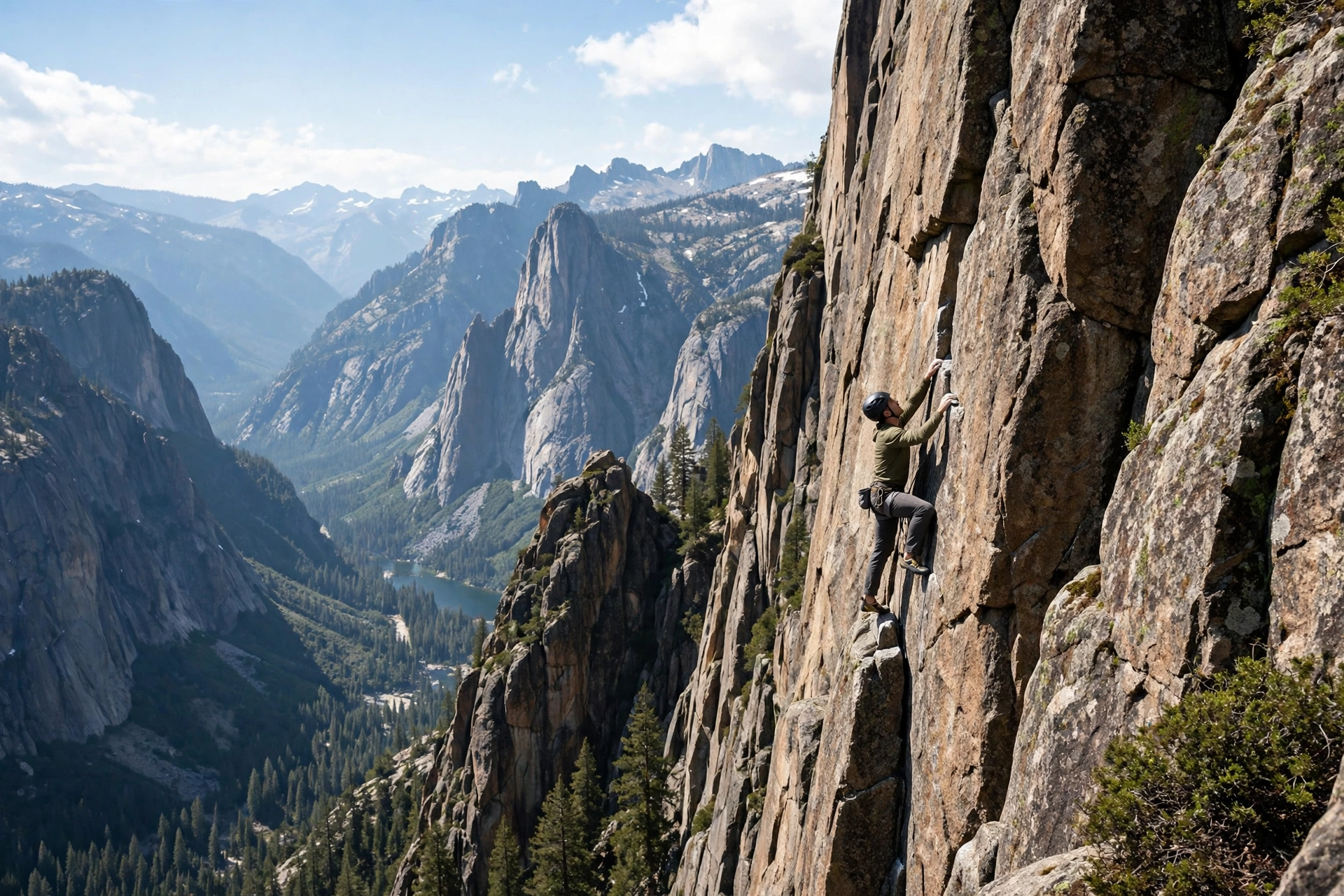
A helmet for free solo climbers is a helmet worn by a climber ascending a rock face without ropes or a harness to protect the head from falling rock, loose holds, and knocks against the wall, and in general terms a free solo climber who chooses to wear one should pick a light helmet that fits well and stays in place on a long climb. Free solo climbing means climbing alone with no rope, so a fall is not an option the climber plans for. The helmet is not there to save a climber from a long fall; it is there for the smaller dangers of the rock, and it is treated by many climbers as sensible safety equipment, not as an optional extra.
A free solo climber’s head is close to the rock for hours at a time, and the wall above can shed loose stones at any moment. A hold can break, a foot can slip, and the climber’s head can strike the rock as they move. A helmet gives the climber protection in those moments, and it also shields the head from sun and from dripping water on a damp face.
Why might a free solo climber wear a helmet?
A free solo climber might wear a helmet because rockfall is a real danger even on a familiar route. Stones can be loosened by climbers above, by animals, or by the weather, and a small stone falling from height can strike with real force. In general terms, a helmet spreads the force of an impact and helps to protect the skull, and that protection matters all the more when the climber is high on a wall with no rope to catch them.
There is also the risk of the climber’s own head striking the rock, if a hold breaks or a foot slips and the body swings into the wall. A helmet gives a layer of protection against those knocks too. Some free solo climbers choose not to wear a helmet, and that is their choice, but in general terms a helmet adds protection without changing how the climb is done, and many climbers wear one where rockfall is a known problem.
What kind of helmet is best for free solo climbing?
The best helmet for free solo climbing is, in general terms, a very light climbing helmet with a hard outer shell, a secure chin strap, and good ventilation. Many free solo climbers use a helmet made for rock climbing, because those helmets are light, comfortable, and made to cope with falling rock. The key points are a snug fit, very low weight, and a strap that holds the helmet in place when the climber is looking up at the rock above.
The helmet should also cope with long hours on the rock and with the sun. A helmet used for free solo climbing will be worn for hours at a time, so it should be comfortable enough to forget about and should not make the climber’s head too hot. Vents that let air in are useful, and a lining that can be removed and washed is a practical feature. A helmet that is too heavy or too hot will become a distraction on a long climb.
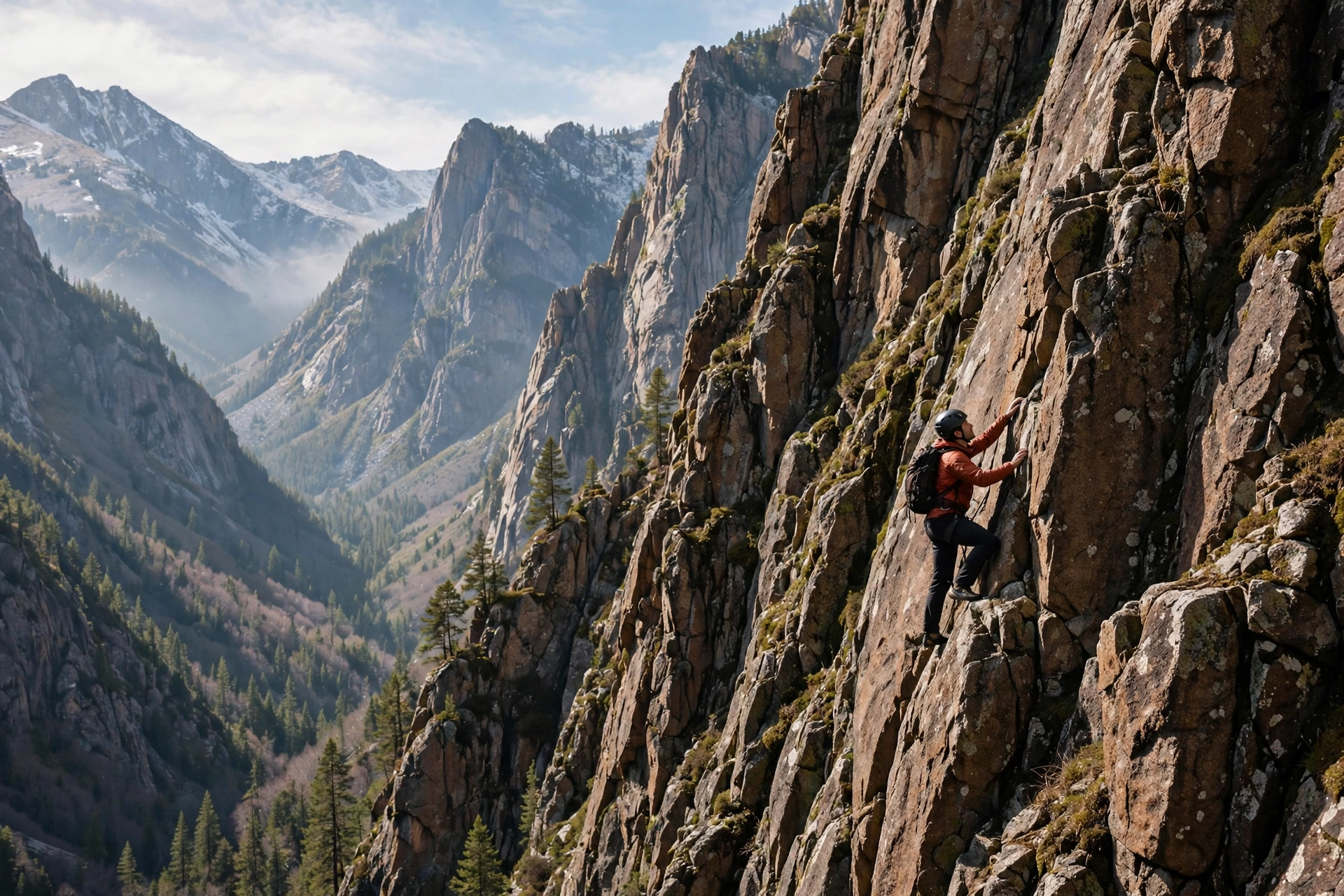
How should a helmet for free solo climbing fit?
A helmet for free solo climbing should fit snugly, sit level on the head, and stay in place when the climber looks up, leans back, or moves their head quickly. The helmet should cover the forehead and the top of the head, and the chin strap should be fastened securely before every climb. A strap that is left loose lets the helmet lift in the wind or slide if the climber is struck by a stone, and a helmet that comes off on the wall is no help at all.
The fit should be checked with any other gear the climber will actually wear, such as a sun hat or a warm layer on a cold morning, because extra layers can change how a helmet sits. The helmet should not press painfully on the forehead or squeeze the ears, and it should not block the climber’s hearing, because a climber needs to hear their partner, other climbers, and any sound of falling rock. A climber who wears glasses should check that the helmet does not push them out of place.
What should a free solo climber check before a climb?
Before a climb, a free solo climber should check the helmet for cracks, dents, or damage to the shell, and should look at the lining, the strap, and the buckle to make sure they are sound and working. A helmet that has been struck by a stone, or that has taken a knock in a fall, should be looked at with care, and in general terms a helmet that has taken a serious impact should be replaced rather than used again. The damage may not be easy to see, so the climber should think honestly about what the helmet has been through.
The climber should also check the route, the weather, and the condition of the rock before starting. A helmet is only one part of staying safe on a wall, and it works best when the climber also checks that the route is dry, the weather is settled, and the rock is sound. Climbing with a partner on the ground, rather than alone on a remote crag, is a sensible habit too.
How should a free solo climbing helmet be looked after?
A free solo climbing helmet should be looked after with regular cleaning and sensible storage, in the same way as any sports helmet. After a day on the rock, the climber should brush off dust and grit, wipe the shell clean, and let the helmet dry naturally away from direct heat. Strong heat, such as a hot car, can harm the materials in a helmet over time, so a cool, dry place is a better choice for storage.
The helmet should be kept where it will not be knocked about or used as a seat or a shelf, because a hard knock can damage it even when no crack is visible. A helmet bag is a simple way to protect it between climbs. Climbers choosing a new helmet may also want to learn about features that can help in a fall, including a system designed to reduce rotational forces, such as MIPS, which is found in some helmets made for climbing and other rock sports. A well-kept helmet, worn every time, gives a free solo climber the best chance of enjoying a long day on the rock in safety.
Do all free solo climbers wear a helmet?
No, not all free solo climbers wear a helmet, and the choice is a personal one. In general terms, a helmet adds protection against rockfall and knocks on the wall, and many climbers wear one on routes where rockfall is a known risk.
Can a regular climbing helmet be used for free solo climbing?
Yes, in general terms a regular climbing helmet that fits well and is in good condition is suitable for free solo climbing. The key points are light weight, fit, and a secure chin strap.
When should a free solo climbing helmet be replaced?
A free solo climbing helmet should be replaced after a strike from a falling stone or a hard knock, or when it no longer fits well, shows damage, or has been worn for a long time. When in doubt, replace it rather than keep climbing in it.

Olivia
Writer at Helmet Today, covering helmet reviews, fit and riding safety.