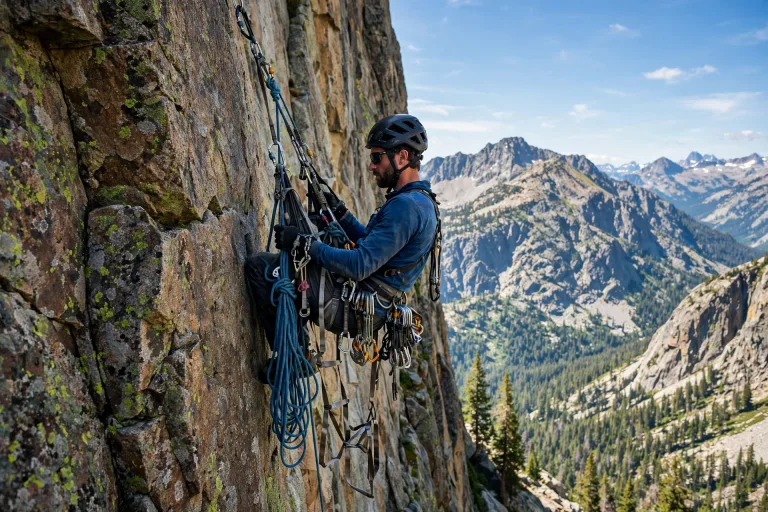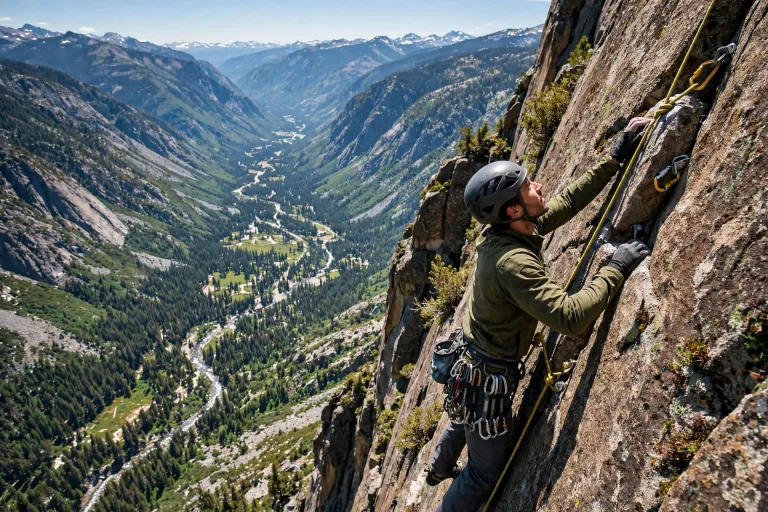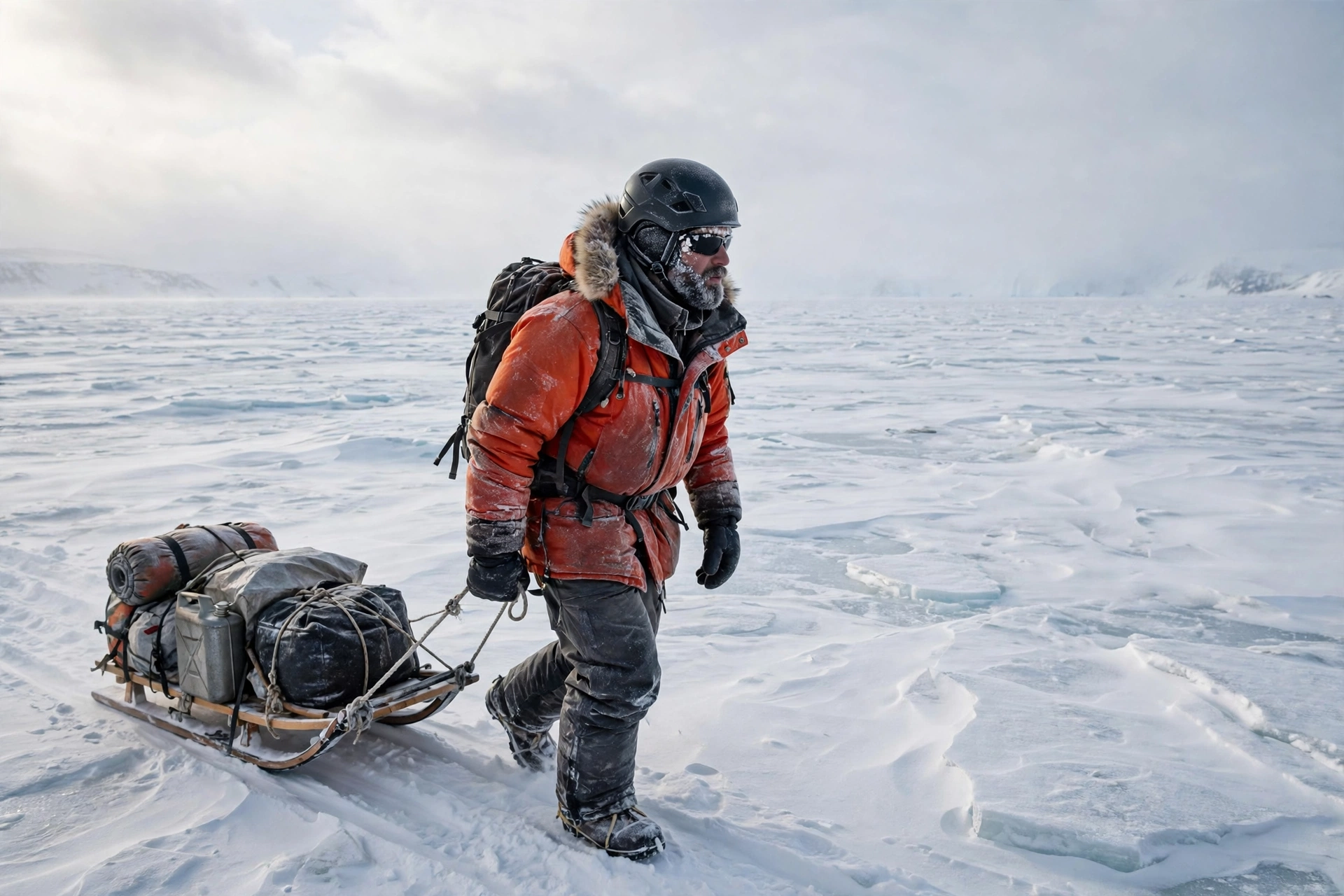
A helmet for polar expeditions is a helmet worn by a member of an expedition travelling across snow and ice near the poles to protect the head from falls, wind-blown ice, and knocks from sleds and equipment, and in general terms every expedition member should wear one that fits well over cold-weather clothing and stays in place in extreme cold. A polar expedition is a long journey on foot or on skis across a frozen landscape, often in strong wind and at temperatures far below freezing. The ground is hard ice and packed snow, help can be days away, and a head injury far from shelter is a serious matter, so a helmet is treated as essential safety equipment, not as an optional extra.
An expedition member’s head is exposed to wind, cold, and snow glare for hours at a time. A slip on blue ice can throw a person backwards onto a hard surface, and a tipping sled can strike the person pulling it. A helmet gives the traveller protection in those moments, and it also adds a layer of warmth and wind protection that helps in a place where the wind chill can be severe.
Why do polar expedition members need a helmet?
Polar expedition members need a helmet because the surface they travel on is hard, and a fall on ice is very different from a fall onto soft snow. Wind-polished ice can be almost as firm as rock, and a traveller who slips while pulling a sled can hit it with real force. In general terms, a helmet spreads the force of an impact and helps to protect the skull, and that protection matters all the more when the nearest medical help may be far away.
There is also the risk of being struck by part of the expedition’s equipment, such as a sled, a ski pole, or a tent pole, if the wind catches it or the load shifts suddenly. A helmet gives a layer of protection against those knocks too. Blowing snow and ice crystals are another reason: in a storm, wind-driven ice can sting the face and eyes, and a helmet worn with goggles helps the traveller keep their eyes clear and their focus on the route ahead.
What kind of helmet is best for polar expeditions?
The best helmet for polar expeditions is, in general terms, a light, well-fitting helmet with a hard outer shell, a secure chin strap, and room to fit over a warm hat or balaclava. Many expedition members use a climbing helmet or a ski helmet, because those helmets are light, comfortable, and made to cope with cold and wind. The key points are a snug fit over insulation, good protection from the wind, and a strap that can be fastened with gloved hands.
The helmet should also cope with extreme cold and with moisture. A helmet used on a polar expedition will face freezing temperatures, and frost can build up on it, so it should be easy to brush clean and should not become brittle in the cold. A lining that stays warm when damp is practical, because sweat and breath can freeze inside a helmet. A helmet that is too heavy or too cold will become a distraction on a long day of hauling a sled.
How should a helmet for polar expeditions fit?
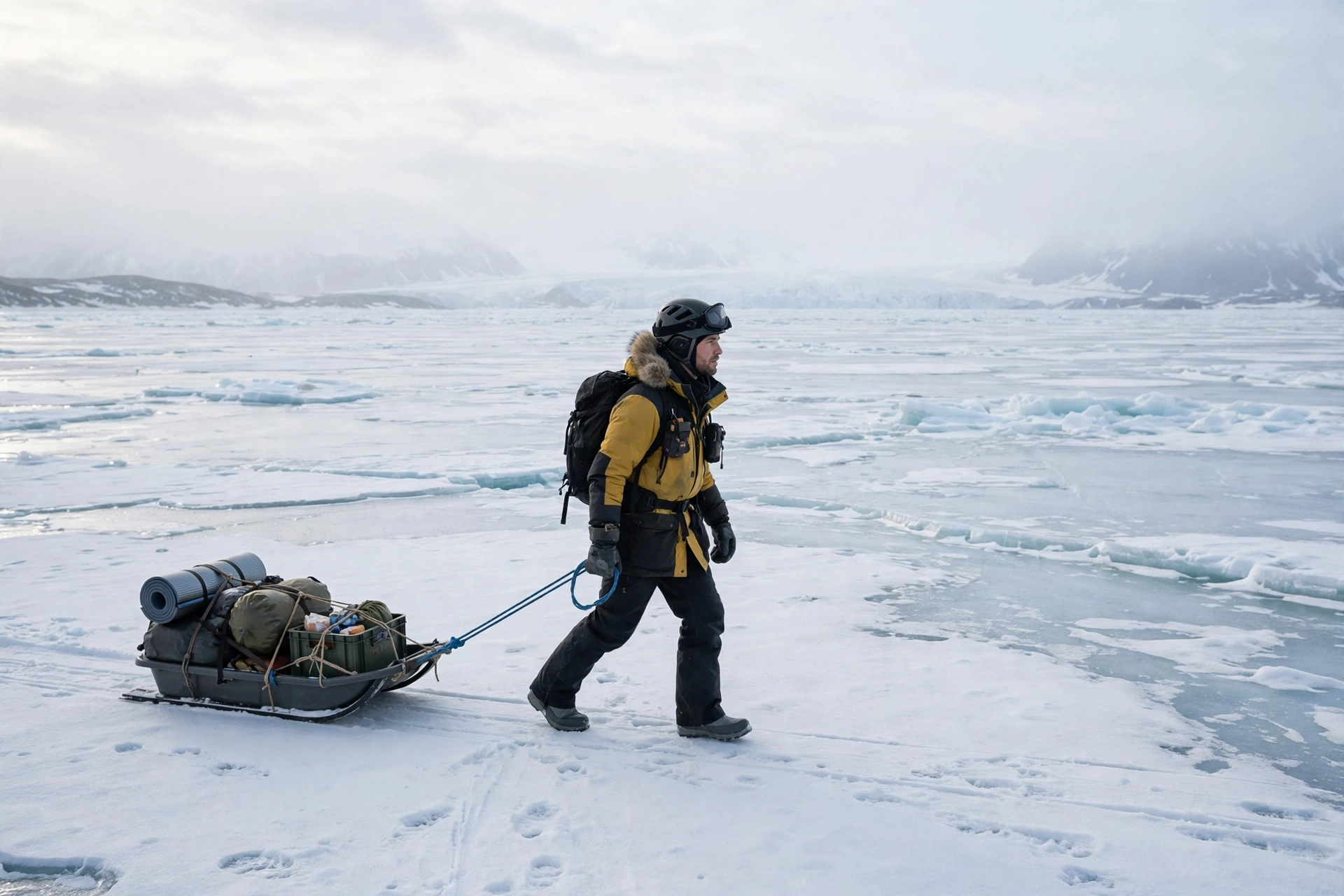
A helmet for polar expeditions should fit snugly, sit level on the head, and stay in place when the traveller bends, pulls a sled, or turns into the wind. The helmet should cover the forehead and the top of the head, and the chin strap should be fastened securely every time the traveller is out. A strap that is left loose lets the helmet lift in the wind or slide in a fall, and a helmet that comes off in a storm is no help at all.
The fit should be checked with the hat or balaclava the traveller will actually wear, because cold-weather layers can change how a helmet sits. The helmet should not press painfully on the forehead or squeeze the ears, and it should not block the traveller’s hearing, because an expedition member needs to hear companions, the wind, and warnings about the ice. A traveller who wears goggles should check that they sit neatly against the helmet without leaving a gap that lets in wind and snow.
What should an expedition member check before setting out?
Before setting out, an expedition member should check the helmet for cracks, dents, or damage to the shell, and should look at the lining, the strap, and the buckle to make sure they are sound and working. A helmet that has been dropped onto hard ice, or that has taken a knock in a fall, should be looked at with care, and in general terms a helmet that has taken a serious impact should be replaced rather than used again. The damage may not be easy to see, so the traveller should think honestly about what the helmet has been through.
The traveller should also check the route, the weather, and the condition of the sled and skis before setting off. A helmet is only one part of staying safe on the ice, and it works best when the traveller also checks the forecast, the state of the ice, and that the equipment is in good order. Travelling with companions nearby, rather than alone on an empty icefield, is a sensible habit too.
How should a polar expedition helmet be looked after?
A polar expedition helmet should be looked after with regular cleaning and sensible storage, in the same way as any sports helmet. After a day on the ice, the traveller should brush off snow and frost, wipe the shell dry, and let the helmet air out away from direct heat. Strong heat, such as a stove or a heater, can harm the materials in a helmet over time, so a cool, dry place is a better choice for storage, even in a tent.
The helmet should be kept where it will not be knocked about or used as a seat or a shelf, because a hard knock can damage it even when no crack is visible. A helmet bag is a simple way to protect it between days on the ice. Travellers choosing a new helmet may also want to learn about features that can help in a fall, including a system designed to reduce rotational forces, such as MIPS, which is found in some helmets made for cold-weather and expedition use. A well-kept helmet, worn every time, gives a polar traveller the best chance of completing a long journey across the ice in safety.
Do all polar expedition members wear a helmet?
In general terms, most polar expedition members wear a helmet today, and many guides and organised expeditions expect it. A traveller who is unsure should check the rules for the expedition before setting out.
Can a ski helmet be used for a polar expedition?
Yes, in general terms a ski helmet that fits well over warm layers and is in good condition is often suitable for a polar expedition. The key points are fit, warmth, and a secure chin strap.
When should a polar expedition helmet be replaced?
A polar expedition helmet should be replaced after a hard impact or a fall on ice, or when it no longer fits well, shows damage, or has been worn for a long time. When in doubt, replace it rather than keep travelling in it.

Olivia
Writer at Helmet Today, covering helmet reviews, fit and riding safety.