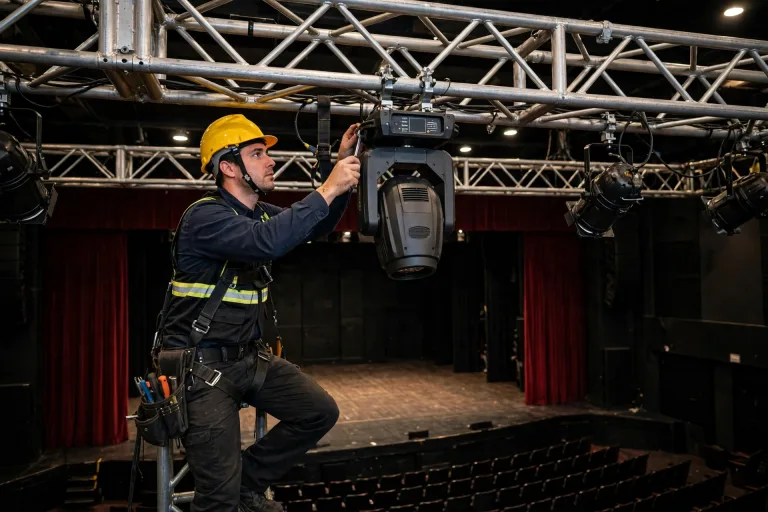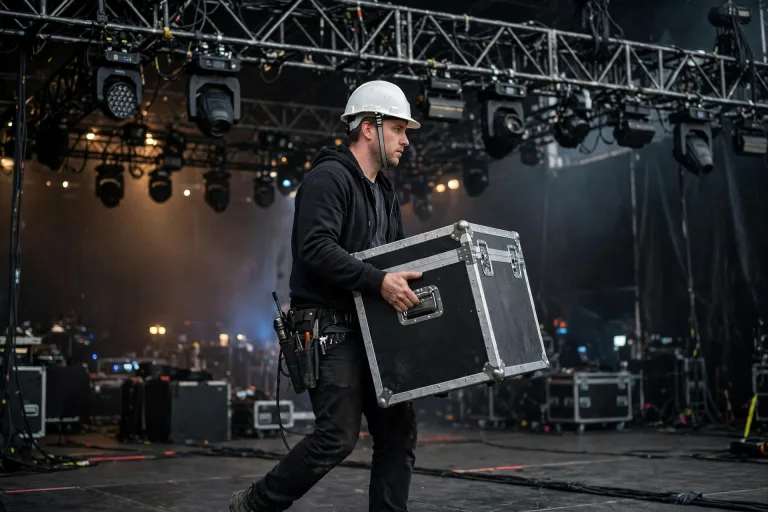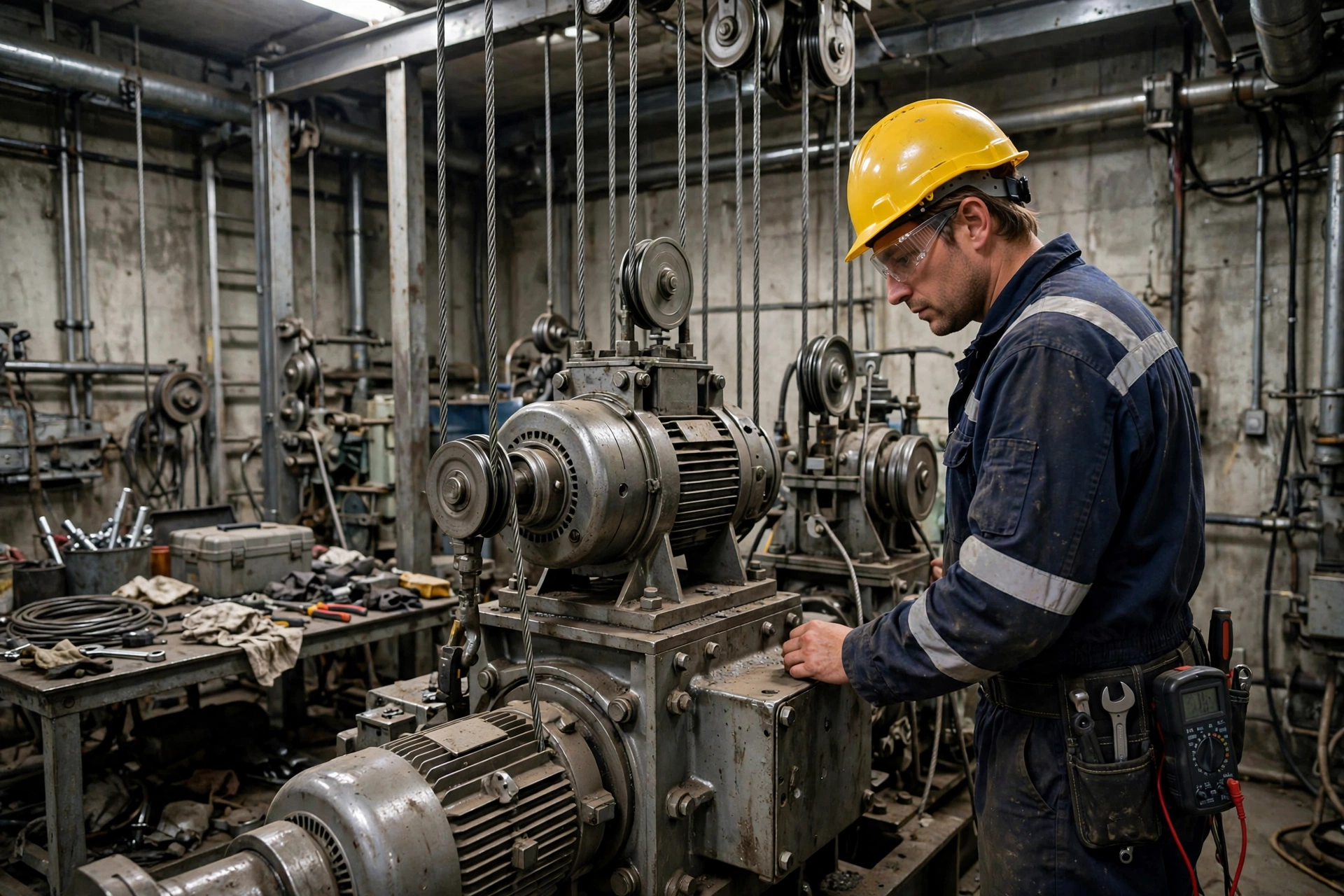
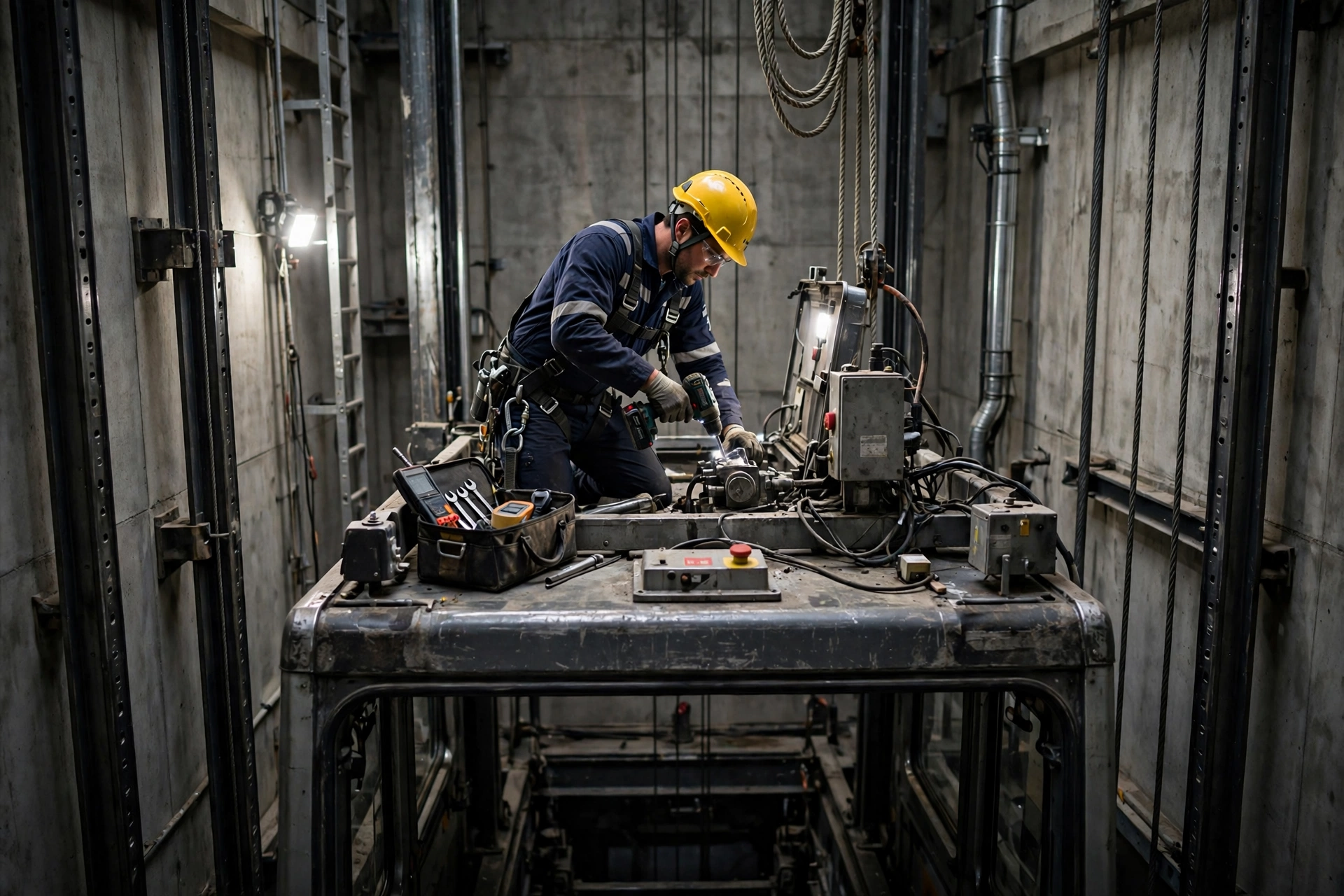
A helmet for lift engineers is a hard hat worn to protect the head from falling tools, moving lift parts, and knocks in a lift shaft or machine room, and in general terms it should be worn whenever there is a risk of something striking the head. Lift engineers install, service, and repair lifts in buildings of all kinds, and much of that work happens in shafts, pits, and machine rooms where heavy parts move overhead. A helmet is a basic piece of safety equipment in that setting, because a blow to the head from a falling tool or a moving counterweight part can cause a serious injury.
Many lift engineers move between very different places during a single day, from the top of a shaft to the pit at the bottom to the machine room on the roof. A helmet that is worn whenever the engineer is in the shaft or the machine room gives the best protection, because a head injury can happen on an ordinary service visit that looked safe at first glance.
Why do lift engineers need a helmet?
Lift engineers need a helmet because they work in a tall, narrow shaft where people and parts are above and below them at the same time. A tool or a small part dropped from a landing above can fall a long way before it reaches the engineer in the pit. A helmet helps to take the force of that blow, and it is the only protection the engineer has against something falling from above.
There is also the risk of knocks and bumps in the tight spaces of a lift installation. A machine room is full of motors, ropes, and steelwork at head height, a shaft has guide rails and brackets close to the body, and a car top means working in a cramped space with hard edges all round. In general terms, a helmet is the first line of defence for a lift engineer’s head, and it should be treated as part of the job, not an optional extra.
What kind of helmet is best for lift engineers?
The best helmet for lift engineers is, in general terms, a hard hat that meets the safety standard used on the site and fits the engineer well. Most lift engineers choose a standard hard hat with a suspension system inside, because it spreads the force of a blow across the head and keeps the shell away from the skull. A chin strap keeps the helmet in place when the engineer is looking up the shaft or bending over in the pit.
Some lift engineers also need their helmet to work with other gear, such as a head torch, safety glasses, or ear defenders, and many hard hats have slots on the sides or a clip at the front for these. A head torch is often essential in a dark shaft or machine room, so the helmet should hold one firmly without slipping. The helmet should be chosen for the real work being done, and the engineer should check the site rules before buying, because some sites ask for a particular type or colour.
How should a helmet for lift engineers fit?
A helmet for lift engineers should fit snugly, sit level on the head, and stay in place when the engineer bends down, reaches up, or looks up a long shaft. The suspension should be adjusted so the shell sits a little above the head, with an even gap all round, and the chin strap should be fastened whenever the engineer is in the shaft, on the car top, or in the pit. A strap left loose lets the helmet slide or fall off, and a helmet on the floor of the pit is no help at all.
The fit should be checked with the other gear the engineer will wear, such as a head torch, safety glasses, or ear defenders, because these can change how a helmet sits. A head torch that is too heavy can pull the helmet forward, and glasses with thick arms can push the suspension out of place. The engineer should also check that the helmet does not block their hearing or their view, because a lift engineer needs to hear a colleague’s warning, a lift alarm, or a shout from another landing.
What should a lift engineer look for in a helmet?
When choosing a helmet, a lift engineer should look first at comfort, because a helmet that hurts or feels heavy will be taken off, and a helmet that is off is no protection. The weight, the balance, and the feel of the suspension all matter on a long shift in a shaft, and a helmet with good ventilation helps in a hot machine room. The engineer should try the helmet on with their usual glasses and head torch, and wear it for a few minutes before deciding.
The engineer should also check the condition of any helmet before use, looking for cracks, dents, or a suspension that has gone soft or stretched. In general terms a helmet that shows damage should be replaced rather than kept in use. A helmet is a piece of safety equipment, not a fashion item, and its condition is what decides whether it will do its job when it is needed.
How should a lift engineer’s helmet be looked after?
A lift engineer’s helmet should be looked after with regular cleaning and sensible storage, in the same way as any work helmet. After a job, the engineer should wipe the shell clean of dust, oil, and grime, and let the suspension and lining air out before the next call. The shell should be checked for cracks, dents, or damage, and the suspension should be checked for fraying or stretched straps.
The helmet should be stored in a cool, dry place, away from direct heat, sunlight, and chemicals, and kept in a bag or in the van when it is not in use. In general terms a helmet that has taken a serious impact should be replaced rather than used again. Engineers who want to learn more about features that can help in a blow to the head may also want to read about a system designed to reduce rotational forces, such as MIPS, which is found in some work and sport helmets. A well-kept helmet, worn on every job, gives a lift engineer the best chance of going home safe.
Do lift engineers have to wear a helmet?
Lift engineers should wear a helmet in a lift shaft, on a car top, in a pit, or in a machine room, and in general terms most employers ask for one wherever that risk exists.
Can a lift engineer wear a helmet with a head torch?
Yes, in general terms many hard hats have a clip or slots for a head torch, and the torch should be tried with the helmet to make sure it sits firmly and does not pull the helmet out of place.
When should a lift engineer’s helmet be replaced?
A lift engineer’s helmet should be replaced after a hard impact or a serious knock, or when it shows cracks, dents, or a worn-out suspension, or no longer fits well. When in doubt, replace it rather than keep working in it.

Olivia
Writer at Helmet Today, covering helmet reviews, fit and riding safety.