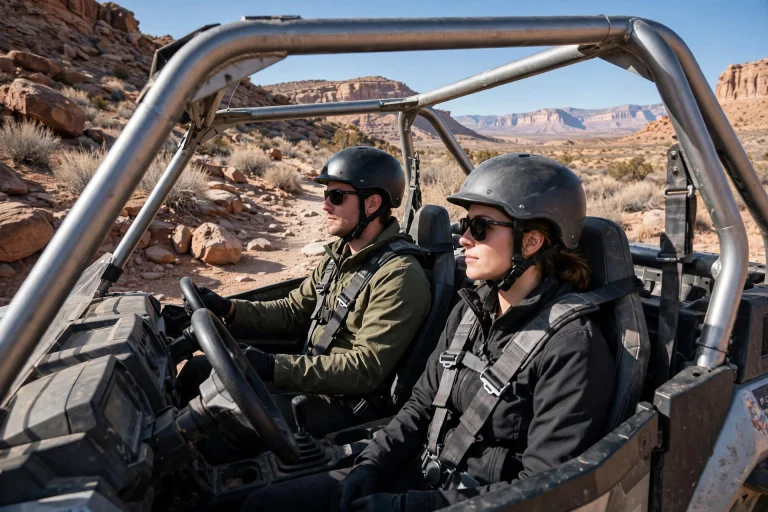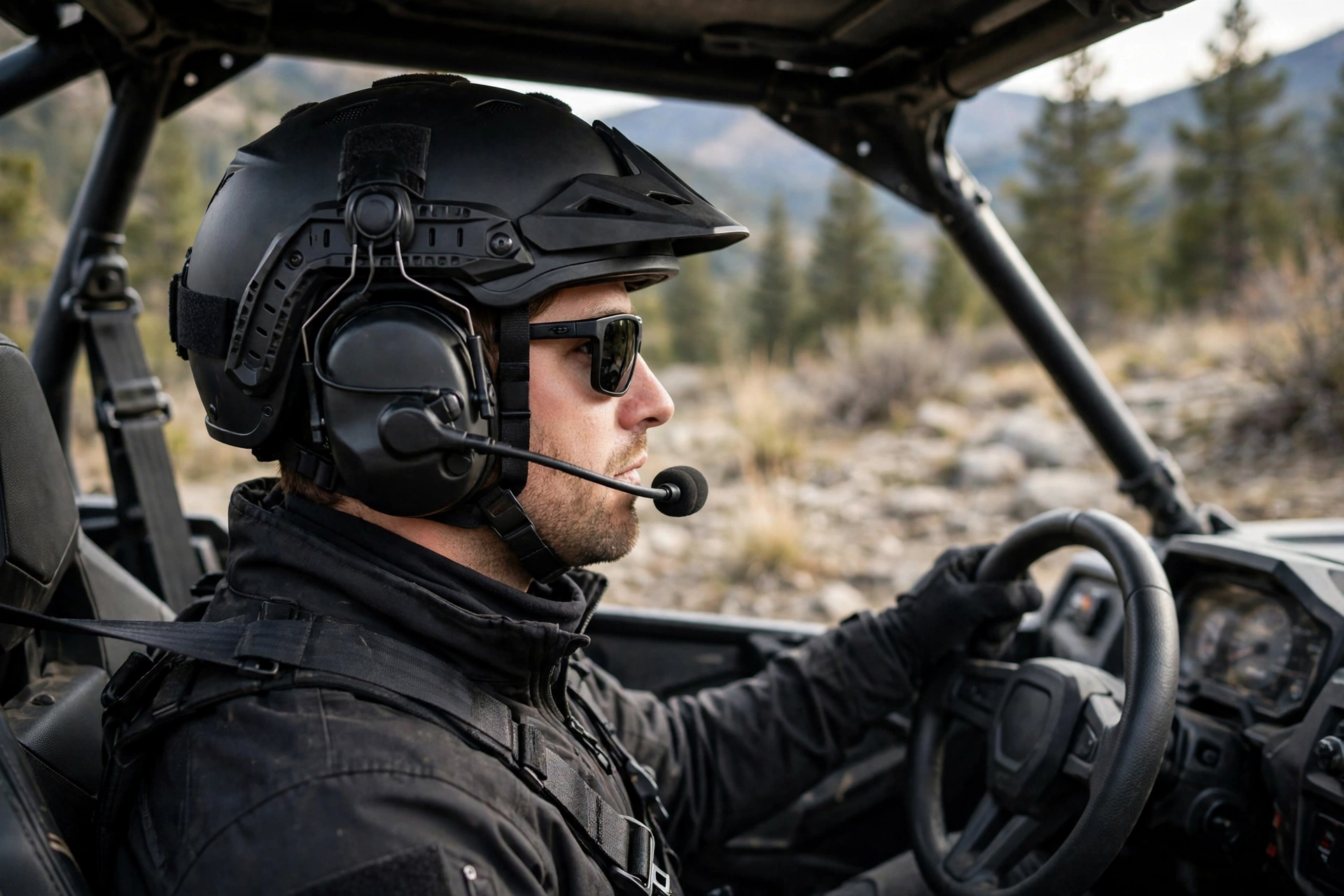
You need the helmet. A headset in a UTV is communication and hearing gear — it protects nothing in a crash — while a helmet is the protective equipment that guards your head in a rollover. The good news is that for most riders it is not either/or: a proper helmet with an intercom or headset system fitted inside it gives you crash protection and communication together. Choosing a headset instead of a helmet trades safety for convenience; choosing both costs a little setup and gives up nothing.
UTVs make this question common, because headsets are genuinely useful in them — the machines are loud, occupants sit side by side, and talking matters. Here is what each piece of gear actually does, and how to combine them sensibly.
What Does Each One Actually Do?
A helmet is impact protection: a shell and energy-absorbing liner certified to a recognized standard, designed to manage the forces of a crash or rollover and to shield your head from the cage, the ground, and debris. Nothing else you wear in a UTV does that job, and a rollover does not schedule itself around the rides where you skipped it.
A headset is audio equipment. Worn over or in the ears, often with a headband, it carries an intercom between occupants, connects to radios and phones, plays music, and on many models provides electronic hearing protection that quiets engine noise while letting voices through. All genuinely useful — none of it protective.
The confusion is that both go on your head and both get called “gear.” In a slow-speed, flat-ground work context some people use headsets alone, but on any real trail ride the protection question has one answer, and it is the helmet.
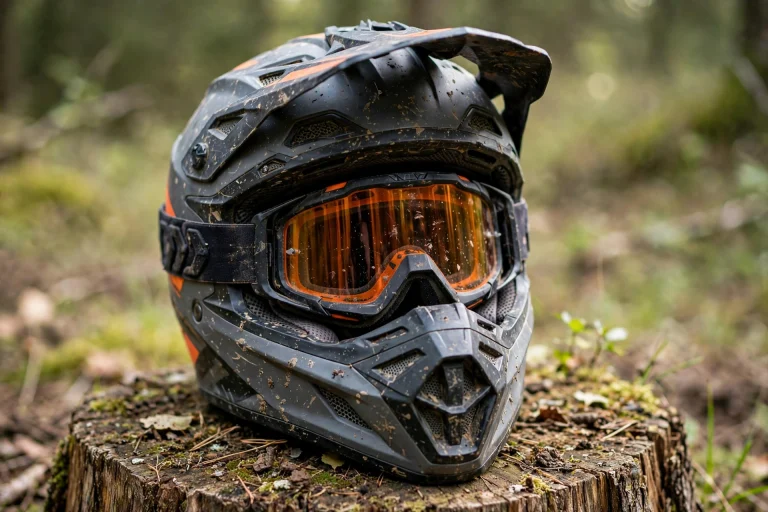
There is also a visibility and awareness side to the comparison. A bare headset leaves your face and eyes open to dust, brush, and thrown debris — headset users still need goggles or other eye protection off-road — while a peaked off-road helmet plus goggles covers eyes, face, and sun in one system. And a helmet shapes how you ride: riders who feel properly dressed for the machine tend to belt up, hold on, and pay attention in a way that riders in casual gear often do not. Protection equipment and riding behavior are not separate topics, and the helmet is the piece that anchors both.
When Do Riders Choose Headsets Alone — and What Is the Risk?
Headsets alone show up in the gentlest use cases: puttering around a property, slow utility work, hunting access at walking pace, where the machine barely leans and a rollover feels remote. The appeal is real — cooler, lighter, easy conversation, nothing fogging or pressing.
The risk is that UTV accidents are poor respecters of gentle intentions. Rollovers happen at low speeds on side slopes, in ruts, and on off-camber ground that looked harmless, and a head meeting a cage tube or the ground at low speed is still a serious injury. Dust, brush, and thrown debris do not check your speed either.
There is also the requirements angle: in general terms, many riding areas, parks, tours, and events require helmets for all UTV occupants, whatever the terrain. The headset-alone setup may not even be permitted where you want to ride — and where it is permitted, it is still the weaker choice on every ride that leaves flat ground.
Can You Wear a Headset With a Helmet?
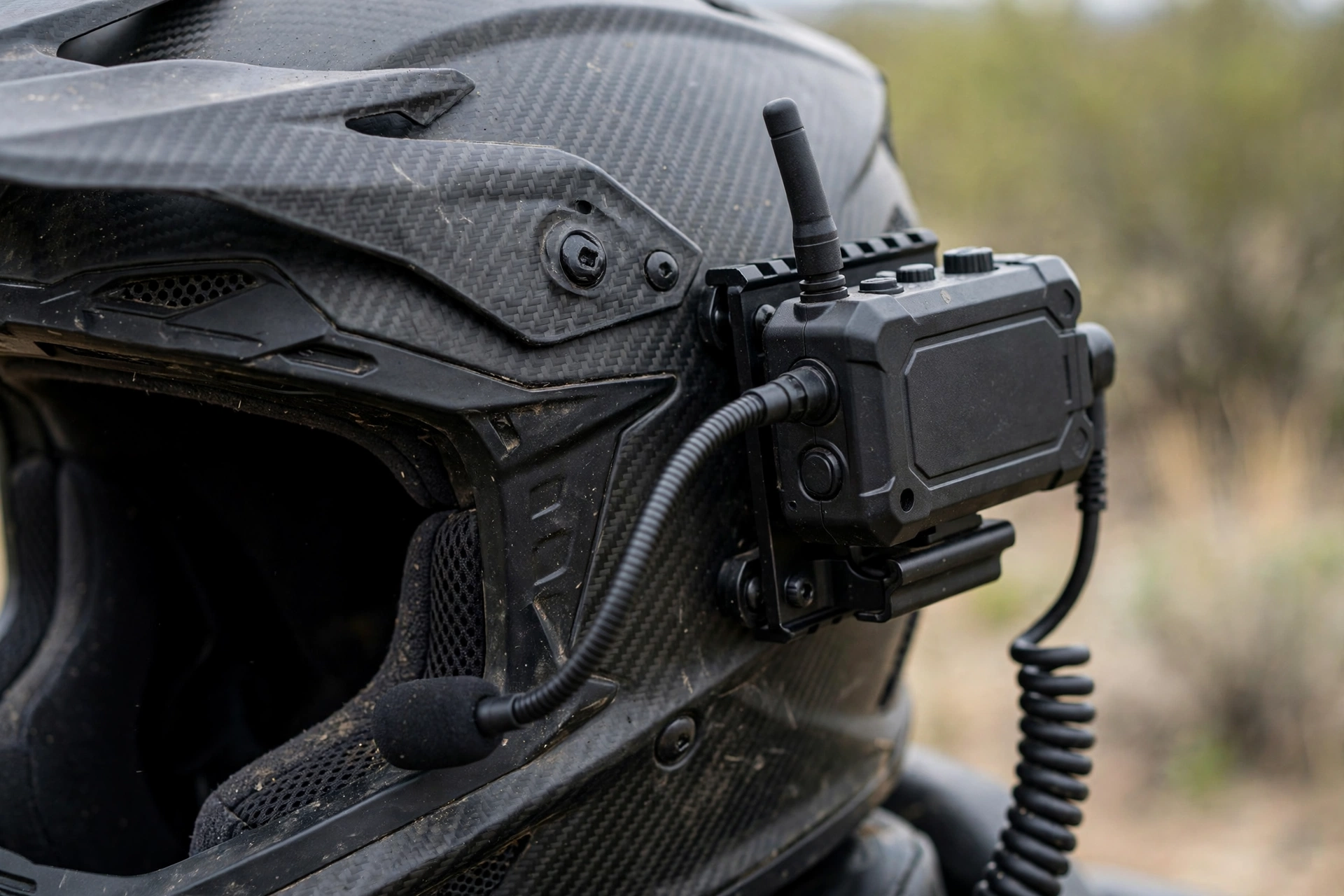
Yes, and it is the standard solution. Intercom and radio systems for off-road use are designed to fit inside helmets: flat speakers mount in the ear pockets of the liner, a small microphone sits at the chin bar, and a compact unit clips to the shell or sits in the cab wired to the helmet. Once fitted, you put on one helmet and get protection, intercom, radio, and music together.
Simple earbud-style headsets also fit under many helmets for riders who want a lighter setup, though a purpose-made in-helmet system is more secure and comfortable over a long day. What does not work is a bulky over-ear headset worn over a helmet — the combination fits neither properly, and anything that compromises how the helmet sits on your head compromises the protection.
Fit the system, then check the helmet still sits exactly as it did: level, snug, strap fastened, speakers flat in their pockets rather than pressing on your ears. An hour of trail vibration will find any pressure point the driveway check missed.
What About Hearing Protection From Engine Noise?
This is the one job where a headset can outdo a basic helmet setup. UTV engines, wind, and tire noise over a long day are fatiguing and, in general terms, sustained loud noise is hard on hearing. Many intercom headsets include active sound management that limits loud noise while passing speech, and helmet intercom speakers give a milder version of the same benefit.
A helmet itself muffles some noise, and riders on long trips sometimes add simple earplugs under the helmet — compatible with protection and with hearing a passenger at stops. The point is that hearing care layers onto the helmet; it does not replace it.
Decide by the ride. Short, slow chores are where headsets alone tempt people, and longer, faster, rougher rides are where the full setup — helmet, intercom, hearing care — earns its keep. Across all of them, the constant is a certified helmet that fits, worn properly, with modern liners such as rotational-impact liners like MIPS managing crash forces. Fit the communication into that, and the question answers itself: helmet first, headset inside it.
Frequently Asked Questions
Q: Is a headset with hearing protection enough for slow rides?
A: It protects your hearing, not your head. Even at low speed a UTV can tip on a slope or rut, and your head can strike the cage or ground. Slow riding lowers the odds; the helmet is what covers you when the odds lose.
Q: Will an intercom fit in my existing helmet?
A: Usually, yes. Most off-road helmets have ear pockets in the liner where flat intercom speakers sit, and systems are made to retrofit. Check that the speakers sit flat and the helmet still fits snugly with everything installed.
Q: Do passengers need the helmet-and-headset setup too?
A: Passengers need the helmet, full stop. Adding them to the intercom is the comfort upgrade that makes group rides better — and a passenger who can hear warnings and conversation is a safer passenger as well.

Olivia
Writer at Helmet Today, covering helmet reviews, fit and riding safety.