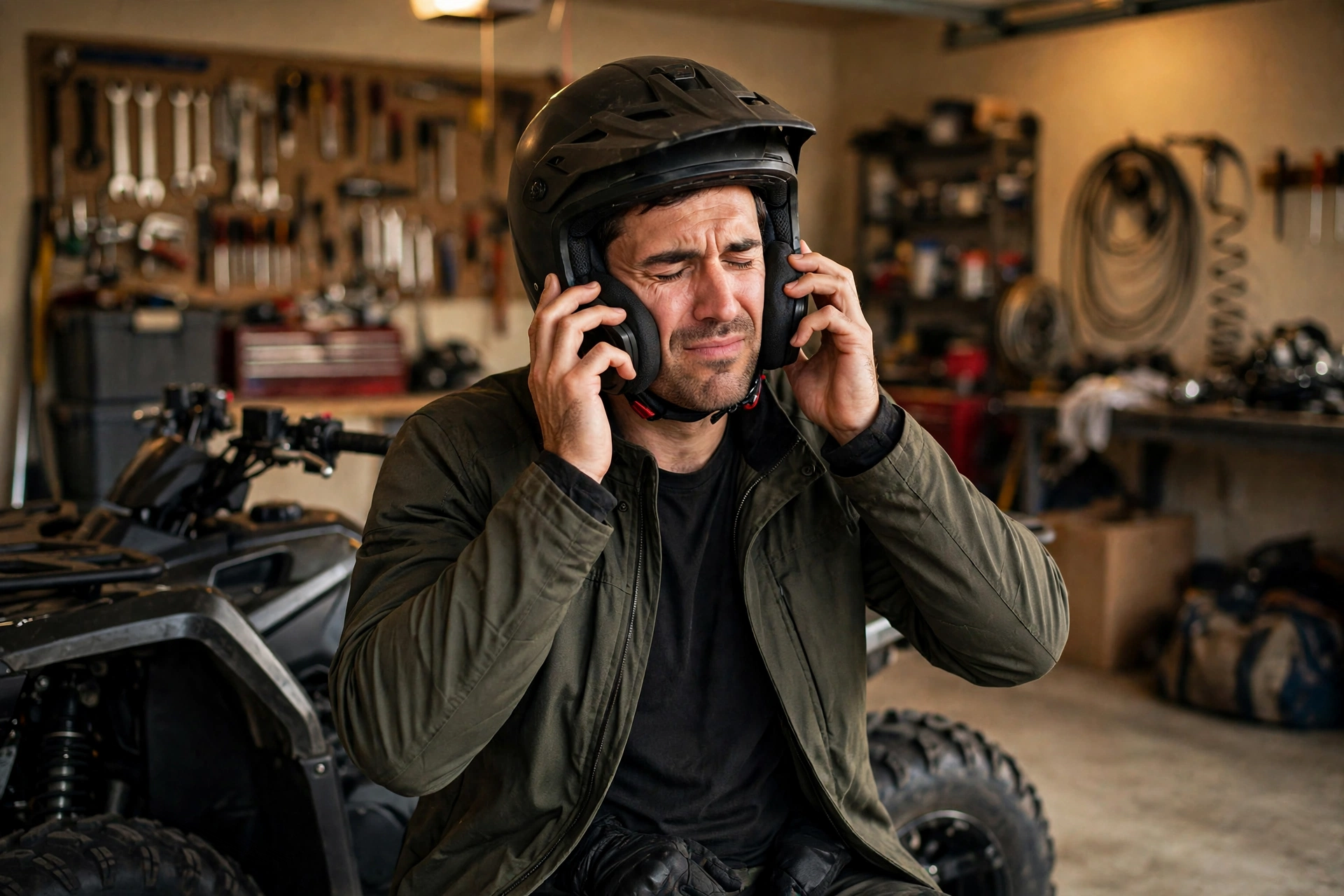
A new ATV helmet is supposed to feel snug, and a gentle, even tightness in the first few rides is normal — the padding has not broken in yet. What is not normal is pain: a sharp forehead hotspot, aching temples, or a headache within minutes means the helmet is the wrong size or the wrong shape for your head. The difference between “snug” and “too tight” is where the pressure sits and whether it eases as the liner settles.
This guide explains why ATV helmets feel tight, how to tell healthy snugness from a genuine fit problem, and what you can do about each one.
Is It Normal for a New ATV Helmet to Feel Tight?
Yes, up to a point. A new helmet’s comfort liner is at its thickest when it leaves the box, and it is designed to mould slightly to your head over the first several hours of riding. Most riders find a new helmet feels firm everywhere at first, then relaxes into a close, even fit.
Helmets are meant to sit snug because that is how they do their job. A helmet that shifts, lifts, or rocks when you shake your head cannot stay in position during a crash, and the energy-absorbing liner works best when the helmet is held firmly against the skull with no gaps.
Break-in has limits, though. Padding compresses only a little — it eases pressure, it does not change the helmet’s size. If a helmet is a full size too small, no amount of riding will make it right.
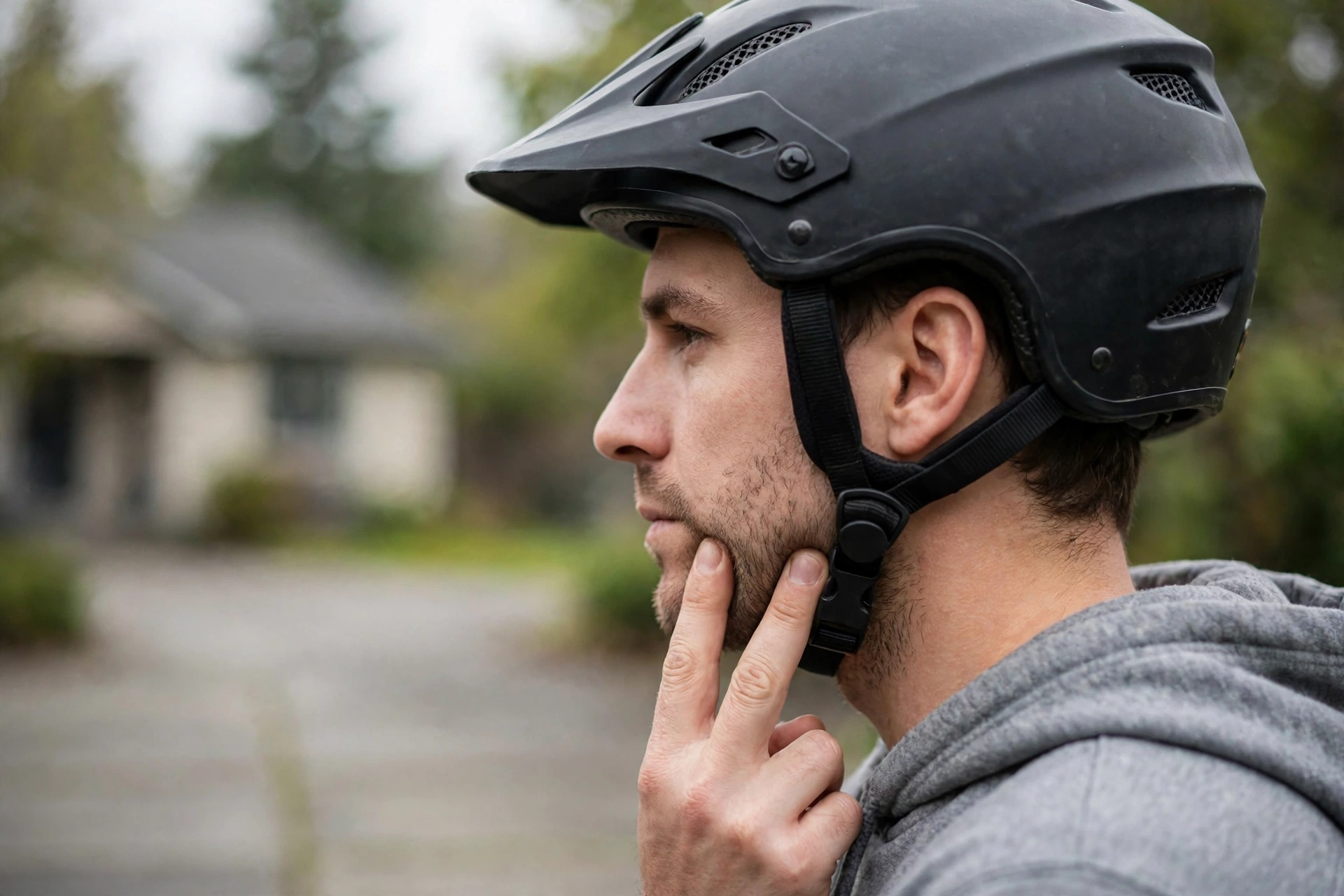
There are two quick checks that separate snug from too small. First, the shake test: with the strap done up, shake your head side to side and up and down — the helmet should move with your head, your skin should move with the helmet, and it should not slide or thump. Second, the time test: wear it for fifteen minutes indoors. Snugness stays background-level; a wrong fit announces itself with growing pressure well inside that quarter hour, long before you would notice it on a ride.
Could Your Helmet Be the Wrong Size or Shape?
Size is the first suspect. Helmets are sized by head circumference, and riders who guess, measure over a hat, or fall between sizes and round down often end up in a shell that simply has no room. Measure around the widest part of your head, just above the eyebrows, and compare it honestly with the maker’s chart.
Shape is the quieter problem. Heads are not all the same shape, and neither are helmets: some are built for rounder heads, others for longer, narrower ones. A round-shaped helmet on a long oval head squeezes the forehead and back of the skull while feeling loose at the sides — tight and loose at the same time.
Other culprits include a thick hairstyle, a beanie or liner worn underneath, glasses arms pressing into your temples, and cheek pads that are simply too thick for your face. Each one eats into space the shell does not have to spare.
What Pressure Points Tell You Something Is Wrong?
Even pressure all over is a good sign. Localised pressure is a warning. A burning spot in the centre of your forehead usually means the helmet is too small or too round for your head shape, and it tends to grow into a headache rather than fade.
Pain at the temples often comes from the shell shape, sunglasses, or the helmet sitting too low. Cheek pressure is different: firm cheeks are normal in a new off-road helmet, and the pads are meant to feel pushy at first — but jaw pain or feeling like you are biting your cheeks when you talk means the pads are too thick.
Numbness, tingling, or a headache that starts within ten to fifteen minutes of putting the helmet on means you should take it off and fix the fit before riding. Riding distracted by pain is its own hazard, quite apart from the fit problem itself.
How Can You Make a Tight ATV Helmet More Comfortable?
Start with the free fixes. Wear the helmet around the house in short sessions to let the liner settle, make sure it sits level rather than tipped back, and route glasses arms carefully. Remove anything worn underneath that you do not truly need — a thin skull cap is fine, a thick beanie is not.
Many helmets allow pad changes. Thinner cheek pads are widely available and can transform a helmet that only squeezes your face, and some brands offer alternate crown liners too. Swapping pads changes comfort fit; it does not change the shell size, so it works only when the shell itself is right.
Good fit matters because the whole protective system depends on it. The foam liner, the shell, and features such as rotational-impact liners like MIPS can only manage crash energy properly if the helmet stays centred on your head — another reason to solve tightness with the right size rather than by forcing a bad one.
When Is a Helmet Too Tight to Ride In Safely?
A helmet is too tight to ride in if it causes pain, numbness, or headaches, if you cannot open your jaw comfortably, or if you find yourself loosening the strap or pushing the helmet up to get relief. At that point it is not a break-in issue; it is the wrong helmet.
It is also too tight if you dread putting it on. Riders quietly skip helmets that hurt, shorten rides, or ride with the strap undone — and an unworn helmet protects nobody. The right response is to exchange it for the correct size or a shape that matches your head while you still can.
The simple test: a good helmet feels like a firm, even hug you forget about within minutes. A bad one keeps reminding you it is there. Listen to the reminder.
Frequently Asked Questions
Q: How long does an ATV helmet take to break in?
A: In general terms, the liner settles over the first several hours of riding — often the first few rides. If the fit has not become comfortable by then, the problem is size or shape, not break-in.
Q: Will a tight helmet stretch a full size with use?
A: No. Padding compresses slightly and cheek pads soften, but the shell size never changes. A helmet that is a size too small will stay a size too small.
Q: My cheeks feel squashed but my head feels fine. Is that okay?
A: Firm cheek pressure is normal in a new off-road helmet and usually eases. If it causes jaw pain, try thinner cheek pads before changing the whole helmet.

Olivia
Writer at Helmet Today, covering helmet reviews, fit and riding safety.