No, helmets do not automatically make riders take more risks — but the idea behind risk compensation is worth understanding, because feeling safer can change how anyone behaves. Risk compensation is the theory that when people feel protected, they may take more chances than they otherwise would. In the case of helmets, the worry is that a rider who feels well protected might ride faster, take tighter corners, or pay less attention to traffic.
The question matters because it is often raised in debates about whether helmets are a good idea at all. Some people argue that if helmets encourage riskier riding, their benefit might be cancelled out. Others point out that most riders wear a helmet for exactly the opposite reason: because they know the road can be dangerous and they want protection. This guide looks at what risk compensation means in general terms, what it might look like on the road, and how riders can make sure a helmet makes them safer rather than bolder.
What Is Risk Compensation?
Risk compensation is a simple idea from behavioural science. It suggests that people tend to keep their overall sense of risk at a level they feel comfortable with. When one part of an activity becomes safer, they may — often without realising it — take on a little more risk somewhere else to bring that feeling back to where it was. The classic example is a driver who feels safer in a car with better brakes and airbags, and so drives a little faster or follows a little closer.
Applied to helmets, the theory says a rider who puts on a helmet might feel more protected and therefore ride more boldly. They might take a corner a little faster, squeeze through a narrower gap in traffic, or worry less about a fall. The feeling of safety comes from the helmet itself, even though the helmet does nothing to prevent a crash from happening in the first place. It only helps if a crash does happen.
It is important to note that risk compensation is a theory about how people behave in general, not a rule that applies to every rider. Some riders may ride more boldly with a helmet on, while others ride exactly the same way, or even more carefully because putting the helmet on reminds them of the risks. In general terms, the effect, if it exists at all for a given rider, is likely to be small and hard to separate from all the other things that shape how someone rides.
Does Wearing a Helmet Really Change How People Ride?
There is no simple yes or no answer, because riders are different and so are the roads they use. Some riders say they feel braver with a helmet on, and that extra confidence might show up as a slightly higher speed or a willingness to try a trickier route. Others say the helmet makes no difference to how they ride, and that their speed and caution are set by the traffic, the weather, and their own habits rather than by what is on their head.
Researchers who have looked at this question have found mixed results. Some studies have suggested small changes in behaviour when people wear protective gear, while others have found no clear change at all. One difficulty is that it is hard to measure risk-taking fairly: a rider who wears a helmet may also be the kind of person who rides more often, rides further, or rides on busier roads, and those factors alone could explain differences in crash rates. In general terms, the research does not support the idea that helmets make riders reckless.
What seems clearer is that the biggest factors in how safely someone rides are experience, attention, and road conditions. A careful rider with a helmet is still a careful rider. A rider who takes chances will take chances with or without a helmet. The helmet is one piece of the picture, and it is not the piece that decides whether someone rides sensibly. If you are learning about how helmets handle different kinds of impact, reading about what MIPS is for helmets can help you understand one of the technologies used in modern helmet design.
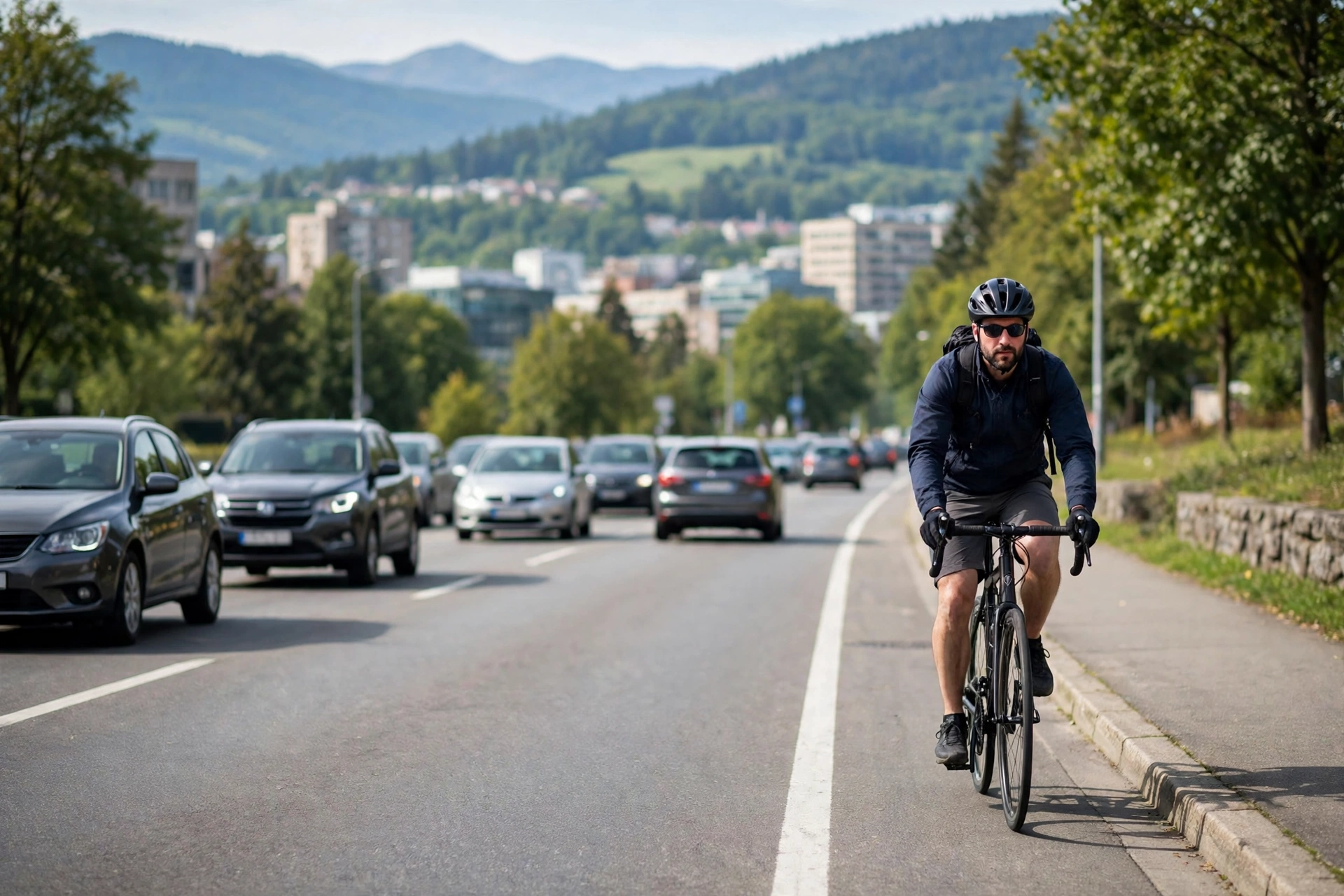
What Does the Evidence Suggest in General Terms?
In general terms, the evidence for helmets as protective equipment is much stronger than the evidence for risk compensation cancelling that protection out. Helmets are designed to reduce the force that reaches the head in a crash, and that is a physical effect that does not depend on how the rider behaves. Even if a rider did take slightly more risk while wearing one, the helmet would still be there to help in a fall.
How Can Riders Guard Against Overconfidence?
The simplest guard against overconfidence is to remember what a helmet is for. A helmet protects your head if you fall or crash; it does not stop you from falling, it does not make other road users see you, and it does not make a dangerous manoeuvre safe. Keeping that in mind helps you treat the helmet as a backup, not as a licence to take chances.
It also helps to set your own rules before you ride. Decide your speed for the conditions, not for how brave you feel. Leave a sensible gap to the vehicle in front, signal clearly, and slow down at junctions and in wet weather, whether or not you are wearing a helmet. These habits matter far more than any feeling of safety the helmet gives you.
Does Risk Compensation Mean Helmets Are Not Worth Wearing?
In general terms, no. The concern about risk compensation is real enough to think about, but it does not outweigh the protection a helmet offers in a crash. A helmet is a simple, practical piece of equipment that can reduce the severity of a head injury, and that benefit stands on its own. The answer to the risk compensation worry is not to stop wearing a helmet, but to wear one and ride sensibly at the same time.
If you are unsure whether a helmet has changed how you ride, ask yourself a few honest questions. Do you ride faster with it on than without it? Do you take gaps in traffic you would not take bare-headed? If the answer is yes, you do not need a different helmet — you need to bring your riding back to the careful standard you would use anyway. The helmet is there to protect you, not to change the way you judge risk.
Frequently Asked Questions
Q: Do helmets make cyclists ride more dangerously?
A: In general terms, there is no clear evidence that helmets make most riders ride dangerously. Some riders may feel more confident, but careful habits, experience, and road conditions shape riding behaviour far more than the helmet itself.
Q: What is risk compensation in simple terms?
A: Risk compensation is the idea that feeling safer can lead people to take a little more risk, often without realising it. With helmets, the worry is that feeling protected might make a rider bolder, though the effect is not proven to be large.
Q: Should I stop wearing a helmet to avoid risk compensation?
A: No. The protection a helmet gives in a crash stands on its own. The better answer is to wear a helmet and ride carefully, remembering that the helmet protects you if you fall rather than preventing the fall itself.

Olivia
Writer at Helmet Today, covering helmet reviews, fit and riding safety.