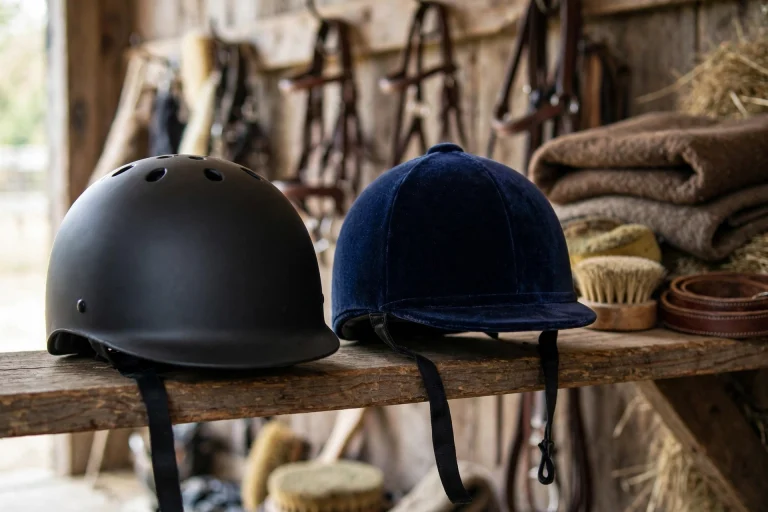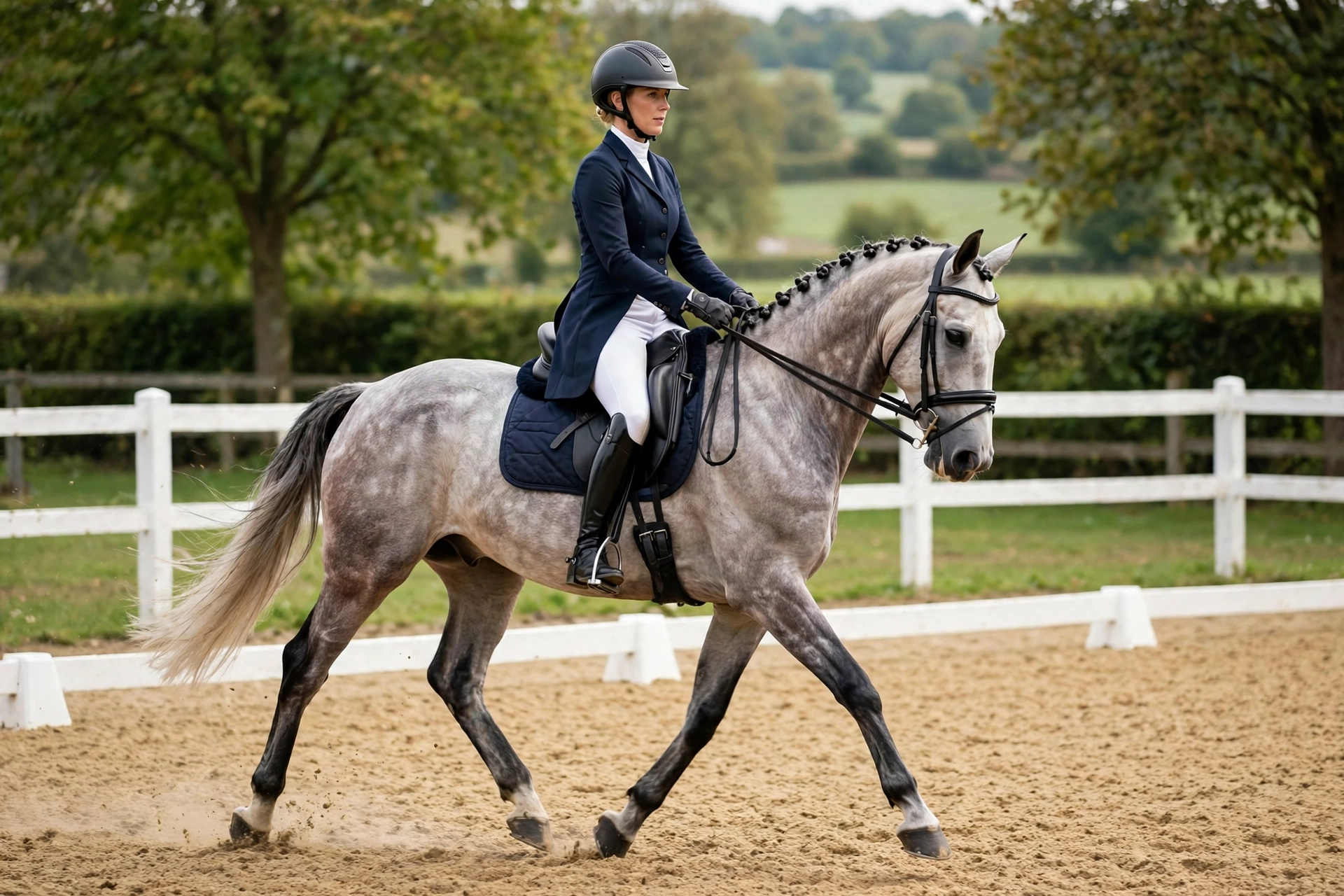
In general terms, the helmet rules for both dressage and show jumping now come down to three requirements: the helmet must be certified to an accepted safety standard, it must be properly fitted, and its harness must be fastened whenever you are mounted. That framework applies at most competitions under the major federations — the top hat era in dressage has effectively ended at international level, and jumping has required certified helmets for years — but the accepted-standards lists and the details still vary by body and level, so check your own federation’s current rulebook each season.
This guide explains how the rules reached their current shape, what officials actually check, and how to make sure your helmet complies.
What Is the Basic Helmet Rule in Both Disciplines Now?
Start with what is common ground. Under the FEI and most national federations, a rider mounted at a competition — in the ring, in the warm-up, and generally anywhere on the showground — must wear a helmet that meets an accepted standard, correctly fitted, with the harness secured. The harness point is enforced as strictly as the helmet itself: an unfastened chin strap counts as not wearing a helmet.
Juniors sit under the strictest version of the rules almost everywhere: young riders must wear certified helmets in all phases and, in many rule sets, whenever mounted at all. Adult rules have converged toward the junior position over time, which is the story of both disciplines below.
What counts as “an accepted standard” is defined by lists, not by the general idea of a safe helmet. Federations publish which standards they accept — for example ASTM/SEI, PAS 015, VG1 and others, sometimes with conditions on certification marks — and those lists are updated as standards change. Your helmet complies by matching the list, not by being a good helmet in the abstract.
How Have Dressage Helmet Rules Changed?
Dressage held out longest, for reasons of tradition. The top hat was part of the sport’s formal dress for generations, worn by senior riders at the highest levels long after jumping had gone fully to helmets, and for years the rules split: helmets for juniors and lower levels, top hats permitted for senior riders in international competition.
That split has closed. In recent years, international dressage has moved to requiring protective helmets for all riders in competition, and national federations have broadly followed, so the top hat has largely disappeared from the arena. Velvet-covered helmets and helmet designs styled to look traditional have filled the visual gap — the silhouette the sport loved, with certification inside it.
Some variation remains at the edges. National rules can differ from international ones, some unaffiliated and local shows set their own dress codes, and historical or side-saddle classes occasionally write their own provisions. If you compete below international level, your national federation’s current dressage rules — not the FEI’s, and not last season’s memory of either — are the document that governs your hat.
What Do Show Jumping Rules Require?
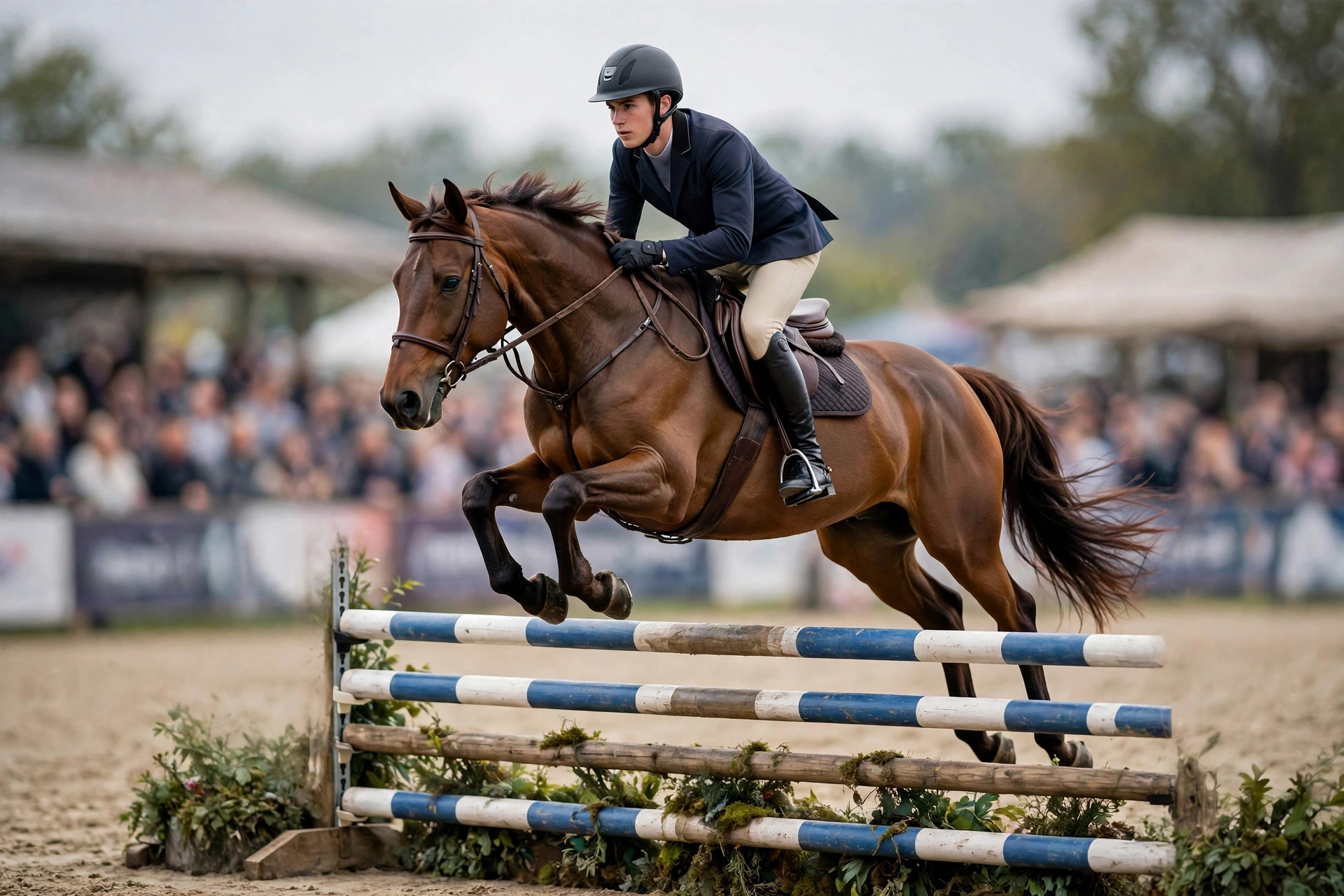
Show jumping’s helmet rules settled earlier and simpler. Certified helmets with fastened harnesses have been required in the jumping ring for many years at essentially all levels, and the requirement extends to the warm-up arena, where most jumping falls at shows actually happen. A rider who jumps a practice fence with the harness undone can expect to be spoken to.
The jumping rules also illustrate the general competition principle that the helmet requirement follows the horse, not the class: riders schooling or exercising at a show venue are under the venue and federation rules whether or not they are competing that day. “I’m not in a class until three o’clock” does not suspend the helmet rule at ten.
Style is otherwise free. Jumping helmets range from skull caps under silks to ventilated modern designs, in any colour the dress rules allow — the regulation cares about the label inside and the strap under the chin, not the fashion. That freedom within a firm safety frame is roughly where dressage has now arrived too, by a longer road.
What Do Officials Actually Check?
At affiliated competitions, expect three things. First, the harness: stewards and officials watch for unfastened or dangling straps in warm-ups and at in-gates, and will stop a rider to fix one. Second, the label: officials may ask to see inside the helmet for the standard and certification marks, particularly at events where helmet checks are announced. Third, the helmet’s condition and fit — obviously damaged or absurdly loose helmets draw intervention on safety grounds alone.
The consequences of non-compliance are procedural and immediate, in general terms: a rider who cannot produce a compliant helmet may not be permitted to compete, and riding in the ring in breach of the dress and safety rules can lead to elimination. There is no argument that wins at the in-gate, because the rules are written to be checked there.
Unaffiliated shows vary more — some adopt federation rules wholesale, some write a simple “correct standard hats must be worn” line, and enforcement depends on the organiser. Treat the affiliated standard as your personal standard everywhere, and the question of what a particular show enforces stops mattering.
How Do You Make Sure Your Helmet Complies?
Do the paperwork once a season. Read your federation’s current helmet rules — every body you compete under — and note the accepted standards and any mark conditions. Then read your helmet’s label and match them exactly. Keep the label legible: if it has worn away, that itself is a problem officials cannot wave through, and a reason to replace the helmet.
Then do the physical checks. The helmet must fit snugly and sit level, the harness must be intact and adjusted, and the helmet must be in date and fall-free. A compliant label on a helmet that has taken a fall is paperwork over a spent product; rules assume a helmet in genuine working order.
Finally, choose ahead. Riders buying new can pick models that carry multiple certifications, which keeps options open across federations and disciplines, and some choose helmets that add features beyond the standard, such as rotational-impact systems like MIPS. Compliance is the floor every competition helmet must meet — build from there, keep the strap fastened, and the rules will never be the reason your day ends early.
Frequently Asked Questions
Q: Can I still wear a top hat for dressage?
A: At international level, in general terms, no — the rules have moved to requiring certified protective helmets for all competitors. Some national, local, or special classes may still write their own dress provisions, so the answer for your show is in your federation’s and the organiser’s current rules. Absent an explicit allowance, assume a certified helmet is required.
Q: Do the rules apply at unaffiliated or local shows?
A: Usually some version of them does — many local shows adopt their national federation’s helmet rules or state their own requirement for correctly certified hats. Enforcement varies, but the sensible approach is to wear the same certified, fastened helmet everywhere. Your head cannot tell affiliated footing from unaffiliated.
Q: Does my chin strap really have to be fastened, or is wearing the helmet enough?
A: It has to be fastened. Competition rules treat a helmet with an unsecured harness as not properly worn, and officials will stop you for a dangling strap in the warm-up or at the in-gate. Safety-wise they are right: an unfastened helmet can leave your head in the first moment of a fall, before the impact it was there for.

Olivia
Writer at Helmet Today, covering helmet reviews, fit and riding safety.